Magnetic garnet single crystal and optical element using the same
US20070193504A1
2007-08-23
11/704,192
2007-02-09
✅ Patent granted
US 8,142,676 B2
2012-03-27
-
-
Matthew Song
2029-07-07
Abstract:
The invention relates to a magnetic garnet single crystal and an optical element using the same, for the purpose of providing a magnetic garnet single crystal at a reduced Pb content, and an optical element using the same, where the magnetic garnet single crystal is represented by the chemical formula BiαM13-αFe5-β-γM2βM3γO12 (M1 is at least one element selected from Y, La, Ce, Pr, Nd, Sm, Eu, Gd, Tb, Dy, Ho, Er, Tm, Yb and Lu; and M2 is Si; and M3 is at least one element selected from Zn, Ni, Cu and Mg, provided that 0.5<α≦2.0, 0<β, and 0<y).
Assignee:
- TDK CORPORATION 7,285 🇯🇵 Tokyo, Japan
Interested in similar patents?
Get notified when new applications in this technology area are published.
Classification:
H01F1/346 » CPC main
Magnets or magnetic bodies characterised by the magnetic materials therefor; Selection of materials for their magnetic properties of inorganic materials characterised by their coercivity of soft-magnetic materials non-metallic substances, e.g. ferrites; Oxides; Ferrites, e.g. having a cubic spinel structure (X2+O)(Y23+O3), e.g. magnetite FeO [(TO4) 3] with T= Si, Al, Fe, Ga
C04B35/2675 » CPC further
Shaped ceramic products characterised by their composition ; Ceramics compositions ; Processing powders of inorganic compounds preparatory to the manufacturing of ceramic products based on oxide ceramics based on ferrites Other ferrites containing rare earth metals, e.g. rare earth ferrite garnets
C04B35/653 » CPC further
Shaped ceramic products characterised by their composition ; Ceramics compositions ; Processing powders of inorganic compounds preparatory to the manufacturing of ceramic products; Forming processes; Processing powders of inorganic compounds preparatory to the manufacturing of ceramic products Processes involving a melting step
C30B19/04 » CPC further
Liquid-phase epitaxial-layer growth using molten solvents, e.g. flux the solvent being a component of the crystal composition
C30B29/28 » CPC further
Single crystals or homogeneous polycrystalline material with defined structure characterised by the material or by their shape; Inorganic compounds or compositions; Oxides; Complex oxides with formula AMeO wherein A is a rare earth metal and Me is Fe, Ga, Sc, Cr, Co or Al, e.g. garnets
G02F1/0036 » CPC further
Devices or arrangements for the control of the intensity, colour, phase, polarisation or direction of light arriving from an independent light source, e.g. switching, gating or modulating; Non-linear optics; Materials therefor Magneto-optical materials
C04B2235/3206 » CPC further
Aspects relating to ceramic starting mixtures or sintered ceramic products; Composition of constituents of the starting material or of secondary phases of the final product; Constituents and secondary phases not being of a fibrous nature; Metal oxides, mixed metal oxides, or oxide-forming salts thereof, e.g. carbonates, nitrates, (oxy)hydroxides, chlorides; Alkaline earth oxides or oxide forming salts thereof, e.g. beryllium oxide Magnesium oxides or oxide-forming salts thereof
C04B2235/3224 » CPC further
Aspects relating to ceramic starting mixtures or sintered ceramic products; Composition of constituents of the starting material or of secondary phases of the final product; Constituents and secondary phases not being of a fibrous nature; Metal oxides, mixed metal oxides, or oxide-forming salts thereof, e.g. carbonates, nitrates, (oxy)hydroxides, chlorides Rare earth oxide or oxide forming salts thereof, e.g. scandium oxide
C04B2235/3279 » CPC further
Aspects relating to ceramic starting mixtures or sintered ceramic products; Composition of constituents of the starting material or of secondary phases of the final product; Constituents and secondary phases not being of a fibrous nature; Metal oxides, mixed metal oxides, or oxide-forming salts thereof, e.g. carbonates, nitrates, (oxy)hydroxides, chlorides; Iron group oxides, their mixed metal oxides, or oxide-forming salts thereof Nickel oxides, nickalates, or oxide-forming salts thereof
C04B2235/3281 » CPC further
Aspects relating to ceramic starting mixtures or sintered ceramic products; Composition of constituents of the starting material or of secondary phases of the final product; Constituents and secondary phases not being of a fibrous nature; Metal oxides, mixed metal oxides, or oxide-forming salts thereof, e.g. carbonates, nitrates, (oxy)hydroxides, chlorides Copper oxides, cuprates or oxide-forming salts thereof, e.g. CuO or CuO
C04B2235/3284 » CPC further
Aspects relating to ceramic starting mixtures or sintered ceramic products; Composition of constituents of the starting material or of secondary phases of the final product; Constituents and secondary phases not being of a fibrous nature; Metal oxides, mixed metal oxides, or oxide-forming salts thereof, e.g. carbonates, nitrates, (oxy)hydroxides, chlorides Zinc oxides, zincates, cadmium oxides, cadmiates, mercury oxides, mercurates or oxide forming salts thereof
C04B2235/3298 » CPC further
Aspects relating to ceramic starting mixtures or sintered ceramic products; Composition of constituents of the starting material or of secondary phases of the final product; Constituents and secondary phases not being of a fibrous nature; Metal oxides, mixed metal oxides, or oxide-forming salts thereof, e.g. carbonates, nitrates, (oxy)hydroxides, chlorides Bismuth oxides, bismuthates or oxide forming salts thereof, e.g. zinc bismuthate
C04B2235/3418 » CPC further
Aspects relating to ceramic starting mixtures or sintered ceramic products; Composition of constituents of the starting material or of secondary phases of the final product; Constituents and secondary phases not being of a fibrous nature; Non-metal oxides, non-metal mixed oxides, or salts thereof that form the non-metal oxides upon heating, e.g. carbonates, nitrates, (oxy)hydroxides, chlorides Silicon oxide, silicic acids, or oxide forming salts thereof, e.g. silica sol, fused silica, silica fume, cristobalite, quartz or flint
C04B2235/764 » CPC further
Aspects relating to ceramic starting mixtures or sintered ceramic products; Aspects relating to sintered or melt-casted ceramic products; Physical characteristics; Crystal structural characteristics, e.g. symmetry; Cubic symmetry, e.g. beta-SiC Garnet structure AB(CO)
C30B13/00 IPC
Single-crystal growth by zone-melting; Refining by zone-melting
G02F1/09 » CPC further
Devices or arrangements for the control of the intensity, colour, phase, polarisation or direction of light arriving from an independent light source, e.g. switching, gating or modulating; Non-linear optics for the control of the intensity, phase, polarisation or colour based on magneto-optical elements, e.g. exhibiting Faraday effect
Description
BACKGROUND OF THE INVENTION1. Field of the Invention
The present invention relates to a magnetic garnet single crystal and an optical element using the same.
2. Description of the Related Art
Faraday rotator is an optical element with a function to rotate the polarization plane of transmitting light and is used in optical devices such as optical isolator, optical attenuator, optical circulator and photo-magnetic field sensor for communication. Faraday rotator is generally prepared by using a plane-like bismuth (Bi)-substituted rare-earth iron garnet single crystal. The Bi-substituted rare-earth iron garnet single crystal is prepared by the liquid phase epitaxial (LPE) process as one of flux processes.
In growing the Bi-substituted rare-earth iron garnet single crystal by the LPE process, generally, lead oxide (PbO), bismuth oxide (Bi2O3) and boron oxide (B2O3) are used as the solvents so as to stably grow such garnet single crystal while the solvents are maintained at their supersaturation states. Therefore, a trace amount of lead (Pb) contaminates in magnetic garnet single crystals during the growth thereof. In Faraday rotators for use in optical devices for communication, magnetic garnet single crystals at a Pb content “y” of about 0.03 to 0.06 in the chemical formula Bi3-x-yM1xPbyFe5-z-wM2zM3wO12 have been used conventionally. See Patent Reference 1: JP-A-2001-044026; Patent Reference 2: JP-A-2001-044027; and Patent Reference 3: JP-B-Hei 6-046604.
Following the upsurge in the recent environmental protection movement, however, efforts are now directed toward the reduction of the content of Pb as an environmental load substance in any of industrial products. Therefore, a trace amount of contaminating Pb in magnetic garnet single crystals grown by the LPE process has drawn concerns as a potential factor of environmental pollution. Accordingly, it is necessary to reduce or eliminate the amount of Pb contained in magnetic garnet single crystals as materials constituting Faraday rotators.
SUMMARY OF THE INVENTIONIt is an object of the present invention to provide a magnetic garnet single crystal at a reduced Pb content, and an optical element using the same.
The object is attained with a magnetic garnet single crystal represented by the chemical formula BiαM13-αFe5-β-γM2βM3γO12 (M1 is at least one element selected from Y, La, Ce, Pr, Nd, Sm, Eu, Gd, Tb, Dy, Ho, Er, Tm, Yb and Lu; and M2 is Si; and M3 is at least one element selected from Zn, Ni, Cu and Mg, provided that 0.5<α≦2.0, 0<β, and 0<γ).
The magnetic garnet single crystal in accordance with the invention is characteristic in that the “β” and the “γ” satisfy the relation of 0<β+γ≦0.04.
The object is attained with an optical element prepared by using the magnetic garnet single crystal in accordance with the invention.
In accordance with the invention, the Pb content in the magnetic garnet single crystal can be reduced or completely eliminated.
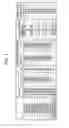
BRIEF DESCRIPTION OF THE DRAWINGSFIG. 1 shows a table collectively showing the elements contained in the solvents in the following Examples and Comparative Examples in one mode for carrying out the invention, and the Si amount “β”, the element as M3, the M3 amount “γ”, the amount of “β+γ”, and the crystal defect density in the resulting magnetic garnet single crystals therein, and the optical loss of the prepared Faraday rotators.
DESCRIPTION OF THE PREFERRED EMBODIMENTSA magnetic garnet single crystal and an optical element using the same, in a first mode for carrying out the invention, are now described with reference to FIG. 1. So as to grow a magnetic garnet single crystal with a smaller Pb content, in this mode, Pb contained in a solvent is at least partially replaced with another substance. Compared with other oxides, a great number of substances containing sodium (Na) and oxygen are dissolved at lower temperatures. Therefore, such substances are effective as solvents for growing magnetic garnet single crystals. A magnetic garnet single crystal grown in a solvent containing for example sodium hydroxide (NaOH) is of an excellent quality without any defects or cracks. It was however demonstrated that the garnet single crystal grown in Na-containing solvents had very high optical absorption in a wavelength band region of 1300 to 1600 nm for use in optical communication. When garnet single crystals with such high optical absorption are processed to prepare an optical element such as Faraday rotator, disadvantageously, the optical loss (insertion loss) in the resulting optical element may be elevated.
Herein, one Faraday rotator was prepared by processing a magnetic garnet single crystal [(BiGdYb)3Fe5O12] grown in NaOH, Bi2O3 and B2O3 as solvents by the LPE process. The optical loss of the Faraday rotator against the beam at a wavelength of 1.55 μm was 3 dB. The other Faraday rotator was prepared by processing a magnetic garnet single crystal [(BiGdYb)3Fe5O12] grown in a solvent containing Pb by the LPE process. The optical loss of the Faraday rotator against the beam at a wavelength of 1.55 μm was 0.05 dB or less. It was now shown that the optical loss of the Faraday rotator prepared by using the Na-containing solvent was extremely high compared with the optical loss of the Faraday rotator prepared by using the Pb-containing solvent. The composition of the magnetic garnet single crystal grown in the Na-containing solvent was examined by X-ray fluorescence analysis. Na at about 100 to 300 ppm was detected in the magnetic garnet single crystal. The cation (positive ion) constituting the Bi-substituted rare-earth iron garnet is essentially trivalent. When the Na cation with a stable valence number of monovalence enters in a garnet single crystal, the charge balance is deteriorated so that the resulting garnet single crystal is a semiconductor. This indicates the occurrence of optical absorption in the magnetic garnet single crystal grown in the Na-containing solvent.
In this mode, potassium (K) is used instead of Na. Like Na, K is an effective element as a solvent for growing magnetic garnet single crystals. Additionally because K has a far larger ion radius compared with rare-earth elements and Bi constituting magnetic garnet, K never enters in any magnetic garnet single crystal, unlike Na. Because cations constituting magnetic garnet single crystals are almost totally trivalent, the charge balance is hardly deteriorated. It was nevertheless found that it was very difficult to minimize the optical absorption of even a magnetic garnet single crystal grown by using K as the solvent. The cause may mainly be the deterioration of the charge balance in the resulting magnetic garnet single crystal when oxygen deficiency (oxygen defect), namely partial deficiency of oxygen atoms occurs.
In light of the problem described above in this mode of carrying out the invention, at least one of zinc oxide (ZnO), nickel oxide (NiO), copper oxide (CuO) and magnesium oxide (MgO) was additionally added together with silicone oxide (SiO2) to the blend material, to grow a magnetic garnet single crystal. The grown garnet single crystal was processed into a Faraday rotator to evaluate the optical loss. It was found that the optical loss was likely reduced to a lower value. When two or more of ZnO, NiO, CuO and MgO were added together with SiO2 to the blend material, the optical loss of the resulting Faraday rotator was reduced as well. Zn, Ni, Cu and Mg are stable at their bivalent cationic states in garnet, while Si is stable at its tetravalent cationic state in garnet. These bivalent and tetravalent cations are incorporated in garnet while compensating the charge. By allowing appropriate amounts of the bivalent and tetravalent cations to be contained in a magnetic garnet single crystal, the charge balance inclusive of the influence of the oxygen deficiency can be resumed. Thus, the resulting magnetic garnet single crystal is an insulant. It is suggested that the optical absorption of the magnetic garnet single crystal was reduced in such manner.
Si, Zn, Ni, Cu and Mg are elements to be substituted with Fe. Among them, Zn, Ni, Cu and Mg have such larger ion radii compared with Fe that these may cause the occurrence of crystal defects when a greater amount of these elements enter in a magnetic garnet single crystal. When a large amount of Si enters in a magnetic garnet single crystal, larger amounts of Zn, Ni, Cu and Mg also enter therein so as to balance the charge. So as to suppress the reduction of the productivity of the Faraday rotator due to crystal defects, preferably, the total amount of Si, Zn, Ni, Cu and Mg in substitution is adjusted to 0.04 or less (0<β+γ≦0.04).
So as to grow a Bi-substituted rare-earth iron garnet. single crystal in a solvent containing K, the supersaturated state of the solution can be retained stably. Accordingly, Bi can stably enter in a garnet single crystal up to about 2.0 in the chemical formula (α≦2.0). So as to obtain a satisfactory rotation coefficient (deg/μm) as a Faraday rotator, meanwhile, Bi is required in a garnet single crystal at 0.5 or more in the chemical formula (α≧0.5).
In this mode, furthermore, the following elements capable of stably forming a garnet single crystal singly or in combination with Fe are used as rare-earth elements to be contained in a Bi-substituted rare-earth iron garnet single crystal: yttrium (Y), lanthanum (La), cerium (Ce), praseodymium (Pr), neodymium (Nd), samarium (Sm), europium (Eu), gadolinium (Gd), terbium (Tb), dysprosium (Dy), holmium (Ho), erbium (Er), thulium (Tm), ytterbium (Yb) and lutetium (Lu).
As described above, the magnetic garnet single crystal in the mode for carrying out the invention is represented by the chemical formula BiαM13-αFe5-β-γM2βM3γO12 (M1 is at least one element selected from Y, La, Ce, Pr, Nd, Sm, Eu, Gd, Tb, Dy, Ho, Er, Tm, Yb and Lu; M2 is Si; and M3 is at least one element selected from Zn, Ni, Cu and Mg, provided that 0.5<α≦2.0, 0<β, and 0<γ). According to this mode, a magnetic garnet single crystal from which Pb is preliminarily removed almost completely as well as an optical element using the same can be realized. According to this mode for carrying out the invention, still further, the optical absorption of the magnetic garnet single crystal from which Pb is preliminarily removed almost completely and the optical loss of the resulting optical element can be reduced.
The magnetic garnet single crystal and the optical element using the same in accordance with this mode are more specifically described below, using Examples and Comparative Examples.
EXAMPLE 1Gd2O3, Yb2O3, Fe2O3, SiO2, ZnO, B2O3, Bi2O3, and potassium hydroxide (KOH) were charged in a gold (Au) crucible, which was arranged in an electric furnace. By dissolving the materials in the crucible by raising the furnace temperature to 950° C., a melt (solution) was generated and agitated with an agitation device made of Au. As a substrate for growing a magnetic garnet single crystal thereon, a single crystal wafer prepared from an ingot of a garnet single crystal grown by the pulling method is used. In this Example, a CaMgZr-substituted GGG (gadolinium.gallium.garnet) single crystal substrate [(GdCa)3(GaMgZr)5O12] is used as the substrate for growing the single crystal.
Arranging the.CaMgZr-substituted GGG substrate onto a fixing device made of Au and then charging the substrate into a furnace, the furnace temperature was lowered down to 850° C. and then, a single face of the substrate was put in contact with the melt to allow epitaxial growth for 40 hours. A magnetic garnet single crystal film of a film thickness of 500 μm was obtained. The grown single crystal film was compositionally analyzed by X-ray fluorescence analysis. The composition was Bi1.300Gd1.200Yb0.500Fe5.000O12, with no Si or Zn detected. The composition was examined in detail by the ICP (inductively coupled plasma) analysis, with the contents of Si and Zn determined. Consequently, it was shown that the chemical formula of the magnetic garnet single crystal was (BiGdYb)3.000Fe4.991Si0.004Zn0.005O12. By processing the grown single crystal film, a single crystal plate with a rotation angle of 45 deg toward the beam at a wavelength of 1.55 μm was prepared. The inside of the single crystal plate was observed with an infrared polarization microscope, with not any crystal defects observed (crystal defect density was almost zero defect/cm2. A non-reflective film was formed on the polished face of the resulting single crystal plate. 20 samples were taken out of the prepared Faraday rotators to evaluate the optical loss against the beam at a wavelength of 1.55 μm. The optical loss of each Faraday rotator was 0 to 0.01 dB, which was very small optical loss.
EXAMPLE 2Gd2O3, Yb2O3, Fe2O3, SiO2, ZnO, B2O3, Bi2O3, and KOH were charged in an Au crucible, which was arranged in an electric furnace. By dissolving the materials in the crucible by raising the furnace temperature to 950° C., a melt was generated and agitated with an agitation device made of Au. Arranging a CaMgZr-substituted GGG substrate onto a fixing device made of Au and then charging the substrate into a furnace, the furnace temperature was lowered down to 850° C. and then, a single face of the substrate was put in contact with the melt to allow epitaxial growth for 40 hours. A magnetic garnet single crystal film of a film thickness of 500 μbm was obtained. The grown single crystal film was compositionally analyzed by X-ray fluorescence analysis. The composition was Bi1.300Gd1.200Yb0.500Fe5.000O12, with no Si or Zn detected. The composition was examined in detail by the ICP analysis, with the contents of Si and Zn determined. Consequently, it was shown that the chemical formula of the magnetic garnet single crystal was (BiGdYb)3.000Fe4.961Si0.019Zn0.020O12. By processing the grown single crystal film, a single crystal plate with a rotation angle of 45 deg toward the beam at a wavelength of 1.55 μm was prepared. The inside of the single crystal plate was observed with an infrared polarization microscope, with crystal defects observed at about 2 defects/cm2. Because Faraday rotators for use in optical devices are generally in squares of 2 mm or less dimensionally, a crystal defect density approximately at the level or less has no significant influence on the productivity of Faraday rotator. A non-reflective film was formed on the polished face of the resulting single crystal plate to prepare Faraday rotators. 20 samples were taken out of the prepared Faraday rotators to evaluate the optical loss against the beam at a wavelength of 1.55 μm. The optical loss of each Faraday rotator was 0 to 0.01 dB, which was very small optical loss.
EXAMPLE 3Gd2O3, Yb2O3, Fe2O3, SiO2, ZnO, B2O3, Bi2O3, and KOH were charged in an Au crucible, which was arranged in an electric furnace. By dissolving the materials in the crucible by raising the furnace temperature to 950° C., a melt was generated and agitated with an agitation device made of Au. Arranging a CaMgZr-substituted GGG substrate onto a fixing device made of Au and then charging the substrate into a furnace, the furnace temperature was lowered down to 850° C. and then, a single face of the substrate was put in contact with the melt to allow epitaxial growth for 40 hours. A magnetic garnet single crystal film of a film thickness of 500 μm was obtained. The grown single crystal film was compositionally analyzed by X-ray fluorescence analysis. The composition was Bi1.300Gd1.200Yb0.500Fe5.000O12, with no Si or Zn detected. The composition was examined in detail by the ICP analysis, with the contents of Si and Zn determined. Consequently, it was shown that the chemical formula of the magnetic garnet single crystal was (BiGdYb)3.000Fe4.955Si0.022Zn0.023O12. By processing the grown single crystal film, a single crystal plate with a rotation angle of 45 deg toward the beam at a wavelength of 1.55 μm was prepared. The inside of the single crystal plate was observed with an infrared polarization microscope, with crystal defects observed at about 10 defects/cm2. A crystal defect density at such a high level may sometimes reduce the productivity of Faraday rotator. A non-reflective film was formed on the polished face of the resulting single crystal plate to prepare Faraday rotators. 20 samples were taken out of the prepared Faraday rotators to evaluate the optical loss against the beam at a wavelength of 1.55 μm. The optical loss of each Faraday rotator was 0 to 0.01 dB, which was very small optical loss.
EXAMPLE 4Gd2d3, Yb2O3, Fe2O3, SiO2, NiO, B2O3, Bi2O3, and KOH were charged in an Au crucible, which was arranged in an electric furnace. By dissolving the materials in the crucible by raising the furnace temperature to 950° C., a melt was generated and agitated with an agitation device made of Au. Arranging a CaMgZr-substituted GGG substrate onto a fixing device made of Au and then charging the substrate into a furnace, the furnace temperature was lowered down to 850° C. and then, a single face of the substrate was put in contact with the melt to allow epitaxial growth for 40 hours. A magnetic garnet single crystal film of a film thickness of 500 μm was obtained. The grown single crystal film was compositionally analyzed by X-ray fluorescence analysis. The composition was Bi1.300Gd1.200Yb0.500Fe5.000O12, with no Si or Ni detected. The composition was examined in detail by the ICP analysis, with the contents of Si and Ni determined. Consequently, it was shown that the chemical formula of the magnetic garnet single crystal was (BiGdYb)3.000Fe4.991Si0.004Ni0.005O12. By processing the grown single crystal film, a single crystal plate with a rotation angle of 45 deg toward the beam at a wavelength of 1.55 μm was prepared. The inside of the single crystal plate was observed with an infrared polarization microscope, with not any crystal defects observed. A non-reflective film was formed on the polished face of the resulting single crystal plate to prepare Faraday rotators. 20 samples were taken out of the prepared Faraday rotators to evaluate the optical loss against the beam at a wavelength of 1.55 μm. The optical loss of each Faraday rotator was 0 to 0.01 dB, which was very small optical loss.
EXAMPLE 5Gd2O3, Yb2O3, Fe2O3, SiO2, NiO, B2O3, Bi2O3, and KOH were charged in an Au crucible, which was arranged in an electric furnace. By dissolving the materials in the crucible by raising the furnace temperature to 950° C., a melt was generated and agitated with an agitation device made of Au. Arranging a CaMgZr-substituted GGG substrate onto a fixing device made of Au and then charging the substrate into a furnace, the furnace temperature was lowered down to 850° C. and then, a single face of the substrate was put in contact with the melt to allow epitaxial growth for 40 hours. A magnetic garnet single crystal film of a film thickness of 500 μm was obtained. The grown single crystal film was compositionally analyzed by X-ray fluorescence analysis. The composition was Bi1.300Gd1.200Yb0.500Fe5.000O12, with no Si or Ni detected. The composition was examined in detail by the ICP analysis, with the contents of Si and Ni determined. Consequently, it was shown that the chemical formula of the magnetic garnet single crystal was (BiGdYb)3.000Fe4.961Si0.019Ni0.020O12. By processing the grown single crystal film, a single crystal plate with a rotation angle of 45 deg toward the beam at a wavelength of 1.55 μm was prepared. The inside of the single crystal plate was observed with an infrared polarization microscope, with crystal defects observed at about 2 defects/cm2. Because Faraday rotators for use in optical devices are generally in squares of 2 mm or less dimensionally, a crystal defect density approximately at the level or less has no significant influence on the productivity of Faraday rotator. A non-reflective film was formed on the polished face of the resulting single crystal plate to prepare Faraday rotators. 20 samples were taken out of the prepared Faraday rotators to evaluate the optical loss against the beam at a wavelength of 1.55 μm. The optical loss of each Faraday rotator was 0 to 0.01 dB, which was very small optical loss.
EXAMPLE 6Gd2O3, Yb2O3, Fe2O3, SiO2, NiO, B2O3, Bi2O3, and KOH were charged in an Au crucible, which was arranged in an electric furnace. By dissolving the materials in the crucible by raising the furnace temperature to 950° C., a melt was generated and agitated with an agitation device made of Au. Arranging a CaMgZr-substituted GGG substrate onto a fixing device made of Au and then charging the substrate into a furnace, the furnace temperature was lowered down to 850° C. and then, a single face of the substrate was put in contact with the melt to allow epitaxial growth for 40 hours. A magnetic garnet single crystal film of a film thickness of 500 μm was obtained. The grown single crystal film was compositionally analyzed by X-ray fluorescence analysis. The composition was Bi1.300Gd1.200Yb0.500Fe5.000O12, with no Si or Ni detected. The composition was examined in detail by the ICP analysis, with the contents of Si and Ni determined. Consequently, it was shown that the chemical formula of the magnetic garnet single crystal was (BiGdYb)3.000Fe4.955Si0.022Ni0.023O12. By processing the grown single crystal film, a single crystal plate with a rotation angle of 45 deg toward the beam at a wavelength of 1.55 μm was prepared. The inside of the single crystal plate was observed with an infrared polarization microscope, with crystal defects observed at about 10 defect/cm2. A crystal defect density at such a high level may sometimes reduce the productivity of the resulting Faraday rotator. A non-reflective film was formed on the polished face of the resulting single crystal plate to prepare Faraday rotators. 20 samples were taken out of the prepared Faraday rotators to evaluate the optical loss against the beam at a wavelength of 1.55 μm. The optical loss of each Faraday rotator was 0 to 0.01 dB, which was very small optical loss.
EXAMPLE 7Gd2O3, Yb2O3, Fe2O3, SiO2, CuO, B2O3, Bi2O3, and KOH were charged in an Au crucible, which was arranged in an electric furnace. By dissolving the materials in the crucible by raising the furnace temperature to 950° C., a melt was generated and agitated with an agitation device made of Au. Arranging a CaMgZr-substituted GGG substrate onto a fixing device made of Au and then charging the substrate into a furnace, the furnace temperature was lowered down to 850° C. and then, a single face of the substrate was put in contact with the melt to allow epitaxial growth for 40 hours. A magnetic garnet single crystal film of a film thickness of 500 μm was obtained. The grown single crystal film was compositionally analyzed by X-ray fluorescence analysis. The composition was Bi1.300Gd1.200Yb0.500Fe5.000O12, with no Si or Cu detected. The composition was examined in detail by the ICP analysis, with the contents of Si and Cu determined. Consequently, it was shown that the chemical formula of the magnetic garnet single crystal was (BiGdYb)3.000Fe4.991Si0.004Cu0.005O12. By processing the grown single crystal film, a single crystal plate with a rotation angle of 45 deg toward the beam at a wavelength of 1.55 m was prepared. The inside of the single crystal plate was observed with an infrared polarization microscope, with not any crystal defects observed. A non-reflective film was formed on the polished face of the resulting single crystal plate to prepare Faraday rotators. 20 samples were taken out of the prepared Faraday rotators to evaluate the optical loss against the beam at a wavelength of 1.55 μm. The optical loss of each Faraday rotator was 0 to 0.01 dB, which was very small optical loss.
EXAMPLE 8Gd2O3, Yb2O3, Fe2O3, SiO2, CuO, B2O3, Bi2O3, and KOH were charged in an Au crucible, which was arranged in an electric furnace. By dissolving the materials in the crucible by raising the furnace temperature to 950° C., a melt was generated and agitated with an agitation device made of Au. Arranging a CaMgZr-substituted GGG substrate onto a fixing device made of Au and then charging the substrate into a furnace, the furnace temperature was lowered down to 850° C. and then, a single face of the substrate was put in contact with the melt to allow epitaxial growth for 40 hours. A magnetic garnet single crystal film of a film thickness of 500 μm was obtained. The grown single crystal film was compositionally analyzed by X-ray fluorescence analysis. The composition was Bi1.300Gd1.200Yb0.500Fe5.000O12, with no Si or Cu detected. The composition was examined in detail by the ICP analysis, with the contents of Si and Cu determined. Consequently, it was shown that the chemical formula of the magnetic garnet single crystal was (BiGdYb)3.000Fe4.961Si0.119Cu0.020O12. By processing the grown single crystal film, a single crystal plate with a rotation angle of 45 deg toward the beam at a wavelength of 1.55 μm was prepared. The inside of the single crystal plate was observed with an infrared polarization microscope, with crystal defects observed at about 2 defects/cm2. Because Faraday rotators for use in optical devices are generally in squares of 2 mm or less dimensionally, a crystal defect density approximately at the level or less has no significant influence on the productivity of Faraday rotator. A non-reflective film was formed on the polished face of the resulting single crystal plate to prepare Faraday rotators. 20 samples were taken out of the prepared Faraday rotators to evaluate the optical loss against the beam at a wavelength of 1.55 μm. The optical loss of each Faraday rotator was 0 to 0.01 dB, which was very small optical loss.
EXAMPLE 9Gd2O3, Yb2O3, Fe2O3, SiO2, CuO, B2O3, Bi2O3, and KOH were charged in an Au crucible, which was arranged in an electric furnace. By dissolving the materials in the crucible by raising the furnace temperature to 950° C., a melt was generated and agitated with an agitation device made of Au. Arranging a CaMgZr-substituted GGG substrate onto a fixing device made of Au and then charging the substrate into a furnace, the furnace temperature was lowered down to 850° C. and then, a single face of the substrate was put in contact with the melt to allow epitaxial growth for 40 hours. A magnetic garnet single crystal film of a film thickness of 500 μm was obtained. The grown single crystal film was compositionally analyzed by X-ray fluorescence analysis. The composition was Bi1.300Gd1.200Yb0.500Fe5.000O12, with no Si or Cu detected. The composition was examined in detail by the ICP analysis, with the contents of Si and Cu determined. Consequently, it was shown that the chemical formula of the magnetic garnet single crystal was (BiGdYb)3.000Fe4.955Si0.22Cu0.023O12. By processing the grown single crystal film, a single crystal plate with a rotation angle of 45 deg toward the beam at a wavelength of 1.55 μm was prepared. The inside of the single crystal plate was observed with an infrared polarization microscope, with crystal defects observed at about 10 defects/cm2. A crystal defect density at such a high level may sometimes reduce the productivity of Faraday rotator. A non-reflective film was formed on the polished face of the resulting single crystal plate to prepare Faraday rotators. 20 samples were taken out of the prepared Faraday rotators to evaluate the optical loss against the beam at a wavelength of 1.55 μm. The optical loss of each Faraday rotator was 0 to 0.01 dB, which was very small optical loss.
EXAMPLE 10Gd2O3, Yb2O3, Fe2O3, SiO2, MgO, B2O3, Bi2O3, and KOH were charged in an Au crucible, which was arranged in an electric furnace. By dissolving the materials in the crucible by raising the furnace temperature to 950° C., a melt was generated and agitated with an agitation device made of Au. Arranging a CaMgZr-substituted GGG substrate onto a fixing device made of Au and then charging the substrate into a furnace, the furnace temperature was lowered down to 850° C. and then, a single face of the substrate was put in contact with the melt to allow epitaxial growth for 40 hours. A magnetic garnet single crystal film of a film thickness of 500 μm was obtained. The grown single crystal film was compositionally analyzed by X-ray fluorescence analysis. The composition was Bi1.300Gd1.200Yb0.500Fe5.000O12, with no Si or Mg detected. The composition was examined in detail by the ICP analysis, with the contents of Si and Mg determined. Consequently, it was shown that the chemical formula of the magnetic garnet single crystal was (BiGdYb)3.000Fe4.991Si0.004Mg0.005O12.By processing the grown single crystal film, a single crystal plate with a rotation angle of 45 deg toward the beam at a wavelength of 1.55 μm was prepared. The inside of the single crystal plate was observed with an infrared polarization microscope, with not any crystal defects observed. A non-reflective film was formed on the polished face of the resulting single crystal plate to prepare Faraday rotators. 20 samples were taken out of the prepared Faraday rotators to evaluate the optical loss against the beam at a wavelength of 1.55 μm. The optical loss of each Faraday rotator was 0 to 0.01 dB, which was very small optical loss.
EXAMPLE 11Gd2O3, Yb2O3, Fe2O3, SiO2, MgO, B2O3, Bi2O3, and KOH were charged in an Au crucible, which was arranged in an electric furnace. By dissolving the materials in the crucible by raising the furnace temperature to 950° C., a melt was generated and agitated with an agitation device made of Au. Arranging a CaMgZr-substituted GGG substrate onto a fixing device made of Au and then charging the substrate into a furnace, the furnace temperature was lowered down to 850° C. and then, a single face of the substrate was put in contact with the melt to allow epitaxial growth for 40 hours. A magnetic garnet single crystal film of a film thickness of 500 μm was obtained. The grown single crystal film was compositionally analyzed by X-ray fluorescence analysis. The composition was Bi1.300Gd1.200Yb0.500Fe5.000O12, with no Si or Mg detected. The composition was examined in detail by the ICP analysis, with the contents of Si and Mg determined. Consequently, it was shown that the chemical formula of the magnetic garnet single crystal was (BiGdYb)3.000Fe4.961Si0.019Mg0.02O12. By processing the grown single crystal film, a single crystal plate with a rotation angle of 45 deg toward the beam at a wavelength of 1.55 μm was prepared. The inside of the single crystal plate was observed with an infrared polarization microscope, with crystal defects observed at about 2 defects/cm2. Because Faraday rotators for use in optical devices are generally in squares of 2 mm or less dimensionally, a crystal defect density approximately at the level or less has no significant influence on the productivity of Faraday rotator. A non-reflective film was formed on the polished face of the resulting single crystal plate to prepare Faraday rotators. 20 samples were taken out of the prepared Faraday rotators to evaluate the optical loss against the beam at a wavelength of 1.55 μm. The optical loss of each Faraday rotator was 0 to 0.01 dB, which was very small optical loss.
EXAMPLE 12Gd2O3, Yb2O3, Fe2O3, SiO2, MgO, B2O3, Bi2O3, and KOH were charged in an Au crucible, which was arranged in an electric furnace. By dissolving the materials in the crucible by raising the furnace temperature to 950° C., a melt was generated and agitated with an agitation device made of Au. Arranging a CaMgZr-substituted GGG substrate onto a fixing device made of Au and then charging the substrate into a furnace, the furnace temperature was lowered down to 850° C. and then, a single face of the substrate was put in contact with the melt to allow epitaxial growth for 40 hours. A magnetic garnet single crystal film of a film thickness of 500 μm was obtained. The grown single crystal film was compositionally analyzed by X-ray fluorescence analysis. The composition was Bi1.300Gd1.200Yb0.500Fe5.000O12, with no Si or Mg detected. The composition was examined in detail by the ICP analysis, with the contents of Si and Mg determined. Consequently, it was shown that the chemical formula of the magnetic garnet single crystal was (BiGdYb)3.000Fe4.955Si0.022Mg0.023O12. By processing the grown single crystal film, a single crystal plate with a rotation angle of 45 deg toward the beam at a wavelength of 1.55 μm was prepared. The inside of the single crystal plate was observed with an infrared polarization microscope, with crystal defects observed at about 10 defects/cm2. A crystal defect density at such a high level may sometimes reduce the productivity of Faraday rotator. A non-reflective film was formed on the polished face of the resulting single crystal plate to prepare Faraday rotators. 20 samples were taken out of the prepared Faraday rotators to evaluate the optical loss against the beam at a wavelength of 1.55 μm. The optical loss of each Faraday rotator was 0 to 0.01 dB, which was very small optical loss.
COMPARATIVE EXAMPLE 1Gd2O3, Yb2O3, Fe2O3, B2O3, Bi2O3, and NaOH were charged in an Au crucible, which was arranged in an electric furnace. By dissolving the materials in the crucible by raising the furnace temperature to 950° C., a melt was generated and agitated with an agitation device made of Au. Arranging a CaMgZr-substituted GGG substrate onto a fixing device made of Au and then charging the substrate into a furnace, the furnace temperature was lowered down to 850° C. and then, a single face of the substrate was put in contact with the melt to allow epitaxial growth for 40 hours. A magnetic garnet single crystal film of a film thickness of 500 μm was obtained. The grown single crystal film was compositionally analyzed by X-ray fluorescence analysis. The composition was Bi1.300Gd1.200Yb0.500Fe5.000O12, with no Na detected. The composition was examined in detail by the ICP analysis, with the Na content determined. Consequently, it was shown that the chemical formula of the magnetic garnet single crystal was (BiGdYb)2.998Na0.002Fe5.000O12. By processing the grown single crystal film, a single crystal plate with a rotation angle of 45 deg toward the beam at a wavelength of 1.55 μm was prepared. The inside of the single crystal plate was observed with an infrared polarization microscope, with not any crystal defects observed. A non-reflective film was formed on the polished face of the resulting single crystal plate to prepare Faraday rotators. 20 samples were taken out of the prepared Faraday rotators to evaluate the optical loss against. the beam at a wavelength of 1.55 μm. The optical loss of each Faraday rotator was 3.0 to 3.5 dB, which was very high optical loss.
COMPARATIVE EXAMPLE 2Gd2O3, Yb2O3, Fe2O3, B2O3, Bi2O3, and KOH were charged in an Au crucible, which was arranged in an electric furnace. By dissolving the materials in the crucible by raising the furnace temperature to 950° C., a melt was generated and agitated with an agitation device made of Au. Arranging a CaMgZr-substituted GGG substrate onto a fixing device made of Au and then charging the substrate into a furnace, the furnace temperature was lowered down to 850° C. and then, a single face of the substrate was put in contact with the melt to allow epitaxial growth for 40 hours. A magnetic garnet single crystal film of a film thickness of 500 μm was obtained. The grown single crystal film was compositionally analyzed by X-ray fluorescence analysis. The composition was Bi1.300Gd1.200Yb0.500Fe5.000O12. By processing the grown single crystal film, a single crystal plate with a rotation angle of 45 deg toward the beam at a wavelength of 1.55 μm was prepared. The inside of the single crystal plate was observed with an infrared polarization microscope, with not any crystal defects observed. A non-reflective film was formed on the polished face of the resulting single crystal plate to prepare Faraday rotators. 20 samples were taken out of the prepared Faraday rotators to evaluate the optical loss against the beam at a wavelength of 1.55 μm. The optical loss of each Faraday rotator was about 0.1 dB.
FIG. 1 collectively depicts the elements contained in the solvents in the above Examples and Comparative Examples, the Si amount “β”, the element as M3, the M3 amount “γ”, the amount of β+γ, and the crystal defect density (defects/cm2) in the grown magnetic garnet single crystals therein, and the optical loss (dB) of the prepared Faraday rotators therein. As shown in FIG. 1, the magnetic garnet single crystals in Examples 1 through 12 were grown in K-containing solvents and contained M2 (Si) and M3 (at least one of Zn, Ni, Cu and Mg) (β>0, γ>0). Meanwhile, the magnetic garnet single crystal in Comparative Example 1 was grown in a solvent containing not K but Na. Furthermore, the magnetic garnet single crystals in the Comparative Examples 1 and 2 never contained M2 and M3. Furthermore, Pb was never detected in the magnetic garnet single crystals in Examples 1 through 12 and Comparative Examples 1 and 2.
In addition to almost complete removal of Pb in the Faraday rotators using the magnetic garnet single crystals in Examples 1 through 12, the Faraday rotators were at smaller optical loss compared with the Faraday rotators using the magnetic garnet single crystals in Comparative Examples 1 and 2. In case that the M2 amount “β” and the M3 amount “γ” satisfy the relation of the formula 0<β+γ≦0.04 (Examples 1, 2, 4, 5, 7, 8, 10 and 11), the crystal defect densities in the magnetic garnet single crystals are so small that the productivity of Faraday rotator is elevated.
Claims
What is claimed is:1. A magnetic garnet single crystal represented by the chemical formula BiαM13-αFe5-β-γM2βM3γO12 (M1 is at least one element selected from Y, La, Ce, Pr, Nd, Sm, Eu, Gd, Tb, Dy, Ho, Er, Tm, Yb and Lu; and M2 is Si; and M3 is at least one element selected from Zn, Ni, Cu, and Mg, provided that 0.5<α≦2.0, 0 <β, and 0<γ.
2. A magnetic garnet single crystal according to claim 1, where the “β” and the “γ” satisfy the relation of 0<β+γ≦0.04.
3. An optical element prepared by using the magnetic garnet single crystal according to claim 1.
4. An optical element prepared by using the magnetic garnet single crystal according to claim 2.
Images & Drawings included:
Sources:
- United States Patent and Trademark Office - verify current appl. status at the USPTO↗
Similar patent applications:
- » 20080095686
Magnetic garnet single crystal and optical element using same as well as method of producing single crystal - » 20100326350
Magnetic garnet single crystal and optical element using same as well as method of producing single crystal - » 20070160875
Magnetic garnet single crystal and method for producing the same as well as optical element using the same
Recent applications in this class:
- » 20200258668 2020-08-13
Ferrite composition and multilayer electronic component - » 20180033531 2018-02-01
Magnetic material and production method therefor - » 20160300651 2016-10-13
Ferrite composition and electronic component - » 20090260861 2009-10-22
POLYCRYSTALLINE, MAGNETIC CERAMIC MATERIAL, MICROWAVE MAGNETIC DEVICE, AND NON-RECIPROCAL CIRCUIT DEVICE COMPRISING SUCH MICROWAVE MAGNETIC DEVICE - » 20070160875 2007-07-12
Magnetic garnet single crystal and method for producing the same as well as optical element using the same
Recent applications for this Assignee:
- » 20250293657 2025-09-18
FILTER DEVICE - » 20250292953 2025-09-18
COIL COMPONENT - » 20250292952 2025-09-18
MULTILAYER COIL COMPONENT - » 20250292951 2025-09-18
COIL COMPONENT - » 20250292950 2025-09-18
COIL COMPONENT - » 20250292947 2025-09-18
MULTILAYER COIL COMPONENT - » 20250291212 2025-09-18
OPTICAL DEVICE, RECEPTION APPARATUS, TRANSCEIVER APPARATUS, COMMUNICATION SYSTEM, TERMINAL APPARATUS, AND OPTICAL SYSTEM - » 20250291106 2025-09-18
OPTICAL DEVICE, RECEIVER DEVICE, TRANSCEIVER DEVICE, COMMUNICATION SYSTEM, TERMINAL DEVICE, AND OPTICAL SYSTEM - » 20250290887 2025-09-18
GAS SENSOR - » 20250285805 2025-09-11
MULTILAYER COIL COMPONENT