VEHICLE SUSPENSION SYSTEM
US20070194551A1
2007-08-23
11/671,618
2007-02-06
Abstract:
A vehicle suspension system which includes a least one suspension airbag interposed between a vehicle axle and a vehicle body and a supplementary airbag positioned on a fixed support in the suspension system and extending to a structural member of the suspension system, the arrangement being such that with the suspension airbag inflated and the supplementary airbag deflated, the suspension system operates normally, and with the suspension airbag deflated and the supplementary airbag inflated, the suspension system is lifted with a consequent lifting of the axle, to bring its road wheels clear of the road surface.
Inventors:
- Andrew John Ward 7 🇬🇧 Northampton, United Kingdom
- Brendan Joseph Quill 1 🇬🇧 Northampton, United Kingdom
Assignee:
- HENDRICKSON USA, L.L.C. 187 🇺🇸 Itasca, IL, United States
Interested in similar patents?
Get notified when new applications in this technology area are published.
Classification:
B60G7/001 » CPC main
Pivoted suspension arms; Accessories thereof Suspension arms, e.g. constructional features
B60G9/003 » CPC further
Resilient suspensions of a rigid axle or axle housing for two or more wheels the axle being rigidly connected to a trailing guiding device
B60G2200/314 » CPC further
Indexing codes relating to suspension types; Rigid axle suspensions with longitudinally arranged arms articulated on the axle
B60G2200/345 » CPC further
Indexing codes relating to suspension types; Rigid axle suspensions; Stabilising mechanisms, e.g. for lateral stability with an axle suspended by two pivoted rods in "X"-arrangement
B60G2202/152 » CPC further
Indexing codes relating to the type of spring, damper or actuator; Type of spring; Fluid spring Pneumatic spring
B60G2204/126 » CPC further
Indexing codes related to suspensions or to auxiliary parts; Mounting of suspension elements; Mounting of springs or dampers Mounting of pneumatic springs
B60G2204/4702 » CPC further
Indexing codes related to suspensions or to auxiliary parts; Auxiliary suspension parts; Adjustment of suspensions; Means for retracting the suspension pneumatically
B60G2206/121 » CPC further
Indexing codes related to the manufacturing of suspensions: constructional features, the materials used, procedures or tools; Constructional features of suspension elements, e.g. arms, dampers, springs; Constructional features of arms the arm having an H or X-shape
B60G2206/124 » CPC further
Indexing codes related to the manufacturing of suspensions: constructional features, the materials used, procedures or tools; Constructional features of suspension elements, e.g. arms, dampers, springs; Constructional features of arms the arm having triangular or Y-shape, e.g. wishbone
B60G11/27 » CPC further
Resilient suspensions characterised by arrangement, location or kind of springs having fluid springs only, e.g. hydropneumatic springs wherein the fluid is a gas
B60G9/00 IPC
Resilient suspensions of a rigid axle or axle housing for two or more wheels
Description
RELATED/PRIORITY APPLICATION
This application claims the benefit of British application Serial No. 0603400.3, filed Feb. 21, 2006.
BACKGROUND OF THE INVENTION
This invention relates to vehicle suspension systems, and particularly to suspension systems employing airbags to support a vehicle, tractor unit or trailer unit on the axles to which the road wheels are attached. Such suspension systems are particularly effective in ensuring a comfortable ride of the passengers, and protecting any cargo that the vehicle may be carrying against excessive shocks transmitted from the road wheels through the suspension system and to the vehicle.
Axle/suspension systems for vehicles arguably are one of the most important structures of a vehicle, because they ensure a comfortable ride to the passengers in the vehicle and protect any cargo that the vehicle may be carrying from excessive shocks. Axle/suspension systems also provide stability to the vehicle by controlling various forces acting on the axle itself, which in turn could cause an unwanted change in position of the axle relative to the vehicle frame. Specifically, such forces operate to alter the vertical, lateral, and/or longitudinal position of the axle in relation to the vehicle frame, and also can cause axle movement such as roll, yaw, and wind-up.
A typical axle/suspension system usually limits the six possible axle motions by incorporating into the suspension assembly, which supports the axle, a number of components that react to and control the various forces. Although such conventional suspension assemblies generally serve their intended function, the number and/or type of components in a typical prior art assembly also contribute unwanted complexity, weight and cost to the suspension assembly.
These problems are lessened to a significant degree by the proposals to be found in U.S. Pat. No. 6,527,286 where there is a reduction of the number and/or complexity of parts needed to control the forces imposed on the axle, and specifically by replacing the pair of beams of a typical prior art suspension assembly with a fabricated “torque box”. Depending on the prior art suspension assembly being compared, the present invention incorporating the torque box concept either reduces the number and complexity of parts to save cost and weight, or reduces complexity alone to achieve the same savings The resulting simplified suspension assembly of the present invention also exhibits design flexibility whereby its suspension characteristics, such as roll rate, for example, can be readily changed for adapting the assembly concept to different types of vehicle requirements.
A primary objective of the present invention is to improve on and extend the field of application of what is disclosed in U.S. Pat. No. 6,527,286.
SUMMARY OF THE INVENTION
According to the present invention, a vehicle suspension system comprises at least one suspension airbag interposed between a vehicle axle and a vehicle body and a supplementary airbag positioned on a fixed support in the suspension system and extending to a structural member of the suspension system, the arrangement being such that with the suspension airbag inflated and the supplementary airbag deflated, the suspension system operates normally, and with the suspension airbag deflated and the supplementary airbag inflated, the suspension system is lifted with a consequent lifting of the axle, to bring its road wheels clear of the road surface.
The invention commences with the recognition that with vehicles with multi-axle aggregates or bogies (tractor or trailer), it is frequently so that not all of its wheels need to be in ground contact, and when unnecessary wear of the tyres would occur. With vehicles with a multi-axle aggregate or bogie, when running empty or with less than full load, at least one axle and its set of non-driven road wheels can be lifted clear of the road surface in perfect safety, such as for example one axle or two axles of a triple axle aggregate or bogie.
With the type of vehicle suspension where an axle is attached to an A-frame to assist in the maintenance of an axle in its required position, the supplementary airbag can be positioned below the A-frame in close proximity to the axle, and the A-frame pivotally connected to the vehicle frame, so that as the or each airbag of the suspension system is deflated, the supplementary airbag below the A-frame is inflated, causing the axle to lift and bring its road wheels clear of the road surface.
The invention is, however, ideally suited to the suspension system discussed in U.S. Pat. No. 6,527,286.
In accordance with an aspect of the invention of particular significance, a suspension system comprises torque means mounted on and extending between the vehicle structure and an axle, said torque means including a generally box-like structure, at least one suspension airbag located between the vehicle structure and the axle, a support means attached to the vehicle structure and extending below the box-like structure, and a supplementary airbag extending between the support and the box-like structure.
Thus, with a vehicle having a double or triple axle aggregate or bogie, operating conventionally and carrying its load, all wheels on all of the axles are in ground contact. With e.g. the vehicle running empty or with a load significantly less than the maximum permitted load, at least one axle of a multi-axle aggregate or bogie can be raised, by deflating the suspension airbag or bags and inflating the supplementary airbag, to cause the box-like structure to lift and as a consequence cause the said axle or axles to lift, to bring its wheels clear of the road.
BRIEF DESCRIPTION OF THE DRAWINGS
One embodiment of the invention is illustrated by way of example only in the accompanying drawings in which:
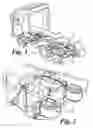
FIG. 1 is a schematic representation of a tractor vehicle of the prior art with twin rear axles;
FIG. 2 shows a part of FIG. 1 to a larger scale, with parts removed for clarity;
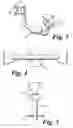
FIG. 3 is a perspective view of a support member for a supplementary airbag;
FIG. 4 is an underneath plan view of FIG. 3;
FIG. 5 is a side elevation of FIG. 3;
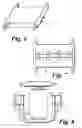
FIG. 6 is a perspective view of the torque box of the vehicle suspension system;
FIG. 7 is an underneath plan view of FIG. 5; and
FIG. 8 shows the assembly of the torque box and supplementary airbag of one embodiment of the invention.
DETAILED DESCRIPTION OF THE ILLUSTRATED EMBODIMENTS
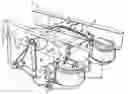
FIG. 1 is a schematic representation of a tractor vehicle 1 with twin rear axles 2, one of which is a driven axle 2 and the other of which is non-driven. As is shown more particularly by FIG. 2, the suspension system is of the type discussed in U.S. Pat. No. 6,527,286, where an axle 2 has airbags 3 forming part of the suspension system, with a torque box 4 also forming part of the suspension system.
In accordance with one embodiment of the invention, at location X indicated in FIG. 2, a support member 5 as shown in FIGS. 3 to 5 is secured by its flanges 6 to the frame members 7 of the tractor vehicle The support member has a mounting plate 8 for a supplementary airbag 9.
As is shown by FIGS. 6 and 7, the torque box 4 is provided on its underside with a mounting frame 10 to which a supplementary airbag can be attached.
Thus, and as is illustrated in FIG. 8, the supplementary airbag 9 is attached by one end to the mounting plate 8 on the support member 5, and by it other end to the mounting frame 10 on the torque box 4.
With this assembly attached to the vehicle frame members 7 at the location indicated at X in FIG. 2, the supplementary airbag when inflated causes the torque box 4 to lift, and as a consequence causes the axle to which the torque box is connected to lift.
When running normally and laden, the supplementary airbag 9 is deflated and the airbags 3 of the vehicle suspension inflated, and when all four road wheels are in ground contact. When partly laden, or running empty or with the tractor vehicle disconnected from the trailer, the airbags 3 of one non-driven axle 2 can be deflated, with inflation of the supplementary airbag 9, to cause the road wheels of the non-driven axle to be lifted clear of the road.
Claims
What is claimed is:1. A vehicle suspension system comprising at least one suspension airbag interposed between a vehicle axle and a vehicle body and a supplementary airbag positioned on a fixed support in the suspension system and extending to a structural member of the suspension system, the arrangement being such that with the suspension airbag inflated and the supplementary airbag deflated, the suspension system operates normally, and with the suspension airbag deflated and the supplementary airbag inflated, the suspension system is lifted with a consequent lifting of the axle, to bring its road wheels clear of the road surface.
2. A vehicle suspension as in claim 1, wherein the structural member is a torque box having a mounting frame.
3. A vehicle suspension system as in claim 1, wherein an axle is attached to an A-frame to assist in the maintenance of an axle in its required position, and the supplementary airbag is positioned below the A-frame in close proximity to the axle, and the A-frame pivotally connected to the vehicle frame, so that as the or each airbag of the suspension system is deflated, the supplementary airbag below the A-frame is inflated, causing the axle to lift and bring its road wheels clear of the road surface.
4. A vehicle suspension system comprising a torque means mounted on and extending between the vehicle structure and an axle, said torque means including a generally box-like structure, at least one suspension airbag located between the vehicle structure and the axle, a support means attached to the vehicle structure and extending below the box-like structure, and a supplementary airbag extending between the support and the box-like structure, the arrangement being such that with a vehicle having a double or triple axle aggregate or bogie, operating conventionally and carrying its load, all wheels on all of the axles are in ground contact, and with e.g. the vehicle running empty or with a load significantly less than the maximum permitted load, at least one axle of a multi-axle aggregate or bogie can be raised, by deflating the suspension airbag or bags and inflating the supplementary airbag, to cause the box-like structure to lift and as a consequence cause the said axle or axles to lift, to bring its wheels clear of the road.
Images & Drawings included:
Sources:
- United States Patent and Trademark Office - verify current appl. status at the USPTO↗
Similar patent applications:
- » 20230150329
Pneumatic control system for vehicle suspension system - » 20210188028
Vehicle suspension system and vehicle - » 20090079145
Damping force generation system and vehicle suspension system constructed by including the same - » 20090134588
Suspension system, vehicle comprising such a suspension system and a method for controlling a suspension system - » 20250135827
VEHICLE SUSPENSION SYSTEM FOR VEHICLE HEIGHT ADJUSTMENT AND CONTROL METHOD THEREFOR - » 20190353561
Method and system for vehicle suspension system - » 20050127634
Arm for a motor-vehicle independent suspension system and a motor-vehicle independent suspension system comprising the arm - » 20060113740
Active roll control system for a vehicle suspension system - » 20050146098
Integrated control unit for an active roll control system for a vehicle suspension system - » 20220371822
Vehicle suspension system, conveyor system, and autonomous vehicles incorporating the same
Recent applications in this class:
- » 20250162365 2025-05-22
SPRING ISOLATOR PAD WITH INTEGRATED SPRING ROTATION STOP AND PAD ROTATION STOP - » 20250153522 2025-05-15
Multi-Link Front Suspension for an Underground Articulated Dump Truck - » 20250135819 2025-05-01
COMPONENT OF SUSPENSION STRUCTURE - » 20250135818 2025-05-01
A-Arms For A Vehicle - » 20250100335 2025-03-27
AN ADJUSTING DEVICE FOR ADJUSTING THE CAMBER ANGLE FOR A SUSPENSION OF A MOTOR VEHICLE - » 20250091398 2025-03-20
Trailing Arm For a Vehicle - » 20250083486 2025-03-13
SPINDLE FOR A RECREATIONAL VEHICLE - » 20250065679 2025-02-27
LOWER CONTROL ARM AND LOWER CONTROL ARM ASSEMBLY - » 20250010674 2025-01-09
Control arm - » 20250001822 2025-01-02
COUPLING ROD AND METHOD FOR PRODUCING SAME
Recent applications for this Assignee:
- » 20200282784 2020-09-10
Bushing with wear pad retainer - » 20190337346 2019-11-07
Heavy-duty vehicle axle/suspension system with optimized damping - » 20190277324 2019-09-12
Body bound shear connection - » 20190061449 2019-02-28
Mechanical down-stop for axle/suspension systems - » 20190054787 2019-02-21
Axle/suspension system with down stop - » 20190054786 2019-02-21
Multi-functional suspension bushing - » 20190047536 2019-02-14
Suspension assembly with disc brake actuator protection - » 20180370565 2018-12-27
Self-steering axle knuckle - » 20180340584 2018-11-29
Hub and rotor assembly - » 20180339550 2018-11-29
Wheel hub for heavy-duty vehicles