High-density multi-layer recording medium and an apparatus for writing to or reading from such a recording medium
US20070195684A1
2007-08-23
11/703,720
2007-02-08
Abstract:
In one embodiment, the recording medium includes a light incident surface and an opposite surface of the light incident surface, a substrate having a transparent layer, and a first recording layer located close to the light incident surface. A second recording layer is located between the first recording layer and the opposite surface. The minimum thickness from the light incident surface to the first recording layer and the maximum thickness from the light incident surface to the second recording layer depend on a refractive index of the transparent layer, and the minimum and maximum thickness have larger values in case that the refractive index of the transparent layer is 1.7 than the refractive index of the transparent layer is 1.6. Furthermore a distance between the first and second recording layers is a value of more than 18.5 μm.
Inventors:
- Seong Yun JEONG 6 🇰🇷 Seoul, South Korea
- Jin Yong KIM 26 🇰🇷 Kyunggi-do, South Korea
- Kyung Chan Park 11 🇰🇷 Seoul, South Korea
Interested in similar patents?
Get notified when new applications in this technology area are published.
Classification:
G11B7/24038 » CPC main
Recording or reproducing by optical means, e.g. recording using a thermal beam of optical radiation , reproducing using an optical beam at lower power ; Record carriers therefor; Record carriers characterised by shape, structure or physical properties, or by the selection of the material; Layers; Shape, structure or physical properties thereof; Recording layers Multiple laminated recording layers
G11B7/24 IPC
Recording or reproducing by optical means, e.g. recording using a thermal beam of optical radiation , reproducing using an optical beam at lower power ; Record carriers therefor Record carriers characterised by shape, structure or physical properties, or by the selection of the material
Description
DOMESTIC PRIORITY INFORMATIONThis is a continuation application of U.S. application Ser. No. 10/793,011 filed Mar. 5, 2004, the entire contents of which are hereby incorporated by reference.
FOREIGN PRIORITY INFORMATIONThis non-provisional application claims priority under 35 U.S.C. §365 to PCT Application No. PCT/KR03/01095, filed on Jun. 4, 2003, in the Korean Intellectual Property Office, which claims Priority on Korean Patent Publication No. 10-2002-0031741 and 10-2002-0031741, both filed on Jun. 5, 2002, in the Korean Intellectual Property Office, the contents of which are hereby incorporated herein by reference in its entirety.
BACKGROUND OF THE INVENTION1. Field of the Invention
The present invention relates to a high-density multi-layer recording medium having first and second recording layers, both of which are positioned between a central plane that bisects the thickness of the recording medium and a light incident surface of the recording medium.
2. Description of the Related Art
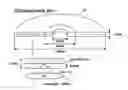
FIG. 1 shows the structure of a conventional DVD (Digital Versatile Disc). As shown in FIG. 1, the DVD 10 has a diameter of 120 mm, a thickness of 1.20 mm and a center hole having a diameter of 15 mm. The DVD 10 also includes a clamping region having a diameter of 44 mm adapted to be clamped by a turntable and damper (not shown) included in a recording medium apparatus arranged and configured to read and/or write a DVD.
The DVD 10 has a recording layer 12, in which data is recorded in a pit pattern. The recording layer 12 of the DVD 10 is positioned at a depth of about 0.60 mm from a disc surface 14 facing an objective lens 1 of an optical pickup device (not shown) included in the recording medium apparatus. The objective lens 1 of the optical pickup device for the DVD 10 typically has a numerical aperture NA of 0.6.
FIG. 2 shows the structure of a high-density single layer DVD. As shown in FIG. 2, the high-density single layer DVD 20, like DVD 10, has a diameter of 120 mm, a thickness of 1.20 mm and a center hole having a diameter of 15 mm. The DVD 20 also includes a clamping region having a diameter of 44 mm adapted to be clamped by a turntable and damper (not shown) included in an recording medium apparatus arranged and configured to read and/or write such a DVD. The high-density single layer DVD 20 has a data recording layer 22, which is positioned at a depth of about 0.1 mm from a disc surface 24 facing an objective lens 2 of an optical pickup device (not shown) included in the recording medium apparatus. The objective lens 2 of the optical pickup device used with the high-density single layer DVD 20 has a numerical aperture NA equal to 0.85, which is a relatively large value in comparison with that of the objective lens 1 used with a conventional DVD 10.
The objective lens 2 of the optical pickup device also utilizes a shorter wavelength laser beam having a wavelength shorter than that used in the DVD 10 for the reproduction or recording of high-density data. That is, for the reproduction or recording of high-density data, the DVD 10 uses a laser beam having a wavelength of 650 nm, whereas the high-density single layer DVD 20 uses a laser beam having a wavelength of 405 nm.
By utilizing the shorter wavelength laser beam, increasing the numerical aperture of the objective lens and positioning the objective lens 2 of the optical pickup device close to the recording layer of the high-density single layer DVD 20, it is possible to form a small beam spot on a pit of high data density by intensively focusing the laser beam and to reduce the thickness of the transparent cover layer that must be traversed by the shorter wavelength laser beam. As a result, the variation of the laser beam's properties and the generation of aberrations can be reduced.
In recent years many companies have developed high-density multi-layer recording media, for example, a high-density multi-layer DVD or high-density multi-layer blu-ray disc (hereinafter referred to as an “high-density multi-layer BD”), as substitutes for the high-density single layer DVD. These high-density multi-layer recording media can record and store a large quantity of video and audio data, as a result of having about twice the capacity of the high-density single layer DVD.
In the case of the high-density multi-layer recording medium as stated above, however, there is no way to restrict the level of WFA (wave front aberration) effectively. Wave front aberration is inevitably generated both as a result of spherical aberrations produced by variations in the material thickness between the light incident surface of the recording medium and respective recording layers and as a result of coma aberrations resulting from the tilt of the objective lens included in the optical pickup device.
SUMMARY OF THE INVENTIONThe present invention relates to a high-density recording medium.
In one embodiment, the recording medium includes a light incident surface and an opposite surface of the light incident surface, a substrate having a transparent layer, and a first recording layer located close to the light incident surface. A second recording layer is located between the first recording layer and the opposite surface. The minimum thickness from the light incident surface to the first recording layer and the maximum thickness from the light incident surface to the second recording layer depend on a refractive index of the transparent layer, and the minimum and maximum thickness have larger values in case that the refractive index of the transparent layer is 1.7 than the refractive index of the transparent layer is 1.6. Furthermore, a distance between the first and second recording layers is a value of more than 18.5 μm.
The present invention further relates to an apparatus for recording or reproducing to or from an optical recording medium. In one embodiment, the apparatus includes an optical pickup for recording or reproducing a data to or from the optical recording medium, and a controller controlling the pickup to record or reproduce data to or from the first and second recording layer of the optical recording medium the recording medium includes a light incident surface and an opposite surface of the light incident surface, a substrate having a transparent layer, and a first recording layer located close to the light incident surface. A second recording layer is located between the first recording layer and the opposite surface. The minimum thickness from the light incident surface to the first recording layer and the maximum thickness from the light incident surface to the second recording layer depend on a refractive index of the transparent layer, and the minimum and maximum thickness have larger values in case that the refractive index of the transparent layer is 1.7 than the refractive index of the transparent layer is 1.6. Furthermore, a distance between the first and second recording layers is a value of more than 18.5 μm.
BRIEF DESCRIPTION OF THE DRAWINGSThe features and other advantages of the present invention will be more clearly understood from the following detailed description taken in conjunction with the accompanying drawings, in which:
FIG. 1 shows the structure of a conventional DVD;
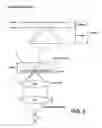
FIG. 2 shows the structure of a conventional high-density single layer DVD;
FIG. 3 shows the example structure of an exemplary embodiment of high-density multi-layer recording medium according to the present invention;
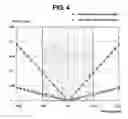
FIG. 4 is a graph for comparing variations in wave front aberration resulting from spherical aberrations due to variations in the material thickness between the light incident surface and the recording layers in the high-density multi-layer recording medium;
FIG. 5 shows the structure of an exemplary embodiment of a high-density multi-layer recording medium in accordance with the present invention;
FIGS. 6A to 6C are graphs for comparing variations in wave front aberration resulting from coma errors caused by the tilt of an objective lens with spherical aberrations caused by variations in the material thickness between the light incident surface and the recording layers in the high-density multi-layer recording medium;
FIG. 7 is a graph showing the range of the material thicknesses between the light incident surface of the recording medium and the first and second recording layers that may be utilized in a high-density multi-layer recording medium according to an exemplary embodiment of the present invention; and
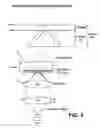
FIG. 8 shows the structure of a high-density multi-layer recording medium in accordance with an exemplary embodiment of the present invention.
DETAILED DESCRIPTION OF EXEMPLARY EMBODIMENTSAs illustrated in FIG. 3, a conventional high-density multi-layer DVD 30 has a diameter of 120 mm, a thickness of 1.20 mm and a center hole having a diameter of 15 mm. DVD 30 also includes a clamping region having a diameter of 44 mm that is adapted to be clamped by a turntable and damper (not shown) included in an recording medium apparatus. The high-density multi-layer DVD 30 comprises a first recording layer 32a, which is formed in the same general manner as the recording layer of a general high-density single layer DVD, and a second recording layer 32b spaced apart from the first recording layer by a distance of 0.02 mm. In detail, as shown in FIG. 3, the first recording layer 32a of the high-density multi-layer DVD 30 is positioned at a depth of 0.10 mm from a disc surface 34 that faces an objective lens 3 of an optical pickup device included in the recording medium apparatus, and the second recording layer 32b is positioned at a depth of 0.12 mm from the disc surface.
The objective lens 3 of the optical pickup device for the high-density multi-layer recording medium 30 has a numerical aperture (“NA”) of 0.85 and utilizes a laser device 5 and a collimator lens 4 to produce a light beam having a wavelength of 405 nm for the reproduction or recording of high-density data in the first and second recording layers, in much the same manner as the high-density single layer DVD 20.
Where the optical pickup device adopting the numerical aperture of 0.85 and the wavelength of 405 nm is used to reproduce or record data in the recording layers, a de-focusing margin (“DFM”) due to the material thickness between the light incident surface of the recording medium and the recording layers is reduced considerably according to equation (1):
DFM
=
λ
(
NA
)
4
Δ
t
(
1
)
where λ is the wavelength in nanometers, NA is the numerical aperture, and At is the variation in the thickness of the material of the cover layer arranged between the light incident surface of the recording medium and the recording layers.
It should be noted that increasing the numerical aperture of the objective lens and decreasing the wavelength both tend to reduce the DFM resulting from the same magnitude of variation in the material thickness when compared with a conventional DVD. This reduction in the DFM ultimately acts to increase system noise. Conversely, an arrangement in which the first recording layer is formed 0.10 mm from the light incident surface of the recording medium and second recording layer is formed 0.08 mm from the surface of the substrate, will tend to increase the DFM when compared with a configuration in which the first recording layer is formed at a depth of 0.10 mm and the second recording layer is formed at a depth of 0.12 mm. Also, in addition to the DFM, the spherical aberration, the coma aberration and the resulting WFA must be considered when positioning the recording layers with respect to the recording medium surface.
Assuming that the material thickness between the light incident surface of the recording medium and the first recording layer is 0.10 mm and the WFA of a beam spot formed on the first recording layer is zero, the WFA will vary with the thickness between the light incident surface of the recording medium and the second recording layer as shown in the graph of FIG. 4. For example, where the thickness between the light incident surface of the recording medium and the second recording layer has a nominal value of 0.08 mm or 0.12 mm, the WFA will have a value of about 0.18 λrms.
In general, however, total aberration should typically not exceed about 0.075 λrms in order to maintain a sufficiently low error rate for the optical system, a level that will be used hereinafter as the general upper limit for total aberration for exemplary embodiments of the invention. As reflected in FIG. 4, when the thickness between the second recording layer and the substrate surface is less than 0.08 mm or greater than 0.12 mm, the WFA exceeds the upper limit of 0.075 λrms that has been established for an actual system.
As stated above, when the thickness from the light incident surface of the recording medium to the respective first and second recording layers are set at 0.10 mm and 0.12 mm, respectively, or set at 0.10 mm and 0.08 mm, respectively, the resulting WFA is about 0.18 λrms, a level that is generally unacceptable for satisfactory operation of a typical system. Several methods are available for reducing the WFA including the use of an accurately positioned collimator lens 4 in the recording medium apparatus, as illustrated in FIG. 5, or installing an additional liquid crystal device (not shown) or similar device in the recording medium apparatus. Such methods tend to reduce the WFA to about 0.045 λrms when the thickness between the light incident surface of the recording medium and the second recording layer is 0.08 mm or 0.12 mm.
FIG. 5 shows the structure of a high-density multi-layer recording medium in accordance with an exemplary embodiment of the present invention in which the high-density multi-layer recording medium 40, has first 42a and second 42b recording layers. The first thickness t1 from the light incident surface 44 of the recording medium to the first recording layer 42a corresponds to a value obtained by subtracting half the distance between the first and second recording layers 42a, 42b from the thickness from the light incident surface 24 of a recording medium to a recording layer 22 in a conventional high-density single layer recording medium as illustrated in FIG. 2. The second thickness t2 from the light incident surface 44 of the recording medium to the second recording layer 42b corresponds to a value obtained by adding half the distance between the first and second recording layers 42a, 42b to the thickness from the light incident surface of the recording medium to the recording layer in the conventional high-density single layer recording medium 20.
High-density multi-layer DVDs or high-density multi-layer BDs according to the exemplary embodiments of the present invention will typically have a diameter of 120 mm, a thickness of 1.2 mm and a center hole having a diameter of 15 mm, as well as a clamping region having a diameter of 44 mm that is adapted to be clamped by a turntable and damper (not shown) included in an recording medium apparatus. The exemplary high-density multi-layer DVD 40 according to the present invention includes a first recording layer positioned 0.09 mm from the disc surface 44 facing an objective lens 3 of an optical pickup device included in the recording medium apparatus, and a second recording layer positioned 0.11 mm from the disc surface facing the objective lens 3 of the optical pickup device.
Applying the conditions as stated above regarding the data presented in FIG. 4, when the first and second thicknesses t1 and t2, measured from the light incident surface of the recording medium to the first and second recording layers respectively, are set at 0.09 mm and 0.11 mm, the resulting WFA is about 0.08 λrms, a level very close to the upper limit of 0.075 λrms that has been found acceptable in actual systems. Furthermore, by finely regulating the positioning of a collimator lens 4 and the installation of an additional compensating liquid crystal device, the wave front aberration may be reduced to about 0.025 λrms. In this way, the generation of the wave front aberration due to the substrate thickness from the light incident surface of the recording medium to the recording layers can be reduced effectively.
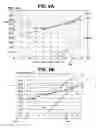
FIGS. 6A to 6C are graphs for comparing the variation in WFA resulting from the tilt of the objective lens, i.e., coma aberration, with that the aberration resulting from variations in the thickness from the light incident surface of the recording medium to recording layers in the high-density multi-layer recording medium, i.e., spherical aberration. As reflected in FIGS. 6A to 6C, the spherical aberration produced by variations in the thickness between the light incident surface of a recording medium (i.e., a cover layer) and the recording layers, assuming a 0° tilt, or tilt angle, for the objective lens included in an optical pickup device is plotted as the line {circle around (1)} in each of FIGS. 6A to 6C. As used herein, the terms tilt, lens tilt or tilt angle refer to the angular deviation between the axis of an incident beam or an objective lens and an axis perpendicular to a reference plane within the disc. A tilt angle of 0° or a no-tilt state, therefore, indicates that the incident beam or the axis of the lens is perpendicular to the reference plane.
A coma aberration, resulting from an objective lens of the optical pickup device that has a tilt angle of less than 0.6°, is plotted as the line {circle around (2)} in each of FIGS. 6A to 6C. A wave front aberration generated all over the recording medium resulting from the combination of the spherical aberration and coma aberration is reflected in the line plotted as {circle around (3)} in each of FIGS. 6A to 6C. FIGS. 6A to 6C also include line {circle around (1)}, which is generated by applying the graph shown in FIG. 4, with {circle around (2)} being obtained from equation (2):
{circle around (2)}=t((n2−1)/(2n2))NA3α (2)
where t is the thickness in Am, n is the Refractive Index, NA is the numerical aperture of the objective lens and a is angle of lens tilt, in degrees.
As a general rule, because typical optical systems will have a maximum amount of tilt of no more than about 0.6°, this angle value is used to compute the coma aberration, allowing the WFA {circle around (3)} to be calculated according to equation 3:
{circle around (3)}=√{square root over ({circle around (1)}2+{circle around (2)}2 (3)
where {circle around (1)} is the spherical aberration produced by a variation in the material thickness from the light incident surface of a recording medium to recording layers under a no-tilt state of an objective lens and {circle around (2)} is the coma aberration produced under a tilt angle of no more than 0.6°.
Therefore, as shown in FIG. 6A, the thickness from the light incident surface of the recording medium to respective first and second recording layers has to be set within a range of about 70 μm to 108 μm in order to obtain a WFA of no more than 0.075 λrms. The range in values for these thicknesses is a function of the Refractive Index of the transparent material comprising the cover layer and space layer, both of which, in this instance, have been assumed to be 1.60. As reflected in FIG. 6B, a refractive index of 1.45 requires that the range of thickness from the light incident surface of the recording medium to respective first and second recording layers has to be set within a range of about 68.5 μm to 106.5 μm in order to obtain a WFA of no more than about 0.075 λrms. And finally, as reflected in FIG. 6C, for a refractive index of 1.70, the thickness from the light incident surface of the recording medium to respective first and second recording layers has to be set within a range of about 71.4 μm to 110.5 μm in order to obtain a WFA of no more than about 0.075 λrms.
FIG. 7 is a graph showing the range of the thickness between the light incident surface of a recording medium and the first and second recording layers applicable to exemplary embodiments of high-density multi-layer recording mediums in accordance with the present invention. As shown in FIGS. 6A to 6C, the target range for substrate thickness varies in accordance with the refractive index of the recording medium. For example, where the refractive index of the materials used to form the cover and space layers is 1.60, the thicknesses t1 and t2 should be between 70 μm to 108 μm respectively in order not to exceed the maximum wave front aberration value of 0.075 λrms.
Similarly, when the refractive index of the material(s) is 1.45, the corresponding thickness range will be about 68.5 μm to 106.5 μm and, when the refractive index is 1.70, the corresponding thickness range will be about 71.4 μm to 110.5 μm, in order to obtain a maximum WFA of less than 0.075 λrms. Thus, for indices of refraction between 1.45 and 1.70, the distance from the light incident surface of the recording medium to the first recording layer will be in a range of about 106.5 to 110.5 μm, and the distance from the light incident surface of the recording medium to the second recording layer will be in a range of about 68.5 to 71.4 μm.
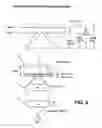
FIG. 8 illustrates the structure of the high-density multi-layer recording medium in accordance with the exemplary embodiments of the present invention, with the material thickness between the light incident surface of the recording medium and the first recording layer having a minimum value of 70 μm, the material thickness between the light incident surface of the recording medium and the second recording layer having a maximum value of 108 μm and the distance separating the first and second recording layers being within a range of 22 μm±8 μm, 25±5 μm, or, more preferably, 19 μm±5 μm.
The minimum t1 value and the maximum t2 values associated with the positioning of the first and second recording layers from the light incident surface of the recording medium have an average value of 89 μm ((70 μm+108 μm)/2). However, when the first recording layer is positioned at the minimum depth of 70 μm, the second recording layer will be positioned at a nominal depth of 89 μm to maintain the desired 19 μm spacing between the two recording layers. Similarly, when the second recording layer is positioned at a depth of 108 μm, the first recording layer will be positioned at a nominal depth of 89 μm to maintain the desired 19 μm spacing between the layers. Considering the manufacturing capabilities of conventional systems, it is believed that the first and second layers can be positioned with an accuracy on the order of ±5 μm from the light incident surface. In light of the expected accuracy of the manufacturing process, an exemplary embodiment of the invention will have first target thickness of 79.5 μm±5 μm, a second target thickness of 98.5 μm±5 μm, and a target separation thickness of 19 μm±5 μm, as indicated on FIG. 8. As will be appreciated, improvements in the manufacturing process may allow for more accurate positioning of the respective recording layers and a corresponding reduction in the variability allowed in the target thicknesses and/or the target separation thickness.
The configuration of a high-density multi-layer recording medium according to the exemplary embodiments of the invention permit a reduction in the WFA resulting from both the spherical aberration and the coma aberration. This reduction in WFA will improve the accuracy of the read and/or write processes utilizing such high-density multi-layer recording mediums. Although the preferred embodiments of the present invention have been disclosed for illustrative purposes, those skilled in the art will appreciate that various modifications, additions and substitutions are possible, without departing from the scope and spirit of the invention as disclosed in the accompanying claims.
Claims
We claim:1. A high-density recording medium, comprising:
a light incident surface of the recording medium and an opposite surface of the light incident surface;
a substrate including a transparent layer;
a first recording layer being located closed to the light incident surface; and
a second recording layer being located between the first recording layer and the opposite surface,
wherein the minimum thickness from the light incident surface to the first recording layer and the maximum thickness from the light incident surface to the second recording layer depend on a refractive index of the transparent layer and the minimum and maximum thickness have larger values in case that the refractive index of the transparent layer is 1.7 than the refractive index of the transparent layer is 1.6, and distance between the first and second recording layers is a value of more than 18.5 μm.
2. A high-density optical disc of claim 1, wherein distance between the first and second recording layers is less than 19.5 μm.
3. A high-density optical disc of claim 1, wherein the minimum and maximum thickness have the minimum values when the refractive index of the transparent layer is 1.45
4. A high-density optical disc of claim 3, wherein the minimum thickness has a value of more than 68.51 μm.
5. A high-density optical disc of claim 4, wherein the maximum thickness has a value of less than 110.5 μm
6. An apparatus for recording or reproducing to or from an optical recording medium, comprising:
an optical pickup recording or reproducing a data to or from the optical recording medium,
a controller controlling the pickup to record or reproduce data to or from the first and second recording layer of the optical recording medium;
wherein recording medium includes a light incident surface of the recording medium, an opposite surface of the light incident surface;
a substrate including a transparent layer;
a first recording layer being located closed to the light incident surface; and
a second recording layer being located between the first recording layer and the opposite surface, further wherein
the minimum thickness from the light incident surface to the first recording layer and the maximum thickness from the light incident surface to the second recording layer depend on a refractive index of the transparent layer and the minimum and maximum thickness have larger values in case that the refractive index of the transparent layer is 1.7 than the refractive index of the transparent layer is 1.6, and distance between the first and second recording layers is a value of more than 18.5 μm.
7. An apparatus of claim 6, wherein a distance between the first and second recording layers is a value of less than 19.5 μm
8. An apparatus of claim 6, wherein the minimum and maximum thickness have the minimum values when the refractive index of the transparent layer is 1.45
9. An apparatus of claim 8, wherein the minimum thickness has a value of more than 68.5 μm.
10. An apparatus of claim 9, wherein the maximum thickness has a value of less than 110.5 μm.
11. A high-density recording medium, comprising:
a light incident surface of the recording medium and an opposite surface of the light incident surface;
a substrate including a transparent layer;
a first recording layer being located closed to the light incident surface; and
a second recording layer being located between the first recording layer and the opposite surface,
wherein the first thickness from the light incident surface to the first recording layer is no less than a first value and the second thickness from the light incident surface to the second recording layer is no more than a second value, the first value and the second values depend on a refractive index of the transparent layer, the first value and the second values have a larger value in case that the refractive index of the transparent layer is 1.7 than the refractive index of the transparent layer is 1.6, and distance between the first and second recording layers is a value of more than 18.5 μm.
Images & Drawings included:


Sources:
- United States Patent and Trademark Office - verify current appl. status at the USPTO↗
Recent applications in this class:
- » 20240161779 2024-05-16
Method of producing multilayer optical recording medium and device for producing multilayer optical recording medium - » 20240055020 2024-02-15
OPTICAL STORAGE MEDIUM - » 20220415351 2022-12-29
Optical storage medium - » 20220068306 2022-03-03
OPTICAL INFORMATION STORAGE MEDIUM - » 20210166728 2021-06-03
Information storage medium having multiple recording layers - » 20190214048 2019-07-11
Optical information storage medium - » 20180047423 2018-02-15
Optical recording medium - » 20170270959 2017-09-21
Optical disc recording medium suitable for use in stacked manner - » 20160343398 2016-11-24
MULTI-STACK OPTICAL STORAGE MEDIU - » 20160336035 2016-11-17
Optical information storage medium