Method of amidocarbonylation reaction
US20070197765A1
2007-08-23
10/592,138
2005-03-10
✅ Patent granted
US 7,732,638 B2
2010-06-08
WO; PCT/JP2005/004715; 20050310
WO; WO2005/085180; 20050915
Daniel M Sullivan | Yevegeny Valenrod
2027-04-07
Abstract:
A novel method of an amidocarbonylation reaction among an aldehyde compound, an amide compound, and carbon monoxide, which comprises using a palladium-supporting crosslinked-polymer composition containing palladium clusters having a major-axis length of 20 nm or shorter to conduct the amidocarbonylation reaction. Thus, an N-acyl-α-amino acid can be more efficiently and selectively synthesized in a dean reaction system. Also provided is a catalyst for use in the method.
Assignee:
- Japan Science and Technology Agency 722 🇯🇵 Saitama, Japan
Interested in similar patents?
Get notified when new applications in this technology area are published.
Classification:
C07C231/12 » CPC further
Preparation of carboxylic acid amides by reactions not involving the formation of carboxamide groups
B01J31/06 » CPC further
Catalysts comprising hydrides, coordination complexes or organic compounds containing organic compounds or metal hydrides containing polymers
C08F12/22 » CPC further
Homopolymers and copolymers of compounds having one or more unsaturated aliphatic radicals, each having only one carbon-to-carbon double bond, and at least one being terminated by an aromatic carbocyclic ring; Monomers containing only one unsaturated aliphatic radical containing one ring substituted by hetero atoms or groups containing heteroatoms Oxygen
C08F12/26 » CPC further
Homopolymers and copolymers of compounds having one or more unsaturated aliphatic radicals, each having only one carbon-to-carbon double bond, and at least one being terminated by an aromatic carbocyclic ring; Monomers containing only one unsaturated aliphatic radical containing one ring substituted by hetero atoms or groups containing heteroatoms Nitrogen
C07C273/1854 » CPC further
Preparation of urea or its derivatives, i.e. compounds containing any of the groups, the nitrogen atoms not being part of nitro or nitroso groups of substituted ureas by reactions not involving the formation of the N-C(O)-N- moiety
C08F212/22 » CPC further
Copolymers of compounds having one or more unsaturated aliphatic radicals, each having only one carbon-to-carbon double bond, and at least one being terminated by an aromatic carbocyclic ring; Monomers containing only one unsaturated aliphatic radical containing one ring substituted by heteroatoms or groups containing heteroatoms Oxygen
C08F212/26 » CPC further
Copolymers of compounds having one or more unsaturated aliphatic radicals, each having only one carbon-to-carbon double bond, and at least one being terminated by an aromatic carbocyclic ring; Monomers containing only one unsaturated aliphatic radical containing one ring substituted by heteroatoms or groups containing heteroatoms Nitrogen
B01J2531/0211 » CPC further
Additional information regarding catalytic systems classified in; Compositional aspects of complexes used, e.g. polynuclearity; Polynuclearity Metal clusters, i.e. complexes comprising 3 to about 1000 metal atoms with metal-metal bonds to provide one or more all-metal (M)n rings, e.g. Rh(CO)
C07C2601/14 » CPC further
Systems containing only non-condensed rings with a six-membered ring The ring being saturated
C08F8/42 » CPC further
Chemical modification by after-treatment Introducing metal atoms or metal-containing groups
C08F212/08 » CPC main
Copolymers of compounds having one or more unsaturated aliphatic radicals, each having only one carbon-to-carbon double bond, and at least one being terminated by an aromatic carbocyclic ring; Monomers containing only one unsaturated aliphatic radical containing one ring; Hydrocarbons Styrene
C07C233/84 » CPC further
Carboxylic acid amides having carbon atoms of carboxamide groups bound to carbon atoms of six-membered aromatic rings having the nitrogen atom of at least one of the carboxamide groups bound to a carbon atom of a hydrocarbon radical substituted by carboxyl groups with the substituted hydrocarbon radical bound to the nitrogen atom of the carboxamide group by an acyclic carbon atom of a saturated carbon skeleton containing rings
C08G2/00 IPC
Addition polymers of aldehydes or cyclic oligomers thereof or of ketones; Addition copolymers thereof with less than 50 molar percent of other substances
C08G67/02 IPC
Macromolecular compounds obtained by reactions forming in the main chain of the macromolecule a linkage containing oxygen or oxygen and carbon, not provided for in groups - Copolymers of carbon monoxide and aliphatic unsaturated compounds
C07C231/10 IPC
Preparation of carboxylic acid amides from compounds not provided for in groups -
C07C233/47 » CPC further
Carboxylic acid amides having carbon atoms of carboxamide groups bound to hydrogen atoms or to acyclic carbon atoms having the nitrogen atom of at least one of the carboxamide groups bound to a carbon atom of a hydrocarbon radical substituted by carboxyl groups with the substituted hydrocarbon radical bound to the nitrogen atom of the carboxamide group by an acyclic carbon atom having the carbon atom of the carboxamide group bound to a hydrogen atom or to a carbon atom of an acyclic saturated carbon skeleton
C07C233/82 IPC
Carboxylic acid amides having carbon atoms of carboxamide groups bound to carbon atoms of six-membered aromatic rings having the nitrogen atom of at least one of the carboxamide groups bound to a carbon atom of a hydrocarbon radical substituted by carboxyl groups with the substituted hydrocarbon radical bound to the nitrogen atom of the carboxamide group by an acyclic carbon atom
C07C275/18 » CPC further
Derivatives of urea, i.e. compounds containing any of the groups , the nitrogen atoms not being part of nitro or nitroso groups having nitrogen atoms of urea groups bound to acyclic carbon atoms of a saturated carbon skeleton containing rings
C07B61/00 IPC
Other general methods
C08L25/02 IPC
Compositions of, homopolymers or copolymers of compounds having one or more unsaturated aliphatic radicals, each having only one carbon-to-carbon double bond, and at least one being terminated by an aromatic carbocyclic ring; Compositions of derivatives of such polymers Homopolymers or copolymers of hydrocarbons
C08L29/10 IPC
Compositions of homopolymers or copolymers of compounds having one or more unsaturated aliphatic radicals, each having only one carbon-to-carbon double bond, and at least one being terminated by an alcohol, ether, aldehydo, ketonic, acetal or ketal radical; Compositions of hydrolysed polymers of esters of unsaturated alcohols with saturated carboxylic acids; Compositions of derivatives of such polymers Homopolymers or copolymers of unsaturated ethers
Description
TECHNICAL FIELDThe present invention relates to a novel method of an amidocarbonylation reaction that enables to recover and reuse a catalyst and can efficiently and according to a clean reaction system synthesize an amino acid compound that is important as one having various kinds of functions such as bioactivities or the like, and a catalyst therefor.
BACKGROUND ARTIn a so-called Strecker reaction where from an aldehyde compound, ammonia and hydrogen cyanide α-amino nitrile is obtained, when α-amino nitrile that is a product is hydrolyzed, α-amino acid can be readily obtained. Accordingly, the Strecker reaction has long been used in a synthesis process of α-amino acid. However, there are problems in that high toxicity of a cyanide compound that is a raw material and an ammonium salt generated according to a hydrolysis reaction of α-amino nitrile have to be disposed of On the other hand, a so-called amidocarbonylation reaction where, from an aldehyde compound, an amide compound and carbon monoxide, N-acyl-α-amino acid is synthesized has many advantages over the Strecker reaction in that carbon monoxide lower in the toxicity than hydrogen cyanide is used, all raw materials are contained in a product (N-acyl-α-amino acid) to be an atom-economically highly efficient reaction, and furthermore according to a hydrolysis reaction not only an acyl group on nitrogen can be removed and converted into an α-amino acid but also the acyl group can be recovered as carboxylic acid and converted into a corresponding amide to enable to reuse as a raw material. In 1971, Wakamatsu et al found a method of carrying out an amidocarbonylation reaction having such excellent features under pressure of carbon monoxide/hydrogen with cobalt carbonyl that is a transition metal catalyst (non-patent literature 1, patent literature 1).
The Wakamatsu's method generally necessitates high-temperature and high-pressure conditions. On the other hand, in 1997, Beller et al reported an amidocarbonylation reaction that uses a palladium catalyst and a lithium bromide-sulfuric acid cocatalyst (non-patent literature 2, patent literature 2). This is an efficient reaction that does not necessitate hydrogen and can proceed under a lower catalyst amount, a lower carbon monoxide pressure and a lower temperature. Furthermore, Beller et al later reported of the catalyst activities of rhodium, iridium and ruthenium complexes under similar conditions (patent literature 3). Furthermore, more recently, the inventors of the present application found an amidocarbonylation reaction with a platinum catalyst (non-patent literature 3).
On the other hand, from a viewpoint of the organic synthetic chemistry, one of the most useful catalysts is a palladium catalyst. The polymer immobilization thereof has been studied for relatively long periods and many immobilized palladium catalysts have been developed. However, in many of so far developed polymer-immobilized catalysts, since a polymer and a metal portion that is an active center is connected with a ligand, though excellent in the stability, the activity of the catalyst itself is largely affected, and in many cases there is a problem in that the catalyst activity is lowered than that of a corresponding homogeneous system catalyst. Under such circumstances, the inventors of the application have developed a microencapsulated catalyst as a novel polymer-immobilized catalyst. The microencapsulated catalyst immobilizes a metal on a polymer by making use of a physical or an electrostatic interaction, consequently, the catalyst activity rivaling to or exceeding that of the homogeneous catalyst can be expected.
In actuality, the inventors have already developed a microencapsulated Lewis-acid catalyst, a microencapsulated osmium catalyst and a microencapsulated transition metal catalyst (palladium, ruthenium) and have reported that these catalysts worked effectively in various organic synthesis reactions (non-patent literature 4). However, since polystyrene hitherto used as a polymer carrier is dissolved with a reaction solvent in some cases, there is a problem in that the applications thereof are restricted. In this connection, the inventors studied to overcome the problem and developed a palladium catalyst having a novel configuration named as “a polymer Carcerand type (Polymer Incarcerated (PI)) catalyst (non-patent literature 5). In the catalyst, palladium is immobilized to a polymer (1) having an epoxy group and a hydroxyl group on a side chain as shown for instance with a formula below.
More specifically, as shown in a formula below, firstly, palladium is carried or contained by a polymer according to a microencapsulation method, followed by heating under a non-solvent condition to crosslink polymers to render a palladium catalyst that is insoluble in an ordinary solvent. The catalyst effectively worked in a hydrogenation reaction of olefins and an allylic substitution reaction and generated in all cases a corresponding product at a high yield. Furthermore, in all cases, it is confirmed that palladium did not elute off and the catalyst could be recovered and reused.
In this connection, the inventors have studied to make use of features of the novel palladium catalyst as mentioned above to realize the amidocarbonylation reaction method more efficiently and in a clean reaction system.
However, when, according to the report of Beller et al, with NMP (1-methyl-2-pyrolidinone) as a solvent, by use of the above-mentioned novel palladium catalyst: PI Pd (2), a reaction according to a formula below was tried, a yield of N-acyl-α-amino acid of only 9% or less was obtained. In the case of a dioxane solvent, the yield was only several percent.
Non-patent literature 1: J. Chem. Soc., Chem. Commun., 1971, 1540
Non-patent literature 2: Angen. Chem. Int, Ed., 1997, 36, 1540
Non-patent literature 3: Chem. Lett., 2003, 160
Non-patent literature 4: (a) J. Am Chem. Soc., 1998, 120, 2985. (b) J. Org. Chem., 1998, 63, 6094. (c) J. Am. Chem. Soc., 1999, 121, 11229. (d) Org. Lett., 2001, 3, 2649. (e) Angew. Chem., Int. Ed, 2001, 40, 3469. (f) Angew. Chem., Int. Ed., 2002, 41, 2602. (g) Chem. Commun, 2003, 449
Non-patent literature 5: J. Am. Chem. Soc., 2003, 125, 3412
Patent literature 1: DE-B 2115985 (1971)
Patent literature 2: DE-B 19627717 (1996)
Patent literature 3: DE 100 12251 A1 (1999)
DISCLOSURE OF INVENTIONThe present invention, from the above-mentioned background, intends to provide a novel method of an amidocarbonylation reaction that, by taking advantages of features of the PI palladium catalyst that the inventors have developed and by further improving and developing the catalyst, can more efficiently and selectively carry out an amidocarbonylation reaction that enables to synthesize N-acyl-α-amino acid in a clean reaction system.
The application provides inventions below as one that overcomes the above problems
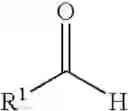
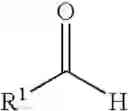
- [1] A method of amidocarbonylation reaction where an aldehyde compound represented by a formula below
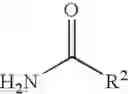
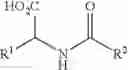
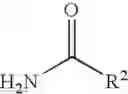
(R1 in the formula expresses a hydrogen atom or a hydrocarbon group that may have a substitution group) is reacted with carbon monoxide and an amide compound represented by a formula below
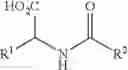
(R2 in the formula expresses a hydrocarbon group that may have a substitution group) to synthesize an amino acid compound represented by a formula below
(R1 and R2 in the formula are same as those shown above), characterized in that, in a reaction system, a palladium-supported crosslinked polymer composition containing palladium clusters having a major axis of 20 nm or less is present. - [2] The method of an amidocarbonylation reaction, characterized in that the palladium-supported crosslinked polymer composition is one that is obtained when a microcapsule containing palladium clusters is subjected to a crosslinking reaction.
- [3] An amidocarbonylation reaction that uses a palladium-supported crosslinked polymer composition, characterized in that a microcapsule is made of a copolymer that includes a hydrophobic portion made of an aromatic group, an epoxy group and a hydrophilic portion that reacts with an epoxy group.
- [4] The method of an amidocarbonylation reaction characterized in that the carried palladium has zero valence.
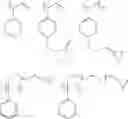
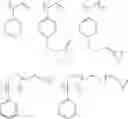
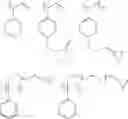
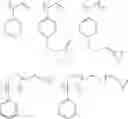
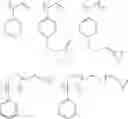
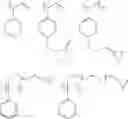
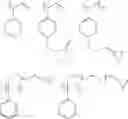
- [5] A method of an amidocarbonylation reaction, characterized in that a polymer palladium catalyst is one that is obtained by immobilizing palladium in a copolymer of monomers containing styrene compounds represented by formulas (1), (2) and (3) below.
(In the formula, RX and RY represent a hydrogen atom or a substitution group shown in a formula 1a, at least one of these showing at least one kind showing a hydrogen atom, n showing an integer of 0 to 6, m showing an integer of 1 to 6, 1 showing an integer of 0 to 10, Ra showing a hydrogen atom or a hydrocarbon group that may have a substitution group, Rb showing a hydrocarbon group that may have a substitution group, and furthermore Ra and Rb may combine with each other to form a lactam ring.) - [6] A method of an amidocarbonylation reaction, characterized in that a copolymer is represented by a formula below.
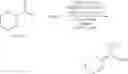
(In the formula, v/w/x/y/z is 0 to 90/3 to 80/0 to 20/3 to 20/0 to 20 and x and z are not zero.)
The invention according to the application has features as mentioned above. In what follows, embodiments thereof will be described below.
Firstly, raw materials for an amidocarbonylation reaction that synthesizes N-acyl-α-amino acid are an aldehyde compound, an amide compound and carbon monoxide (CO). As to the aldehyde compound, a symbol R1 in the formula is a hydrogen atom or a hydrocarbon group that may have a substitution group, and a symbol R2 of the amide compound is a hydrocarbon group that may have a substitution group.
Here, the hydrocarbon group may be any one of various kinds such as an aliphatic hydrocarbon group, an alicyclic hydrocarbon group and an aromatic hydrocarbon group and may be saturated one or unsaturated one. Furthermore, the hydrocarbon group may form a ring through a different kind of atom (O, N, S or the like).
Furthermore, the substitution groups of the hydrocarbon groups, as far as these do not disturb the amidocarbonylation reaction, may be appropriately selected. Various kinds such as an alkoxy group, a nitro group, a heterocyclic group and so on may be considered.
A ratio of the aldehyde compound and the amide compound used as the raw materials, though not particularly restricted, is normally set preferably in the range of substantially 0.1 to 10 by mole ratio and more preferably in the range of 0.3 to 3. The carbon monoxide (CO), though not particularly restricted, is generally introduced in a reaction system under a pressure condition of substantially 10 to 80 atm.
In a reaction system of the amidocarbonylation reaction, a polymer palladium catalyst according to the invention of the application is contained. The polymer palladium catalyst is characterized as a palladium-supported crosslinked polymer composition containing palladium dusters having a major axis of 20 nm or less.
The palladium-supported crosslinked polymer composition, though not particularly restricted in the preparation thereof, is more preferably, for instance, one that is obtained by crosslinking microcapsules containing palladium clusters. In this case, various configurations of the microcapsules as well may be considered. However, preferably, a microcapsule made of a copolymer containing a hydrophobic portion made of an aromatic group, an epoxy group and a hydrophilic portion that reacts with an epoxy group can be cited.
As more preferable ones of the polymer palladium compositions, ones where palladium is immobilized to a copolymer of monomers that contain styrene and a styrene derivative represented as shown by formulas (1), (2) and (3) can be cited.
In the formula (1), RX and RY in the formula are a hydrogen atom or a substitution group shown with a formula 1a, at least one of these showing at least one kind showing a hydrogen atom, n showing an integer of 0 to 6. Furthermore, in the formulas (2) and (3), m shows an integer of 1 to 6, 1 showing an integer of 0 to 10, Ra showing a hydrogen atom or a hydrocarbon group that may have a substitution group, Rb showing a hydrocarbon group that may have a substitution group, and furthermore Ra and Rb may combine with each other to form a lactam ring.
Furthermore, in the amide group of the formula (2), from viewpoints of the stability and the catalytic ability, Ra and Rb are more preferably one that bonds with a nitrogen atom to form a ring.
More specifically, when preferable examples are shown, the copolymers are, as shown above, ones that are represented with following formulas.
(In the formula, v/w/x/y/z is 0 to 90/3 to 80/0 to 20/3 to 20/0 to 20 and x and z are not zero.)
An average molecular weigh of the polymer thereof is generally in the range of 5,000 to 150,000 by weight average molecular weight (Mw) and more preferably in the range of 15,000 to 100,000.
In order to suppress the immobilized palladium from eluting off and to make it insoluble in an ordinary solvent as well, in the polymer palladium catalyst according to the invention of the application, a heating process is effectively applied to forward the crosslinking.
Furthermore, unit coefficients w, x, y and z of the unit configurations such as shown above are as well determined from viewpoints of the stability of the palladium immobilization and the catalytic ability.
For instance, the polymer palladium catalyst according to the invention such as shown above can be prepared similarly to, for instance, a method that the inventors have proposed (non-patent literature 5). For instance, a process shown in a formula below can be cited.
In general, in dissolution when for instance a process of microencapsulation is applied,
- polar good solvent: THF, dioxane, acetone, DMF, NMP and so on,
- nonpolar good solvent: toluene, dichloromethane, chloroform and so on,
- polar poor solvent: methanol, ethanol, butanol, amyl alcohol and so on, and.
- nonpolar poor solvent: hexane, heptane, octane and so on are considered to be used.
- At that time, as the conditions, the followings are considered That is, concentration of a polymer in a good solvent: 1 to 100 g/liter,
- concentration of a palladium catalyst in a good solvent: 1 to 100 mmol/liter and
- concentration of a poor solvent to a good solvent: 0.1 to 10 (v/v), preferably 0.5 to 5 (v/v).
- Furthermore as the conditions of the thermal crosslinking temperature: 80 to 160° C., preferably 100 to 140° C. and
- reaction period: 30 min to 12 hr, preferably 1 to 4 hr can be considered.
In the amidocarbonylation reaction according to the invention of the application, the above-mentioned palladium-supported crosslinked polymer composition is used, as a molar ratio of palladium to reaction raw materials, normally in the range of 0.1 to 10% by mole, and more preferably in the range of 0.5 to 5% by mole. Together with the palladium-supported crosslinked polymer composition, in the reaction system, to the reaction raw materials, 10 to 15% by mole of a quaternary ammonium salt such as tetraalkyl ammonium bromide and 5 to 25% by mole of sulfuric acid are preferably added.
Furthermore, in the reaction, appropriate solvents can be used. Among these, dioxane is one of the preferable ones. A reaction temperature is generally in the range of 80 to 200° C.
The palladium-supported crosslinked polymer composition according to the invention of the application is effective not only in the amidocarbonylation reaction but also in various processes such as a hydrogenation reaction of olefins and so on.
In what follows, the invention will be detailed with reference to examples. It goes without saying that the invention is not restricted to examples below.
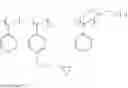
EXAMPLES<1> A copolymer was prepared according to a reaction formula below.
That is, styrene (1.75 g, 16.6 mmol), 1-(4′-vinylbenzyl)-2-pyrrolidinone (500 mg, 2.38 mmol), 4-vinylbenzyl glycidyl ether (452 mg, 2.38 mmol), tetraethylene glycol mono-2-phenyl-2-propenyl ether (738 mg, 2.38 mmol) and AIBN (28 mg, 0.17 mmol) were dissolved in chloroform (2.8 mL), followed by heating and stirring in an argon atmosphere for 48 hr under reflux. A reaction mixture was cooled to room temperature, followed by dropping into ice-cooled methanol (500 mL) to solidify a copolymer. After a supernatant liquid was removed according to the decantation, the copolymer was dissolved with a little amount of tetrahydrofuran, followed by once more dropping in ice-cooled methanol (500 mL). A precipitated copolymer was filtered and washed with methanol, followed by drying under reduced pressure under room temperature, and thereby 2.10 g of the copolymer (yield: 61%) was obtained.
A composition ratio (v/w/x/y) of the respective monomers, a number average molecular weight (Mn), a weight average molecular weight (Mw) and the degree of dispersion (Mw/Mn) of the obtained copolymer, respectively, were 71/13/10/6, 32,911, 80,978 and 2.461.
<2> In the next place, by use of the obtained copolymer, according to a process of a formula below, a palladium-supported crosslinked polymer composition was prepared.
That is, the copolymer (1.0 g) and Pd (PPh3)4 (1.0 g) were dissolved in dichloromethane (20 ml) followed by stirring for 24 hr. Thereto, methanol (50 ml) was gradually added to agglomerate a palladium-containing copolymer. A supernatant liquid was removed according to the decantation, followed by washing several times with methanol, and then by drying under reduced pressure. Subsequently, under heating at 120° C. for 2 hr, the copolymers themselves were crosslinked. After washing with THF followed by drying, a palladium-supported crosslinked polymer was obtained (801 mg). A content of palladium was 0.82 mmol/g.
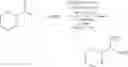
<3> With the palladium-supported crosslinked polymer composition prepared in the <2>, an amidocarbonylation reaction according to a formula below was carried out.
That is, the palladium-supported crosslinked polymer (12.2 mg, 0.01 mmol), acetamide (59.1 mg, 1.0 mmol), BnEt3NBr (95.3 mg, 0.35 mmol) and cyclohexane carboxaldehyde (168 mg, 1.5 mmol) were mixed in a 0.05M sulfuric acid-dioxane solution (2 mL, 0.10 mmol). A reaction vessel was put in an autoclave, followed by stirring under a carbon monoxide atmosphere of 60 atm at 120° C. for 15 hr. A reaction mixture was cooled to room temperature, followed by exhausting carbon monoxide and adding methanol (50 mL). After filtering to remove the catalyst, 2,6-xylenol that is an internal standard material was added to a filtrate, followed by analyzing by means of the HPLC to determine a yield (yield: 96%). The leakage of palladium (Pd) from the catalyst was not at all observed in the fluorescent X-ray analysis (XRF).
Furthermore, the reaction can isolate a targeted N-acyl-α-amino acid. That is, after the filtrate of the reaction was concentrated under reduced pressure, a residue was diluted with a saturated sodium hydrogen carbonate aqueous solution, followed by washing with chloroform and ethyl acetate. In the next place, after phosphoric acid was (I) added to an aqueous phase to adjust the pH to 2, followed by extracting with ethyl acetate, organic phases were gathered, further followed by drying with anhydrous sodium sulfate. After the filtration, the solution was concentrated under reduced pressure and thereby a targeted N-acyl-α-amino acid was obtained (isolation yield: 100%).
On the other band, a yield, when Et4NBr (35 mol %) was used as a quaternary ammonium salt, was 72% and that when Bu4NBr (35 mol %) was used was 98%.
When acetonitrile was used as the solvent, though a very slight amount of palladium eluted off, the yield was quantitative.
Similarly, various kinds of aldehyde compounds and amide compounds were reacted, and thereby N-acyl-α-amino acid could be synthesized with results below.
| TABLE |
| entry | R1 | R2 | yield (%)b | |
| 1 | c-Hex | Me | quant (96)c,d | |
| 2 | c-Hex | (CH2)4Me | 75c | |
| 3 | c-Hex | Ph | 20c | |
| 4 | c-Hex | NHMe | 20c,e | |
| 5 | PhCH2CH2 | Me | 49c,f | |
| 6 | i-Pr | Me | 67 | |
| 7 | t-Bu | Me | 55 | |
| 8 | Ph | Me | 78 | |
| 9 | p-CF3C6H4 | Me | 46g | |
| 10 | p-MeOC6H4 | Me | 38 | |
| 11 | α-Naph | Me | 58g | |
| 12 | β-Naph | Me | 44h | |
aUnless otherwise noted, the loading level of the palladium was 1.04 mmol/g. |
||||
bIsolated yields. |
||||
cYield was determined by HPLC analysis. |
||||
dThe loading level of the palladium was 0.820 mmol/g. |
||||
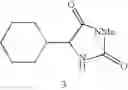
eThe product was identified as 3. |
||||
fThe reaction mixture was stirred at rt for 6 h before introducing CO. |
||||
gThe loading level of the palladium was 0.629 mmol/g. |
||||
hThe reaction was performed for 24 h. |
As mentioned above, according to the first invention of the application, a synthesis of N-acyl-α-amino acid by an amidocarbonylation reaction that has many advantages over the above-mentioned Strecker reaction can be realized more efficiently and more selectively by use of a novel polymer-immobilized palladium catalyst in a clean reaction system while enabling to recover and reuse the catalyst.
According to the second, third and fourth inventions, the advantages excellent as mentioned above can be realized more remarkably.
Furthermore, according to the fifth through eighth inventions, a palladium catalyst that can realize an amidocarbonylation reaction that exhibits excellent effects as mentioned above can be provided.
Claims
1. A method of an amidocarbonylation reaction where an aldehyde compound represented by a formula below
(R1 in the formula expresses a hydrogen atom or a hydrocarbon group that may have a substitution group) is reacted with carbon monoxide and an amide compound represented by a formula below
(R2 in the formula expresses a hydrocarbon group that may have a substitution group) to synthesize an amino acid compound represented by a formula below
(R1 and R2 in the formula are same as those shown above), characterized in that, in a reaction system, a palladium-supported crosslinked polymer composition containing a palladium cluster having a major axis of 20 nm or less is present.
2. The method of an amidocarbonylation reaction according to claim 1, characterized in that the palladium-supported crosslinked polymer composition is one that is obtained when a microcapsule containing a palladium cluster is subjected to a crosslinking reaction.
3. The method of an amidocarbonylation reaction that uses the palladium-supported crosslinked polymer composition according to claim 2, characterized in that a microcapsule is made of a copolymer that includes a hydrophobic portion made of an aromatic group, an epoxy group and a hydrophilic portion that reacts with an epoxy group.
4. The method of an amidocarbonylation reaction according to claim 1, characterized in that a supported-palladium has zero valence.
5. The method of an amidocarbonylation reaction according to claim 3, characterized in that the palladium-supported crosslinked polymer composition is one obtained by immobilizing palladium to a copolymer of monomers containing styrene compounds represented by formulas (1), (2) and (3) below
(In the formula, RX and RY are a hydrogen atom or a substitution group shown in a formula 1a, at least one of these showing at least one kind showing a hydrogen atom, n showing an integer of 0 to 6, m showing an integer of 1 to 6, 1 showing an integer of 0 to 10, Ra showing a hydrogen atom or a hydrocarbon group that may have a substitution group, Rb showing a hydrocarbon group that may have a substitution group, and furthermore Ra and Rb may combine with each other to form a lactam ring.)
6. The method of an amidocarbonylation reaction according to claim 3, characterized in that a copolymer is represented by a formula below
(In the formula, v/w/x/y/z is 0 to 90/3 to 80/0 to 20/3 to 20/0 to 20 and x and z are not zero.)
7. The method of an amidocarbonylation reaction according to claim 2, characterized in that a supported-palladium has zero valence.
8. The method of an amidocarbonylation reaction according to claim 3, characterized in that a supported-palladium has zero valence.
9. The method of an amidocarbonylation reaction according to claim 4, characterized in that the palladium-supported crosslinked polymer composition is one obtained by immobilizing palladium to a copolymer of monomers containing styrene compounds represented by formulas (1), (2) and (3) below
(In the formula, RX and RY are a hydrogen atom or a substitution group shown in a formula 1a, at least one of these showing at least one kind showing a hydrogen atom, n showing an integer of 0 to 6, m showing an integer of 1 to 6, 1 showing an integer of 0 to 10, Ra showing a hydrogen atom or a hydrocarbon group that may have a substitution group, Rb showing a hydrocarbon group that may have a substitution group, and furthermore Ra and Rb may combine with each other to form a lactam ring.)
10. The method of an amidocarbonylation reaction according to claim 7, characterized in that the palladium-supported crosslinked polymer composition is one obtained by immobilizing palladium to a copolymer of monomers containing styrene compounds represented by formulas (1), (2) and (3) below
(In the formula, RX and RY are a hydrogen atom or a substitution group shown in a formula 1a, at least one of these showing at least one kind showing a hydrogen atom, n showing an integer of 0 to 6, m showing an integer of 1 to 6, 1 showing an integer of 0 to 10, Ra showing a hydrogen atom or a hydrocarbon group that may have a substitution group, Rb showing a hydrocarbon group that may have a substitution group, and furthermore Ra and Rb may combine with each other to form a lactam ring.)
11. The method of an amidocarbonylation reaction according to claim 8, characterized in that the palladium-supported crosslinked polymer composition is one obtained by immobilizing palladium to a copolymer of monomers containing styrene compounds represented by formulas (1), (2) and (3) below
(In the formula, RX and RY are a hydrogen atom or a substitution group shown in a formula 1a, at least one of these showing at least one kind showing a hydrogen atom, n showing an integer of 0 to 6, m showing an integer of 1 to 6, 1 showing an integer of 0 to 10, Ra showing a hydrogen atom or a hydrocarbon group that may have a substitution group, Rb showing a hydrocarbon group that may have a substitution group, and furthermore Ra and Rb may combine with each other to form a lactam ring.)
12. The method of an amidocarbonylation reaction according to claim 5, characterized in that a copolymer is represented by a formula below
(In the formula, v/w/x/y/z is 0 to 90/3 to 80/0 to 20/3 to 20/0 to 20 and x and z are not zero.)
13. The method of an amidocarbonylation reaction according to claim 9, characterized in that a copolymer is represented by a formula below
(In the formula, v/w/x/y/z is 0 to 90/3 to 80/0 to 20/3 to 20/0 to 20 and x and z are not zero.)
14. The method of an amidocarbonylation reaction according to claim 10, characterized in that a copolymer is represented by a formula below
(In the formula, v/w/x/y/z is 0 to 90/3 to 80/0 to 20/3 to 20/0 to 20 and x and z are not zero.)
15. The method of an amidocarbonylation reaction according to claim 11, characterized in that a copolymer is represented by a formula below
(In the formula, v/w/x/y/z is 0 to 90/3 to 80/0 to 20/3 to 20/0 to 20 and x and z are not zero.)
Images & Drawings included:










Sources:
- United States Patent and Trademark Office - verify current appl. status at the USPTO↗
Recent applications in this class:
- » 20250270357 2025-08-28
POLYMER, CHEMICALLY AMPLIFIED NEGATIVE RESIST COMPOSITION, AND RESIST PATTERN FORMING PROCESS - » 20250236693 2025-07-24
RESIN COMPOSITION, AND MOLDED PRODUCT, CURED PRODUCT, FILM, COMPOSITE MATERIAL, CURED COMPOSITE MATERIAL, LAMINATE, METAL FOIL WITH RESIN, AND VARNISH FOR CIRCUIT BOARD MATERIAL OBTAINEDTHEREFROM - » 20250223387 2025-07-10
SELF-HEALING COPOLYMERS - » 20250215126 2025-07-03
COMPOSITION, SUBSTRATE TREATMENT METHOD, MANUFACTURING METHOD OF SEMICONDUCTOR DEVICE, AND COMPOUND - » 20250197541 2025-06-19
METHOD FOR RADICAL POLYMERISATION OF THIONOLACTIDES - » 20250171573 2025-05-29
COMPOSITION FOR ELECTROCHEMICAL DEVICE FUNCTIONAL LAYER, LAMINATE FOR ELECTROCHEMICAL DEVICE, AND ELECTROCHEMICAL DEVICE - » 20250101157 2025-03-27
POLYMER FOR ELECTROCHEMICAL ELEMENT FUNCTIONAL LAYER, METHOD OF PRODUCING POLYMER, COMPOSITION FOR ELECTROCHEMICAL ELEMENT FUNCTIONAL LAYER, SUBSTRATE WITH FUNCTIONAL LAYER FOR ELECTROCHEMICAL ELEMENT, AND ELECTROCHEMICAL ELEMENT - » 20250084195 2025-03-13
COPOLYMER, COMPOSITION, VARNISH, AND CURED PRODUCTS OF THESE - » 20250075017 2025-03-06
SULFONATED BLOCK COPOLYMER SEPARATOR AND ENERGY STORAGE DEVICE - » 20250043050 2025-02-06
CURABLE POLYMER, CURABLE COMPOSITION, PREPREG, MULTILAYER BODY, METAL CLAD LAMINATE AND WIRING BOARD
Recent applications for this Assignee:
- » 20240040814 2024-02-01
Organic Light-Emitting Diode Device - » 20240017224 2024-01-18
MICRO TWO-PHASE LIQUID DROPLET GENERATION DEVICE - » 20230420690 2023-12-28
Methods for producing alpha-keto acid and pyruvic acid - » 20230380303 2023-11-23
Superconducting complex quantum computing circuit - » 20220376797 2022-11-24
Microwave photon control device, microwave photon transmitter, microwave photon receiver, microwave photon repeater, and quantum computer - » 20220308671 2022-09-29
Force sense presentation device and force sense presentation method - » 20220177948 2022-06-09
FLUOROGENIC NUCLEIC ACID MOLECULE AND TARGET RNA FLUORESCENT LABELING METHOD - » 20220145407 2022-05-12
METHOD AND KIT FOR DETECTING INFLUENZA VIRUS, AND METHOD FOR DIAGNOSING INFLUENZA VIRUS INFECTION - » 20220031666 2022-02-03
PPARδ activator - » 20220021372 2022-01-20
Nonlinear microwave filter