Chemical process
US20070197805A1
2007-08-23
10/599,463
2005-03-29
✅ Patent granted
US 7,393,962 B2
2008-07-01
WO; PCT/GB2005/001200; 20050329
WO; WO2005/095377; 20051013
D. Margaret Seaman | Nizal S Chandrakumar
2025-06-25
Abstract:
The present invention provides a process for the preparation of a compound of formula (I): wherein R1 is C1-6 alkyl; R2 and R3 are, independently, C1-6 alkyl; and R4 is C1-6 alkyl or benzyl (wherein the phenyl ring of benzyl is optionally substituted by nitro, S(O)2(C1-4 alkyl), cyano, C1-4 alkyl, C1-4 alkoxy, C(O)(C1-4 alkyl), N(C1-6 alkyl)2, CF3 or OCF3); the process comprising reacting a compound of formula (II): wherein R2, R3 and R4 are as defined above, with a suitable base; and reacting the product so formed with R1OC(O)CH2X, wherein R1 is as defined above and X is chloro, bromo or iodo; wherein the process is carried out in a suitable solvent at a temperature in the range −40° C. to −5° C.; and wherein at least 0.2 moles of the compound of formula (II) are used in the process.
Assignee:
- AstraZeneca AB 1,842 🇸🇪 Sodertalje, Sweden
Interested in similar patents?
Get notified when new applications in this technology area are published.
Classification:
C07D317/72 » CPC main
Heterocyclic compounds containing five-membered rings having two oxygen atoms as the only ring hetero atoms having the hetero atoms in positions 1 and 3 spiro-condensed with carbocyclic rings
C07D323/02 IPC
Heterocyclic compounds containing more than two oxygen atoms as the only ring hetero atoms Five-membered rings
C07D317/44 IPC
Heterocyclic compounds containing five-membered rings having two oxygen atoms as the only ring hetero atoms having the hetero atoms in positions 1 and 3 ortho- or peri-condensed with carbocyclic rings or ring systems
Description
The present invention concerns a process for the preparation of alkoxycarbonylmethoxy cyclopentanes which are useful intermediates in the preparation of pharmaceutically active triazolo[4,5-d]pyrimidine cyclopentanes.
The compound [1S-(1α,2α,3β(1S*,2R*),5β)]-3-[7-[2-(3,4-difluorophenyl)cyclopropyl]amino]-5-(propylthio)-3H-1,2,3-triazolo[4,5-d]pyrimidin-3-yl)-5-(2-hydroxyethoxy)-cyclopentane-1,2-diol (Compound A), and similar such compounds, are disclosed in WO 00/34283 and WO 99/05143. These compounds are disclosed as P2T (which is now usually referred to as P2Y12) receptor antagonists. Such antagonists can be used as, inter alia, inhibitors of platelet activation, aggregation or degranulation.
Compounds of formula (I) (see below) are useful in the preparation of Compound A (see example 1 of WO 01/92263). The preparation of a compound of formula (I) is disclosed in example 1 of WO 01/92263 and in that example the process was conducted at 0° C. It has been found that when scaling up the process of example 1 of WO 01/92263 (say to more than 0.2 mole scale) and keeping the temperature at 0° C., competing side-reactions lead to a significant increase in the level of impurities, an increase in the reagent requirement, and a resulting reduction in the percentage yield of compound of formula (I). This is clearly a problem as it makes the process more costly and less efficient. We have now unexpectedly found that when the process is operated on a 0.2 mole scale or more, the use of a lower temperature allows the compound of formula (I) to be produced in good yield and minimizes the products of the unwanted side reactions.
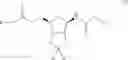
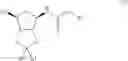
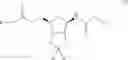
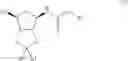
The present invention provides a process for the preparation of a compound of formula (I):
wherein R1 is C1-6 alkyl; R2 and R3 are, independently, C1-6 alkyl; and R4 is C1-6 alkyl (such as tert-butyl) or benzyl (wherein the phenyl ring of benzyl is optionally substituted by nitro, S(O)2(C1-4 alkyl), cyano, C1-4 alkyl, C1-4 alkoxy, C(O)(C1-4 alkyl), N(C1-6 alkyl)2, CF3 or OCF3); the process comprising reacting a compound of formula (II):
wherein R2, R3 and R4 are as defined above, with a suitable base; and reacting the product so formed with R1OC(O)CH2X, wherein R1 is as defined above and X is chloro, bromo or iodo; wherein the process is carried out in a suitable solvent at a temperature in the range −40° C. to −5° C.; and wherein at least 0.2 moles of the compound of formula (II) are used in the process.
Alkyl groups and moieties are straight or branched chain and comprise, for example, 1 to 6 (such as 1 to 4) carbon atoms. Examples of alkyl groups are methyl, ethyl, n-propyl, iso propyl or tert-butyl.
In one particular aspect the present invention provides a process wherein R1 is C1-4 alkyl (for example ethyl).
In another aspect the present invention provides a process wherein R2 and R3 are, independently, C1-4 alkyl; for example R2 and R3 are both methyl.
In a further aspect of the invention R4 is benzyl (wherein the phenyl ring of benzyl is optionally substituted by C1-4 alkyl); for example R4 is unsubstituted benzyl.
In a still further aspect the present invention provides a process wherein X is bromo.
Suitable bases include an alkali metal C1-6 alkoxide (for example potassium tert-butoxide).
In another aspect of the invention the molar ratio of suitable base: R1O2CCH2X: compound of formula (II) is (1 to 1.3):(1 to 1.3):1, for example (1.1 to 1.3):(1.1 to 1.3):1, such as about 1.2:1.2:1.
Suitable solvents include cyclic and aliphatic ethers (such as tetrahydrofuran, diethyl ether, diisopropyl ether or methyl tert-butyl ether) and aromatic solvents (such as benzene, toluene or a xylene). The solvent can be a mixture of two or more solvents (for example a mixture of an ether and an aromatic solvent, as exemplified above). In another aspect the invention provides a process wherein an ether, as exemplified above, is used as solvent.
In yet another aspect of the invention the temperature is in the range −30° C. to −10° C., for example −25° C. to −15° C.
In a further aspect the process of the present invention comprises adding a solution of suitable base to a solution of a compound of formula (II) at −15 to −25° C., and then adding to this mixture a solution of R1OC(O)CH2X at −15 to −25° C., a suitable ether being used as solvent.
A compound of formula (II) can be prepared by a method, or a method analogous to a method, disclosed in the literature (for example WO 01/92263).
The following Example illustrates the invention.
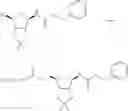
EXAMPLE 1This Example illustrates a process for the preparation of [3aS-(3aα,4α,6α,6aα)]-[2,2-dimethyl-6-((ethoxycarbonyl)methoxy)-tetrahydro-4H-cyclopenta-1,3-dioxol-4-yl]-carbamic acid, phenylmethyl ester.
A solution (Solution A) of [3αS-(3aα,4α,6α,6aα)]-[tetrahydro-6-hydroxy-2,2-dimethyl-4H-cyclopenta-1,3-dioxol-4-yl]-carbamic acid, phenylmethyl ester (80 g, 260 mmol) in THF (160 ml), under a nitrogen atmosphere, was cooled to −22° C. A solution of potassium tert-butoxide (36.1 g, 312 mmol) in THF was prepared and added to the cooled Solution A over a period of 30 minutes, while maintaing the reaction temperature at about −20° C. This provided a reaction mixture.
A pre-made solution of ethyl bromoacetate (53.2 g, 312 mmol) in THF was then added to the reaction mixture over a period of 30 minutes while maintaining the reaction temperature at about −20° C. The resulting mixture was stirred for approximately an hour at −22° C. HPLC analysis showed that there was a 98% conversion to the desired product.
Table below shows variations on this process.
| t-BuOK | EtBrAc | |||
| Mole ratios of | Addition | Addition |
| reagents to (II) | Time | Temp. | Time | Temp. | Hold time |
| Ex | t-BuOK | EtBrAc | (min.) | (° C.) | (min.) | (° C.) | (min.) |
| 2 | 1.40 | 1.46 | 13 | −20 | 34 | −20 | 23 |
| 3 | 1.15 | 1.15 | 22 | −22 | 42 | −22 | 20 |
| 4 | 1.20 | 1.20 | 30 | −20 | 45 | −20 | 15 |
| 5 | 1.10 | 1.10 | 20 | −30 | 30 | −30 | 20 |
| 6 | 1.20 | 1.20 | 20 | −22 | 30 | −22 | 20 |
| 7 | 1.10 | 1.10 | 20 | −10 | 30 | −10 | 20 |
| 8* | 1.20 | 1.20 | 20 | −22 | 30 | −22 | 20 |
| 9 | 1.20 | 1.20 | 30 | −22 | 180 | −22 | 150 |
| 10 | 1.20 | 1.20 | 25 | −21 | 45 | −21 | 10 |
| 11 | 1.20 | 1.20 | 30 | −22 | 40 | −20 | 10 |
| 12 | 1.2 | 1.2 | 13 | −23/−28 | 10 | −22/−28 | 30 |
| 13 | 1.15 | 1.15 | 12 | −20/−22 | 15 | −19/−24 | 30 |
Ex = Example number |
|||||||
(II) = [3aS-(3aα,4α,6α,6aα)]-[tetrahydro-6-hydroxy-2,2-dimethyl-4H-cyclopenta-1,3-dioxol-4-yl]-carbamic acid, phenylmethyl ester |
|||||||
t-BuOK = potassium tert-butoxide |
|||||||
EtBrAc = ethyl bromoacetate |
|||||||
* = Both the THF solution of compound of formula (II) and potassium tert-butoxide were filtered before use |
Claims
1. A process for the preparation of a compound of formula (I):
wherein
R1 is C1-6 alkyl;
R2 and R3 are, independently, C1-6 alkyl; and
R4 is C1-6 alkyl or benzyl (wherein the phenyl ring of benzyl is optionally substituted by nitro, S(O)2(C1-4 alkyl), cyano, C1-4 alkyl, C1-4 alkoxy, C(O)(C1-4 alkyl), N(C1-6 alkyl)2, CF3 or OCF3);
the process comprising reacting a compound of formula (II):
wherein R2, R3 and R4 are as defined above, with a suitable base; and
reacting the product so formed with R1OC(O)CH2X, wherein R1 is as defined above and X is chloro, bromo or iodo;
wherein the process is carried out in a suitable solvent at a temperature in the range −40° C. to −5° C.; and wherein at least 0.2 moles of the compound of formula (II) are used in the process.
2. A process as claimed in claim 1 wherein R1, R2 and R3 are independently selected from C1-4 alkyl.
3. A process as claimed in claim 1 wherein R1 is ethyl.
4. A process as claimed in claim 1, wherein R2 and R3 are methyl.
5. A process as claimed in claim 1, wherein R4 is benzyl optionally substituted by C1-4 alkyl.
6. A process as claimed in claim 1, wherein R4 is unsubstituted benzyl.
7. A process as claimed in claim 1 wherein X is bromo.
8. A process as claimed in claim 1 wherein the base is an alkyl metal C1-6 alkoxide.
9. A process as claimed in claim 1 wherein the base is potassium tert-butoxide.
10. A process as claimed in claim 1 wherein the molar ratio of suitable base:R1O2CCH2X:compound of formula (II) is (1 to 1.3):(1 to 1.3):1.
11. A process as claimed in claim 1 wherein the molar ratio of suitable base:R1O2CCH2X:compound of formula (II) is (1. 1 to 1.3):(1.1 to 1.3):1.
12. A process as claimed in claim 1 wherein the molar ratio of suitable base:R1O2CCH2X:compound of formula (II) is 1.2:1.2:1.
13. A process as claimed in claim 1 wherein the solvent is selected from a cyclic ether, an aliphatic ether and an aromatic solvent.
14. A process as claimed in claim 1 wherein the solvent is selected from tetrahydrofuran, diethyl ether, diisopropyl ether, methyl tert-butyl ether, benzene, toluene and xylene; and a mixture of two or more of said solvents.
15. A process as claimed in claim 1 wherein the solvent is tetrahydrofuran.
16. A process as claimed in claim 1 wherein the temperature is in the range −30° C. to −10° C.
17. A process as claimed in claim 1 wherein the temperature is in the range −25° C. to −15° C.
18. A process as claimed in claim 1 wherein:
R1 is ethyl;
R2 and R3 are methyl;
R4 is unsubstituted benzyl;
X is bromo; and
the base is potassium tert-butoxide.
19. A process as claimed in claim 18 wherein the molar ratio of suitable base:R1O2CCH2X:compound of formula (II) is 1.2:1.2:1, and wherein the solvent is selected from tetrahydrofuran, diethyl ether, diisopropyl ether, methyl tert-butyl ether, benzene, toluene and xylene, or a mixture of two or more of said solvents.
20. A process as claimed in claim 19 wherein the the temperature is in the range −25° C. to −15° C.
Images & Drawings included:
Sources:
- United States Patent and Trademark Office - verify current appl. status at the USPTO↗
Similar patent applications:
- » 20160004803
Simulation Sequence In Chemical Process Simulation For Chemical Process Flowsheet With Strongly Connected Components - » 20090069944
Chemical process optimization method that considers chemical process plant safety - » 20130306238
CHEMICAL LIQUID PREPARATION METHOD OF PREPARING A CHEMICAL LIQUID FOR SUBSTRATE PROCESSING, CHEMICAL LIQUID PREPARATION UNIT PREPARING A CHEMICAL LIQUID FOR SUBSTRATE PROCESSING, AND SUBSTRATE PROCESSING SYSTEM - » 20170294323
Chemical liquid preparation method of preparing a chemical liquid for substrate processing, chemical liquid preparation unit preparing a chemical liquid for substrate processing, and substrate processing system - » 20250001468
SYSTEMS AND PROCESSES FOR CHEMICAL PROCESSING - » 20150031214
Chemical fluid processing apparatus and chemical fluid processing method - » 20120016040
Device and method for increasing the effectiveness processes of catalytic chemical processes - » 20190284950
Processes for adjusting at least one process condition of a chemical processing unit with a turbine - » 20100181290
Chemical-liquid processing apparatus and chemical-liquid processing method - » 20250021013
PROCESS AND DEVICE FOR CHEMICAL PROCESSING OF A SURFACE
Recent applications in this class:
- » 20250230136 2025-07-17
METHOD FOR PRODUCING KETONES - » 20250084050 2025-03-13
FRAGRANCE COMPOSITION - » 20240199569 2024-06-20
PROCESS FOR THE MANUFACTURE OF INHIBITORS OF KRAS - » 20220388974 2022-12-08
Synthetic pathway to belzutifan and crystalline phases of synthetic intermediates - » 20220267291 2022-08-25
PROCESS FOR PREPARING ESTERS OF N-ACYLATED AMINO ACIDS WITH ACID-LABILE KETO PROTECTIVE GROUP FUNCTIONS - » 20220213051 2022-07-07
NOVEL CRYSTAL FORM OF 3-(4-(BENZYLOXY)PHENYL)HEX-4-INOIC ACID DERIVATIVE - » 20220081407 2022-03-17
METHODS OF PREPARING SUBSTITUTED INDANES - » 20210139450 2021-05-13
Process for preparing esters of N-acylated amino acids with acid-labile keto protective group functions - » 20190112286 2019-04-18
Salt and photoresist composition containing the same - » 20180118708 2018-05-03
CYCLIC COMPOUND
Recent applications for this Assignee:
- » 20250270248 2025-08-28
OLIGONUCLEOTIDES CONJUGATED TO FATTY ACIDS - » 20250235451 2025-07-24
Methods of Delaying Pain Progression And Treating Prostate Cancer - » 20250228870 2025-07-17
CERTAIN (2S)-N-[(1S)-1-CYANO-2-PHENYLETHYL]-1,4-OXAZEPANE-2-CARBOXAMIDES FOR TREATING BRONCHIECTASIS - » 20250195530 2025-06-19
POLQ INHIBITORS - » 20250011311 2025-01-09
Amido heteroaromatic compounds - » 20250000848 2025-01-02
PHARMACEUTICAL COMPOSITION - » 20240423960 2024-12-26
Pharmaceutical composition - » 20240366768 2024-11-07
Conjugates comprising cleavable linkers - » 20240358698 2024-10-31
COMBINATION OF ZIBOTENTAN AND DAPAGLIFLOZIN FOR THE TREATMENT OF ENDOTHELIN RELATED DISEASES - » 20240317767 2024-09-26
PYRAZOLE DERIVATIVES USEFUL AS 5-LIPOXYGENASE ACTIVATING PROTEIN (FLAP) INHIBITORS