Method and system for internet protocol provisioning of customer premises equipment
US20070198717A1
2007-08-23
10/570,832
2004-09-07
✅ Patent granted
US 7,774,436 B2
2010-08-10
WO; PCT/US2004/028907; 20040907
WO; WO2005/024588; 20050317
Philip J Chea
2024-09-07
Abstract:
Method and system for Internet Protocol (IP) provisioning over a cable network. The method and system including a plurality of embedded settop boxes (eSTBs) of at least two different vendors requesting IP provisioning according to a first protocol. The method and system further including a network provisioning unit (NPU) in communication with the eSTBs over the network for responding to the eSTB IP provisioning requests with IP provisioning data, wherein the eSTB IP provisioning data is outputted according to the first protocol such that provisioning of the eSTBs is standard for each vendor in so far as each eSTB utilizes the first protocol for provisioning.
Inventors:
- Richard Woundy 18 🇺🇸 North Reading, MA, United States
- John G. Bevilacqua 17 🇺🇸 Boulder, CO, United States
Assignee:
- Comcase Cable Holdings, LLC 1 🇺🇸 Philadelphia, PA, United States
Interested in similar patents?
Get notified when new applications in this technology area are published.
Classification:
H04L12/2801 » CPC main
Data switching networks characterised by path configuration, e.g. LAN [Local Area Networks] or WAN [Wide Area Networks] Broadband local area networks
H04L67/125 » CPC further
Network arrangements or protocols for supporting network services or applications; Protocols specially adapted for proprietary or special-purpose networking environments, e.g. medical networks, sensor networks, networks in vehicles or remote metering networks involving control of end-device applications over a network
H04L67/303 » CPC further
Network arrangements or protocols for supporting network services or applications; Architectures; Arrangements; Profiles Terminal profiles
H04N21/4227 » CPC further
Selective content distribution, e.g. interactive television or video on demand [VOD]; Client devices specifically adapted for the reception of or interaction with content, e.g. set-top-box [STB]; Operations thereof; Structure of client; Structure of client peripherals; Input-only peripherals , e.g. global positioning system [GPS] Remote input by a user located remotely from the client device, e.g. at work Providing
H04N21/6118 » CPC further
Selective content distribution, e.g. interactive television or video on demand [VOD]; Network structure or processes for video distribution between server and client or between remote clients; Control signalling between clients, server and network components; Transmission of management data between server and client, e.g. sending from server to client commands for recording incoming content stream ; Communication details between server and client ; Network physical structure; Signal processing specially adapted to the downstream path of the transmission network involving cable transmission, e.g. using a cable modem
H04N21/64322 » CPC further
Selective content distribution, e.g. interactive television or video on demand [VOD]; Network structure or processes for video distribution between server and client or between remote clients; Control signalling between clients, server and network components; Transmission of management data between server and client, e.g. sending from server to client commands for recording incoming content stream ; Communication details between server and client ; Control signaling related to video distribution between client, server and network components; Network processes for video distribution between server and clients or between remote clients , e.g. transmitting basic layer and enhancement layers over different transmission paths, setting up a peer-to-peer communication via Internet between remote STB's; Communication protocols; Addressing; Communication protocols IP
G06F15/173 IPC
Digital computers in general ; Data processing equipment in general; Combinations of two or more digital computers each having at least an arithmetic unit, a program unit and a register, e.g. for a simultaneous processing of several programs; Interprocessor communication using an interconnection network, e.g. matrix, shuffle, pyramid, star, snowflake
G06F15/177 IPC
Digital computers in general ; Data processing equipment in general; Combinations of two or more digital computers each having at least an arithmetic unit, a program unit and a register, e.g. for a simultaneous processing of several programs Initialisation or configuration control
H04N7/173 IPC
Television systems; Analogue secrecy systems; Analogue subscription systems with two-way working, e.g. subscriber sending a programme selection signal
Description
CROSS-REFERENCE TO RELATED APPLICATIONSThis application claims the benefit of U.S. provisional application Ser. No. 60/501,231 filed Sep. 5, 2003.
BACKGROUND OF THE INVENTION1. Field of the Invention
The present invention relates to methods for provisioning Customer Premises Equipment (CPE). In particular, the present invention relates to Internet Protocol (IP) provisioning for use in a cable network having a network provisioning unit (NPU) in communication with CPE having embedded settop boxes (eSTBs).
2. Background Art
Customer Premises Equipment (CPE) is a broad term intended to refer to devices located at a subscriber station of a cable subscriber that are used to receive signals from a cable network. In particular, the CPE may include an embedded settop box (eSTB) to receive television signals and to output the received signals to a television or other device for viewing. In addition, the CPE may include an embedded cable modem (eCM) to receive signals to control, provision, manage, and secure the CPE, such as through Data Over Cable Services Interface Specification (DOCSIS) Out-Of-Band (OOB) messaging.
A need exists for Internet Protocol (IP) provisioning of the eSTB of the CPE over a cable network.
SUMMARY OF THE INVENTIONThe present invention contemplates a number of features and configurations to provide IP provisioning, including a system comprising a plurality of embedded settop boxes (eSTBs) and a network provisioning unit (NPU) in communication with the cable network.
The system preferably includes a plurality of eSTBs provided by at least two different vendors, wherein each eSTB is preferably configured to output IP provisioning requests to the network according to a first protocol. The NPU is preferably configured to receive the eSTB IP provisioning requests and output eSTB IP provisioning data in response thereto, wherein the eSTB IP provisioning data is outputted according to the first protocol such that provisioning of the eSTBs is standard for each vendor in so far as each eSTB utilizes the first protocol for provisioning. Preferably, the first protocol is defined according to a Dynamic Host Configuration Protocol (DHCP).
In accordance with one aspect of the present invention, the NPU preferably selects the provisioning data according to the vendor of the requesting eSTB. Preferably, the NPU determines the vendor of the requesting eSTB based on an eSTB vendor identifier included in the eSTB IP provisioning request. Preferably, the NPU includes a database comprising IP provisioning data associated by vendor identifiers with a plurality of eSTB vendors, wherein the NPU determines the vendor of the requesting eSTB by searching the database for a vendor identifier that matches with the eSTB vendor identifier. In accordance with one aspect of the present invention, the eSTB vendor identifier may be a serial number, a hardware version, a software version, an Organization Unique Identifier (OUI), a model number, or a vendor name.
The above features and advantages, along with other features and advantages of the present invention, are readily apparent from the following detailed description of the invention when taken in connection with the accompanying drawings.
BRIEF DESCRIPTION OF THE DRAWINGSFIG. 1 illustrates a cable system in accordance with one aspect of the present invention;
FIG. 2 illustrates Customer Premise Equipment (CPE) in accordance with one aspect of the present invention; and
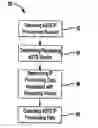
FIG. 3 illustrates a flowchart of method of eSTB IP provisioning in accordance with one aspect of the present invention.
DETAILED DESCRIPTION OF THE PREFERRED EMBODIMENT(S)FIG. 1 illustrates a cable system 10 in accordance with one aspect of the present invention. The system 10 includes a management network 12 and a High Speed Data (HSD) network 14 that respectively provide management and HSD services over a hybrid fiber coax (HFC) 18, or other communication medium, to a subscriber station 20, which includes Customer Premises Equipment (CPE) 22 and a cable modem (CM) 24.
The management network 12 generally comprises two portions, a control portion 30 and an application portion 32. The control portion 30 includes a settop box (STB) controller to control, provision, manage, and secure the CPE 22 through out-of-band (OOB) messaging. The application portion 32 provides applications to the CPE 22, such as video on demand (VOD), interactive television (iTV), and other services.
The HSD network 14 provides data services for the system 10, including services for the CM 24 to access the Internet 36. It includes a network provisioning unit (NPU) 38 having capabilities for Dynamic Host Configuration Protocol (DHCP), Trivial File Transfer Protocol (TFTP), and the like, in addition to a Domain Name System (DNS) server.
The system 10 includes a cable modem termination system (CMTS) 42 to send and receive signals to and from the CPE 22 and the CM 24 over the HFC 18. In general, the CMTS 42 transfers IP packets from the HSD network 14 and the management network 12 to the CPE 22 and CM 24 for processing. Preferably, the signals are outputted from the CMTS 42 on downstream output channels, which preferably include one-way output data tunnels, such as for OOB messaging. In addition, the CMTS 42 is configured to receive signals from the CPE 22 and the CM 24 to support two-way communication therewith, such as for transfer of IP packets from the CPE 22 and/or the CM 24 to the Internet 36 and/or the VOD or STB controller portions 32 and 30.
The system 10 includes a conditional access router (CAR) 46 to connect the management network 12 to the CMTS 42. The CAR 46 transports signals therebetween using IP protocols and provides firewall separation for the VOD or STB controller portions 32 and 30 from the HSD network 14, enhancing security from any devices attempting to associate with devices and signaling on the management network 12. In operation, signaling traffic transported between the management network 12 and the CMTS 42 may be wrapped into addressable packets, such as Ethernet, IP, or other packets.
The system 10 includes a video unit 50 for delivering video signals to the subscriber station 20 over the HFC 18. The video unit 50 can deliver any number of video signals, including network television, cable television, pay-per-view, video on demand, and the like.
FIG. 2 illustrates the CPE 22 in accordance with one aspect of the present invention. The CPE 22 is preferably configured to communicate with the CMTS 42 through digital cable signals, such as through signaling defined by the Data Over Cable Service Interface Specification (DOCSIS) and/or through other protocols authorized through DHCP registration.
The CPE 22 includes a radio frequency (RF) splitter 60, an embedded cable modem (eCM) 62, an embedded set-top box (eSTB) 64, an audio visual (A/V) port 66, and an optional conditional access (CA) unit 68. The RF splitter 60 splits the RF signal into two portions—one for OOB control functions and two-way application traffic and one for video delivery. The OOB and two-way application traffic is relayed to the eCM 62 and the video is relayed to the eSTB 64.
The ESTB 64 outputs video and other media signals to a media output device (not shown) or other device connected to the A/V port 66, such as to a television (TV), digital video recorder (DVR), personal video recorder (PVR), or the like.
The eCM 62 processes control and other non-media signals, such as DOCSIS and other IP packets, and bridges or relays the signals to the eSTB 64 through an internal communications link 70. In particular, the communications link 70 is used to transfer data tunnels tuned to by the eCM 62 to the eSTB 64 so that OOB messaging signals can be delivered to the eSTB 64 for processing.
The CA unit 68 provides conditional access control for the subscriber station 20. It can be a CableCard, SmartCard, or other item for controlling security and access to the data, video, and control signals transmitted over the HFC 18. It is illustrated as a standalone item, however, it can be included with or embedded on the eSTB 64 or the eCM 62 to perform similar functions.
The eCM 62, eSTB 64, and CA unit 68 are logically separate entities, however, they may physically share hardware and software. Other items, such as control logic and applications may be included on the CPE 22 for controlling operation of the eSTB 64 and/or the eCM 62.
FIG. 3 illustrates a flowchart 80 of method of eSTB IP provisioning in accordance with one aspect of the present invention. The method is preferably executed using DHCP protocols, however, the present invention is not so limited.
Block 82 relates to receiving an eSTB IP provisioning request at the NPU 38 from at least two eSTBs 64 associated with two different vendors. The receipt of multiple eSTB IP provisioning requests from different vendors requires the system 10 to support IP provisioning according to the configuration and operation of the different vendors.
Block 84 relates to determining the vendors associated with the requesting eSTBs 64. For example, if two eSTB IP provisioning requests are received from eSTBs 64 from a first vendor and a second vendor, the second vendor being different from the first vendor, the first and second vendors must be identified. Preferably, the eSTB IP provisioning requests each include an eSTB vendor identifier for identifying the vendor, such as a serial number, a hardware version, a software version, an Organization Unique Identifier (OUI), a model number, or a vendor name.
Block 86 relates to determining eSTB IP provisioning data associated with the vendor identified in block 84. Preferably, the NPU 38 includes a database (not shown) having IP provisioning data for each vendor supported by the system 10, including the first and second vendor, which is associated with a vendor identifier. The NPU 38 is configured to compare the eSTB vendor identifier against the vendor identifiers in the database to determine the vendor associated with the requesting eSTB 64.
Block 88 relates to outputting the eSTB IP provisioning data to the requesting eSTB 64. In particular, the NPU 38 receives a request from a specific eSTB 64 in 82, and replies to that specific eSTB 64 in block 88 to preferably provide eSTB IP provisioning data for enabling IP address assignment to the eSTB 64 to help the eSTB 64 communicate to the rest of the system 10 and other networks connected thereto, such as through the Internet 36, and to provide eSTB IP provisioning data for supplying parameter values to the eSTBs 64 for eSTB and application initialization. For example, the eSTB 64 may learn the location of a DNS server through IP provisioning, so that it can look up the hostname of the VoD server 32 and communicate with it. In another example, the eSTB 64 may receive a parameter that instructs the eSTB 64 to disable a vendor-specific A/V port, because usage of that particular A/V port may require a special customer subscription. The corresponding parameter in IP provisioning may be vendor-specific, so it is important that the NPU 38 not send this vendor-specific parameter to all eSTBs 64.
While embodiments of the invention have been illustrated and described, it is not intended that these embodiments illustrate and describe all possible forms of the invention. Rather, the words used in the specification are words of description rather than limitation, and it is understood that various changes may be made without departing from the spirit and scope of the invention.
Claims
What is claimed is:1. A method of Internet Protocol (IP) provisioning for use in a cable network having a network provisioning unit (NPU) in communication with a plurality of embedded settop boxes (eSTBs), the method comprising:
receiving eSTB IP provisioning requests from eSTBs provided by at least two different vendors, the eSTB IP provisioning requests outputted according to a first protocol; and
transmitting eSTB IP provisioning data from the NPU to the eSTBs requesting the eSTB IP provisioning, wherein the eSTB IP provisioning data is outputted according to the first protocol such that provisioning of the eSTBs is standardized for each vendor.
2. The method of claim 1 further comprising selecting the eSTB IP provisioning data according to the vendor of the requesting eSTB.
3. The method of claim 2 further comprising determining the vendor of the requesting eSTB using the NPU based on an eSTB vendor identifier included in the eSTB IP provisioning request.
4. The method of claim 3 wherein the NPU includes a database comprising IP provisioning data associated by vendor identifiers with a plurality of eSTB vendors, and wherein determining the vendor of the requesting eSTB includes searching the database for a vendor identifier that matches with the eSTB vendor identifier.
5. The method of claim 3 wherein the eSTB vendor identifier includes at least one of a serial number, a hardware version, a software version, an Organization Unique Identifier (OUI), a model number, or a vendor name.
6. The method of claim 1 wherein each eSTB is associated with Customer Premise Equipment (CPE) and wherein each CPE includes an embedded cable modem (eCM), and the method further comprises bridging IP signals through the eCM to the eSTB.
7. The method of claim 1 wherein the first protocol is defined according to a Dynamic Host Configuration Protocol (DHCP).
8. A network provisioning unit (NPU) for Internet Protocol (IP) provisioning, the NPU in communication with a cable network having a plurality of embedded settop boxes (eSTBs), the NPU configured to:
receive eSTB IP provisioning requests from eSTBs provided by at least two different vendors, the eSTB IP provisioning requests transmitted according to a first protocol; and
transmit eSTB IP provisioning data to the eSTBs requesting the eSTB IP provisioning, wherein the eSTB IP provisioning data is transmitted according to the first protocol such that provisioning of the eSTBs is standard for each vendor in so far as each eSTB utilizes the first protocol for provisioning.
9. The NPU of claim 8 configured to select the eSTB IP provisioning data according to the vendor of the requesting eSTB.
10. The NPU of claim 9 configured to determine the vendor of the requesting eSTB based on an eSTB vendor identifier included in the eSTB IP provisioning request.
11. The NPU of claim 10 including a database comprising IP provisioning data associated by vendor identifiers with a plurality of eSTB vendors, and configured to determine the vendor of the requesting eSTB by searching the database for a vendor identifier that matches with the eSTB vendor identifier.
12. The NPU of claim 11 configured to identify the vendor based on the eSTB identifier being at least one of a serial number, a hardware version, a software version, an Organization Unique Identifier (OUI), a model number, or a vendor name.
13. The NPU of claim 8 configured to permit IP provisioning wherein the first protocol is defined according to the Dynamic Host Configuration Protocol (DHCP).
14. A system for Internet Protocol (IP) provisioning over a cable network, the system comprising:
a plurality of embedded settop boxes (eSTBs) in communication with the cable network, at least two of the eSTB provided by at least two different vendors, each eSTB configured to transmit IP provisioning requests to the network according to a first protocol; and
a network provisioning unit (NPU) in communication with the network, the NPU configured to receive the eSTB IP provisioning requests and the transmit eSTB IP provisioning data in response thereto, wherein the eSTB IP provisioning data is transmitted according to the first protocol such that provisioning of the eSTBs is standard for each vendor in so far as each eSTB utilizes the first protocol for provisioning.
15. The system of claim 14 wherein the NPU selects the provisioning data according to the vendor of the requesting eSTB.
16. The system of claim 15 wherein the NPU determines the vendor of the requesting eSTB based on an eSTB vendor identifier included in the eSTB IP provisioning request.
17. The system of claim 16 wherein the NPU includes a database comprising IP provisioning data associated by vendor identifiers with a plurality of eSTB vendors, and wherein the NPU determines the vendor of the requesting eSTB by searching the database for a vendor identifier that matches with the eSTB vendor identifier.
18. The system of claim 16 wherein the eSTB vendor identifier includes at least one of a serial number, a hardware version, a software version, an Organization Unique Identifier (OUI), a model number, or a vendor name.
19. The system of claim 14 wherein each eSTB is associated with Customer Premise Equipment (CPE) and wherein each CPE includes an embedded cable modem (eCM) for bridging IP provisioning signals through the eCM to the eSTB.
20. The system of claim 14 wherein the first protocol is defined according to a Dynamic Host Configuration Protocol (DHCP).
Images & Drawings included:

Sources:
- United States Patent and Trademark Office - verify current appl. status at the USPTO↗
Similar patent applications:
Recent applications in this class:
- » 20250247266 2025-07-31
CABLE MODEM UPSTREAM BANDWIDTH ALLOCATION - » 20250240182 2025-07-24
IMPLEMENTING MULTIPLE CABLE MODEMS IN A SINGLE ACCESS DEVICE - » 20250227006 2025-07-10
DOCSIS Channel Profile Generation - » 20250168028 2025-05-22
HANDSHAKE OPERATION IN POINT-TO-MULTIPOINT ACCESS FROM DISTRIBUTION POINT - » 20250158846 2025-05-15
Comprehensive System Design to Address the Needs for Virtual Segmentation of the Coaxial Cable Plant - » 20250125987 2025-04-17
CATV HYBRID FIBER-COAXIAL NETWORK HEADEND VIRTUAL GATEWAY - » 20250106063 2025-03-27
PREMISES APPARATUS AND METHODS FOR AGGREGATED HIGH-CAPACITY DATA SERVICES - » 20250080373 2025-03-06
METHODS AND APPARATUS FOR COORDINATION BETWEEN WIRELINE BACKHAUL AND WIRELESS SYSTEMS - » 20250047518 2025-02-06
LOW DATA RATE, LOW POWER BI-DIRECTIONAL TRANSMISSIONS OVER EXISTING PHYSICAL COMMUNICATION MEDIA USING A PORTABLE NETWORK COMMUNICATIONS MODULE - » 20250016018 2025-01-09
SYSTEMS AND METHODS FOR UPSTREAM AND DOWNSTREAM CATV PLANT CAPACITY EXPANSION