Back pad for abrasive disks and preparation thereof
US20070224901A1
2007-09-27
11/499,310
2006-08-03
✅ Patent granted
US 7,858,541 B2
2010-12-28
-
-
Jennifer A Chriss
2029-04-10
Abstract:
A back pad comprising a nonwoven fabric, and at least one carbon and polyester fiber textile layers stacked thereon has an improved flexibility and provides an improved working environment, and thus, it can be advantageously used in the manufacturing of an abrasive disk.
Assignee:
- Suntek Industries Ltd. 1 🇰🇷 , South Korea
Interested in similar patents?
Get notified when new applications in this technology area are published.
Classification:
B24D11/02 » CPC further
Constructional features of flexible abrasive materials; Special features in the manufacture of such materials Backings, e.g. foils, webs, mesh fabrics
B24D18/0009 » CPC further
Manufacture of grinding tools or other grinding devices , e.g. wheels, not otherwise provided for using moulds or presses
Y10T442/3472 » CPC further
Fabric [woven, knitted, or nonwoven textile or cloth, etc.]; Woven fabric [i.e., woven strand or strip material] Woven fabric including an additional woven fabric layer
Y10T442/3504 » CPC further
Fabric [woven, knitted, or nonwoven textile or cloth, etc.]; Woven fabric [i.e., woven strand or strip material]; Woven fabric including an additional woven fabric layer Woven fabric layers comprise chemically different strand material
Y10T442/3512 » CPC further
Fabric [woven, knitted, or nonwoven textile or cloth, etc.]; Woven fabric [i.e., woven strand or strip material]; Woven fabric including an additional woven fabric layer; Woven fabric layers comprise chemically different strand material Three or more fabric layers
Y10T442/352 » CPC further
Fabric [woven, knitted, or nonwoven textile or cloth, etc.]; Woven fabric [i.e., woven strand or strip material]; Woven fabric including an additional woven fabric layer; Woven fabric layers comprise chemically different strand material; Three or more fabric layers One of which is a nonwoven fabric layer
Y10T442/3537 » CPC further
Fabric [woven, knitted, or nonwoven textile or cloth, etc.]; Woven fabric [i.e., woven strand or strip material]; Woven fabric including an additional woven fabric layer; Three or more fabric layers One of which is a nonwoven fabric layer
Y10T442/378 » CPC further
Fabric [woven, knitted, or nonwoven textile or cloth, etc.]; Woven fabric [i.e., woven strand or strip material]; Woven fabric including a nonwoven fabric layer other than paper Coated, impregnated, or autogenously bonded
Y10T442/3829 » CPC further
Fabric [woven, knitted, or nonwoven textile or cloth, etc.]; Woven fabric [i.e., woven strand or strip material]; Woven fabric including a nonwoven fabric layer other than paper; Coated, impregnated, or autogenously bonded Four or more layers
B32B29/00 IPC
Layered products comprising a layer of paper or cardboard
B32B38/04 IPC
Ancillary operations in connection with laminating processes Punching, slitting or perforating
B24D3/28 » CPC main
Physical features of abrasive bodies, or sheets, e.g. abrasive surfaces of special nature; Abrasive bodies or sheets characterised by their constituents the constituent being used as bonding agent and being essentially organic Resins or natural or synthetic macromolecular compounds
B32B5/26 IPC
Layered products characterised by the non- homogeneity or physical structure, i.e. comprising a fibrous, filamentary, particulate or foam layer; Layered products characterised by having a layer differing constitutionally or physically in different parts characterised by the presence of two or more layers which are next to each other and are fibrous, filamentary, formed of particles or foamed one layer being a fibrous or filamentary layer another layer also being fibrous or filamentary
B24D3/00 IPC
Physical features of abrasive bodies, or sheets, e.g. abrasive surfaces of special nature; Abrasive bodies or sheets characterised by their constituents
B24D3/20 IPC
Physical features of abrasive bodies, or sheets, e.g. abrasive surfaces of special nature; Abrasive bodies or sheets characterised by their constituents the constituent being used as bonding agent and being essentially organic
Description
FIELD OF THE INVENTION
The present invention relates to a back pad for an abrasive disk which has an improved flexibility and provides an improved working environment; and a method for preparing said back pad.
BACKGROUND OF THE INVENTION
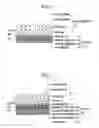
An abrasive disk is usually prepared by coating an adhesive on a back pad disk, and bonding the back pad to a disk form of a coated abrasive body (comprised of a backsheet and a layer of an abrasive material), followed by heat-pressing. The back pad is generally prepared using glass fibers for dimensional stability, and a conventional abrasive disk comprising a glass fiber textile-containing back pad is shown in FIG. 1.
However, the glass fiber textile has problems in that it is heavy, expensive and stiff, which limits the use of such an abrasive disk.
It is also known that abrasive materials in the edge of the abrasive disk wear down quicker than those in other part of the disk during polishing, leading to lowering of the abrasion efficiency. Thus, the worn abrasive material region is usually ground out together with the unused abrasive materials on the other part of the abrasive disk, by a procedure known as “dressing”. This dressing operation is generally performed in several steps, during which the glass fiber textile generates a glass-fiber dust which irritates the skin and respiratory system of the worker. Further, the glass fiber textile has unsatisfactory wear resistance, which leads to a poor productivity and an increase in the manufacturing cost.
SUMMARY OF THE INVENTION
Accordingly, it is a primary object of the present invention to provide a glass fiber-free back pad for an abrasive disk which shows improved dimensional stability, flexibility and life time, while providing a safe working environment; and a method for preparing said back pad.
In accordance with one aspect of the present invention, there is provided a back pad for an abrasive disk which comprises a nonwoven fabric, and at least one carbon and polyester fiber textile layers stacked on the nonwoven fabric.
In accordance with another aspect of the present invention, there is provided a method for preparing the back pad which comprises placing disk forms of at least one set of carbon and polyester fiber textiles on a disk form of a nonwoven fabric, the carbon and polyester fiber textiles being each in a dried state after impregnation-treatment with an adhesive resin, and applying heat and pressure to the stack of the nonwoven fabric and textiles.
BRIEF DESCRIPTION OF THE DRAWINGS
The above and other objects and features of the present invention will become apparent from the following description of the invention, when taken in conjunction with the accompanying drawings, which respectively show:
FIG. 1: a schematic diagram of an abrasive disk comprising a conventional back pad; and
FIG. 2: a schematic diagram of an abrasive disk comprising a back pad in accordance with one embodiment of the present invention.
| 100: abrasive disk | 110: coated abrasive body | |
| 120: back pad | 122: glass fiber textile layer | |
| 124: carbon fiber textile layer | 126: nonwoven fabric | |
| 128: adhesive layer | ||
| 130: polyester fiber textile layer | ||
DETAILED DESCRIPTION OF THE INVENTION
The inventive back pad comprises one nonwoven fabric, and at least two textile layers comprised of carbon and polyester fiber textiles, respectively, wherein the respective carbon and polyester fiber textiles are stacked on the nonwoven fabric in a multilayer form. Preferably, the inventive back pad has a structure comprising the nonwoven fabric, the carbon fiber textile layer and the polyester fiber textile layer which are sequentially stacked. In addition, if desired, two or more sets of the carbon and polyester fiber textile layers may be stacked on the nonwoven fabric.
The nonwoven fabric which is employed in the present invention preferably has a weight of 20 to 30 g/m2 and a thickness of 0.1 to 0.3 mm.
The carbon and polyester fiber textiles which are employed in the present invention are each in a dried state after impregnation-treatment with an adhesive resin. The carbon fiber textile is made of G78 1/0×E225 1/0 (warp×fill)˜H55 1/0×G150 1/0 (warp×fill) tex/yarn fibers and has a satin or plain fabric pattern of 48˜70×26˜37 (warp×fill) count/inch, wherein E, G and H mean that average diameters of the fibers are in the ranges of 6.35˜7.61 μm, 8.89˜10.15 μm and 10.16˜11.42 μm, respectively, and the term “tex” means the gram weight of a 1000 m-long fiber.
The polyester fiber textile is made of 8/2˜14/2×8/2˜14/2 (warp×fill) s/yarn fibers and has a leno plain fabric pattern of 16˜20×8˜12 (warp×fill) count/inch. It is preferred that the polyester fiber textile is made of 12/2˜14/2×8/2˜10/2 (warp×fill) s/yarn fibers such that relatively thin and thick fibers are interwoven. Such a polyester fiber textile having the above-specified fiber thickness and fabric can be used, instead of a glass fiber textile, in producing a back pad having improved dimensional stability.
In addition, the polyester of the polyester fiber textile is a spun yarn, and suitable for this polyester is polyethylene terephthalate having a melting point ranging from 260 to 265° C.
The back pad in accordance with the present invention is manufactured by placing disk forms of at least one set of carbon and polyester fiber textiles on a disk form of a nonwoven fabric, wherein the carbon and polyester fiber textiles are each in a dried state after impregnation-treatment with an adhesive resin, and applying heat and pressure to the stack of the nonwoven fabric and textiles until they are fused together.
In one specific embodiment of the present invention, the back pad laminate may be prepared by placing a nonwoven fabric, the carbon fiber textile and the polyester fiber textile in order from the bottom into a mold, and then applying a pressure of 5 to 7 kgf/cm2 thereto and heating the resulting stack in an oven of 120 to 170° C. for 4 to 10 hrs to allow the adhesive resin impregnated in the fibers to melt, resulting in the fusion of the components.
Representative examples of the adhesive resin employed in the impregnation-treatment of the carbon and polyester fiber textiles include a phenol resin, and a mixture of a phenol resin and a material selected from the group consisting of acrylonitrile-butadiene-rubber, polyester resin, polyvinyl butyral, epoxy resin, urea melamine and degenerated heat-curable resin. A Suitable phenol resin is a Rezole-type one having a solid content of 40 to 60% by weight and a viscosity of 300 to 600 cps at 25° C.
In the present invention, an abrasive disk may be prepared by a conventional method using the back pad thus obtained, e.g., by coating an adhesive on the textile layer surface of the back pad, adhering thereto a disk form of a coated abrasive body (comprised of a backsheet and a layer of an abrasive material) such that the backsheet of the coated abrasive body is bonded to the textile layer of the back pad, and heat-drying/aging the resulting combined disk at a temperature ranging from 80 to 120° C. for 2 to 5 hrs. The adhesive used for combining the back pad and the coated abrasive body may be any one of conventional adhesives. The abrasive disk comprising a back pad in accordance with one embodiment of the present invention is illustrated in FIG. 2.
The following Examples and Comparative Examples are given for the purpose of illustration only, and are not intended to limit the scope of the invention.
EXAMPLE 1
Cut into a disk form having an outer diameter of 180 mm and an inner diameter of 23 mm were: a 25 g/m2 nonwoven fabric having a thickness of 0.15 mm; two carbon fiber textiles (commercially available from Korea Fiber Company) composed of G75 1/0×E225 1/0 (warp×fill) tex/yarn fibers (E and G mean that average diameters of the fibers are in the ranges of 6.35˜7.61 μm and 8.89˜10.15 μm, respectively) and having a satin fabric pattern of 52×30 (warp×fill) count/inch; and two polyethylene terephthalate fiber textiles (commercially available from Suntek Industries Ltd.) composed of 12/2×8/2 (warp×fill) s/yarn fibers and having a leno plain fabric pattern of 16×8 (warp×fill) count/inch. The carbon and polyethylene terephthalate fiber textiles had been dried after the treatment with a Rezole phenol resin.
The above-mentioned nonwoven fabric, one carbon fiber textile, one polyethylene terephthalate fiber textile, one carbon fiber textile and one polyethylene terephthalate fiber textile disks were sequentially stacked from the bottom up in a mold, and a steel press for fixing the disk was applied at a force of 6.0 kgf/cm2 at an electric oven temperature of 150±5° C. for 5 hrs, to prepare the inventive back pad having the structure shown in FIG. 2.
EXAMPLE 2
Cut into a disk form having an outer diameter of 180 mm and an inner diameter of 23 mm were: a 25 g/m2 nonwoven fabric having a thickness of 0.15 mm; two carbon fiber textiles (commercially available from Korea Fiber Company) composed of G75 1/0×E225 1/0 (warp×fill) tex/yarn and having a satin fabric pattern of 52×30 (warp×fill) count/inch; one polyethylene terephthalate fiber textile-(A) (commercially available from Suntek Industries Ltd.) composed of 12/2×8/2 (warp×fill) s/yarn fibers and having a leno plain fabric pattern of 16×8 (warp×fill) count/inch; and one polyethylene terephthalate fiber textile-(B) (commercially available from Suntek Industries Ltd.) composed of 12/2×12/2 (warp×fill) s/yarn fibers and having a leno plain fabric pattern of 16×8 (warp×fill) count/inch. The carbon and polyethylene terephthalate fiber textiles had been dried after the treatment with a Rezole phenol resin.
The above-mentioned nonwoven fabric, two carbon fiber textile, one polyethylene terephthalate fiber textile-(A) and one polyethylene terephthalate fiber textile-(B) disks were sequentially stacked from the bottom up in a mold. Thereafter, the procedure of Example 1 was repeated to prepare the inventive back pad.
EXAMPLE 3
Cut into a disk form having an outer diameter of 180 mm and an inner diameter of 23 mm were: a 25 g/m2 nonwoven fabric having a thickness of 0.15 mm; two carbon fiber textiles (commercially available from Korea Fiber Company) composed of G75 1/0×E225 1/0 (warp×fill) tex/yarn fibers and having a satin fabric pattern of 52×30 (warp×fill) count/inch; and two polyethylene terephthalate fiber textiles (commercially available from Suntek Industries Ltd.) composed of 14/2×8/2 (warp×fill) s/yarn fibers and having a leno plain fabric pattern of 16×8 (warp×fill) count/inch. The carbon and polyethylene terephthalate fiber textiles had been dried after the treatment with a Rezole phenol resin.
The above-mentioned nonwoven fabric, two carbon fiber textile and two polyethylene terephthalate fiber textile disks were sequentially stacked from the bottom up in a mold. Thereafter, the procedure of Example 1 was repeated to prepare the inventive back pad.
COMPARATIVE EXAMPLE 1
Cut into a disk form having an outer diameter of 180 mm and an inner diameter of 23 mm were: a 25 g/m2 nonwoven fabric having a thickness of 0.15 mm; and four glass fiber textiles (commercially available from Korea Fiber Company) composed of H45 1/3×H45 1/3 (warp×fill) tex/yarn fibers and having a leno plain fabric pattern of 8×8 (warp×fill) count/inch (H means that an average diameter of the fiber is in the range of 10.16˜11.42 μm). The glass fiber textiles had been dried after the treatment with a Rezole phenol resin.
The above-mentioned nonwoven fabric and four glass fiber textile disks were sequentially stacked from the bottom up in a mold. Thereafter, the procedure of Example 1 was repeated to prepare a back pad.
COMPARATIVE EXAMPLE 2
Cut into a disk form having an outer diameter of 180 mm and an inner diameter of 23 mm were: a 25 g/m2 nonwoven fabric having a thickness of 0.15 mm; and four glass fiber textiles (commercially available from Korea Fiber Company) composed of H50 1/4×H50 1/4 (warp×fill) tex/yarn fibers and having a leno plain fabric pattern of 9×9 (warp×fill) count/inch. The glass fiber textiles had been dried after the treatment with a Rezole phenol resin.
The above-mentioned nonwoven fabric and four glass fiber textile disks were sequentially stacked from the bottom up in a mold. Thereafter, the procedure of Example 1 was repeated to prepare a back pad.
COMPARATIVE EXAMPLE 3
Cut into a disk form having an outer diameter of 180 mm and an inner diameter of 23 mm were: a 25 g/m2 nonwoven fabric having a thickness of 0.15 mm; two glass fiber textiles (commercially available from Korea Fiber Company) composed of H45 1/4×H45 1/4 (warp×fill) tex/yarn fibers and having a leno plain fabric pattern of 8×8 (warp×fill) count/inch; and two carbon fiber textiles (commercially available from Korea Fiber Company) composed of G75 1/0×E225 1/0 (warp×fill) tex/yarn fibers and having a satin fabric pattern of 52×30 (warp×fill) count/inch. The glass and carbon fiber textiles had been dried after the treatment with a Rezole phenol resin.
The above-mentioned nonwoven fabric, two glass fiber textile and two carbon fiber textile disks were sequentially stacked from the bottom up in a mold. Thereafter, the procedure of Example 1 was repeated to prepare a back pad.
COMPARATIVE EXAMPLE 4
Cut into a disk form having an outer diameter of 180 mm and an inner diameter of 23 mm were: a 25 g/m2 nonwoven fabric having a thickness of 0.15 mm; two glass fiber textiles (commercially available from Korea Fiber Company) composed of H50 1/4×H50 1/4 (warp×fill) tex/yarn fibers and having a leno plain fabric pattern of 9×9 (warp×fill) count/inch; and two carbon fiber textiles (commercially available from Korea Fiber Company) composed of G75 1/0×E225 1/0 (warp×fill) tex/yarn fibers and having a satin fabric pattern of 52×30 (warp×fill) count/inch. The glass and carbon fiber textiles had been dried after the treatment with a Rezole phenol resin.
The above-mentioned nonwoven fabric, two glass fiber textile and two carbon fiber textile disks were sequentially stacked from the bottom up in a mold. Thereafter, the procedure of Example 1 was repeated to prepare a back pad.
COMPARATIVE EXAMPLE 5
Cut into a disk form having an outer diameter of 180 mm and an inner diameter of 23 mm were: a 25 g/m2 nonwoven fabric having a thickness of 0.15 mm; one glass fiber textile (commercially available from Korea Fiber Company) composed of H45 1/3×H45 1/3 (warp×fill) tex/yarn fibers and having a leno plain fabric pattern of 8×8 (warp×fill) count/inch; one carbon fiber textile (commercially available from Korea Fiber Company) composed of G75 1/0×E225 1/0 (warp×fill) tex/yarn fibers and having a satin fabric pattern of 52×30 (warp×fill) count/inch; and two polyethylene terephthalate fiber textiles (commercially available from Suntek Industries Ltd.) composed of 12/2×12/2 (warp×fill) s/yarn fibers and having a leno plain fabric pattern of 16×8 (warp×fill) count/inch. The glass, carbon and polyethylene terephthalate fiber textiles had been dried after the treatment with a Rezole phenol resin.
The above-mentioned nonwoven fabric, one glass fiber textile, one carbon fiber textile and two polyethylene terephthalate fiber textile disks were sequentially stacked from the bottom up in a mold. Thereafter, the procedure of Example 1 was repeated to prepare a back pad.
COMPARATIVE EXAMPLE 6
Cut into a disk form having an outer diameter of 180 mm and an inner diameter of 23 mm were: a 25 g/m2 nonwoven fabric having a thickness of 0.15 mm; one glass fiber textile (commercially available from Korea Fiber Company) composed of H50 1/4×H50 1/4 (warp×fill) tex/yarn fibers and having a leno plain fabric pattern of 9×9 (warp×fill) count/inch; one carbon fiber textile (commercially available from Korea Fiber Company) composed of G75 1/0×E225 1/0 (warp×fill) tex/yarn fibers and having a satin fabric pattern of 52×30 (warp×fill) count/inch; and two polyethylene terephthalate fiber textiles (commercially available from Suntek Industries Ltd.) composed of 12/2×8/2 (warp×fill) s/yarn fibers and having a leno plain fabric pattern of 16×8 (warp×fill) count/inch. The glass, carbon and polyethylene terephthalate fiber textiles had been dried after the treatment with a Rezole phenol resin.
The above-mentioned nonwoven fabric, one glass fiber textile, one carbon fiber textile and two polyethylene terephthalate fiber textile disks were sequentially stacked from the bottom up in a mold. Thereafter, the procedure of Example 1 was repeated to prepare a back pad.
Characteristics Test
The characteristics of the respective back pads obtained in Examples 1 to 3 and Comparative Examples 1 to 6 were measured in terms of tensile strength, rotation breakage strength, flexibility, degree of skin irritation of a worker affected with, dimensional stability and use time (life time). The results are shown in Table 1.
| TABLE 1 | |
| Substrate (back pad) |
| Comp. | Comp. | Comp. | Comp. | Comp. | Comp. | ||||
| Ex.1 | Ex.2 | Ex.3 | Ex.1 | Ex.2 | Ex.3 | Ex.4 | Ex.5 | Ex.6 | |
| Tensile | 300~ | 300~ | 300~ | 150~ | 170~ | 250~ | 270~ | 250~ | 270~ |
| Strength | 350 | 350 | 350 | 170 | 190 | 300 | 320 | 300 | 320 |
| (kgf/in)*1 | |||||||||
| Rotation | 29,000~ | 29,000~ | 29,000~ | 20,000~ | 21,000~ | 24,000~ | 25,000~ | 25,000~ | 26,000~ |
| Breakage | 32,000 | 32,000 | 32,000 | 21,000 | 22,000 | 26,000 | 27,000 | 27,000 | 28,000 |
| Strength | |||||||||
| (rpm)*2 | |||||||||
| Flexibility*3 | 4.0 | 3.8 | 3.8 | 6.0 | 7.0 | 5.0 | 5.0 | 4.5 | 4.5 |
| Degree of | No | No | No | Serious | Serious | Slight | Slight | Slight | Slight |
| skin | irritation | irritation | irritation | irritation | irritation | irritation | irritation | irritation | irritation |
| irritation | |||||||||
| Dimension | Good | Good | Good | Good | Good | Good | Good | Good | Good |
| al stability | |||||||||
| Use | 60.0 | 60.0 | 55.0 | 30.0 | 32.0 | 38.0 | 40.0 | 45.0 | 46.0 |
| time(sec)*4 | |||||||||
| Note: | |||||||||
| *1: Tensile strength-measuring instrument-LLOYD Instruments type LR5R | |||||||||
| *2: Rotation number at which a back pad is broken |
| *4: Time to bring a 7″-sized back pad to 4″-sized when the back pad is subjected to dressing by a #36 coated abrasive body while rotating at a rate of 10,000 rpm under a pressure of 2 kgf/cm2 |
-
- As can be seen from Table 1, the inventive back pads of Examples 1 to 3 exhibit higher tensile strength, higher rotation breakage strength and better flexibility and coordinate dimensional stability, as compared to the back pads of Comparative Examples 1 to 6 containing glass fiber textiles. Further, the inventive back pads are environment-friendly in that dusts generated during the course of usage do not irritate workers' skin, and they can be used for a prolonged time, thereby greatly increasing productivity and lowering the manufacturing cost.
As described above, the inventive back pad which contains no glass fiber textile shows improved dimensional stability, improved flexibility, high elasticity, high resistance to breakage by load or rapid rotation during the course of usage, long life time and good environmental acceptability. Thus, an abrasive disk comprising said back pad can be advantageously employed in various abrasion applications.
While the invention has been described with respect to the above specific embodiments, it should be recognized that various modifications and changes may be made to the invention by those skilled in the art which also fall within the scope of the invention as defined by the appended claims.
Claims
What is claimed is:1. A back pad for an abrasive disk which comprises a nonwoven fabric, and at least one carbon and polyester fiber textile layers stacked on the nonwoven fabric.
2. The back pad of claim 1, wherein the nonwoven fabric, the carbon fiber textile layer and the polyester fiber textile layer are sequentially stacked.
3. The back pad of claim 1, wherein the carbon and polyester fiber textile layers are stacked alternately on the nonwoven fabric twice or more.
4. The back pad of claim 1, wherein the weight and thickness of the nonwoven fabric are in the ranges of 20 to 30 g/m2 and 0.1 to 0.3 mm, respectively.
5. The back pad of claim 1, wherein the carbon fiber textile is made of G78 1/0×E225 1/0 (warp×fill)˜H55 1/0×G150 1/0 (warp×fill) tex/yarn fibers and has a satin or plain fabric pattern of 48˜70×26˜37 (warp×fill) count/inch.
6. The back pad of claim 1, wherein the polyester fiber textile is made of 8/2˜14/2×8/2˜14/2 (warp×fill) s/yarn fibers and has a leno plain fabric pattern of 16˜20×8˜12 (warp×fill) count/inch.
7. A method for preparing the back pad of claim 1 which comprises placing disk forms of at least one set of carbon and polyester fiber textiles on a disk form of a nonwoven fabric, the carbon and polyester fiber textiles being each in a dried state after impregnation-treatment with an adhesive resin, and applying heat and pressure to the stack of the nonwoven fabric and textiles.
8. The method of claim 7, wherein the heat and pressure applied to the stack of the nonwoven fabric and textiles are in the ranges of 120 to 170° C. and 5 to 7 kgf/cm2, respectively.
9. The method of claim 7, wherein the adhesive resin employed in the impregnation-treatment of the textiles is a phenol resin, or a mixture of a phenol resin and a material selected from the group consisting of acrylonitrile-butadiene-rubber, polyester resin, polyvinyl butyral, epoxy resin, urea melamine and degenerated heat-curable resin.
10. An abrasive disk which is obtained by combining a disk form of the back pad of claim 1 and a disk form of a coated abrasive body by using an adhesive.
Images & Drawings included:

Sources:
- United States Patent and Trademark Office - verify current appl. status at the USPTO↗
Recent applications in this class:
- » 20250269494 2025-08-28
POROUS ABRASIVE ARTICLE - » 20250196292 2025-06-19
CURABLE COMPOSITION, COATED ABRASIVE ARTICLE CONTAINING THE SAME, AND METHODS OF MAKING AND USING THE SAME - » 20240253184 2024-08-01
COATED ABRASIVE ARTICLE INCLUDING BIODEGRADABLE THERMOSET RESIN AND METHOD OF MAKING AND USING THE SAME - » 20230364743 2023-11-16
Non-Scratch Abrasive Composite - » 20230356361 2023-11-09
ABRASIVE ARTICLE AND METHOD OF MAKING THE SAME - » 20230089669 2023-03-23
ABRASIVE ARTICLES INCLUDING AN ANTI-LOADING SIZE LAYER WITH ENHANCED MANUFACTURABILITY - » 20230059614 2023-02-23
COATED ABRASIVE ARTICLE AND METHOD OF MAKING THE SAME - » 20230001543 2023-01-05
BONDED ABRASIVE ARTICLE AND METHOD OF MAKING THE SAME - » 20220203501 2022-06-30
ABRASIVE ARTICLE AND METHOD OF MAKING THE SAME - » 20220088746 2022-03-24
SYNTHETIC GRINDSTONE