Wringer for towel
US20070277341A1
2007-12-06
11/757,380
2007-06-03
Abstract:
A wringer for towel generally comprises at least one handle which acts as a lever; a pressing means; and a perforated basket. The handle is hingedly connected to the perforated basket by way of a hinge means; and the pressing means is articulately connected to the handle by a connector means extending from the pressing means.
Interested in similar patents?
Get notified when new applications in this technology area are published.
Classification:
A47L13/59 » CPC main
Implements for cleaning floors, carpets, furniture, walls, or wall coverings; Scrubbing; Scouring; Cleaning; Polishing; Auxiliary implements; Wringers for scouring pads, mops, or the like, combined with buckets with movable squeezing members
D06F51/00 » CPC further
Apparatus for expelling or draining water from the linen, not provided for in the preceding groups
A47L13/58 IPC
Implements for cleaning floors, carpets, furniture, walls, or wall coverings; Scrubbing; Scouring; Cleaning; Polishing; Auxiliary implements Wringers for scouring pads, mops, or the like, combined with buckets
Description
This application claims priority based on provisional application 60/810,513 filed Jun. 5, 2006
FIELD OF THE INVENTION
The present invention relates generally to wringing device but more particularly to a wringer to be used on small towel.
BACKGROUND OF THE INVENTION
The prior art shows several examples of devices for mops and very few for towel.
Of those for towel there are those having a mechanism that is very similar to old washing machine's wringers, that is: A pair of rollers pressed together and in between which one passes the towel.
There does not appear to be a simple easy to use device for wringing towel.
PRIOR ART CAPABILITY AND MOTIVATIONS, AS HELPING TO SHOW PATENTABILITY HERE
Even in hindsight consideration of the present invention to determine its inventive and novel nature, it is not only conceded but emphasized that the prior art had many details usable in this invention, but only if the prior art had had the guidance of the present invention, details of both capability and motivation.
That is, it is emphasized that the prior art had/or knew several particulars which individually and accumulatively show the non-obviousness of this combination invention. E.g.,
-
- a) The cost of the materials are relatively low and do not have a profound impact on price to the point of offsetting the benefits of this novel product;
- b) The nature of an invention as being a “novel combination”, in spite of existence of details separately, is especially significant here where the novelty is of the plurality of concepts, i.e., the use of a lever combined with a pressing means, and a sieve or strainer;
- c) The addition of providing means to attach to a bucket so as to make it practical;
- d) The matter of particular cost-factors, in a detailed form which would surely convey the realization of the huge cost benefits involved in manufacturing such a device;
- e) The prior art has always had sufficient skill to make many types of wringer devices for towel, more than ample skill to have achieved the present invention, but only if the concepts and their combinations had been conceived;
- f) Substantially all of the operational characteristics and advantages of details of the present invention, when considered separately from one another and when considered separately from the present invention's details and accomplishment of the details, are within the skill of persons of various arts, but only when considered away from the integrated and novel combination of concepts which by their cooperative combination achieve this advantageous invention;
- g) The details of the present invention, when considered solely from the standpoint of construction, are exceedingly simple, basically a handle acting as a lever, a pressing plate, a perforated basket. The handle hingedly connected to the basket around a hinge means and the pressing means articulately connected to it. The matter of simplicity of construction has long been recognized as indicative of inventive creativity;
- h) Similarly, and a long-recognized indication of inventiveness of a novel combination, is the realistic principle that a person of ordinary skill in the art, as illustrated with respect to the claimed combination as differing in the stated respects from the prior art both as to construction and concept, is presumed to be one who thinks along the line of conventional wisdom in the art and is not one who undertakes to innovate; and
- i) The predictable benefits from a novel wringer for towel having the features of this invention would seem sufficiently high that others would have been working on this type of product, but only if the concepts which it presents had been conceived.
Accordingly, although the prior art has had capability and motivation, amply sufficient to presumably give incentive to the development a wringer for towel according to the present invention, the fact remains that this invention awaited the creativity and inventive discovery of the present Inventor. In spite of ample motivation, the prior art did not suggest this invention.
PRIOR ART AS PARTICULAR INSTANCES OF FAILURE TO PROVIDE THIS NOVEL PRODUCT AND INSTALLATION METHOD
In view of the general economic advantages, practical advantages, etc., of the present invention as an improved embodiment of the prior art, it may be difficult to realize that the prior art has not conceived of the combination purpose and achievement of the present invention, even though the need for it is a known requested commodity for people nowadays who are getting older, suffer from arthritis and other such ailments which limit their mobility. Surely the need for an easy to use means of wringing a towel use for general household cleaning purposes has been a required commodity more in more in demand for the past twenty years as more and more people live longer and want to be able to be productive despite minor ailments and the technology to achieve such results has been known for decades and that the various combination provided in this invention would have been desired and attempted long ago, but only if its factors and combination-nature had been obvious.
Other considerations, as herein mentioned, when realistically evaluated show the inventive nature of the present invention, a change in concept which the prior patent and other prior art did not achieve.
SUMMARY OF THE PRIOR ART'S LACK OF SUGGESTIONS OF THE CONCEPTS OF THE INVENTION'S COMBINATION
And the existence of such prior art knowledge and related ideas embodying such various features is not only conceded, it is emphasized; for as to the novelty here of the combination, of the invention as considered as a whole, a contrast to the prior art helps also to remind of needed improvement, and the advantages and the inventive significance of the present concepts. Thus, as shown herein as a contrast to all the prior art, the inventive significance of the present concepts as a combination is emphasized, and the nature of the concepts and their results can perhaps be easier seen as an invention.
Although varieties of prior art are conceded, and ample motivation is shown, and full capability in the prior art is conceded, no prior art shows or suggests details of the overall combination of the present invention, as is the proper and accepted way of considering the inventiveness nature of the concepts.
That is, although the prior art may show an approach to the overall invention, it is determinatively significant that none of the prior art shows the novel and advantageous concepts in combination, which provides the merits of this invention, even though certain details are shown separately from this accomplishment as a combination.
And the prior art's lack of an invention of an easy to use device to quickly wring out liquid from a cleaning towel that is optimized for the needs of people with limited motricity, as well as other advantages of the present invention, which are goals only approached by the prior art, must be recognized as being a long-felt need now fulfilled.
Accordingly, the various concepts and components are conceded and emphasized to have been widely known in the prior art as to various installations; nevertheless, the prior art not having had the particular combination of concepts and details as here presented and shown in novel combination different from the prior art and its suggestions, even only a fair amount of realistic humility, to avoid consideration of this invention improperly by hindsight, requires the concepts and achievements here to be realistically viewed as a novel combination, inventive in nature. And especially is this a realistic consideration when viewed from the position of a person of ordinary skill in this art at the time of this invention, and without trying to reconstruct this invention from the prior art without use of hindsight toward particulars not suggested by the prior art.
SUMMARY OF THE INVENTION
In view of the foregoing disadvantages inherent in the known devices now present in the prior art, the present invention, which will be described subsequently in greater detail, is to provide objects and advantages which are:
To provide for an easy to use device to quickly wring out liquid from a cleaning towel.
To provide for a device that is optimized for the needs of people with limited motricity.
To attain these ends, the wringer for towel generally comprises at least one handle which acts as a lever; a pressing means; and a perforated basket. The handle is hingedly connected to the perforated basket by way of a hinge means; and the pressing means is articulately connected to the handle by a connector means extending from the pressing means.
The pressing means is preferably a plate configured and sized to espouse the shape and size of the perforated basket.
In one embodiment of the invention, a pair of hooks located on the outside periphery of the perforated basket to temporarily engage the rim of a bucket.
In yet another embodiment of the invention, a second handle for use as a holding means for the wringer for towel.
In order to use the invention, a user hooks the wringer for towel onto a bucket by way of the hooks, puts a towel inside the perforated basket, wrings the towel by way of the pressing means, and liquid from the towel passes through the holes in the perforated basket.
In order to use the embodiment with two handles, the user puts a towel inside the perforated basket; presses the towel by using the handle to press the pressing means against the towel while holding the wringer for towel with the second handle.
There has thus been outlined, rather broadly, the more important features of the invention in order that the detailed description thereof that follows may be better understood, and in order that the present contribution to the art may be better appreciated. There are additional features of the invention that will be described hereinafter and which will form the subject matter of the claims appended hereto.
In this respect, before explaining at least one embodiment of the invention in detail, it is to be understood that the invention is not limited in its application to the details of construction and to the arrangements of the components set forth in the following description or illustrated in the drawings. The invention is capable of other embodiments and of being practiced and carried out in various ways. Also, it is to be understood that the phraseology and terminology employed herein are for the purpose of description and should not be regarded as limiting.
As such, those skilled in the art will appreciate that the conception, upon which this disclosure is based, may readily be utilized as a basis for the designing of other structures, methods and systems for carrying out the several purposes of the present invention. It is important, therefore, that the claims be regarded as including such equivalent constructions insofar as they do not depart from the spirit and scope of the present invention.
Further, the purpose of the foregoing abstract is to enable the U.S. Patent and Trademark Office and the public generally, and especially the scientists, engineers and practitioners in the art who are not familiar with patent or legal terms or phraseology, to determine quickly from a cursory inspection the nature and essence of the technical disclosure of the application. The abstract is neither intended to define the invention of the application, which is measured by the claims, nor is it intended to be limiting as to the scope of the invention in any way.
These together with other objects of the invention, along with the various features of novelty which characterize the invention, are pointed out with particularity in the claims annexed to and forming a part of this disclosure. For a better understanding of the invention, its operating advantages and the specific objects attained by its uses, reference should be made to the accompanying drawings and descriptive matter which contains illustrated preferred embodiments of the invention.
BRIEF DESCRIPTION OF THE DRAWINGS
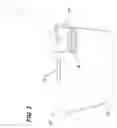
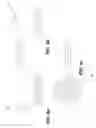
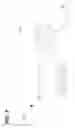
FIG. 1 Isometric view of the device.
FIG. 2 Side view of the device mounted on a bucket
FIG. 3ab Side views with the device open and closed, respectively.
FIG. 4 Side rear top views of the device, respectively.
FIG. 5 Side view of the device with two handles.
DETAILED DESCRIPTION
A wringer for towel (10) has at least one handle (12) acting as a lever, a pressing means (14), and a perforated basket (16). The handle is hingedly connected to the perforated basket (16) by way of a hinge means (18). The pressing means (14) is articulately connected to the handle (12) by a connector means (20) extending from the pressing means (14). The pressing means (14) can be in the guise of a plate configured and sized to generally espouse the shape and size of the perforated basket (16).
The wringer for towel (10) has, on the outside periphery of the perforated basket (16), a pair of hooks (22) to temporarily engage the rim (24) of a standard bucket (26).
The wringer for towel (10) is used by putting a towel (not shown) inside the perforated basket (16) and wringing the towel by way of the pressing means (14) which is actuated by the handle (12). Water or liquid from the towel passes through the holes (28) in the perforated basket (16) and fall into the bucket (26).
Alternatively, a variation of the wringer for towel (10) could have a second handle (12′) used as a holding means for when a user does not require a bucket such as when washing a car outside or any other cleaning chore where the waste liquid does not need to specifically fall into a container such as a bucket (26). In fact that alternate embodiment may not require hooks (22), although it would be well within the scope of the invention to have releasably attached hooks (22) as well as a releasably second handle (12′). This can be done by way of any one of a variety of releasable attachment means as are known in the art.
The wringer for towel (10) as one of the following methods of use:
When using the wringer for towel (10) having hooks (22), the user hooks the wringer for towel (10) onto a bucket (26) by way of the hooks (22) and puts a towel (not shown) inside the perforated basket (16), wrings the towel (not shown) by way of the pressing means (14) and liquid from the towel (not shown) passes through the holes (28) in the perforated basket (16).
When using the wringer for towel (10) with the second handle (12′), the user puts a towel (not shown) inside the perforated basket (16). Presses the towel (not shown) by using the handle (12) to press the pressing means (14) against the towel (not shown) while holding the wringer for towel (10) with the second handle (12′).
As to a further discussion of the manner of usage and operation of the present invention, the same should be apparent from the above description. Accordingly, no further discussion relating to the manner of usage and operation will be provided.
With respect to the above description then, it is to be realized that the optimum dimensional relationships for the parts of the invention, to include variations in size, materials, shape, form, function and manner of operation, assembly and use, are deemed readily apparent and obvious to one skilled in the art, and all equivalent relationships to those illustrated in the drawings and described in the specification are intended to be encompassed by the present invention.
Therefore, the foregoing is considered as illustrative only of the principles of the invention. Further, since numerous modifications and changes will readily occur to those skilled in the art, it is not desired to limit the invention to the exact construction and operation shown and described, and accordingly, all suitable modifications and equivalents may be resorted to, falling within the scope of the invention.
Claims
1. A wringer for towel comprising:
at least one handle which acts as a lever;
a pressing means;
a perforated basket;
the handle is hingedly connected to the perforated basket by way of a hinge means;
the pressing means is articulately connected to the handle by a connector means extending from the pressing means.
2. A wringer for towel as in claim 1 wherein:
the pressing means is a plate configured and sized to espouse the shape and size of the perforated basket.
3. A wringer for towel as in claim 1 wherein:
a pair of hooks located on the outside periphery of the perforated basket to temporarily engage the rim of a bucket.
4. A wringer for towel as in claim 1 wherein:
a second handle for use as a holding means for the wringer for towel.
5. A wringer for towel as in claim 3 having a method of use consisting of the steps of:
hooking the wringer for towel onto a bucket by way of the hooks;
putting a towel inside the perforated basket;
wringing the towel by way of the pressing means;
liquid from the towel passes through the holes in the perforated basket.
6. A wringer for towel as in claim 4 having a method of use consisting of the steps of:
putting a towel inside the perforated basket;
pressing the towel by using the handle to press the pressing means against the towel while holding the wringer for towel with the second handle.
Images & Drawings included:



Sources:
- United States Patent and Trademark Office - verify current appl. status at the USPTO↗
Recent applications in this class:
- » 20250151969 2025-05-15
MOP BUCKET FOR CLEANING AND SQUEEZING FLAT MOP - » 20250143532 2025-05-08
MOP BUCKET FOR CLEANING AND SQUEEZING FLAT MOP - » 20250113970 2025-04-10
MOP BUCKET FOR CLEANING AND SQUEEZING FLAT MOP - » 20250113969 2025-04-10
MOP BUCKET FOR CLEANING AND SQUEEZING FLAT MOP - » 20250025012 2025-01-23
MOP BUCKETS AND ASSOCIATED METHODS - » 20240398200 2024-12-05
MOP BUCKET FOR CLEANING AND SQUEEZING FLAT MOP - » 20240341559 2024-10-17
Double-Bucket Mop Bucket - » 20240298866 2024-09-12
Mop Wringer Assembly - » 20240074637 2024-03-07
Double Action Wringer Assembly - » 20240065514 2024-02-29
MOP WRINGERS AND BUCKET POSITIONING APPARATUS