Method and device for producing a maintenance-free battery having a fixed electrolyte
US20080016680A1
2008-01-24
11/575,155
2005-09-03
✅ Patent granted
US 8,298,301 B2
2012-10-30
WO; PCT/EP2005/009480; 20050903
WO; WO2006/029730; 20060323
Raymond Alejandro | Claire L Roe
2029-04-30
Abstract:
The invention relates to a method and a device for producing an accumulator having a fixed electrolyte. The inventive method is characterized by introducing an electrolyte in a flowable form into the accumulator cell and fixing the electrolyte and forming the active mass simultaneously inside the accumulator cell. The device for carrying out the inventive method comprises a filler head (1), an acid reservoir (3), a thickener reservoir (4), a metering pump for the acid (6.1+6.2), a metering pump for the thickener (5.1+5.2) and a flowmeter for the thickener (9.1+9.2) and the acid (10.1+10.2).
Inventors:
- Jean Ruch 2 🇩🇪 Brilon, Germany
- Dirk Schroder 1 🇩🇪 Meschede, Germany
- Albert Schulte 1 🇩🇪 Brilon, Germany
Assignee:
- Hoppecke Batterien GmbH & Co. KG 8 🇩🇪 Brilon, Germany
Interested in similar patents?
Get notified when new applications in this technology area are published.
Classification:
H01M4/22 » CPC main
Electrodes; Electrodes composed of, or comprising, active material; Electrodes for lead-acid accumulators; Processes of manufacture Forming of electrodes
H01M10/128 » CPC further
Secondary cells; Manufacture thereof; Lead-acid accumulators; Construction or manufacture Processes for forming or storing electrodes in the battery container
H01M50/60 » CPC further
Constructional details or processes of manufacture of the non-active parts of electrochemical cells other than fuel cells, e.g. hybrid cells Arrangements or processes for filling or topping-up with liquids; Arrangements or processes for draining liquids from casings
Y02E60/10 » CPC further
Enabling technologies; Technologies with a potential or indirect contribution to GHG emissions mitigation Energy storage using batteries
Y02E60/10 » CPC further
Enabling technologies; Technologies with a potential or indirect contribution to GHG emissions mitigation Energy storage using batteries
Y02P70/50 » CPC further
Climate change mitigation technologies in the production process for final industrial or consumer products Manufacturing or production processes characterised by the final manufactured product
Y02P70/50 » CPC further
Climate change mitigation technologies in the production process for final industrial or consumer products Manufacturing or production processes characterised by the final manufactured product
Y10T29/49108 » CPC further
Metal working; Method of mechanical manufacture; Electrical device making Electric battery cell making
Y10T29/53135 » CPC further
Metal working; Means to assemble or disassemble; Means to assemble electrical device Storage cell or battery
H01M10/10 » CPC further
Secondary cells; Manufacture thereof; Lead-acid accumulators; Selection of materials as electrolytes Immobilising of electrolyte
H01M4/82 IPC
Electrodes; Electrodes composed of, or comprising, active material; Carriers or collectors Multi-step processes for manufacturing carriers for lead-acid accumulators
H01M10/12 IPC
Secondary cells; Manufacture thereof; Lead-acid accumulators Construction or manufacture
H01M10/14 IPC
Secondary cells; Manufacture thereof; Lead-acid accumulators; Construction or manufacture Assembling a group of electrodes or separators
Description
The invention relates to a method and a device for producing an accumulator having a fixed electrolyte.
Accumulators having fixed electrolytes have been known since the fifties. The advantage of such battery types resides in their ease of maintenance and their safety regarding the leakage of the electrolyte in the accumulator cells. For fixing the electrolyte it is known to bind the same in the form of a gel or to fix it in the accumulator cells with the aid of a micro-structured non-woven material.
One example of the gel-fixed accumulators known from prior art are lead-gel accumulators wherein the electrolyte, normally sulfuric acid, is fixed in the form of a gel that is prepared on the basis of silicon dioxide. From prior art as disclosed by the U.S. Pat. No. 4,317,872 it is known up to present to produce the electrolyte gel batch by batch on the basis of a dispersion from an acid and a thickener and to introduce it into the accumulator cells. However, this batch production of the electrolyte gel frequently leads to quality variations of the gel and finally also to quality variations in the accumulators produced.
In addition, the acid/dispersion mixture must be cooled for decelerating the reaction. The plates must be formed. From German patent DE 197 57 481 it is known to pre-mix and fill in a dispersion from water, thickener and preferably boric acid for reaction deceleration. Inside the accumulator the sulfuric acid is in the active mass of the discharged plates. The thickening is effected by charging.
The laid-open U.S. patent application US 2903/0157400 A1 discloses an apparatus for filling lead accumulators in which the gel components are continuously mixed during the filling of the battery, whereby quality variations of the batch-by-batch production of the electrolyte gel are overcome.
A further problem at the production of accumulators having fixed electrolytes is the formation of cracks and pores during the forming process of the active mass inside the accumulator cells, i.e. during the initial charging of the accumulators. The reactions taking place at the electrodes (in the case of the lead accumulator at the negative electrode the conversion of Pb to PbSO4, at the negative electrode the conversion of PbO2 to PbSO4 or the corresponding back reactions) can lead to cracks and pores in the gelled electrolyte. Although an improved transport of gases (transport of oxygen) is made possible thereby inside the accumulator cells, the cracks in the direct environment of the active mass will lead to increased cell resistances due to a worse contacting between the active mass and the gel and accordingly to an adverse effect on the accumulator performance.
The problem of the present invention is the provision of a method which is suitable for overcoming the difficulty of fluctuations in quality of the electrolyte at the batch-by-batch production of gel electrolytes and also the disadvantages occurring due to the formation of the active masses inside the gel accumulators, taking prior art into account.
This problem is solved by a method for producing an accumulator having a fixed electrolyte, characterized by introducing an electrolyte in a flowable form into the accumulator cell and fixing the electrolyte and forming the active mass simultaneously inside the accumulator cell and by a device for carrying out the inventive method which comprises a filler head (1), an acid reservoir (3), a thickener reservoir (4), a metering pump for the acid (6.1+6.2), a metering pump for the thickener (9.1+9.2) and the acid (10.1+10.2).
According to the invention the electrolyte is fixed inside the accumulator cell in the form of a gel. The gel is introduced into the accumulator cell from a thickener and an acid. The thickener and the acid, for instance a colloidal aqueous silicon dioxide solution and sulfuric acid are mixed only at the time of the introduction into the accumulator cell. Simultaneously with the introduction of the sol into the accumulator cell a voltage is applied to the accumulator cell which is suitable for forming active masses inside the cells.
The advantages of the inventive method result from the fact that on one side reformed plates can be used and that on the other side the sol/gel mixture is prepared shortly before the filling and is filled in within the reaction time. This results in considerable simplifications of the method and economies thereof for instance through the abandonment of cooling, agitation, pre-forming. The method can be carried out at room temperature.
By proceeding according to the invention the mobility of the sulfuric acid is reduced, resulting in that the heat development is made uniform, so that other than known from prior art temperature peaks cannot negatively influence other components.
Further advantages and features of the invention will become apparent from the following description of the drawing figures and the illustrated embodiment.
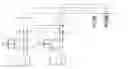
FIG. 1 shows a schematic structure of the device according to the invention;
FIG. 2 shows the structure of the filler head (1) according to the invention; and
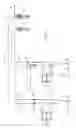
FIG. 3 shows the device according to the invention for filling a plurality of accumulators.
The inventive device for carrying out this method includes in addition to corresponding electrical connectors and suitable voltage sources for applying the required forming voltage a filler head (1) which includes at least one inlet (19) each for the thickener, the acid and a washing medium. Moreover, the filler head (1) includes a mixing device (20) for the static mixing of at least the thickener with the acid. The filler head further includes a filling finger (21) which is advantageously adapted to the accumulator cell to be filled and which is mounted in an exchangeable manner on the filler head for flexibility of the filler head. The device also includes a flow meter for the thickener and the acid that is used, with the aid of which exactly predetermined mixing ratios can be prepared by means of a control unit.
Additionally, the device includes on the filler head a supply passage for a washing medium (2), with the aid of which thickener residues present in the passages (11.1+11.2) leading to the thickener can be washed back to the thickener reservoir (3) via three-way valves (8.1+8.2) through a back washing passage (13). Advantageously, pressurized air serves as a washing medium.
The device according to the invention includes metering pumps for the thickener (5.1+5.2) and the acid (6.1+6.2). Advantageously, these metering pumps are operated by means of stepping motors (7.1+7.2). However, any other driving device is suitable as well, provided that it guarantees fine and exact metering of the components to be mixed.
By the continuous mixing of the gel components inside the filler head at the time of introducing the gel into the accumulator in the form of a sol and by the mixing ratios that can be finely adjusted by the metering pumps the fluctuations in quality of the electrolyte known in connection with the batch-by-batch mixing of the electrolyte are overcome. By the simultaneous filling of the accumulator with the electrolyte gel or sol and the forming of the active masses inside the cells the disadvantages of the gel accumulators known from prior art are overcome.
Advantageously, a device for carrying out the inventive method includes a filler head (1) like for instance the filler head illustrated in FIG. 2. The filler head includes at least one inlet (19) each for the gel components and the washing medium. In addition, a filler head according to the invention includes a static mixing device (20) in which the gel components are mixed prior to being introduced into the accumulator.
For filling the electrolyte sol in the accumulator the filler head (1) according to the invention has a filling finger (21) which is adapted advantageously to the accumulator to be filled or to the geometry of the fill opening of the accumulator. Advantageously, the filling finger (21) is mounted in an exchangeable manner to the filler head (1), so that by means of different filling fingers (21) one filler head (1) can be used for different accumulator types.
FIG. 3 shows an inventive device for filling a plurality of accumulators. The inventive device includes a seat (14) for the accumulators to be filled, positioning devices (15.1+15.2) for the inventive filler heads (1) as well as a metering unit having metering pumps (5.1+5.2) for the thickener and metering pumps (6.1+6.2) for the acid.
The positioning devices (15.1+15.2) for the filler heads (1) are mounted for displacement along a guide (16), so that the filler heads can be freely moved above the seat (14) for the accumulators to be filled. Alternatively, the seat (14) for the accumulators to be filled can be designed as a movable XY table, whereas the filler heads (1) are stationary. A further alternative for positioning the filler heads (1) is the use of a six-axes articulated robot or other handling devices.
For controlling the device according to the invention includes a control box (17) and a control console (18).
LIST OF REFERENCE NUMBERS
- 1 filler head
- 2 passage for washing medium
- 3 thickener reservoir
- 4 acid reservoir
- 5.1/5.2 thickener metering pump
- 6.1/6.2 acid metering pump
- 7.1/7.2 stepping motors
- 8.1/8.2 three-way valve
- 9.1/9.2 thickener flow meter
- 10.1/10.2 acid flow meter
- 11.1/11.2 thickener passage
- 12.1/12.2 acid passage
- 13 back washing passage
- 14 seat for the accumulators to be filled
- 15.1/15.2 positioning device with filler head
- 16 slide rail for positioning device
- 17 control box
- 18 control console
- 19 inlets
- 20 mixing device
- 21 filling finger
Claims
1. Method for producing an accumulator having a fixed electrolyte, characterized in that the electrolyte is introduced in a flowable form into the accumulator cell and that the fixing of the electrolyte and the forming of the active mass inside the accumulator cell are effected simultaneously.
2. Method according to claim 1, characterized in that the electrolyte is fixed in the accumulator cell in the form of a gel.
3. Method according to one or more of the preceding claims, characterized in that the electrolyte is introduced into the accumulator cell in the form of a sol mixture.
4. Method according to one or more of the preceding claims, characterized in that the gel is prepared from at least one sol and one acid.
5. Method according to one or more of the preceding claims, characterized in that at least the thickener and the acid are mixed only at the time of their introduction into the accumulator cell.
6. Method according to one or more of the preceding claims, characterized in that simultaneously with the introduction of the sol into the accumulator cell a voltage is applied to the accumulator cell which is suitable for forming active masses.
7. Method according to one or more of the preceding claims, characterized in that the accumulator is a lead-gel accumulator having a silicon dioxide/sulfuric acid electrolyte.
8. Method according to claim 7, characterized in that the silicon dioxide is used in the form of a colloidal aqueous solution.
9. Device for carrying out the method according to one or more of the claims 1 to 8, which device includes a filler head (1), an acid reservoir (3), a thickener reservoir (4), a metering pump for the acid (6.1+6.2), a metering pump for the thickener (5.1+5.2) as well as flow meters for the thickener (9.1+9.2) and for the acid (10.1+10.2).
10. Device for carrying out the method according to one or more of the claims 1 to 8, including a seat for the accumulator cell (14) to be filled and a device for positioning the filler head (1) and the accumulator cell to be filled relative to each other.
11. Device according to claim 10, characterized in that the positioning device is formed by two mutually orthogonal guide elements, by means of which the filler head (1) is freely movable.
12. Filler head for carrying out the method according to one or more of the claims 1 to 8, including at least one inlet (19) each for the thickener, the acid and the washing medium, a mixing device (20) for the static mixing of at least the thickener with the acid, as well as a filling finger (21) for introducing into the accumulator the mixed sol consisting of thickener and acid.
13. Filler head according to claim 12, characterized in that the filler head can be equipped with different filling fingers that are adapted to the accumulator cell to be filled.
Images & Drawings included:


Sources:
- United States Patent and Trademark Office - verify current appl. status at the USPTO↗
Recent applications in this class:
- » 20240145671 2024-05-02
METHOD OF FORMING A COMPOSITION AND THE COMPOSITION FORMED THEREFROM - » 20230006193 2023-01-05
POROUS METAL MATRIX COMPOSITE AND METHOD FOR PRODUCING THE SAME - » 20210336250 2021-10-28
FREESTANDING LAMINATE, METHOD FOR THE MANUFACTURE THEREOF, AND METHOD OF MAKING A LEAD CARBON BATTERY - » 20210193988 2021-06-24
Coated lead acid battery electrode plates; method for making coated electrode plates and lead acid batteries containing coated electrode plates - » 20200365876 2020-11-19
Bag plate electrodes for lead acid battery - » 20200161636 2020-05-21
Method and installation for producing an electrode plate, an electrode plate and a rechargeable electrochemical battery - » 20200119335 2020-04-16
Producing electrodes for lead acid batteries - » 20190341604 2019-11-07
METHOD OF FORMING A CARBON BASED ACTIVE LAYER FOR AN ANODE OF A LEAD CARBON BATTERY AND THE ACTIVE LAYER FORMED THEREFROM - » 20190252674 2019-08-15
COATED LEAD ACID BATTERY ELECTRODE PLATES; METHOD FOR MAKING COATED ELECTRODE PLATES AND LEAD ACID BATTERIES CONTAINING COATED ELECTRODE PLATES - » 20190103604 2019-04-04
Method for Forming an Electrical Connection to a Conductive Fibre Electrode and Electrode So Formed
Recent applications for this Assignee:
- » 20210098840 2021-04-01
Traction battery - » 20200358056 2020-11-12
Battery box for a block battery - » 20200303696 2020-09-24
System comprising of a holder and stored energy sources which can be placed in the holder - » 20200040430 2020-02-06
Lead alloy, electrode and accumulator - » 20160020440 2016-01-21
Battery cell for a battery, especially for a traction battery - » 20150162589 2015-06-11
Separator - » 20110293821 2011-12-01
Process for the preparation of plates for lead-acid batteries