Apparatus, method, and article of manufacture used to encode information into an image and to decode information from a captured image
US20080025553A1
2008-01-31
11/459,927
2006-07-25
✅ Patent granted
US 7,747,087 B2
2010-06-29
-
-
Vikkram Bali | Eueng-Nan Yeh
2028-12-28
Abstract:
This patent describes a system for encoding information such as identity into an image or series of images. It also describes a system for identifying, extracting, and decoding that information from the image or images. The encoding process is designed to minimize the damage to the perceived quality of the image. The decoding process is optimized for use with images generated with digital cameras and can easily be implemented in mobile communications devices.
Inventors:
- Michael Laude 5 🇺🇸 San Diego, CA, United States
- Kristen Glass 5 🇺🇸 San Diego, CA, United States
Interested in similar patents?
Get notified when new applications in this technology area are published.
Classification:
H04N1/32203 » CPC main
Scanning, transmission or reproduction of documents or the like, e.g. facsimile transmission; Details thereof; Circuits or arrangements for control or supervision between transmitter and receiver or between image input and image output device, e.g. between a still-image camera and its memory or between a still-image camera and a printer device; Display, printing, storage or transmission of additional information, e.g. ID code, date and time or title embedded in the image data, i.e. enclosed or integrated in the image, e.g. watermark, super-imposed logo or stamp; Methods relating to embedding, encoding, decoding, detection or retrieval operations Spatial or amplitude domain methods
H04N1/32208 » CPC further
Scanning, transmission or reproduction of documents or the like, e.g. facsimile transmission; Details thereof; Circuits or arrangements for control or supervision between transmitter and receiver or between image input and image output device, e.g. between a still-image camera and its memory or between a still-image camera and a printer device; Display, printing, storage or transmission of additional information, e.g. ID code, date and time or title embedded in the image data, i.e. enclosed or integrated in the image, e.g. watermark, super-imposed logo or stamp; Methods relating to embedding, encoding, decoding, detection or retrieval operations; Spatial or amplitude domain methods involving changing the magnitude of selected pixels, e.g. overlay of information or super-imposition
H04N1/32229 » CPC further
Scanning, transmission or reproduction of documents or the like, e.g. facsimile transmission; Details thereof; Circuits or arrangements for control or supervision between transmitter and receiver or between image input and image output device, e.g. between a still-image camera and its memory or between a still-image camera and a printer device; Display, printing, storage or transmission of additional information, e.g. ID code, date and time or title embedded in the image data, i.e. enclosed or integrated in the image, e.g. watermark, super-imposed logo or stamp; Methods relating to embedding, encoding, decoding, detection or retrieval operations; Spatial or amplitude domain methods with selective or adaptive application of the additional information, e.g. in selected regions of the image
H04N2201/3269 » CPC further
Indexing scheme relating to scanning, transmission or reproduction of documents or the like, and to details thereof; Circuits or arrangements for control or supervision between transmitter and receiver or between image input and image output device, e.g. between a still-image camera and its memory or between a still-image camera and a printer device; Display, printing, storage or transmission of additional information, e.g. ID code, date and time or title of machine readable codes or marks, e.g. bar codes or glyphs
G06K9/00 IPC
Methods or arrangements for recognising patterns
Description
FIELD OF THE INVENTION
This invention relates to the fields of information coding & image processing.
DESCRIPTION OF THE RELATED ART
There is a growing demand for interactive video services. Mobile digital camera phones and other mobile communications devices are ubiquitous and have the capability to provide an interactive television experience. Until now, this experience has been, at best, slow, clumsy, and not very interactive. For example, “instant voting” implementations simply encourage viewers to send text messages to numbers in order to vote for their favorite television personalities.
Unless they require specialized hardware, existing systems are neither instant nor truly interactive. The basic problem with existing systems is that the mobile device does not have any method discovering the context in which it is operating, for example, which program the viewer is watching. Instead, the viewer/mobile device user must supply this intelligence, greatly reducing the convenience and usability.
There is a clear need for a system that can work with existing video delivery systems and mobile devices. If we can provide an easy way for the mobile device to identify what the viewer/user is watching, we can dramatically improve the user experience. By providing mechanisms for encoding information into an image and extracting and decoding that information from a captured image, this invention provides a practical means of identifying video images.
SUMMARY OF THE INVENTION
This invention consists of an encoding system for embedding information (such as the identity of the image, contact information, etc.) into an image (or stream of images) and a simple decoding system for extracting the information from the image or images.
By allowing the viewer's mobile device to extract specific information from the image, this invention greatly simplifies the interactive experience. With this invention, the viewer simply aims the mobile device in the direction of the external display that is showing the images that contain encoded information. Software in the mobile device uses the device's camera to capture the image from an external display. The mobile device software then quickly extracts and decodes the encoded information. The decoded information may, for example, include the identity of the image or video program being viewed or phone numbers to call or text message.
Knowing the identity of the display makes it possible for software in the mobile device to display information unique to the program being viewed. For example, the mobile device could provide additional information about the program, allow the viewer to vote by selecting and clicking a box, or even allow the user to quickly change their device settings.
This invention's utility is not limited to broadcast media. It could also be useful for recorded video and even static images.
BRIEF DESCRIPTION OF THE DRAWINGS
The nature, objects, and advantages of the invention will become more apparent to those skilled in the art after considering the following detailed description in connection with the accompanying drawings, in which like reference numerals designate like parts throughout, and wherein:
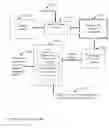
(1) FIG. 1 provides an overview of the encoding/decoding system.
(2) FIG. 2 provides an overview of the encoding process.
(3) FIG. 3 provides an overview of the decoding process.
DETAILED DESCRIPTION OF THE SELECTED EMBODIMENTS
This section provides detailed descriptions of selected embodiments.
Components and Interconnections
FIG. 1 provides an overview of the encoding/decoding system components and interconnections. The original image or images (100) are fed into an image processing system (101). The image processing system may, for example, be a standard personal computer, a standard personal computer with specialized video or image processing hardware, or a specialized video or image processing computer-based device.
The image processing system encodes information (102) supplied by an operator or external system into the image or images. The output of the image processing system is an image (or images) containing the encoded information (103).
These images may be transmitted immediately or recorded for future playback on a television or other display system (104). The viewer's information extraction and decoding system, for example, a mobile device with camera (105) and information extraction and decoding software (106) captures the image or images from the display system. The software extracts and decodes the encoded information from the captured image, producing decoded information (107) that can be made available to the user or to other mobile device software.
Operation
This section describes the operation of the selected embodiments.
Encoding
FIG. 2 is a flow diagram of the encoding process performed by the image processing system (101) shown in FIG. 1.
-
- (1) Construct the information (200), for example, a unique identifier, to be encoded. The size of the information in bits can be adjusted to match the image size and resolution as well as the resolutions of the cameras which will be used to decode the information.
- (2) Convert the information to 8 bit bytes
- (3) In the image, the start & end of each encoded byte is indicated by “dark” pixels. A “dark” pixel simply has a minimum luminance value (usually 0). Dark pixels between the delimiter pixels indicate binary ones. The minimum luminance for “Light” pixels, indicating zeroes, may be selected to match the capabilities of the display device and the digital camera. Ideally, the vast majority of light pixels should be unmodified image pixels.
- (4) Using the bit values and the pixel values from the original image (201, 202), encode each byte into a start delimiter, light and dark pixels, a parity pixel, and an end delimiter. A dark parity pixel denotes odd parity. A light pixel denotes even parity. For more advanced displays and cameras, the parity pixel is optional.
- (5) Insert the encoded identifier into the image edges (203), starting at an agreed location (usually the top left corner) and proceeding in an agreed direction (usually clockwise). Inserting at least one light pixel between each encoded byte reduces the chance of decoding errors. Given a typical NTSC monitor (generally capable of displaying 330 pixels horizontally & 240 pixels vertically) and a low-end digital camera (640×480), 103 bytes can be encoded and decoded around the edges of the display. The algorithm can encode more information by spiraling inward, but this usually leads to unacceptable image degradation. For additional robustness, the first two bytes may be used to indicate the length of the identifier. The value for length should not include the two length bytes, as they are not part of the identifier.
- (6) For video, the identifier usually needs to be visible in multiple sequential video frames, so the insertion process must be repeated for multiple video frames.
- (7) The result of this process is a modified copy of the original image with embedded encoded information (204).
Decoding
FIG. 3 is a flow diagram of the decoding process performed by the information extraction and decoding system (105) shown in FIG. 1.
-
- (1) Capture an image containing information encoded as described above (300). Ideally, the image capture process automatically produces an image of optimum size and resolution, cropped to the edges of the desired image. To enhance the decoding process for video, the extraction and decoding system may capture several frames. The optimum number of frames is calculated based on estimates of image and camera resolution as well as camera speed.
- (2) Process the image to estimate pixel sizes (302).
- (3) Starting in an agreed location (usually the upper left corner) of the captured image, search for dark pixels on the edges of the display, proceeding in an agreed direction (usually clockwise) (303).
- (4) When the algorithm finds a dark pixel, it looks for the closing dark pixel, which should be nine (including parity pixel) or eight (no parity) pixels from the start pixel. When the algorithm finds pixels meeting these conditions, it has identified a potential (or candidate) information byte (304).
- (5) Validate the candidate information byte (305).
- Analyze the pixels between the start and end pixels to determine their values. These values constitute one eight bit byte of the image identifier, plus start/end bits, plus an optional parity bit.
- If multiple image frames are available, check the other frames for this same pixel pattern. Compare and, if necessary, correct for errors, or discard the byte. For example, if the byte only appears in a single frame, it is, at best suspect.
- (6) Repeat this process until the entire edge of the image has been processed.
- (7) Check if the first two bytes indicate the length of the identifier. If so, verify that the correct number of bytes has been processed. If more bytes are needed, continue the byte search process, spiraling inward into the image's center.
- (8) Output the extracted and decoded information (306).
- (9) The final verification of the extracted and decoded information is external to this algorithm. For example, the information may consist of an identifier that will be used to perform a lookup into a table or database.
Article of Manufacture
The system may be implemented as shown in FIG. 1. For example, the image processing system (101) is configured with specialized software to process video and image data. Here, the term “software” is used broadly and comprises, for example, a machine readable language construct that species an operation and identifies operands (instructions), application programs, algorithms, software configuration data, multimedia data, video data, and audio data. These data may reside in any type of storage unit using any type of data storage media. In various embodiments, the software may comprise or emulate lines of compiled “C-type” language, “Java-type” interpreted or pre-compiled language, source code, object code, executable machine code, executable programs, data banks, or other types of commonly known data.
As a further example, information extraction and decoding system (105) may be implemented in a mobile communication device with a digital camera configured with specialized software to capture images, detect, extract, and decode the information encoded in the captured images.
Other Embodiments
Despite the specific foregoing descriptions, ordinarily skilled artisans having the benefit of this disclosure will recognize that the apparatus, method, and article of manufacture discussed above may be implemented in an apparatus, system, method, or article of manufacture of different construction without departing from the scope of the invention. Similarly, parallel methods may be developed. As a specific method example, in order to minimize the impact on image quality, more advanced future systems may encode the information units into different locations in the image. In this advanced method, the coding process adds sequence numbers to the information units and places the coded information unit into sections of the image which already resemble the coded information unit. This method adds significant additional processing requirements to both the encoding and decoding systems, but may be worth adding to the system when more powerful components become available.
As a specific apparatus example, the information extraction and decoding software (106) is a key component of this invention. Although embodiments described in this patent assume that this software will run on a mobile device, the software can run on any platform.
As a specific article of manufacture example, the information extraction and decoding software (106) may be modified to become more efficient or accurate, or it may be expanded to include additional functions.
Claims
What is claimed is:1. A unique system for encoding information into images. This system can be implemented in a variety of systems, including but not limited to a standard personal computer, a standard personal computer with specialized video/image processing hardware, or a specialized image/video processing system.
2. A simple system of identifying, extracting, and decoding the information encoded into images. This system can be implemented in almost any computing device but is especially well suited to mobile communication devices.
Images & Drawings included:



Sources:
- United States Patent and Trademark Office - verify current appl. status at the USPTO↗
Recent applications in this class:
- » 20170078519 2017-03-16
Watermark generator, watermark decoder, method for providing a watermarked signal based on discrete valued data and method for providing discrete valued data in dependence on a watermarked signal - » 20160080602 2016-03-17
Image processing apparatus, image processing method, and non-transitory computer-readable storage medium that embed additional information in an image having a plurality of pixels and image information - » 20160014297 2016-01-14
Salient point-based arrangements - » 20150016688 2015-01-15
Salient point-based arrangements - » 20120237079 2012-09-20
Invisible information embedding apparatus, invisible information detecting apparatus, invisible information embedding method, invisible information detecting method, and storage medium - » 20120121086 2012-05-17
Image encryption/decryption device, method, and storage medium storing a program - » 20110235084 2011-09-29
Image forming apparatus comprising pattern adding function - » 20110194690 2011-08-11
Data adaptive message embedding for visible watermarking - » 20110194154 2011-08-11
Image processing apparatus, method, and computer program - » 20110170133 2011-07-14
IMAGE FORMING APPARATUS, METHOD OF FORMING IMAGE AND METHOD OF AUTHENTICATING DOCUMENT