Socket connector with retaining device
US20080057750A1
2008-03-06
11/899,192
2007-09-04
✅ Patent granted
US 7,476,107 B2
2009-01-13
-
-
T C Patel | Vladimir Imas
2027-09-04
Abstract:
A socket connector (100) includes an insulative housing (1) and a frame (3). The housing defines a mating interface (101), a mounting interface (102) opposite to the mating interface and periphery faces between the mating interface and the mounting interface. The frame has an opening (31) therein to accommodate the housing. At least one retaining device (11) includes a stopper portion (111) and a resilient claw portion (113) unitarily formed on the periphery face of the housing. One face of the frame is supported by the stopper portion and the opposite face is abutted against by the resilient claw potion while the housing is assembled in the opening of the frame.
Assignee:
- Hon Hai Precision Ind. Co., Ltd. 1,929 🇹🇼 Taipei Hsien, Taiwan
Interested in similar patents?
Get notified when new applications in this technology area are published.
Classification:
H01R12/7011 » CPC main
Structural associations of a plurality of mutually-insulated electrical connecting elements, specially adapted for printed circuits, e.g. printed circuit boards [PCBs], flat or ribbon cables, or like generally planar structures, e.g. terminal strips, terminal blocks; Coupling devices specially adapted for printed circuits, flat or ribbon cables, or like generally planar structures; Terminals specially adapted for contact with, or insertion into, printed circuits, flat or ribbon cables, or like generally planar structures; Coupling devices; Guiding, mounting, polarizing or locking means; Extractors Locking or fixing a connector to a PCB
H01R12/7023 » CPC further
Structural associations of a plurality of mutually-insulated electrical connecting elements, specially adapted for printed circuits, e.g. printed circuit boards [PCBs], flat or ribbon cables, or like generally planar structures, e.g. terminal strips, terminal blocks; Coupling devices specially adapted for printed circuits, flat or ribbon cables, or like generally planar structures; Terminals specially adapted for contact with, or insertion into, printed circuits, flat or ribbon cables, or like generally planar structures; Coupling devices; Guiding, mounting, polarizing or locking means; Extractors; Locking or fixing a connector to a PCB; Snap means integral with the coupling device
H01R12/82 » CPC further
Structural associations of a plurality of mutually-insulated electrical connecting elements, specially adapted for printed circuits, e.g. printed circuit boards [PCBs], flat or ribbon cables, or like generally planar structures, e.g. terminal strips, terminal blocks; Coupling devices specially adapted for printed circuits, flat or ribbon cables, or like generally planar structures; Terminals specially adapted for contact with, or insertion into, printed circuits, flat or ribbon cables, or like generally planar structures; Coupling devices connected with low or zero insertion force
H01R12/85 » CPC further
Structural associations of a plurality of mutually-insulated electrical connecting elements, specially adapted for printed circuits, e.g. printed circuit boards [PCBs], flat or ribbon cables, or like generally planar structures, e.g. terminal strips, terminal blocks; Coupling devices specially adapted for printed circuits, flat or ribbon cables, or like generally planar structures; Terminals specially adapted for contact with, or insertion into, printed circuits, flat or ribbon cables, or like generally planar structures; Coupling devices connected with low or zero insertion force contact pressure producing means, contacts activated after insertion of printed circuits or like structures
H01R12/00 IPC
Structural associations of a plurality of mutually-insulated electrical connecting elements, specially adapted for printed circuits, e.g. printed circuit boards [PCBs], flat or ribbon cables, or like generally planar structures, e.g. terminal strips, terminal blocks; Coupling devices specially adapted for printed circuits, flat or ribbon cables, or like generally planar structures; Terminals specially adapted for contact with, or insertion into, printed circuits, flat or ribbon cables, or like generally planar structures
Description
BACKGROUND OF THE INVENTION
1. Field of the Invention
The present invention relates to a socket connector, and particularly to a socket connector for electrically connecting an IC package to a printed circuit board (PCB).
2. Description of Related Arts
FIG. 11 shows a conventional socket connector 1′ for connecting an IC package to a PCB. The connector includes an insulating housing 2′ with a plurality of conductive terminal 6′ arranged therein, a metal reinforcing plate or stiffener 3′ attached to a bottom face of the housing and surrounding the housing, a cover 5′ and a lever 4′. The housing has a rectangular shape with ribs 23′ extending upright therefrom for interengaging with the inner side of the reinforcing plate so as to retain the housing in the plate. The lever 4′ is pivotally supported on an end of the plate and the cover 5 is pivotally retained on another ends opposite to said end of the plate. The lever having a cam portion to press toward a free end of the cover to lock the cover to the housing when the IC package is received in the housing.
The engagement of the housing and the plate restricts only in one direction and limits only one dimensional movement of the housing with respect to the reinforcing plate, which will result in a loose engagement between the housing and the plate. Rendering a disengagement between the housing and the reinforcing plate after a period of time of usage.
Hence, a socket connector having improved retaining device is desired.
SUMMARY OF THE INVENTION
Accordingly, an object of the present invention is to provide a socket connector having improved retaining device to ensure an insulating housing in an frame, in which the housing is retained.
To achieve the above objects, a socket connector comprises an insulative housing and a frame. The housing defines a mating interface, a mounting interface opposite to the mating interface and outside faces between the mating interface and the mounting interface. The frame has an opening therein to accommodate the housing. At least one retaining device includes a stopper portion and a resilient claw portion unitarily on the periphery face of the housing. One face of the frame is supported by the stopper portion and the opposite face is abutted against by the resilient claw potion while the housing is assembled in the opening of the frame.
Other objects, advantages and novel features of the invention will become more apparent from the following detailed description of the present embodiment when taken in conjunction with the accompanying drawings.
BRIEF DESCRIPTION OF THE DRAWING
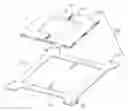
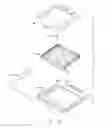
FIG. 1 is a perspective, exploded view of a socket connector of a first embodiment in accordance with the present invention;
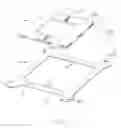
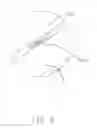
FIG. 2 is a perspective view of half part of the housing shown in FIG. 1;
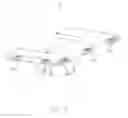
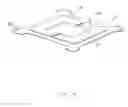
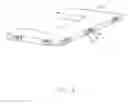
FIG. 3 is a top perspective, assembled view of the connector;
FIG. 4 is an enlarged view of circle 4 shown in FIG. 3;
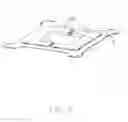
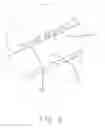
FIG. 5 is a bottom perspective, assembled view of the connector;
FIG. 6 is an enlarged view of circle 6 shown in FIG. 5;
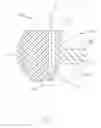
FIG. 7 is an enlarged cross-section view of the assembled connector, showing the engagement of the housing and the frame;
FIG. 8 is a perspective view of the housing of a second embodiment of the present invention;
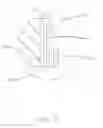
FIG. 9 is an enlarged cross-section view of housing of the connector shown in FIG. 8;
FIG. 10 is an enlarged cross-section view of the assembled connector shown in FIG. 8, showing the engagement of the housing and the frame; and
FIG. 11 is a perspective, exploded view of a conventional socket connector.
DETAILED DESCRIPTION OF THE PREFERRED EMBODIMENT
Further (detailed) description of the preferred embodiments of this present invention is set forth below along with the attached drawings. FIGS. 1˜7 shows a first embodiment and FIGS. 8˜10 shows a second embodiment made in accordance with the present invention.
Referring to FIG. 1, a socket connector 100 made in accordance with the present invention comprises a rectangular insulating housing 1 with a plurality of conductive terminal (not shown) arranged therein, a frame 3 in which the housing is retained. The frame 3 has a substantially rectangular board shape and defines an opening 31 in the center thereof. The frame 3 includes an assembling portion 32 at each of four corners and a though-hole 321 on the assembling portion used to retain the frame on a PCB. Two fingers 33 extend inward from two opposite middle inside edge of the opening into the opening 31 to divide the opening into two equivalent parts. The housing 1 is configured of two symmetrical base portions 10 securely received in said two parts of the opening 31, respectively. The top of the housing is served as a mating interface 101 and the opposite bottom face 102 is served as a mounting interface as shown in FIG. 5.
Referring to FIG. 2, the housing 10 comprises a plurality of similar retaining devices 11˜15 on an outside face thereof. A stopper portion or rib 111 transversely projects outward from a bottom edge of the outside face of the housing, i.e. the stopper rib extends parallel to the mounting interface. A guiding portion 112 or rib projects outward adjacent the stopper rib 111 without space, which extends upright and perpendicular to the stopper rib. Referring to FIG. 7, a recess 114 is defined on the outside of the housing perpendicular to the mounting interface 102 and a claw portion 113 projects outward from the top edge of recess 114. The claw potion is slant to the mounting interface 102 and have resilient capability. The distance between the end of the claw portion and a top surface 1110 of the stopper rib is substantially equal to the thickness of the frame 3. The guiding rib 112 sleekly joints to the outside of the housing. The retaining device 13, 14, 15 might further includes a second guiding rib 1121, if necessary.
The frame 3 is put on the housing from the top of the housing. The edge of the opening 31 of the frame 3 deform the resilient claw portion 113 inward and get across until below the free end of the claw portion, and then the claw portion restore. The top 301 of the frame is abut against the free end of the claw portion 113 and the bottom 302 of the frame is supported by the top face 1110 of the stopper rib 112. The guiding rib 112, 1121 can guide the frame onto the housing.
The configuration of the connector of the second embodiment is substantially similar to that of the first embodiment except the resilient claw portion 9. A cantilever arm 9 extends upward from the bottom edge of the outside of the housing. The arm 9 is spaced away the outside of the housing with a slot 71 and outward hook 91 slants to the mounting interface from the end of the arm to form a resilient claw portion. The frame 3 is disposed between the free end and the stopper portion 111. The slot 71 enlarges the deformation of the arm and increases the resilient of the arm.
It is to be understood, however, that even though numerous characteristics and advantages of the present invention have been set forth in the foregoing description, together with details of the structure and function of the invention, the disclosure is illustrative only, and changes may be made in detail, especially in matters of shape, size, and arrangement of parts within the principles of the invention to the full extent indicated by the broad general meaning of the terms in which the appended claims are expressed.
Claims
I claim:1. A socket connector comprising:
an insulative housing arranged with a plurality of conductive terminal therein, defining a mating interface, a mounting interface opposite to the mating interface and periphery faces between the mating interface and the mounting interface;
a frame defining two opposite faces thereof and an opening therein to securely accommodate the insulative housing;
at least one retaining device comprising a stopper portion and a resilient claw portion unitarily formed on the periphery face of the housing;
wherein one face of the frame is supported by the stopper portion and the opposite face is abutted against by the resilient claw potion while the housing is assembled in the opening of the frame.
2. The socket connector as described in claim 1, wherein the stopper portion is arranged by adjacent to the mounting interface and defines an upward face opposite to the mounting interface to support one face of the frame, and the claw resilient portion is arranged by adjacent to the mating interface.
3. The socket connector as described in claim 1, wherein the periphery face of the housing projects a transverse rib adjacent the mounting interface to form said stopper portion.
4. The socket connector as described in claim 1, wherein the resilient claw portion is slant outwards and to the mounting interface.
5. The socket connector as described in claim 1, wherein the retaining device further comprises a guiding portion between the stopper portion and the claw portion along a direction parallel to the mating interface to guiding the frame surrounding the housing from the mating interface.
6. The socket connector as described in claim 2, wherein the claw portion is defined by a cantilever arm extending from the mounting portion to the mating interface at the periphery face of the housing.
7. The socket connector as described in claim 1, wherein the opening of the frame is divided into two parts by two fingers respective opposite extending into the opening from a middle inside edge of the opening and the housing includes two parts to receive in the opening.
8. A socket connector comprising:
a frame defining an opening therein;
an insulative housing assembled into the opening of the frame along a first direction, the housing arranged with a plurality of conductive terminal therein and provided with a stopper portion and a resilient claw portion;
wherein the stopper portion have a supporting face perpendicular to the first direction, edges of the opening of the frame slides over the resilient claw portion and nicely sandwich between the claw portion and the supporting portion.
9. The socket connector as described in claim 8, wherein the stopper portion projects outward from outside of the housing.
10. The socket connector as described in claim 8, wherein the claw portion slantways projects outward and spaces away the stopper portion with a distance equal to a thickness of the edge of the opening.
11. A socket comprising:
a frame having a rectangular main body defining a large opening;
a pair of fingers extending from the main body into the large opening and forming two areas in said large opening; and
a pair of housings with a plurality of contacts therein, and assembled to the main body and the fingers in a supportably locking manner in said large opening; wherein
said fingers are spaced from each other so as to cooperate with the housings to commonly define a small opening in said large opening.
12. The socket as claimed in claim 11, wherein both said large opening and said small opening are essentially square.
13. The socket as claimed in claim 11, wherein said housing defines at least one resilient hook on a peripheral edge face.
14. The socket as claimed in claim 13, wherein said housing further defines at least one lead-in surface beside said hook.
15. The socket as claimed in claim 14, wherein a stopper is formed on the housing to cooperate with the hook for locking the housing in position with regard to the frame.
Images & Drawings included:

Sources:
- United States Patent and Trademark Office - verify current appl. status at the USPTO↗
Recent applications in this class:
- » 20250105535 2025-03-27
SERVER AND RISER CABLE HOLDER - » 20250038437 2025-01-30
COMPACT RELIABLE RECEPTACLE CONNECTOR - » 20240079804 2024-03-07
CONNECTOR WITH SUBSTRATE - » 20230261397 2023-08-17
ELECTRICAL CONNECTOR AND ELECTRICAL CONNECTOR SET INCLUDING SAID ELECTRICAL CONNECTOR - » 20230041681 2023-02-09
STIFFENER DEVICE FOR AN M.2 TYPE CONNECTOR - » 20220109257 2022-04-07
Connector and manufacturing method thereof - » 20220094086 2022-03-24
Electrical connector and electrical connector assembly - » 20200274268 2020-08-27
Electrical terminal and electrical connector thereof - » 20200144745 2020-05-07
Electrical assembly and method - » 20200127396 2020-04-23
Electrical connector for connecting electrical conductors to a printed circuit board
Recent applications for this Assignee:
- » 20110045702 2011-02-24
Electrical cable connector assembly with improved wire organizer - » 20110021088 2011-01-27
Electrical connector with improved contact footprints - » 20110021082 2011-01-27
High density backplane connector having improved terminal arrangement - » 20110008982 2011-01-13
N-in-1 card connector - » 20110005825 2011-01-13
Cable assembly with EMI protection - » 20110003508 2011-01-06
Electrical connector rotatably mounted to a portable device - » 20100330822 2010-12-30
Electrical connector having contact with upper terminal and lower terminal - » 20100317218 2010-12-16
Electrical connector assembly with latching mechanism - » 20100297861 2010-11-25
Socket connector having improved actuating mechanism for driving moving plate - » 20100291799 2010-11-18
Shielded connector with enlarged base supporting cantilevered brackets extending from the shielded connector