Adjustable optical assembly
US20080074751A1
2008-03-27
11/879,320
2007-07-16
✅ Patent granted
US 7,593,172 B2
2009-09-22
-
-
Timothy J Thompson
2028-03-19
Abstract:
An optical assembly has an optics carrier (2) which is adjustable with respect to an axis (A) and to which at least two optical elements are fixedly connected, with the optics carrier (2) including at least two partial carriers (5a, 5b), each of which secures an optical element, and with the two partial carriers (5a, 5b) being connected to one another by at least three axially elongate, flexible connection members (6) which are spaced apart in a plane and secured by frictional engagement in corresponding associated connection openings (8) so as to be displaceable axially.
Inventors:
- Lieu-Kim Dang 16 🇨🇭 Gams, Switzerland
- Roman Steffen 33 🇨🇭 Rebstein, Switzerland
- Detlef Juesten 2 🇨🇭 Sennwald, Switzerland
Assignee:
- Hilti Aktiengesellschaft 1,520 Schaan, Liechtenstein
Interested in similar patents?
Get notified when new applications in this technology area are published.
Classification:
G02B7/023 » CPC main
Mountings, adjusting means, or light-tight connections, for optical elements for lenses permitting adjustment
G02B7/18 » CPC further
Mountings, adjusting means, or light-tight connections, for optical elements for prisms; for mirrors
H01S5/02253 » CPC further
Semiconductor lasers; Structural details or components not essential to laser action; Mountings; Housings; Out-coupling of light using lenses
H01S5/02212 » CPC further
Semiconductor lasers; Structural details or components not essential to laser action; Mountings; Housings characterised by the shape of the housings Can-type, e.g. TO-CAN housings with emission along or parallel to symmetry axis
G02B27/30 IPC
Optical systems or apparatus not provided for by any of the groups - Collimators
G02B7/02 IPC
Mountings, adjusting means, or light-tight connections, for optical elements for lenses
Description
BACKGROUND OF THE INVENTION1. Field of the Invention
The invention is directed to an adjustable optical assembly, particularly to focusable collimating optics for laser diodes and a focused beamsplitter for optoelectronic surveying instruments.
2. Description of the Prior Art
Laser diodes require collimating optics in order to parallelize the beam bundle. After mounting the laser diode and the collimating lens in an optics carrier for collimating optics, their position relative to one another must be adjusted. This adjustment has axial displacements (focus) and inclinations.
During manufacture of simple collimating optics, the laser diodes and collimating lens are not secured until after the adjustment. This securing process, for example, cementing, requires time which is burdensome in a large-scale production.
According to German Utility Model DE9002698U, collimating optics have a centering ring for the laser diode. This centering ring can be secured axially in the housing by a holding member and can be adjusted in the XY plane by means of the adjusting elements cooperating with a circumferential surface of the centering ring.
According to U.S. Pat. No. 6,657,788, an adjustable optical assembly with collimating optics and a prism has thin, axially oriented, deformable deformation webs between the collimating optics and the prism. These deformation webs are formed around holes which are offset circumferentially in a cylindrical sleeve serving as an optics carrier, partial beams reflected by the prism exiting through these holes. The collimating optics are adjusted by means of the plastically deformed deformation webs.
Japanese Publication JP2003101119 discloses a laser diode collimating lens carrier unit, wherein the laser diode is pressed into the tubular carrier part so as to be axially adjustable and the collimating lens is connected by a plastically deformable tube portion such that it can be displaced laterally.
German Publication DE19702573 discloses a tubular laser diode collimating lens carrier unit in which the collimating lens is connected by a press fit to a partial carrier sleeve by inner runners of the carrier sleeve.
Plastic bending crosspieces for adjustment in an integrally formed carrier unit are also disclosed in U.S. Pat. No. 4,930,858.
SUMMARY OF THE INVENTIONIt is the object of the invention to realize a simple adjustable optical assembly which is suitable for a large-scale production and which has a large adjustment range.
This and other objects of the present invention, which will become apparent hereinafter, are achieved by providing an optical assembly which is adjustable with respect to an axis and has an optics carrier to which at least two optical elements are fixedly connected. The optics carrier includes at least two partial carriers, each of which secures an optical element and which are connected to one another by at least three axially elongate, flexible connection members which are spaced apart in a plane and are secured by frictional engagement in matching connection openings so as to be displaceable axially.
The optics carrier itself is displaceable axially by means of the elongate connection members which are adjustable in a frictionally engaging manner. It is also tiltable in itself, and the bending deformations required for this purpose are carried out substantially in the three axially flexible connection members which are spaced apart in a plane and which together form at least one three-point fixation. For adjustment in a suitably automated adjustment unit, the connection members are each pressed into the associated connection openings exactly far enough so that the axial distance and axial inclination are optimally adjusted to one another. This makes possible an exact positioning of the partial carriers relative to one another in the range of micrometers and angular seconds.
The connection members and the associated connection openings are advantageously arranged at the axial end faces of the partial carriers and, further, are advantageously distributed in a symmetric manner so that, given a frictional engagement per connection, the rigidity of the structural component parts of the adjusted optics carrier is maximized.
The connection members are advantageously pin-shaped, i.e., shaped prismatically in a geometric sense as a body with equal cross-sectional surfaces offset in parallel, e.g., cylindrically, triangularly, rectangularly, etc., so that the fit of the connection members in the associated correspondingly shaped connection openings does not vary as the result of an axial displacement.
The connection members are advantageously constructed as cylindrical pins and the connection openings are advantageously shaped as cylindrical holes so that there is rotational symmetry with respect to an individual connection.
The connection members advantageously form a plurality of parts with the partial carrier so that standardized connection members which are available as series-produced articles can be used, e.g., sufficiently thin, flexible metal pins of copper or aluminum.
Alternatively, the connection members are advantageously formed integral with the partial carrier, e.g., as an injection-molded part, so that a process step for outfitting the partial carrier with detachable connection members is dispensed with.
In an advantageous manner, the optics carrier is substantially sleeve-shaped (hollow-cylindrical or hollow-prismatic) so that correspondingly formed components can be arranged coaxially in the interior. In addition, this kind of shape corresponds to the axial symmetry.
The assembly is advantageously constructed as adjustable and focusable collimating optics with a collimating lens and a laser diode so that an adjustable, focused beam source suitable for series production is realized.
The assembly is advantageously constructed an adjustable and focusable beamsplitter with the collimating optics as focused beam source and a beamsplitter prism so that an adjustable beam splitter which is suitable for series production is realized.
The novel features of the present invention which are considered as characteristic for the invention, are set forth in the appended claims. The invention itself, however, both as to its construction and its mode of operation, together with additional advantages and objects thereof, will be best understood from the following detailed description of preferred embodiment, when read with reference to the accompanying drawings.
BRIEF DESCRIPTION OF THE DRAWINGSThe drawings show:
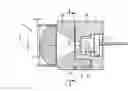
FIG. 1 a cross-sectional view of collimating optics;
FIG. 2 a longitudinal cross-sectional view of the collimating optics;
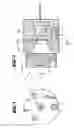
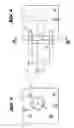
FIG. 3 a cross-sectional view of a beamsplitter; and
FIG. 4 a side view of the beamsplitter.
DETAILED DESCRIPTION OF THE PREFERRED EMBODIMENTAccording to FIG. 1 and FIG. 2, an optical assembly, which is in the form of focusable collimating optics 1 and is adjusted with respect to an axis A in axial distance and axial inclination, has a sleeve-shaped optics carrier 2 by which two optical components in the form of a laser diode 3 and a collimating lens 4 are fixedly pressed in. The optics carrier 2 has two partial carriers 5a, 5b, each of which secures an optical component and which are connected to one another by three axially elongate, flexible connection members 6. The connection members 6 which are symmetrically distributed on the axial end face 7 of the first partial carrier 5a are secured by frictional engagement in corresponding associated connection openings 8 of the axial end face 7 of the second partial carrier 5b so as to be displaceable axially. The connection members 6 which are constructed integral with the injection-molded partial carrier 5a as cylindrical pins are pressed into the connection openings 8 in a frictional engagement so as to be displaceable axially, these connection openings 8 being shaped as cylindrical bore holes.
According to FIG. 3 and FIG. 4, an optical assembly 1′ which is adjusted with respect to an axis A in axial distance and axial inclination and which is constructed as a focusable beamsplitter has a sleeve-shaped optics carrier 2′ to which two optical components in the form of pressed in focused collimating optics 1 (according to FIG. 1 and FIG. 2) and a beamsplitter prism 9 are fixedly connected. The optics carrier 2′ has also two partial carriers 5a′, 5b′, each of which secures an optical component and which are connected to one another by three axially elongate, flexible connection members 6′. The connection members 6′ which are distributed in a plane on the axial end face 7′ of the first partial carrier 5a′ are secured by frictional engagement in corresponding associated connection openings 8′ of the axial end face 7′ of the second partial carrier 5b′ so as to be displaceable axially. The connection members 6′, which are fixedly pressed with the partial carrier 5a′ and constructed in a plurality of parts as conventional cylindrical or rectangular metal pins, are pressed into the correspondingly shaped connection openings 8′ in a frictional engagement so as to be displaceable axially.
Though the present invention was shown and described with references to the preferred embodiment, such is merely illustrative of the present invention and is not to be construed as a limitation thereof and various modifications of the present invention will be apparent to those skilled in the art. It is therefore not intended that the present invention be limited to the disclosed embodiment or details thereof, and the present invention includes all variations and/or alternative embodiments within the spirit and scope of the present invention as defined by the appended claims.
Claims
What is claimed is:1. An optical assembly, comprising an optics carrier (2, 2′) which is adjustable with respect to an axis (A) and to which at least two optical elements are fixedly connected, the optics carrier (2, 2′) having at least two partial carriers (5a, 5b, 5a′, 5b′) each of which secures an optical element; and at least three axially elongate, flexible connection members (6, 6′) for connecting the at least two partial carriers (5a, 5b; 5a′, 5b′) to each other and which are spaced apart in a plane and are secured by frictional engagement in corresponding associated connection openings (8, 8′) so as to be displaceable axially.
2. An optical assembly according to claim 1, wherein the connection members (6, 6′) and the associated connection openings (8, 8′) are arranged at axial end faces (7, 7′) of the partial carriers (5a, 5b, 5a′, 5b′), respectively.
3. An optical assembly according to claim 1, wherein the connection members (6, 6′) are pin-shaped.
4. An optical assembly according to claim 1, wherein the connection members (6, 6′) are formed as cylindrical pins, and the connection openings (8, 8′) are formed as cylindrical bore holes.
5. An optical assembly according to claim 1, wherein the connection members (6, 6′) and a respective partial carrier (5a′) are formed as separate parts.
6. An optical assembly according to claim 2, wherein the connection members (6, 6′) are formed integrally with a respective partial carrier (5a).
7. An optical assembly according to claim 1, wherein the optics carrier (2, 2′) is sleeve-shaped.
8. An optical assembly according to claim 1, comprising adjustable and focusable collimating optics (1) with a collimating lens (4) and a laser diode (3).
9. An optical assembly according to claim 8, wherein the assembly is formed as an adjustable and focusable beamsplitter (1′) with the collimating optics (1) and a beamsplitter prism (9).
Images & Drawings included:
Sources:
- United States Patent and Trademark Office - verify current appl. status at the USPTO↗
Similar patent applications:
- » 20230350159
PERISCOPIC OPTICAL ZOOM MODULE AND ASSEMBLY METHOD THEREFOR, AND CORRESPONDING ADJUSTABLE OPTICAL ASSEMBLY - » 20060203217
Optical adjustment device, optical pickup apparatus provided with optical adjustment device, and method and apparatus for assembling optical adjustment device - » 20070035854
Adjustable optical assembly - » 20150124452
System and Method for an Adjustable Optics Assembly - » 20100073783
FOCUS-ADJUSTABLE OPTICAL ASSEMBLY - » 20070187578
Optical assembly with adjustable optical element and independently tunable position sensors - » 20130278910
PROJECTION OPTICAL ASSEMBLY, PROJECTION OPTICAL ASSEMBLY ADJUSTMENT METHOD, EXPOSURE DEVICE, EXPOSURE METHOD, AND DEVICE MANUFACTURING METHOD - » 20120224261
ADJUSTABLE OPTICAL ASSEMBLY AND METHOD - » 20150073752
WAVEFRONT MEASURING APPARATUS, WAVEFRONT MEASURING METHOD, METHOD OF MANUFACTURING OPTICAL ELEMENT, AND ASSEMBLY ADJUSTMENT APPARATUS OF OPTICAL SYSTEM - » 20190227303
OPTICAL SCANNING APPARATUS AND METHOD FOR ASSEMBLING AND ADJUSTING OPTICAL SCANNING APPARATUS
Recent applications in this class:
- » 20250284087 2025-09-11
ROTARY DIAL STRUCTURE - » 20250264685 2025-08-21
LENS DEVICE AND MANUFACTURING METHOD OF LENS DEVICE - » 20250237843 2025-07-24
PANNING BINOCULAR NIGHT VISION SYSTEM - » 20250189752 2025-06-12
LENS UNIT AND LENS BARREL - » 20250155665 2025-05-15
LENS MODULE - » 20250155664 2025-05-15
OPTICAL APPARATUS WITH MOVABLE LENSES - » 20250123460 2025-04-17
OPTICAL ELEMENT DRIVING UNIT, IMAGING OPTICAL MODULE AND ELECTRONIC DEVICE - » 20250116840 2025-04-10
METHOD AND SYSTEM FOR REDUCING ACTUATION FORCES FOR AN ADJUSTABLE OPTICAL ELEMENT - » 20250102761 2025-03-27
LENS DRIVING MECHANISM, LENS APPARATUS, AND IMAGE PICKUP APPARATUS - » 20250085504 2025-03-13
LENS BARREL
Recent applications for this Assignee:
- » 20250243117 2025-07-31
Two-component mortar system based on aluminous cement and use thereof - » 20250187982 2025-06-12
USE OF CALCIUM SULFATE IN AN INORGANIC MORTAR SYSTEM BASED ON ALUMINOUS CEMENT AND GROUND-GRANULATED BLAST-FURNACE SLAG TO INCREASE LOAD VALUES - » 20250179346 2025-06-05
TWO-COMPONENT MORTAR SYSTEM BASED ON ALUMINOUS CEMENT AND GROUNDGRANULATED BLAST-FURNACE SLAG AS WELL AS USE THEREOF - » 20250178974 2025-06-05
TWO-COMPONENT MORTAR SYSTEM BASED ON ALUMINOUS CEMENT AND CALCIUM SILICATE AS WELL AS USE THEREOF - » 20250178963 2025-06-05
STABILIZED AQUEOUS COMPOSITION BASED ON BLOCKED CALCIUM SILICATE CEMENT FOR INITIATING SETTING AND HARDENING OF ALUMINOUS CEMENT COMPOSITIONS - » 20250178960 2025-06-05
STABILIZED AQUEOUS COMPOSITION BASED ON BLOCKED GROUND-GRANULATED BLAST-FURNACE SLAG FOR INITIATING SETTING AND HARDENING OF ALUMINOUS CEMENT COMPOSITIONS - » 20250164040 2025-05-22
CAST-IN-PLACE THROUGH-PENETRATION FIRESTOP DEVICE - » 20250115704 2025-04-10
FOAMABLE MULTI-COMPONENT COMPOSITION, AND FOAMED FIRE-PROTECTION PROFILE HAVING TEMPERATURE-REGULATING FILLERS - » 20250090879 2025-03-20
COMPOSITE MATERIAL AND FIRE PROTECTION ELEMENT FOR SEALING PASSAGE OPENINGS AND JOINTS IN COMPONENTS - » 20250088012 2025-03-13
Power tool and method for carrying out charge equalization between accumulators in a power tool