Stable solid dispersion of a derivative of vinca alkaloid and process for manufacturing it
US20080089935A1
2008-04-17
11/667,998
2005-12-20
✅ Patent granted
US 9,061,015 B2
2015-06-23
WO; PCT/EP2005/056965; 20051220
WO; WO2006/069938; 20060706
Tigabu Kassa
Birch, Stewart, Kolasch & Birch, LLP
2027-07-08
Abstract:
This invention relates to solid and stable dispersions of a hydrosoluble derivative of vinca alkaloids in at least one polyethyleneglycol with a molecular mass between 800 and 30 000.
Inventors:
- Elie LEVERD 11 🇫🇷 Castres, France
- Joel BOUGARET 19 🇫🇷 Francarville, France
- Marie-Dominique Ibarra 4 🇫🇷 Souilhanels, France
Assignee:
- PIERRE FABRE MEDICAMENT 240 🇫🇷 Boulogne-Billancourt, France
Applicant:
Interested in similar patents?
Get notified when new applications in this technology area are published.
Classification:
A61P35/00 » CPC further
Antineoplastic agents
A61K9/16 IPC
Medicinal preparations characterised by special physical form; Particulate form, e.g. powders, Processes for size reducing of pure drugs or the resulting products, Pure drug nanoparticles Agglomerates; Granulates; Microbeadlets ; Microspheres; Pellets; Solid products obtained by spray drying, spray freeze drying, spray congealing,(multiple) emulsion solvent evaporation or extraction
A61K9/2018 » CPC further
Medicinal preparations characterised by special physical form; Pills, tablets, discs, rods; Excipients; Inactive ingredients; Organic compounds, e.g. phospholipids, fats Sugars, or sugar alcohols, e.g. lactose, mannitol; Derivatives thereof, e.g. polysorbates
A61K9/2846 » CPC further
Medicinal preparations characterised by special physical form; Pills, tablets, discs, rods; Dragees; Coated pills or tablets, e.g. with film or compression coating; Coating materials; Organic macromolecular compounds obtained by reactions only involving carbon-to-carbon unsaturated bonds, e.g. polyvinyl pyrrolidone Poly(meth)acrylates
A61K9/2866 » CPC further
Medicinal preparations characterised by special physical form; Pills, tablets, discs, rods; Dragees; Coated pills or tablets, e.g. with film or compression coating; Coating materials; Organic macromolecular compounds; Polysaccharides, e.g. gums; Cyclodextrin Cellulose; Cellulose derivatives, e.g. hydroxypropyl methylcellulose
A61K9/2886 » CPC further
Medicinal preparations characterised by special physical form; Pills, tablets, discs, rods; Dragees; Coated pills or tablets, e.g. with film or compression coating having two or more different drug-free coatings; Tablets of the type inert core-drug layer-inactive layer
A61K9/4808 » CPC further
Medicinal preparations characterised by special physical form; Preparations in capsules, e.g. of gelatin, of chocolate characterised by the form of the capsule or the structure of the filling; Capsules containing small tablets; Capsules with outer layer for immediate drug release
A61K31/55 IPC
Medicinal preparations containing organic active ingredients; Heterocyclic compounds having nitrogen as a ring hetero atom, e.g. guanethidine or rifamycins having seven-membered rings, e.g. azelastine, pentylenetetrazole
A61K47/30 IPC
Medicinal preparations characterised by the non-active ingredients used, e.g. carriers or inert additives; Targeting or modifying agents chemically bound to the active ingredient Macromolecular organic or inorganic compounds, e.g. inorganic polyphosphates
A61K31/4375 » CPC main
Medicinal preparations containing organic active ingredients; Heterocyclic compounds having nitrogen as a ring hetero atom, e.g. guanethidine or rifamycins having six-membered rings with one nitrogen as the only ring hetero atom ortho- or peri-condensed with heterocyclic ring systems the heterocyclic ring system containing a six-membered ring having nitrogen as a ring heteroatom, e.g. quinolizines, naphthyridines, berberine, vincamine
A61K9/48 IPC
Medicinal preparations characterised by special physical form Preparations in capsules, e.g. of gelatin, of chocolate
A61K9/20 IPC
Medicinal preparations characterised by special physical form Pills, tablets, discs, rods
A61K9/28 IPC
Medicinal preparations characterised by special physical form; Pills, tablets, discs, rods Dragees; Coated pills or tablets, e.g. with film or compression coating
Description
This invention relates to solid and stable dispersions of hydrosoluble derivatives of vinca alkaloids and more particularly derivatives of vinorelbine, particularly vinorelbine ditartrate in at least one polyethyleneglycol, which are intended to be incorporated into pharmaceutical compositions for oral administration of such a vinca derivative.
Antineoplastic chemotherapy was initially developed using intravenous methods. The arguments in favor of this administration method are:
-
- lesser gastrointestinal toxicity,
- total bioavailability, and
- potentially lower inter and intra patient exposure variations than with an oral method.
However, the intravenous method is associated with serious disadvantages that limit its use: the morbidity of vein access, possible complications of central vein channels (infection, thrombosis), the risk of extravasation.
For several years, oral forms of antineoplastic chemotherapy have developed increasingly due to the real benefit possible for the patient. Furthermore, pharmaco-economic considerations that are becoming increasingly important in the choice of therapeutic strategies, are also leading towards the development of oral treatments.
A lot of exploratory work has been carried out on the possible use of molecules intended for the treatment of cancer and administrated by mouth, for former active principles (for example etoposide, cyclophosphamide and idarubicine) , new synthetic derivatives of fluoropyridines (for example UFT, capecitabine, S-1), derivatives of platinum (for example JM-216) or Vinca alkaloids (e.g. vinorelbine).
Therefore this invention also concerns stable pharmaceutical compositions for oral administration of vinca alkaloids, and particularly vinorelbine in dispersed form.
Vinorelbine or 3′4′-Didehydro-4′-desoxy-8′-norvincaleucoblastine is an alkaloid derivative of vinca which exerts a cytostatic effect by inhibition of the polymerization of tubulin.
Vinorelbine, and more particularly a salt of vinorelbine, vinorelbine ditartrate, is also active in the treatment of large cell lung cancer and breast cancer. An injectable form was marketed for the first time in France in 1989. It is now marketed throughout the world in the form of a solution to be diluted for perfusion, to a concentration of 10 mg/ml expressed in basic vinorelbine and distributed in flasks with unit volumes of 1 and 5 ml.
More recently, an oral formulation of vinorelbine in solution was developed and put on the market under the name of NAVELBINE Oral® soft capsules. It is in the form of a soft gelatin capsule containing vinorelbine ditartrate and an excipient mix comprising polyethyleneglycol, glycerol, ethanol and water. The average molecular mass of polyethyleneglycol is between 200 and 600: these are liquid polyethyleneglycols such as MACROGOL 400. Unit doses expressed in basic vinorelbine are between 5 mg and 100 mg, and more advantageously equal to 20 mg, 30 mg, 40 mg and 80 mg.
These soft capsules were described in a patent application R. P. Scherer Technologies, Inc. WO 03/101383.
Pharmaceutical compositions according to this invention are intended for oral administration of alkaloid derivatives of vinca and particularly vinorelbine, in dispersed form. They contain the hydrosoluble derivative of vinca alkaloid, advantageously a salt of vinorelbine, and more particularly ditartrate dispersed in semi-solid or solid polyethyleneglycols.
More precisely, the stable solid dispersion according to the invention is associated with a hydrosoluble derivative of vinca alkaloid, particularly in at least one polyethyleneglycol with a molecular mass between 800 and 30,000, and more particularly a polyethyleneglycol with a molecular mass of between 1,000 and 6,000.
Polyethyleneglycols chosen in the invention have an average molecular mass greater than about 800. When the molecular mass is between 800 and 2,000, they are in semi-solid form, and when the molecular mass is higher, they are in solid form. They are differentiated from each other by their melting point, as indicated in the table below.
| Polyethyleneglycol (average molecular mass) |
| 1000 | 1500 | 4000 | 6000 | 8000 | 20000 | 30000 | |
| Melting point | 37° C. to | 44° C. to | 50° C. to | 55° C. to | 60° C. to | 60° C. to | 65° C. to |
| 40° C. | 48° C. | 58° C. | 63° C. | 63° C. | 63° C. | 70° C. | |
According to one advantageous embodiment of this invention, the ratio of the masses of the hydrosoluble derivative of vinca alkaloids and more particularly firstly vinorelbine ditartrate, and secondly polyethyleneglycol, is between 1.5:1 and 1:10 and preferably between 1:3 and 1:6.
These dispersions of the derivative of vinca alkaloids or the salt of vinorelbine in polyethyleneglycols according to this invention form a solid dispersion. In general, the use of the solid dispersions technology in the pharmaceutical formulation domain is known. The first reason for the development of solid dispersions is based on the possibility of improving dissolution and therefore potentially the bioavailability of active principles that are not very soluble in water and are administered by mouth.
The use of hydrophilic polymers such as polyethyleneglycols, polyvinylpyrrolidone or cellulose derivatives tends towards this hydrosolubilisation. Within the context of this invention, solid dispersions are not used with the intention of increasing the dissolution rate of active constituents. Hydrosoluble derivatives of vinca alkaloids and particularly vinorelbine salts, and more particularly ditartrate, are very soluble in water and their wettability characteristics do not cause any problem.
However, unexpectedly, galenic forms of hydrosoluble derivatives of vinca alkaloids and particularly vinorelbine salts according to this invention are more stable.
Thus, vinorelbine ditartrate must be kept at a temperature of below −15° C., regardless of its form (amorphous or crystalline) and its degree of division (unground, ground or micronized).
On the other hand, solutions of vinorelbine ditartrate can be kept at temperatures between +5° C. and +3° C. This is the case both for the injectable water based solution for injectable preparations, and for the soft capsules filling solution composed of liquid polyethyleneglycol, glycerol, ethanol and water. Therefore, it appeared that the solubilization operation was responsible for better stability.
Surprisingly, in the pharmaceutical compositions according to this invention, hydrosoluble derivatives of vinca alkaloids and particularly vinorelbine ditartrate which is in the dispersed powder state, are at least as stable, or even more stable, than the soft capsules in which they are dissolved.
A preparation of dispersions of hydrosoluble derivatives of vinca alkaloid, and particularly vinorelbine, and more particularly vinorelbine ditartrate, always begins with a mix of this active principle with polyethyleneglycol in the molten state. To achieve this, the said polyethyleneglycol will be previously heated to a temperature slightly greater than its melting temperature to bring it into the liquid state so that it can be mixed with the hydrosoluble derivative of vinca alkaloid while stirring. The process terminates with a cooling operation of the said dispersion to bring it into the solid state. If a polyethyleneglycol with a high molar mass is used, it will preferably be heated in the presence of a plastifier, which will bring the said solid polyethylene into the liquid state without exceeding a temperature of the order of 80° C.
The first step in the preparation of the solid dispersion can advantageously be done as follows:
-
- either discontinuously: manufacturing in tank, before distribution of the mix for example in hard gelatin capsules or by the use of techniques such as molding injection,
- or continuously using hot extrusion techniques.
These techniques have two advantages:
-
- the concentration of the active principle in the final mix can be as high as 60%, which for example allows large unit doses,
- the residence time of the active principle in the extruder, for which the duration of its exposure to high temperatures is short so that a vinorelbine salt can be used although it is sensitive to heat with polyethyleneglycols with a high molecular mass.
The dispersions obtained may be in divided form, for example in the form of pellets, or in monolithic form, for example in the form of tablets. In order to protect manufacturing personnel or the patient from risks of exposure to cytotoxic vinorelbine salts, the final pharmaceutical forms will be distributed in hard gelatin capsules or they will be coated tablets.
After mixing and cooling, polyethyleneglycol and vinorelbine give a mass that can be treated differently as a function of the particular form searched for. It may be directly poured into the hard gelatin capsules to lead to a monolithic form after the said hard gelatin capsules have been cooled.
Traditionally, the hard gelatin capsules are composed of gelatin, hydroxypropylmethycellulose or extracellular bacterial polysaccharide obtained using Aureobasidium pullulans, known under the name of pullulan.
According to one variant of the process according to this invention, the stable solid dispersion is extruded to obtain pellets to be used to make hard gelatin capsules or tablets. In the latter case, coating is done during the actual manufacturing operation, for example using a co-extruded technique, the dispersion being effectively co-extruded with a natural or synthetic film-forming polymer to obtain film-coated tablets directly.
As a variant, this type of coating operation may also be done during a later additional manufacturing step, for example requiring fluidized air bed or turbine coating techniques.
In both coating variants, the coating may advantageously be obtained using a film forming polymer, with natural or synthetic origin, and particularly cellulose derivatives such as hydroxypropylmethylcellulose, hydroxypropylcellulose or acrylic ester or modified methacrylic ester copolymers or polyethyleneglycols with high molecular weight.
When the said stable solid dispersion uses polyethyleneglycols with low molecular mass (800-2,000), technical additives such as structuring agents, and particularly silica, polyethylene oxide, microcrystalline cellulose, can be added. The proportions in which these additional structuring agents will be present vary between 0.05% and 10%, and preferably between 0.5% and 5%.
Finally, it should be noted that when polyethyleneglycols with a high molecular mass are used, it may be advantageous to add plastifiers to avoid an excessive increase in the melting temperature so that they can be obtained in the liquid state in the context of the first mixing operation with vinca derivatives. Examples of plastifiers include ester citrates, triacetine, etc.
The following examples describe some possible formulations and preparation processes:
EXAMPLE 1The use of a semi-solid polyethyleneglycol involves the incorporation of a structuring agent such as silica, as described in the following composition:
| Vinorelbine ditartrate (in amorphous form) | 55.40 | mg | |
| i.e. vinorelbine | 40.00 | mg | |
| Silica | 3.00 | mg | |
| Polyethyleneglycol 1000 | qsq 330.00 | mg | |
The preparation is made discontinuously using a preliminary hot mix in a tank before distribution in gelatin capsules.
EXAMPLE 2The use of a solid polyethyleneglycol with a high melting point imposes the use of a plastifier and the use of a hot extrusion manufacturing process.
The following hot mix was prepared continuously in a co-extruder with a double screw:
| Vinorelbine ditartrate (in amorphous form) | 55.40 | mg | |
| i.e. vinorelbine | 40.00 | mg | |
| Triethyl citrate | 6.00 | mg | |
| Polyethyleneglycol 6000 | qsq 150.00 | mg | |
Example 3 below gives a complete illustration of this invention and describes a process of production. It relates to a gelatin capsule containing 40 mg of vinorelbine dispersed in polyethyleneglycol 1500.
EXAMPLE 3The exact composition of the contents is:
| Vinorelbine ditartrate (in amorphous form) | 55.40 | mg | |
| i.e. vinorelbine | 40.00 | mg | |
| Polyethyleneglycol 1500 | qsq 330.00 | mg | |
| Size 2 gelatin capsule | 1 | ||
The manufacturing process includes the following steps:
-
- polyethyleneglycol 1500 is heated to a temperature of between 55° C. and 60° C.,
- dispersion under mechanical stirring of vinorelbine ditartrate,
- filling in size 2 hard gelatin capsules, with 330 mg of mix per hard gelatin capsule,
- cooling to ambient temperature.
The essential constituent of the gelatin capsule casing is a hydrophilic polymer which, as mentioned above, may be gelatin or hydroxypropylmethylcellulose (HPMC) or pullulan.
There is no need to seal the gelatin capsules since no leakage occurs during storage. However, with regard to the cytotoxicity of the vinorelbine, it is recommended that it should be sealed for safety reasons. This is done either by stretch wrapping, or by spraying with a hydro-alcohol spray.
This composition has an excellent physicochemical stability: degradation of the dispersed vinorelbine formulated in hard gelatin capsules after 6 months of storage at 25° C./60% RH (severe temperature condition) is:
-
- very significantly less than the degradation observed for vinorelbine alone,
- less than or equal to the degradation observed in soft capsules.
The results are expressed below:
| Formulated vinorelbine |
| Hard | ||||
| Vinorelbine | gelatin | HPMC | Soft | |
| ditartrate | capsule | capsule | capsule | |
| Physical state of | Powder | Dispersed | Dispersed | Solution |
| vinorelbine ditartrate | powder | powder | ||
| Total impurities | +1.87 | +0.70 | +0.62 | +0.76 |
| Including identified | ||||
| impurities: | ||||
| S/D6 | +1.02 | — | — | — |
| 6′-N-oxyvinorelbine | +0.37 | — | — | — |
| 6′-N-methylvinorelbine | +0.05 | +0.10 | +0.10 | +0.15 |
| 4-0-deacetylvinorelbine | +0.05 | +0.04 | +0.08 | +0.37 |
| 23-0-demethyl- | — | +0.15 | +0.17 | +0.16 |
| vinorelbine | ||||
Variation of the content of impurities (in % relative) after 6 months 25° C./60% RH compared with t0.
Other hydrophilic polymers such as polyethyleneglycols were tested. The stability of vinorelbine in the presence of these other polymers is significantly lower: after only 1 month at 25° C./60% RH, the variation of the content of impurities compared with t0 was +7.63% and +29.08% for polyvinylpyrrolidone and a cellulosic ether respectively.
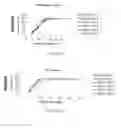
Furthermore, and unexpectedly, the dissolution rate of vinorelbine ditartrate contained in the hard gelatin capsule in example 3 above, in the dispersed state, is very similar to the dissolution dynamics of vinorelbine ditartrate contained in the dissolved state in the soft capsule. The dissolution profiles in 900 ml of water at 37° C., 50 rpm, for six samples of a batch of each galenic form, are given in FIGS. 1A and 1B appended. The process used is the rotating plate process given in the European Pharmacopoeia 2.9.3. Dissolution of vinorelbine ditartrate is 100° complete in less than 30 minutes.
Unit doses of hard gelatin capsules, expressed in basic vinorelbine, are between 5 and 100 mg and are advantageously equal to 20 mg, 30 mg, 40 mg and 80 mg.
However, this invention can be used particularly to obtain unit doses of more than 100 mg, and up to 300 mg, by injection molding.
Claims
1. Solid and stable dispersion of a hydrosoluble derivative of vinca alkaloids in at least one polyethyleneglycol with a molecular mass between 800 and 30,000.
2. Solid and stable dispersion according to claim 1, characterized in that the hydrosoluble derivative of vinca alkaloids is a derivative of vinorelbine, particularly vinorelbine ditartrate.
3. Solid and stable dispersion according to claim 1, characterized in that polyethyleneglycol has a molecular mass of between 1,000 and 6,000.
4. Solid and stable dispersion according to claim 1, characterized in that the said dispersion also contains a plastifier or a structuring agent.
5. Solid and stable dispersion according to claim 1, characterized in that it is in monolithic form.
6. Solid and stable dispersion according to claim 5, characterized in that the said solid dispersion is distributed in a hard gelatin capsule.
7. Solid and stable dispersion according to claim 5, characterized in that the said solid dispersion, associated with compression excipients, is in the form of a tablet.
8. Solid and stable dispersion according to claim 1, characterized in that it is in the form of divided pellets.
9. Solid and stable dispersion according to claim 8, characterized in that the said solid dispersion is in the form of divided pellets distributed in a hard gelatin capsule.
10. Solid and stable dispersion according to claim 1, characterized in that the ratio of the masses of the hydrosoluble derivative of vinca alkaloids and more particularly firstly vinorelbine ditartrate, and secondly polyethyleneglycol, is between 1.5:1 and 1:10 and preferably between 1:3 and 1:6.
11. Process for manufacturing a stable pharmaceutical composition process for oral administration of hydrosoluble derivatives of vinca alkaloids in the form of a solid dispersion, according to claim 1, characterized in that the following operations are carried out:
polyethyleneglycol is heated to a temperature slightly greater than its melting temperature to bring it to the liquid state, and
the hydrosoluble derivative of vinca alkaloid in powder form is mixed while stirring with polyethyleneglycol obtained in the previous step, to form a dispersion, and
the said dispersion is cooled to bring it into the solid state.
12. Process according to claim 11, characterized in that the polyethyleneglycol is heated in the presence of a plastifier when a solid polyethyleneglycol is used up to a maximum temperature of 80° C.
13. Process according to claim 11, characterized in that a structuring agent such as silica, microcrystalline cellulose or polyethylene oxide is added to the dispersion, when a semi-solid polyethyleneglycol is used.
14. Process according to claim 11, characterized in that it requires distribution of the said dispersion in hard gelatin capsules, particularly through a pouring operation.
15. Process according to claim 11, characterized in that the dispersion is extruded to obtain pellets to make tablets or hard gelatin capsules.
16. Process according to claim 11, characterized in that the dispersion is coextruded with a natural or synthetic film-forming polymer to obtain film-coated tablets.
17. Process according to claim 15, characterized in that film-coated tablets are prepared in a fluidized air bed or a turbine.
18. Solid and stable dispersion according to claim 2, characterized in that polyethyleneglycol has a molecular mass of between 1,000 and 6,000.
19. Solid and stable dispersion according to claim 2, characterized in that the said dispersion also contains a plastifier or a structuring agent.
20. Solid and stable dispersion according to claim 3, characterized in that the said dispersion also contains a plastifier or a structuring agent.
Images & Drawings included:

Sources:
- United States Patent and Trademark Office - verify current appl. status at the USPTO↗
Similar patent applications:
Recent applications in this class:
- » 20250288564 2025-09-18
DIHYDROBERBERINE COMPOSITION AND USE THEREOF - » 20250288563 2025-09-18
METHODS OF TREATMENT FOR CYSTIC FIBROSIS - » 20250228829 2025-07-17
FORMULATIONS WITH ENHANCED SN-38 SOLUBILITY AND ORAL ABSORPTION - » 20250221970 2025-07-10
Combinations of a B-RAF Inhibitor and an Anti-EGFR Antibody for the Treatment of Cancer - » 20250195482 2025-06-19
METHOD AND COMPOSITION FOR IMPROVING HEALTH OF HAIR FOLLICLES, SCALP OR HAIR OF MAMMALS - » 20250186414 2025-06-12
TREATMENT OF MIGRAINE - » 20250186413 2025-06-12
METHODS OF TREATING MIGRAINE - » 20250186412 2025-06-12
METHODS OF TREATING MIGRAINE - » 20250177365 2025-06-05
TREATMENT OF MIGRAINE - » 20250099443 2025-03-27
METHODS FOR SYNTHESIZING ALEUTIANAMINE AND ANALOGS THEREOF
Recent applications for this Assignee:
- » 20250052758 2025-02-13
RECEPTOR FOR VISTA - » 20250025383 2025-01-23
EMOLLIENT COMPOSITION IN EMULSION FORM - » 20240350657 2024-10-24
SULFOMALEIMIDE-BASED LINKERS AND CORRESPONDING CONJUGATES - » 20230243836 2023-08-03
RECEPTOR FOR VISTA - » 20230174603 2023-06-08
A PROTEIN COMPLEX COMPRISING AN IMMUNOCYTOKINE - » 20230002316 2023-01-05
DERIVATIVES OF DOLASTATIN 10 AND AURISTATINS - » 20220218838 2022-07-14
ADC FOR A TREATMENT CONCOMITANT WITH OR SUBSEQUENT TO DOCETAXEL - » 20220105195 2022-04-07
Antibody-drug-conjugate and its use for the treatment of cancer - » 20220071860 2022-03-10
EMOLLIENT COMPOSITION IN EMULSION FORM - » 20220048966 2022-02-17
NEW IMMUNOCYTOKINES FOR THE TREATMENT OF CANCER