BASE FOR SUPPORTING APPARATUS
US20080105799A1
2008-05-08
11/625,482
2007-01-22
Abstract:
A base for a supporting apparatus is provided. The base includes a chassis and a foot member accommodated in the chassis. The foot member is retractable and capable of being stretched out from the chassis.
Interested in similar patents?
Get notified when new applications in this technology area are published.
Classification:
H04N5/64 » CPC main
Details of television systems Constructional details of receivers, e.g. cabinets or dust covers
G06F1/1601 » CPC further
Details not covered by groups - and; Constructional details or arrangements Constructional details related to the housing of computer displays, e.g. of CRT monitors, of flat displays
F16M2200/08 » CPC further
Details of stands or supports Foot or support base
G06F2200/1612 » CPC further
Indexing scheme relating to -; Indexing scheme relating to -; Indexing scheme relating to constructional details of the monitor Flat panel monitor
A47B91/02 IPC
Feet for furniture in general Adjustable feet
Description
BACKGROUND OF THE INVENTION
1. Field of the Invention
The present invention is related to a supporting apparatus and particularly to a base for a supporting apparatus.
2. Description of the Prior Art
Compared with conventional cathode ray tube (CRT) displays, flat panel displays have the advantages of smaller size and less electromagnetic radiation. Accordingly, they have gradually been the main product in the market of displays in recent years.
In addition to a monitor for displaying images, a flat panel display usually includes a supporting apparatus for supporting the monitor and adjusting the height/angle of the monitor. In general, to stably support the monitor, the base for the supporting apparatus is considerably large. However, the larger the base is, the larger the size of a packaged flat panel display is; moreover, the cost of storage and transportation is accordingly high.
SUMMARY OF THE INVENTION
To solve the aforementioned problems, the present invention proposes a base for a supporting apparatus. And, according to one preferred embodiment of the present invention, the base includes a chassis and a foot member. When the base is packed or users do not need to use the base, the foot member can be accommodated in the chassis. Thus, the space of the base is dramatically reduced. Besides, the foot member is retractable and capable of being stretched out from the chassis; therefore, users can adjust the angle and length of the foot member according to their needs.
Compared with prior arts, the base of the present invention is smaller and more flexible. Moreover, the base can be used not only for supporting apparatuses of flat panel displays but also for different kinds of apparatus that needs a base.
The advantage and spirit of the invention may be understood by the following recitations together with the appended drawings.
BRIEF DESCRIPTION OF THE APPENDED DRAWINGS
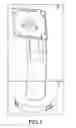
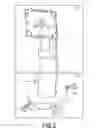
FIG. 1 and FIG. 2 show an embodiment of a base according to the present invention.
FIG. 3 shows an embodiment of the foot members according to the present invention.
DETAILED DESCRIPTION OF THE INVENTION
A base for a supporting apparatus is provided in this invention. According to one preferred embodiment of the present invention, the base includes a chassis and a foot member accommodated in the chassis. The foot member is retractable and capable of being stretched out from the chassis.
FIG. 1 and FIG. 2 show an embodiment of a base according to the present invention. In the embodiment, the base 10 is used to cope with a supporting apparatus 20. In reality, the base 10 usually has a recess, and the supporting apparatus 20 has a section which is correspondent with and capable of being engaged to the recess. Furthermore, the base 10 and the supporting apparatus 20 can also be made as a whole without additional connecting sections.
In this embodiment, four foot members are taken as an example. That is to say, the base 10 includes a chassis 12 and four foot members 14. FIG. 1 and FIG. 2 respectively show the conditions when the foot members 14 are accommodated in and stretched out from the chassis 12. According to the present invention, when the base 10 is packed or users do not need to use the base 10, the foot members 14 can be accommodated in the chassis 12. Thus, the volume of the base 10 is dramatically reduced.
In actual applications, as shown in FIG. 3, the foot members 14 can be pivotally engaged to the chassis 12. In this way, users, based on their needs, can decide the optimal angle of each stretched foot member 14 to stably hold the article supported by the supporting apparatus 20. Doubtless, the foot members 14 can be fixed to the chassis 12 directly. In theory, if the center of gravity of the article remains within the region composed by the foot members 14, the article will not topple down.
In the embodiment shown in FIG. 3, each of the foot members 14 includes a first section 14A and a second section 14B. The first section 14A is pivotally or directly engaged to the chassis 12, and the second section 14B is movably seated within the first section 14A. For instance, the first section 14A and the second section 14B can engaged with each other by slides or screws. Stretching the second section 14B out from the first section 14A can further increase the length of the foot member 14. Furthermore, when the second section 14B is seated within the first section 14A, the second section 14B does not enlarge the volume of the base 10.
In actual applications, each of the foot members 14 can include three or more sections. To prevent the second section 14B from being separated from the first section 14A because of over-stretching, the second section 14B can be releasably clamped with the first section 14A.
The base, according to the present invention, can be broadly applied to flat panel displays and different kinds of apparatus that needs a base. Users can adjust the angles and lengths of the foot members 14 based on their needs. Compared with prior arts, the base, according to the present invention, is more flexible and smaller after being accommodated.
With the examples and explanations above, the features and spirits of the present invention will be hopefully well described. Those skilled in the art will readily observe that numerous modifications and alterations of the device may be made while retaining the teaching of the invention. Accordingly, the above disclosure should be construed as limited only by the metes and bounds of the appended claims.
Claims
What is claimed is:1. A base for a supporting apparatus, comprising:
a chassis; and
a foot member accommodated in the chassis, the foot member being retractable and capable of being stretched out from the chassis.
2. The base of claim 1, wherein the foot member is pivotally engaged to the chassis.
3. The base of claim 1, wherein the foot member comprises a first section and a second section; the first section is engaged to the chassis and the second section is movably seated within the first section.
4. The base of claim 3, wherein the first section is pivotally engaged to the chassis.
5. The base of claim 3, wherein the first section has a first end, the second section has a second end, and the second end is releasably clamped by the first end.
6. The base of claim 1, wherein the chassis has a recess, and the supporting apparatus has a section capable of being engaged to the recess.
Images & Drawings included:


Sources:
- United States Patent and Trademark Office - verify current appl. status at the USPTO↗
Similar patent applications:
- » 20240114350
BASE STATION ALLOCATION SUPPORT APPARATUS, BASE STATION ALLOCATION SUPPORT METHOD AND PROGRAM - » 20080203863
Gaming Apparatus Support Base - » 20050121583
Swivel support base apparatus - » 20210093910
Floor or ground based apparatus supporting exercise activities - » 20150150739
Optimization of the operation of a patient-support apparatus based on patient response - » 20110035057
Patient health based support apparatus configuration - » 20130145558
Optimization of the operation of a patient-support apparatus based on patient response - » 20180022354
Driving support apparatus performing driving support based on reliability of each detection apparatus - » 20180030749
SEISMIC BASE ISOLATION SUPPORT APPARATUS - » 20120015649
Methods and apparatus to support base station detection and selection in multi-tier wireless networks
Recent applications in this class:
- » 20250047804 2025-02-06
DISPLAY DEVICE - » 20240406341 2024-12-05
TV AND CONTROL METHOD THEREOF - » 20240022683 2024-01-18
Middle frame and display device - » 20230300289 2023-09-21
Television mounting systems - » 20230239425 2023-07-27
ROLLABLE AND HIDDEN LASER TELEVISION INTEGRATED MACHINE - » 20230136468 2023-05-04
COLLECTIBLE WITH THEMED DESIGN AND CONTENT - » 20230060401 2023-03-02
Frame assembly - » 20220150441 2022-05-12
SWIVELING TELEVISION MOUNTING SYSTEMS - » 20220046203 2022-02-10
Television, television control method, and control apparatus - » 20220021839 2022-01-20
Decorative Television Frame