Integrating Security Particles in Value Documents or Value Products
US20080107898A1
2008-05-08
11/579,036
2005-03-04
Abstract:
A coherent sheet-like or tape-like product (10) adapted to be integrated into value products or documents, comprises: security particles (12) in the form of metal fibers or metal coated fibers; a paper or plastic compatible binder (14). The sheet-like or tape-like product allows a better controllable concentration of the security particles.
Assignee:
- NV Bekaert SA 226 🇧🇪 Zwevegem, Belgium
Interested in similar patents?
Get notified when new applications in this technology area are published.
Classification:
C08J5/041 » CPC main
Manufacture of articles or shaped materials containing macromolecular substances; Reinforcing macromolecular compounds with loose or coherent fibrous material with inorganic fibres with metal fibres
G09F3/0292 » CPC further
Labels, tag tickets, or similar identification or indication means ; Seals; Postage or like stamps; Forms or constructions; Labels or tickets undergoing a change under particular conditions, e.g. heat, radiation, passage of time tamper indicating labels
G09F3/0341 » CPC further
Labels, tag tickets, or similar identification or indication means ; Seals; Postage or like stamps; Forms or constructions of security seals characterised by the type of seal used having label sealing means
Y10T428/249921 » CPC further
Stock material or miscellaneous articles Web or sheet containing structurally defined element or component
Y10T428/27 » CPC further
Stock material or miscellaneous articles Web or sheet containing structurally defined element or component, the element or component having a specified weight per unit area [e.g., gms/sq cm, lbs/sq ft, etc.]
C08J5/04 IPC
Manufacture of articles or shaped materials containing macromolecular substances Reinforcing macromolecular compounds with loose or coherent fibrous material
C08J5/18 IPC
Manufacture of articles or shaped materials containing macromolecular substances Manufacture of films or sheets
C08K7/02 IPC
Use of ingredients characterised by shape Fibres or whiskers
C08K7/04 IPC
Use of ingredients characterised by shape; Fibres or whiskers inorganic
G09F3/03 IPC
Labels, tag tickets, or similar identification or indication means ; Seals; Postage or like stamps; Forms or constructions of security seals
Description
FIELD OF THE INVENTION
The present invention relates to a coherent sheet-like or tape-like product with security particles. According to a second aspect, the present invention also relates to a value product or value document comprising such a sheet-like or tape-like product. According to a third aspect, the invention relates to two methods of manufacturing a sheet-like or tape-like product.
BACKGROUND OF THE INVENTION
It is known to integrate security particles into substrates for authentication or identification purposes of value documents. U.S. Pat. No. 4,408,156, EP-B-0 236 365 and EP-B-0 897 569 are only examples of prior art documents describing such value documents.
U.S. Pat. No. 4,265,703 discloses a method of integrating security particles in the form of metal fibers into a fibrous structure such as paper. Indeed, the difference in specific gravity between metal fibers and paper-like material makes a homogeneous distribution of the metal fibers in a paper substrate difficult, if no precautions are taken. The precautions taken by U.S. Pat. No. 4,265,703 consist in subjecting a bundle of metal fibers to a bath of a hydro soluble binder so as to make a coated bundle. The hydro soluble binder is either polyvinyl alcohol or starch. Hereafter, the fiber bundle is dried and cut into predetermined lengths of agglomerates binder-fiber. The agglomerates are mixed with paper fibers to form a sheet-like structure where the metal fibers are homogeneously distributed. The binder material serves as material for separating the filaments.
Despite successful application of this method, variations in concentrations of the fibers in the substrate are experienced.
When the security level to be provided by the fibers also depends upon the concentration of the fibers in the substrate, these variations in concentrations are unacceptable.
The method described in U.S. Pat. No. 4,265,703 can also be applied to incorporate metal fibers at limited locations in value documents. These limited locations may take the form of bands or strips. Experience has shown that it is difficult to keep the width of such bands or strips within predetermined narrow limits. Furthermore, some dimensions, e.g. very small widths, are not obtainable. Here again, when the security level to be provided by the metal fibers also depends on the exact geographical location of the metal fibers in the value document, too big a variation in this geographical location is not acceptable.
SUMMARY OF THE INVENTION
It is an object of the present invention to avoid the drawbacks of the prior art.
It is another object of the present invention to provide more control of the concentration of security particles in the substrate of a value document.
It is yet another object of the present invention to provide for exactly determined geographical locations with security particles within a security document.
It is still another object of the present invention to provide for a robust method of integrating security particles into a value document, largely independent of the way of manufacturing the value documents.
According to a first aspect of the present invention, there is provided a coherent sheet-like or tape-like product adapted to be integrated into value products or documents. The said product comprises
-
- security particles in the form of metal fibers or metal coated fibers;
- a paper or plastic compatible binder.
In the context of the present invention, the terms “value products” refer to all types of valuable documents such as bank notes, bonds, passports, credit-cards, access tickets,
The terms “value products” refer to all types of products with a high value such as medicine, perfume, jewelry, . . . The security particles may be either integrated into the products or documents themselves or into the packaging.
The metal fibers or metal coated fibers may be nickel coated carbon fibers, stainless steel fibers or fibers of a metal with magnetic properties, irrespective of the length of the fibers (both short and long fibers). In order to function as “security particles”, the fibers have parameters, which are detectably different from the substrate material. The detectable difference may take various forms such as optical difference, electrical conductivity, magnetic coercivity, harmonic response, microwave reflection, microwave absorptions or the like.
Next to the security particles, other particles, without a security or identification function, may also be added. For example, it may be advantageous to add particles, which have an affinity with the substrate already at this stage in the sheet-like or tape-like product. In this sense, when the substrate comprises paper, it may advantageous to add cellulose fibers, next to the security particles.
In contrast with other applications such as filtration, it is not the purpose that the fibers form an independent network and that the fibers are entangled with each other. The purpose of the fibers is to function as security features and to be detectable, hence a relatively small concentration.
The security particles may be present in the sheet-like or tape-like product in a concentration ranging from 1.0×10⁻⁵ to 1.8×10⁻⁴ g/cm2.
Advantageously, the binder is a water-soluble binder.
As an example, the binder may be selected from the group consisting of polyvinyl alcohols, methyl cellulose ethers, hydroxypropylmethylcellulose, polyethers from ethylene oxide, acrylic acid polymers or acrylic copolymers.
As a matter of a preferable example, methyl cellulose has following advantages as a binder in this context: it is a cheap binder material, any shaping or mixing can be done under room conditions, reuse of the methyl cellulose and of the material mixed with it, is possible. The binder material methyl cellulose easily disintegrates when heated.
The tape-like or sheet-like product, as such, has only a transitory existence. Its purpose is to control better the concentration of the security particles and the geometry of the region of security particles. This control is done at the level of the tape-like or sheet-like material and not at the level of the final value document or value product. Ultimately, the tape-like or sheet-like product is to integrate with the value document or value product. Once this integration step done, it is no longer possible to extract the tape-like or sheet-like material intact from the value document or value product. So during its life, the tape-like or sheet-like product must stay coherent and strong. At the time of integration with the value document or value product, the tape-like or sheet-like product must cease to exist as such.
Preferably, a plasticizer may be added and mixed together with the security particles and the binder material in the solvent. Such a plasticizer makes the sheet-like or tape-like product stronger and more flexible. An example of a plasticizer is polyethylene glycol. Another example is polyvinyl alcohol.
The plasticizer may also have another function, particularly in case the sheet-like or tape-like product is to be integrated in paper value documents. Paper manufacturing is done in a very humid atmosphere with a lot of water. Correct amounts of plasticizer present in the tape-like or sheet-like product may control the time required for the disintegration process of the tape-like or sheet-like material and its integration in the paper value documents. Next to plasticizers, titantiumdioxide (TiO2) and carbonates may also fulfill this function. The higher the amount of plasticizer, TiO2 or carbonates, the longer the disintegration process takes.
Also color additives may be mixed together with the security particles and the binder material. This may give a particular and predetermined color to the sheet-like or tape-like product. The given color may mask the presence of security particles.
Advantageously, particularly when used with paper as substrate material, the sheet-like or tape-like product is made porous, e.g. by making small perforations in the sheet-like or tape-like product. This porosity facilitates the evacuation of water during the integration of the sheet-like or tape-like product in a paper substrate.
According to a second aspect of the present invention, there is provided a value document or a value product in which or on which the tape-like or sheet-like product has been integrated.
According to a third aspect of the present invention, there are provided two methods of manufacturing a sheet-like or tape-like product.
The first method comprises the following steps
- a) providing a binder in a liquid form or loose form, e.g. in a solvent such as water;
- b) providing particles which will function as security particles;
- c) mixing the particles in or with the binder;
- d) casting the binder with the particles;
- e) drying or heat treating the cast binder with the particles to form a coherent sheet-like or tape-like product.
One of the advantages of the present invention results from step c): the particles are mixed with the binder material in a controllable and determinable concentration. If abstraction is made of the non-security particles, possible other additives and of the solvent, the only parameters are the amount of security particles, the amount of binder material and the degree of mixing. Both the amount of security particles and the amount of binder material can be exactly determined. The degree of mixing can be easily controlled e.g. by the revolutions of a screw in the mixture and by the working temperature. The mixed particles in the binder are cast and dried or heat-treated, e.g. to vaporize the solvent, and form a coherent sheet-like or tape-like product. The concentration of the security particles in this sheet-like or tape-like product and the variations hereof can be determined on this sheet-like or tape-like product before any integration into the final product. The concentration of the security particles in the sheet-like or tape-like product is directly related to the concentration of the security particles in the final product or final document.
In an embodiment of the invention, the tape-like or sheet-like product may be cast using an applicator such as a doctor blade.
The method further comprises the step of cutting the sheet-like or tape-like product. This additional step has the advantage of exactly determining the dimensions of the location where the security particles can be found. Moreover, this exact determination is done in advance prior to the final value product or value document manufacturing. This means that this separate and prior cutting makes the whole method more robust and less dependent upon the particular way of integrating the security particles into the final value document or onto a value product.
As a subsequent step, the dried binder with the security particles is integrated in the substrate of the value document or value product.
The second method comprises the following steps:
- a) providing a substrate;
- b) providing security particles in the form of metal fibers or metal coated fibers on the substrate;
- c) casting or spraying a binder in liquid or loose form on the security particles;
- d) drying or heat treating the combination of binder and security particles so that a coherent sheet-like or tape-like product is obtained separable from the substrate.
In this second method, the concentration of security particles and the geometry of the region with security particles is controlled mainly in step b).
BRIEF DESCRIPTION OF THE DRAWINGS
The invention will now be described into more detail with reference to the accompanying drawings wherein
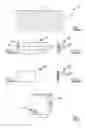
FIG. 1 is a drawing of a cast and dried binder mixed with security particles;
FIG. 2a (upper view) and FIG. 2b (cross-section) show a value document of paper;
FIG. 3a (upper view) and FIG. 3b (cross-section) show a value document of plastic;
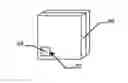
FIG. 4 shows a package for a value product.
DESCRIPTION OF THE PREFERRED EMBODIMENTS OF THE INVENTION
FIG. 1 shows an sheet-like or tape-like product 10 as result of the invention method. The sheet-like or tape-like product 10 comprises a cast and dried solvent with binder 12 mixed with security particles 14.
The security particles 14 may be metal fibers. As a matter of example, the metal fibers have an equivalent diameter ranging from 1 μm to 25 μm, and an average length ranging from 0.05 mm to 15 mm. The length to equivalent diameter ratio is always greater than 5, preferably greater than 10. Fibers having an equivalent diameter of less than 1 μm are difficult and expensive to manufacture, while fibers with a diameter above 25 μm will harm the visual aspect of the value documents. The terms “equivalent diameter” refer to the diameter of an imaginary circle, which has the same surface as the surface of a fiber, cut perpendicular to the major axis of the fiber.
The sheet-like or tape-like product 10 is made in the following way:
- a) an amount of binder such as methyl cellulose is poured in a receptacle filled with a solvent such as water;
- b) a predetermined amount of fibers 14 is poured in the same receptacle;
- c) the fibers 14 are mixed in the methyl cellulose in order to obtain a distribution which is as homogeneous as possible; for example, the amount of fibers may range from 0.2 g fibers per liter solvent—methyl cellulose to 2.4 g fibers per liter solvent—methyl cellulose, e.g. from 0.4 g/l to 1.2 g/l;
- d) the slurry solvent—methyl cellulose 12—fibers 14 is cast on a flat surface, e.g. a metal surface;
- e) the cast mixture is leveled to a predetermined thickness, e.g. a thickness varying between 30 μm and 500 μm, e.g. between 60 μm and 300 μm ; this leveling can be done by means of a leveling lath, e.g. by means of the clearance of a doctor blade;
- f) the leveled mixture is dried;
- g) the dried mixture may be cut to the desired lengths and widths.
Any control on the concentration itself and on the variation of the concentration of the fibers 14 in the methyl cellulose can be done on the sheet-like or tape-like product 10. Any sheet-like or tape-like product not meeting the concentration specifications can be recuperated.
The cutting to the desired width may allow avoiding side effects on the concentration, if any.
The concentration in the sheet-like or tape-like product may range, for example, from 0.05 g/m2 to 10.0 g/m2, e.g. from 0.1 g/m2 to 1.0 g/m2, e.g. 0.5 g/m2.
FIG. 2a is an upper view and FIG. 2b a cross-section of a value document 20 with a paper substrate 22 and with two small bands 24, 26 comprising fibers. An example of such a value document may be a bank note. The two small bands 24 originate from the sheet-like or tape-like product 10, which has been cut in advance to the desired width. As a result, the width can be determined with more accuracy than in the prior art case where the loose fibers are being integrated into the paper substrate during the paper manufacturing process. If the binder material is methyl cellulose dissolved in a solvent as water, it may dissolve partially or completely during the integration into the paper substrate as a result of the water used during paper manufacturing and the heat produced during paper manufacturing. This ‘disappearance’, however, has no negative influence on the concentration and the distribution of the fibers in the document.
FIG. 3a is an upper view and FIG. 3b is a cross-section of a value document 30 with a plastic substrate 32 and with a layer 34 comprising fibers. An example of such a value document may be a credit card or a plastic bank note. The value document 30 may be made by laminating the sheet-like or tape-like product 10 with the fibers 14 between two plastic foils 32. Here again, if methyl cellulose dissolved in a solvent as water is used as binder material, it may disappear partially or completely as a result of the heat generated during lamination.
FIG. 4 is a schematic drawing of a packaging material 40 for a value product. The sheet-like or tape-like product 10 comprising the binder material 42 and the fibers 44 is glued on the packaging material 40.
Claims
1. A coherent sheet-like or tape-like product adapted to be integrated into value products or documents, said product comprising:
security particles in the form of metal fibers or metal coated fibers;
a paper or plastic compatible binder.
2. A sheet-like or tape-like product according to claim 1 said sheet-like or tape-like product having a concentration of security particles varying from 1.0×10⁻⁵ g /cm2 to 1.8×10⁻⁴ g/cm2.
3. A sheet-like or tape-like product according to claim 1, wherein said binder is water soluble.
4. A sheet-like or tape-like product according to claim 3, wherein said binder is selected from the group consisting of polyvinyl alcohols, methyl cellulose ethers, hydroxypropylmethylcellulose, polyethers from ethylene oxide, acrylic acid polymers or acrylic copolymers.
5. A sheet-like or tape-like product according to claim 1, wherein said product further comprises a plasticizer, titanium dioxide or carbonates.
6. A sheet-like or tape-like product according to claim 5, wherein said plasticizer is polyethylene glycol or polyvinylalcohol or a combination of both.
7. A sheet-like or tape like product according to claim 1, wherein said product is provided with porosities to facilitate water evacuation.
8. A value product or value document comprising a sheet-like or tape-like product according to claim 1.
9. A method of manufacturing a sheet-like or tape-like product according to claim 1, said method comprising the following steps:
a) providing a binder in a liquid or loose form
b) providing security particles in the form of metal fibers or metal coated fibers;
c) mixing said particles in said binder;
d) casting said binder with said particles;
e) drying or heat treating said cast binder with said particles to form said sheet-like or tape-like product.
10. A method of manufacturing a sheet-like or tape-like product according to claim 1, said method comprising the following steps:
a) providing a substrate;
b) providing security particles in the form of metal fibers or metal coated fibers on said substrate;
c) casting or spraying a binder in liquid or loose form on said security particles;
d) drying or heat treating said combination of binder and security particles so that a coherent sheet-like or tape-like product is obtained separable from said substrate.
Images & Drawings included:
Sources:
- United States Patent and Trademark Office - verify current appl. status at the USPTO↗
Recent applications in this class:
- » 20220177657 2022-06-09
Metal-fiber reinforced plastic composite - » 20200369837 2020-11-26
COMPOSITE ARTICLE COMPRISING A METAL REINFORCEMENT ELEMENT - » 20140295207 2014-10-02
TEXTILE STRUCTURE FOR THE REINFORCEMENT OF A POLYMER MATERIAL - » 20120318897 2012-12-20
Alumina fiber aggregate, process for producing the same, and use thereof - » 20100207054 2010-08-19
Alumina fiber aggregate, process for producing the same, and use thereof - » 20100204380 2010-08-12
Thermally Conductive Polymer Composites and Articles Made Using the Same - » 20060060690 2006-03-23
Low cost aircraft structures and avionics manufactured from conductive loaded resin-based materials
Recent applications for this Assignee:
- » 20250163560 2025-05-22
CONTROL SYSTEM FOR HEAVY METALLIC COATING WEIGHT - » 20250052015 2025-02-13
CONSTRUCTION REINFORCEMENT WITH MELTABLE SUBSTRATE - » 20250010520 2025-01-09
A METHOD TO RECUPERATE A BEAD BUNDLE ASSEMBLY OUT OF AN END-OF-LIFE TIRE - » 20240416380 2024-12-19
RESIN APPLICATOR FOR COATING METAL WIRE AND ASSOCIATED METHOD FOR COATING - » 20240376712 2024-11-14
FIBER REINFORCED POST-TENSIONED CONCRETE SLAB WITH OPENINGS - » 20240376709 2024-11-14
POST-TENSIONED EXPANDING CONCRETE WITH FIBERS FOR SLABS - » 20240360621 2024-10-31
A STEEL CORD FOR RUBBER REINFORCEMENT - » 20240352670 2024-10-24
STEEL CORD WITH ADAPTED ELONGATION PROPERTIES - » 20240322460 2024-09-26
METHOD FOR RESTORING SUPERCONDUCTIVITY OF AN MgB2 WIRE - » 20240313520 2024-09-19
JOINT OF MgB2 SUPERCONDUCTING WIRES