Pointer-oriented object acquisition method for abstract treatment of information of AI of AI of a cyborg or an android based on a natural language
US20080109213A1
2008-05-08
11/727,322
2007-03-26
✅ Patent granted
US 7,672,922 B2
2010-03-02
-
-
David R Vincent | Kalpana Bharadwaj
2027-07-16
Abstract:
The pointer-oriented object acquisition method for abstract treatment of information of the computer system of Al of a cyborg or an android based on a natural language.
The pointer-oriented object acquisition method for abstract treatment of information of the computer system of Al of a cyborg or an android based on a natural language, in which three pointers are created in the computer main memory (in RAM) of the computer system of Al of a cyborg or an android in the natural language, in which the computer system is working at this timeframe, at runtime. In this way, the subjective object, the associative object and the abstract object of the computer system of Al of a cyborg or an android are instantiated and are initialized. With these objects, which are implemented in a natural language, one can access to, i.e. manipulate with the element variables, i.e. with the data elements, of a class of the classification tree of the computer system of Al of the cyborg or the android.
Interested in similar patents?
Get notified when new applications in this technology area are published.
Classification:
G06F40/30 » CPC main
Handling natural language data Semantic analysis
G06N5/00 IPC
Computing arrangements using knowledge-based models
G06F17/00 IPC
Digital computing or data processing equipment or methods, specially adapted for specific functions
Description
The present invention refers to the pointer-oriented object acquisition method for abstract treatment of information of the computer system of Al of a cyborg or an android. The object acquisition method is based on a natural language.
By the European patent (KR 2003000254, DE 10361726), a robot toy with artificial intelligence and control method for it is patented. Several patent claims specific for a robot are disclosed by the patent. The Al of the robot toy is planned for its mechanical control.
From the American patent (U.S. Pat. No. 5,963,663 A), a land mark recognition method for mobile robot navigation is known. Signs (the land marks) are identified as objects in this invention. In the invention, with help an object recognition apparatus, which work after the principle of the pattern recognition of the neuronal net, a pattern of a signal is differentiated from another pattern. The input signal is decomposed on the red value, the green value, and the blue value for the pattern recognition. The invention makes it possible, that a robot can execute the different technical tasks, e.g. to transport objects in plants. The point from this invention is not a computer system of Al of a cyborg or an android.
The Publication “View-invariant modeling and recognition of human actions using grammars”,
A. S. Ogale, A. Karapurkar, Y. Aloimonos, International Conference on Computer Vision (ICCV), Workshop on Dynamical Vision, October 2005, is relevant to the state of the related art. The article is about:
-
- 1. an approach for using multiview training videos to automatically create view-independent representations of actions within the framework of probabilistic context-free grammar;
- 2. that each body-pose is represented implicitly by a family of silhouettes observed in different viewpoints;
- 3. that the movements of the human body are identified with lower level verbs having direct visual counterparts;
- 4. that in the framework, each visual verb is described by a short sequence of key body-pose pairs;
- 5. that it is clear that a particular key body-pose (such as “standing upright”) may be common to many body actions;
- 6. that the body “actions have been given names (like Kneel) for presentation purposes”.
From the my patent application (DE 10 2005 050 579.1, U.S. Ser. No. 11/355,287, IS 174910), a computer system and the working method of this computer system of artificial intelligence of a cyborg or an android, is known. This patent application is about a computer system as a computer system of Al of a cyborg or an android based on a natural language. The computer system includes the hardware devices, the sensors groups, the interfaces, the senses input receiver, the senses output transmitter, the database, the cyborg-interpreter. The natural language which the computer system uses with its working method is interpreted by the computer system in an object-oriented way. These objects and/or the classes from the objects are no elements of a computer language. The computer system functionality is based on these objects, which are unique, which are defined relatively at the time, for example, which are provided with a timestamp. These objects generated by the natural language can represent some more reactions in each case from some more sensors groups than five reactions of five sense organs. In the application, some different approaches of the working method in a natural language are described as well. For the working method in another natural language, the computer system uses the references.
From my patent application (DE 10 2005 054 901.2, U.S. Ser. No. 11/368,422, IS 175533), a working method for treatment of abstract objects of the computer system of Al of a cyborg or an android is known. This patent application is about the working method for the treatment of an abstract object of the computer system of Al of a Cyborg or an Android, in which the internal directives of the abstract subjectivity of the computer system are used. The working method is impelled by the computer system of Al of a cyborg or an android by itself. In this working method, the abstract objects, i.e. the classes of the objects, are processed in a no permanent, in the sense of a no continuous treatment mode, it means discretely. The treatment mode is determined with the polymorphy of the classes classification of the computer system of Al of the cyborg or the android. The decision, whether an abstract object is to be treated and how the abstract object is to be handled within the bounds of the determined treatment mode, is determined with the classes classification of the computer system of Al of the cyborg or the android. The classes of abstract objects are classified by the computer system of Al of a cyborg or an android itself subjective (in the sense of depending on the subject (on the computer system of Al of a cyborg or an android)) in a natural language.
Further, the humanoid robots are known which can move in human or animal way.
For example, ASIMO is a robot developed by company Honda which can move in human way.
The AIBO of company Sony, a robot-dog, which can be programmed. In addition, he can run, see, show his feelings and speak the predefined words.
The QRIO of company Sony. It is a humanoid robot itself, which can move in human way. He can do everything that the AIBO can do. He can also speak about something, or have a conversation. Besides, the speech recognition is used and the predefined response scenarios with many thousands of words are prepared. In addition, the QRIO is very expensive.
With the concept definition of artificial intelligence, (Al), the so-called strong Al is known worldwide. The human intelligence should be imitated with the strong Al. The strong Al, that can work like the human intelligence, should be created on the basis of consciousness, self-confidence, emotions etc. The strong Al is treated as an illusion at present.
In addition, the terms: emotional intelligence, emotions in fauna, emotional behavioral control; subjective feeling; the mood etc. are known worldwide. All these terms are taken into consideration with the strong Al, and/or are researched for the strong Al. Several of these terms can also be summarized under the term, associative subjectivity.
Some terms need to be defined for describing the present invention. The terms, and their definitions, include:
-
- 1. “An android is an artificially created robot, an automation, that resembles a human being . . . in . . . behavior. The word derives from the Greek andr-,” meaning “man, male”, and the suffix—eides, used to mean “of the species alike” (from eidos “species”).”—Wikipedia, the free encyclopedia.htm (http://en.wikipedia.org/wiki/Android);
- 1.1. Unlike the terms robot (a “mechanical” being) and cyborg (a being that is partly organic and partly mechanical), the word android has been used in literature and other media to denote several different kinds of artificially constructed beings:
- 1.1.1. a robot that closely resembles a human;
- 1.1.2. a cyborg that closely resembles a human;
- 1.1.3. an artificially created, yet primarily organic, being that closely resembles a human.
- 2. “The term cyborg, a portmanteau of cybernetic organism, is used to designate an organism which is a mixture of organic and mechanical (synthetic) parts . . . ”—Wikipedia, the free encyclopedia.htm (http://en.wikipedia.org/wiki/Cyborg);
- 2.1. Generally, the aim is to add to or enhance the abilities of an organism by using technology, i.e. a man-machine mixture;
- 2.2. “Isaac Asimov's short story “The Bicentennial Man” explored cybernetic concepts . . . . His explorations lead to breakthroughs in human medicine via artificial organs and prosthetics.” As well as to the” . . . artificial positronic brain . . . ”;
- 2.3. “The term “cyborg” is used to refer to a man or woman with bionic, or robotic, implants.”
- 3. Strong Artificial Intelligence:
- 3.1. In the philosophy of artificial intelligence, strong Al is the claim that some forms of artificial intelligence can truly reason and solve problems; strong Al states that it is possible for machines to becomes sapient, or self-aware, but may or may not exhibit human-like thought processes.—Wikipedia, the free encyclopedia.htm (hftp://en.wikipedia.org/wiki/strong_Al);
- 3.2. “ . . . according to strong Al, the computer is not merely a tool in the study of the mind; rather, the appropriately programmed computer really is a mind” (J. Searle in Minds, Brains and Programs. The Behavioral and Brain Sciences, vol. 3, 1980).
- 4. “The mind is the term most commonly used to describe the higher functions of the human brain . . . —Wikipedia, the free encyclopedia.htm (hftp://en.wikipedia.org/wiki/Mind).
- 5. In psychology . . . two concepts or stimuli are associated when the experience of one leads to the effects of another, due to repeated pairing. This is sometimes called Pavlovian association for Ivan Pavlov's pioneering of classical conditioning.—Wikipedia, the free encyclopedia.htm (http://en.wikipedia.org/wiki/Association_%28psychology%29).
- 6. “The thought is a direct sense shape of thinking . . . the thought describes a result, a product of the think-process.”—Wikipedia, the free encyclopedia.htm (http://de.wikipedia.org/wiki/Gedanke).
“It (thought) is an element/instance of thinking and is used as its synonym.”
“In philosophy, thought is also a synonym for idea.”—Wikipedia, the free encyclopedia.htm (http://en.wikipedia.org/wiki/Though_(disambiguation)).
-
- 7. “The most popular and developed model of OOP is a class-based model, as opposed to an object-based model. In this model, objects are entities that combine state (i.e., data), behavior (i.e., procedures, or methods) and identity (unique existence among all other objects). The structure and behavior of an object are defined by a class, which is a definition, or blueprint, of all objects of a specific type . . . ”—Wikipedia, the free encyclopedia.htm (http://en.wikipedia.org/wiki/Class-based_OOP).
- 8. “A pointer identifies in computer science a special class of variables, that refer to another memory space or the variables itself . . . . The referred memory space contains either data (object, variable) or the program code.”—Wikipedia, the free encyclopedia.htm (http://de.wikipedia.org/wiki/Zeiger).
In C and C++, pointers are variables that store addresses (of the computer memory) and can be NULL. A NULL-Pointer has a reserved value, often but not necessarily the value zero, indicating that it refers to no object. (The NULL-Pointer stores the address of a NULL-Object, i.e. points to nothing). A pointer is a simple implementation of the general reference data type (although it is quite different from the facility referred to as a reference in C++). - Wikipedia, the free encyclopedia.htm (http://en.wikipedia.org/wiki/Pointer). - 9. “A reference represents an identification of an object . . . . Therewith, a reference represents an alias name to an entity.”—Wikipedia, the free encyclopedia.htm (http://de.wikipedia.org/wiki/Referenz_%28Programmierung%29).
A reference is an alias-name. If a reference be created, it will be initialized with the name of another object, with the target. From this moment, the reference is like an alternative name for the target, and everything, what be applied to the reference, refers to the target in fact. (The book, C++ in 21 Tagen”, Jesse Liberty, 2000 by Markt&Technik Verlag (Publishing), ISBN 3-8272-5624-0, the authorized translation of the American original edition: “Teach Yourself C++ in 21 Days” © 1999 by SAMS Publishing). - 10. Therewith . . . the new objects are created on the heap (the freely available memory storage area by dynamic memory allocation). The . . . given back address (of the memory storage area) will be stored in the pointer. (The book, C++ in 21 Tagen”, Jesse Liberty, 2000 by Markt&Technik Verlag (Publishing), ISBN 3-8272-5624-0, the authorized translation of the American original edition: “Teach Yourself C++ in 21 Days” © 1999 by SAMS Publishing).
- 11. “Telepathy (from the Greek τ□λε, tele, “distant”; and ττ{acute over (α)}θεlα, patheia, “feeling”) is defined in parapsychology as the paranormal acquisition of information concerning the thoughts, feelings or activity of another person.”—Wikipedia, the free encyclopedia.htm (http://en .wikipedia.org/wiki/Telepathy).
“The German Term for Telepathy is the Thoughts-Transfer.”—Wikipedia, the free encyclopedia (http://de.wikipedia.org/wiki/Telepathie).
This invention, as also my inventions: “Computer system and the working method of this computer system of artificial intelligence of a cyborg or an android”, patent application (DE 10 2005 050 579.1, U.S. Ser. No. 11/355,287, IS 174910), and “Working method for treatment of abstract objects of the computer system of Al of a cyborg or an android”, patent application (DE 10 2005 054 901.2, U.S. Ser. No. 11/368,422, IS 175533), are based on one of my scientific discoveries, and/or a theory of subjectivity, with the subject—“Human intelligence. Natural intelligence. The functionality of the human (natural) intelligence.”
The three inventions make it possible either the conversion of a humanoid robot into an android or the conversion of a human into a cyborg with the artificial component, or with the artificial part,—the artificial intelligence.
An enormous gigantic job potential, which includes thousands of highly qualified, highly motivated, high-quality jobs in the different branches, is hidden behind this invention. For example:
- 1. cyborg (android)—hardware development;
- 2. cyborg (android)—software development;
- 3. cyborg (android)—production;
- 4. human cyborg (android)—pedagogy;
- 5. human cyborg (android)—education;
- b 6. human (cyborg (android))—medicine;
- 7. human (cyborg (android))—fight against crime;
- 8. human (cyborg (android))—counterterrorism . . . .
The way of posing a problem of this invention is:
-
- 1. to realize a pointer-oriented object acquisition method, with which the computer system of Al of a cyborg or an android administers the input/output information, i.e. the treated information, in a natural language efficiently;
- 2. to realize a pointer-oriented object acquisition method, with which the computer system of Al of a cyborg or an android classifies the input/output information, i.e. the treated information, in a natural language by itself as well;
- 3. to realize a pointer-oriented object acquisition method, with which the computer system of Al of a cyborg or an android gets access to the data elements of a class of the information in a natural language;
- 4. to realize a pointer-oriented object acquisition method, with which the computer system of Al of a cyborg or an android administers the input/output information, i.e. the treated information, in another natural language efficiently;
- 5. to substantiate an association in the computer system of Al of a cyborg or an android physically;
- 6. to substantiate a thought in the computer system of Al of a cyborg or an android physically.
The innovative solution accomplished by the present invention is that a natural language, that the computer system uses with its pointer-oriented object acquisition working method, is interpreted by the computer system in an object-oriented way of the thinking paradigm of the class-based model of OOP, i.e. the programming language C++.
In RAM (on the heap (the freely available memory storage area by dynamic memory allocation) of the computer system of Al of a cyborg or an android, a pointer is created subjectively, in the sense of depending on the subject (on the computer system of Al of a cyborg or an android) at runtime. The addresses of the inputs of the reactions of the sensor groups, that represent the sense organs, (i.e. for example the group of the sense of sight, the group of the sense of hearing, the group of the sense of smell, the group of the sense of taste, the group of the sense of touch and thereto n groups from the n-Sense sensor groups else) are stored in this pointer. In this way, a subjective object of the computer system is instantiated. The subjective object is simultaneously acquired. However, the subjective object of the computer system of Al of a cyborg or an android is never considered relatively at the time. The first pointer, i.e. the subjective object is temporary.
In its working method, in a natural language, the subjective object, i.e. the pointer, that identified as the subjective object, and, that refers to the reactions of the sensor groups, that represent the sense organs, is associatively completed, in the sense of the associations of the subject (of the computer system of Al of a cyborg or an android), and is supplemented with consideration of relativity at the time, in the sense of the real-time, that however can be implemented with the timeframe, for example as six weekdays and one holiday. This pointer is stored in another, the second pointer. In this way, an associative object of the computer system is instantiated. With the associative object, an association is physically substantiated in the computer system of Al of a cyborg or an android, in the sense of building a substance of the association. When the associative object is instantiated, the subjective object will be deleted. Thus, the memory will be released.
Further in its working method, in RAM of the computer system of Al of a cyborg or an android, one, the third, pointer is created at the runtime, in a natural language abstractly, in the sense of the abstract information in a natural language relating to the associative information, that is stored in an associative object of the computer system of Al of a cyborg or an android. This pointer refers to the vocabulary of the computer system of Al of a cyborg or an android, i.e. the RAM addresses of the words of the vocabulary of the computer system of Al of a cyborg or an android are stored under the object variables of this pointer. Consequently, the addresses of the words, that build the associative Information, are stored under the object variables of this pointer. Furthermore, the object variables, that contain some abstract information in itself, belong also to the vocabulary (physically). In its names are stored the RAM addresses of the words of the vocabulary of the computer system of Al of a cyborg or an android as well. In this way, an abstract object of the computer system is instantiated and initialized, i.e. its object variables are instantiated and initialized. If the abstract Object is initialized, it contains the abstract Information of the entire associative object, i.e. from the entire subjective object. With the abstract object, a thought is physically substantiated in the computer system of Al of a cyborg or an android, in the sense of building a substance of the thought.
The third pointer does not refer to the associative object of computer system. It is the task of the cyborg-interpreter both of these pointers, the third and the second, to reference and to synchronize. The cyborg-interpreter is working in a natural language, for example German or English. Therefore, the reference of the abstract object, i.e. of the third pointer, get no access to the associative object, i.e. to the second pointer, i.e. even with help of the cyborg-interpreter.
The abstract objects are classified in a natural language in an object-oriented way of the thinking paradigm of the class-based model of OOP. (The classes of the of the computer system of Al of a cyborg or an android are classified by the computer system of Al of a cyborg or an android itself in a natural language in this manner as well.)
The element variables of a class, i.e. data elements, are implemented with the objects of the classes that define an interrogative in the natural language, in which the computer system of Al of a cyborg or an android is working at this timeframe. With the interrogative of the question that is posed to a part of speech, i.e. to a part of a sentence.
The element functions of a class, which manipulate with the element variables, are actions, i.e. the verbs of the natural language, in which the computer system of Al of a cyborg or an android is working at this timeframe. These element functions are stored, as a matter of course, under the element variable that represents an object of the class “Do”.
The auxiliaries, the modal verbs, the prepositions, the conjunctions and so on are to treat as constants. They are stored in the natural language, in which the computer system of Al of a cyborg or an android is working at this timeframe, under in each case an element variable, which is defined with help of an object of the class, in which the auxiliary, the modal verb, the preposition, the conjunction and so on, itself, is classified.
If the different parts of a sentence, for example the object, the subject, the predicate, the attributes, the adverbial modifiers, the local modifier, the temporal modifier consist of several words, the parts of a sentence are initialized by the computer system of Al of a cyborg or an android in interpreting with the others variables defined previously and provided with a value. If these parts of a sentence are also stored under the abstract object, they should be deleted, i.e. should be forgotten, at the fastest.
The element variables of a class, i.e. the data elements, the element functions of a class, which manipulate with the element variables, the constants, i.e. the element variables, under which an element variable value, a function, a constant is stored, substantiate the thought as an abstract object analytically, keep in mind please, after working of the cyborg-interpreter.
The composite, compound or complex, sentences are decomposed by the computer system of Al of a cyborg or an android in interpreting the abstract object in each case on the simple sentences at the same real timestamp.
In order to perform the relativity at the time of the abstract object, the state of affairs of the abstract object, the personality to the abstract object and so on, the abstract object is always stored with a modal verb, an auxiliary verb and so on.
With the aid of the third pointer, i.e. the abstract object, the computer system of Al of a cyborg or an android can get access to, as well as manipulate with the element variables, i.e. with the data elements of a class.
For working method in the other natural language, the computer system of Al of a cyborg or an android uses the references, i.e. the alias-names of the abstract object, in the other natural languages.
The telepathy is implemented with transferring all three objects, i.e. the subjective object, the corresponding associative object and the corresponding abstract object, of the computer system of Al of a cyborg or an android to another remote computer system of Al of a cyborg or an android simultaneously. All three objects of the computer system of Al of a cyborg or an android are transferred to another remote computer system of Al of a cyborg or an android with n-Sense, for example WLAN, in the sense of passing objects to a method with the mechanism “path-by-value”. Both the current computer system of Al of a cyborg or an android and the remote computer system of Al of a cyborg or an android are working in real time. Therefore, the real timestamps of objects treatments for both of these systems are different.
Other details, features and advantages result from the execution examples shown in the drawings, and from the independent und dependent claims. The execution examples follow the description.
IN THE DRAWINGS:
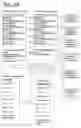
FIG. 1 illustrates the pointer-oriented object acquisition method for abstract treatment of information of the computer system of Al of a cyborg or an android based on a natural language.
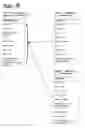
FIG. 2 is an illustration of access of the computer system of Al of a cyborg or an android to the data elements of a class in a natural language.
FIG. 3 is an illustration of access of the computer system of Al of a cyborg or an android to the data elements of a class in a natural language on another higher abstract level.
FIG. 4 shows a subjective, in the sense of depending on the subject (on the computer system of Al of a cyborg or an android), representation (of the computer system of Al of a cyborg or an android in a natural language) of the relativity at the time of the abstract object; of the state of affairs, in the sense of ready or not ready, of the abstract object; of the personality to the abstract object.
FIG. 1 illustrates the pointer-oriented object acquisition method for abstract treatment of information of the computer system of Al of a cyborg or an android based on a natural language. In RAM (on the heap (the freely available memory storage area by dynamic memory allocation) of the computer system of Al of a cyborg or an android, a pointer is created subjectively, in the sense of depending on the subject (on the computer system of Al of a cyborg or an android) at runtime. The addresses of the inputs of the reactions of the sensor groups, that represent the sense organs, (i.e. for example the group of the sense of sight, the group of the sense of hearing, the group of the sense of smell, the group of the sense of taste, the group of the sense of touch and thereto n groups from the n-Sense sensor groups else) are stored in this pointer. In the each individual case (at the runtime) for example, the input of the sensors of the sensors group of the sense of sight is stored under the file
- V:\Cyborg\SenseOrgans\SenseOfSight\See1918.see on the V:\disk drive;
- the input of the sensors of the sensors group of the sense of hearing is stored under the file W:\Cyborg\SenseOrgans\SenseOfHearing\Hearing1918.hear on the W:\disk drive;
- the input of the sensors of the sensors group of the sense of smell is stored under the file X:\Cyborg\SenseOrgans\SenseOfSmell\Smell1918.smell on the X:\disk drive;
- the input of the sensors of the sensors group of the sense of taste is stored under the file Y:\Cyborg\SenseOrgans\SenseOfTaste\Taste1918.taste on the Y:\disk drive;
- the input of the sensors of the sensors group of the sense of touch is stored under the file Z:\Cyborg\SenseOrgans\SenseOfTouch\Touch1918.touch on the Z:\disk drive;
- (thereto n inputs of the sensors of the n-Sense sensors groups else, for example) the input of the sensors of the sensors group of the n-sense is stored under the file N:\Cyborg\SenseOrgans\SenseOfn-Sense\n-Sense1918.n-sense on the N:\disk drive. Then, the n paths are stored as n addresses under a pointer simultaneously.
- (S1, S2, S3, S4, S5, . . . , Sn (for example: variables; columns names in a table; etc.) signify n senses, which are implemented at the concrete cyborg or an android)
- S1=V:\Cyborg\SenseOrgans\SenseOfSight\See1918.see
- S2=W:\Cyborg\SenseOrgans\SenseOfHearing\Hearing1918. hear
- S3=X:\Cyborg\SenseOrgans\SenseOfSmell\Smell1918.smell
- S4=Y:\Cyborg\SenseOrgans\Senseofraste\Taste1918.taste
- S5=Z:\Cyborg\SenseOrgans\SenseOfTouch\Touch1918.touch
- Sn=N:\Cyborg\SenseOrgans\SenseOfn-Sense\n-Sense1918.n-sense
In this way, a subjective object of the computer system is instantiated. The subjective object is simultaneously acquired. However, the subjective object of the computer system of Al of a cyborg or an android is never considered relatively at the time.
The first Pointer, i.e. the subjective object, refers to the above-mentioned files.
Physically, in RAM (on the heap (the freely available memory storage area by dynamic memory allocation) of the computer system of Al of a cyborg or an android, a pointer is instantiated subjective, in the sense of depending on the subject (on the computer system of Al of a cyborg or an android) at runtime. This pointer is implemented as an object of the subjective, primitive, system-specifically previously defined class. (That means, the variables: S1, S2, S3, S4, S5, . . , Sn are not used for the first pointer.) This pointer is initialized with the addresses of the inputs of the reactions of the sensors groups, that represent the sense organs. (The disk drive paths were given for the presentation purposes only. The addressing can also be realized by the computer system of Al of a cyborg or an android in another manner). The first pointer, i.e. the subjective object, is temporary.
In its working method, in a natural language, the subjective object, i.e. the pointer, that identified as the subjective object, and, that refers to the reactions of the sensor groups, that represent the sense organs, is associatively completed, in the sense of the associations of the subject (of the computer system of Al of a cyborg or an android), and is supplemented with consideration of relativity at the time, in the sense of the real-time (no model-time), that however can be implemented with the timeframe, for example as six weekdays and one holiday. This pointer is stored in another one, the second pointer. In this manner, an associative object of the computer system is instantiated. In the each individual case, the paths, that are stored in the first pointer:
- S1=V:\Cyborg\SenseOrgans\SenseOfSight\See1918.see;
- S2=W:\Cyborg\SenseOrgans\SenseOfHearing\Hearing1918.hear;
- S3=X:\Cyborg\SenseOrgans\SenseOfSmell\Smell1918.smell;
- S4=Y:\Cyborg\SenseOrgans\Senseofraste\Taste1918.taste;
- S5=Z:\Cyborg\SenseOrgans\SenseOfTouch\Touch1918.touch;
- Sn=N:\Cyborg\SenseOrgans\SenseOfn-Sense\n-Sense1918.n-sense,
are stored in the second pointer in the same manner. The contents of the files are supplemented associative. For example the information: “You shall love your neighbor as yourself” is supplemented as “Test4 shall love Test4's neighbor as test4 itself (herself)”. The real-time of instantiating the associative object, “Sunday, morning”, is acquired with. There will be the associative information then together: “Test4 shall love Test4's neighbor as test4 itself (herself), Sunday, morning”.
Physically however, in RAM (on the heap (the freely available memory storage area by dynamic memory allocation) of the computer system of Al of a cyborg or an android, a further pointer will be instantiated at runtime. This second pointer is also implemented as an object of the subjective, primitive, system-specifically previously defined class. (That means, the variables: S1, S2, S3, S4, S5, . . . Sn will be not used for the second pointer.) This pointer is initialized with the addresses of the inputs of the reactions of the sensors groups, which represent the sense organs. (The disk drive paths were given for the presentation purposes only. The addressing can also be realized by the computer system of Al of a cyborg or an android in another manner.) This pointer must be able completed associatively, in the sense of the associations of the subject (of the computer system of Al of a cyborg or an android), and relevant at the time as well. The associative information will be supplemented with some abstract information with the cyborg-interpreter. For example, the information: “Test4 shall love Test4's neighbor as test4 itself (herself), Sunday, morning”.
(Unfortunately, Case Sensitive (using of uppercase and lowercase letters) is not taken into consideration at the associative object yet.) The supplemented information is to be viewed only like a signal, a label or a name. (It can best be represented on a quite primitive example. While a dog is being trained the command “place”, the brain of the dog is storing the subjective pieces of information of its place with the associative signal “place”.)
With the associative object, i.e. with the second pointer, an association is physically substantiated in the computer system of Al of a cyborg or an android, in the sense of building a substance of the association. After the associative object is instantiated, the subjective object will be deleted. Thus, the memory will be released. The memory, that is referred with the first pointer, will be administered with the second pointer from this point in time.
Further in its working method, in RAM of the computer system of Al of a cyborg or an android, one, the third, pointer is created at the runtime, in a natural language abstractly, in the sense of the abstract information in a natural language relating to the associative information, that is stored in an associative object of the computer system of Al of a cyborg or an android. This pointer refers to the vocabulary of the computer system of Al of a cyborg or an android, i.e. the RAM addresses of the words of the vocabulary of the computer system of Al of a cyborg or an android are stored under the object variables of this pointer. Consequently, the addresses of the words, that build the associative information, are stored under the object variables of this pointer. Furthermore, the object variables, that contain some abstract information in itself, belong also to the vocabulary (physically). In its names are stored the RAM addresses of the words of the vocabulary of the computer system of Al of a cyborg or an android as well:
- T:\Vocabulary\who.txt; T:\Vocabulary\Test4.txt;
- T:\Vocabulary\shall.txt; T:\Vocabulary\shall.txt;
- T:\Vocabulary\do.txt; T:\Vocabulary\love.txt;
- T:\Vocabulary\whose.txt; T:\Vocabulary\test4's.txt;
- T:\Vocabulary\whom.txt; T:\Vocabulary\neighbor.txt;
- T:\Vocabulary\as.txt; T:\Vocabulary\as.txt;
- T:\Vocabulary\whom.txt; T:\Vocabulary\Test4.txt;
- T:\Vocabulary\which.txt; T:\Vocabulary\tself.txt (herself.txt);
- T:\Vocabulary\real.txt T:\Vocabulary\timestamp.txt; T:\Vocabulary\Sunday.txt,
- T:\Vocabulary\morning.txt.
The word order of the part of a sentence, i.e. the sentence position, of the associative object, i.e. of the supplemented information of the associative object, is stored with the abstract object as well.
Physically however, in RAM (on the heap (the freely available memory storage area by dynamic memory allocation) of the computer system of Al of a cyborg or an android, a pointer, the third one, will be instantiated at runtime. This third pointer is implemented as an object of the true, system-specifically object-oriented class. It means, the addresses of the values of the data elements are stored in the object variables. (The disk drive paths were given for the presentation purposes only. The addressing can also be realized by the computer system of Al of a cyborg or an android in another manner.)
In this way, an abstract object of the computer system is instantiated and initialized, i.e. its object variables are instantiated and initialized. If (only if, keep in mind please) the abstract object is initialized, it contains the abstract information of the entire associative object, i.e. from the entire subjective object.
With the abstract object, i.e. with the third pointer, a thought is physically substantiated in the computer system of Al of a cyborg or an android, in the sense of building a substance of the thought.
The third pointer does not refer to the associative object of computer system. It is the task of the cyborg-interpreter both of these pointers, the third and the second, to reference and to synchronize. The cyborg-interpreter is working in a natural language, for example German or English. Therefore, the reference of the abstract object, i.e. of the third pointer, get no access to the associative object, i.e. to the second pointer, i.e. even with help of the cyborg-interpreter.
The abstract objects are classified in a natural language in an object-oriented way of the thinking paradigm of the class-based model of OOP. (The classes of the of the computer system of Al of a cyborg or an android are classified by the computer system of Al of a cyborg or an android itself in a natural language in this way as well.)
With the aid of the third pointer, i.e. the abstract object, the computer system of Al of a cyborg or an android can get access to, as well as manipulate with the element variables, i.e. with the data elements of a class. The data elements, as said, are implemented in a natural language, i.e. are instantiated and initialized. These abstract data elements of a class, which are instantiated and initialized with each abstract object, will be described still further.
The element variables of a class, i.e. the data elements, the element functions of a class, that manipulate with the element variables, the constants, i.e. the element variables, under which an element variable value, a function, a constant is stored, substantiate the thought as an abstract object analytically, keep in mind please, after working of the cyborg-interpreter.
For working method in another natural language, the computer system of Al of a cyborg or an android uses the references, i.e. the alias-names of the abstract object, in the other natural languages.
Test4 soll Test4s Nachsten lieben wie Test4 selbst” is a reference, an alias-name, in German to the abstract object of class “Love” in English: “Test4 shall love Test4's neighbor as Test4 herself”.
The hardware deployment diagram of the computer system of Al of a cyborg or an android is illustrated in the middle of the FIG. 1A. On the hardware devices node 1 of the computer system of Al of a cyborg or an android are installed a hardware devices node 2 of the associative subjectivity 4 and a hardware devices node 3 of the abstract subjectivity 5. Hardware devices nodes are realized for the test and demo purposes as different computers. The periphery devices as well as the microcontrollers or another chips will be used for production.
FIG. 2 is an illustration of access of the computer system of Al of a cyborg or an android to the data elements of a class in a natural language. Element variables, element functions and constants are defined in the natural language for it. (At the FIG. 2-4, the object means an abstract object of the computer system of Al of a cyborg or an android, i.e. the third pointer.)
The element variables of a class, i.e. data elements, are implemented with the objects of the classes that define an interrogative in the natural language, in which the computer system of Al of a cyborg or an android is working at this timeframe. With the interrogative of the question that is posed to a part of speech, i.e. to a part of a sentence.
The computer system of Al of a cyborg or an android is interpreting an abstract object of class “Love”: “Test4 shall love Test4's neighbor as Test4 herself”. (Test4 is a person.) The computer system of Al of a cyborg or an android has the following abstract information at its disposal:
The class “Whom” is derived from the class “Interrogative”. The class “Whom” is an interrogative to an object that was represented as a noun that indicates a person (an animated noun). (The object was defined in the sense of a part of a sentence). (Please keep in Mind, that the strings “Whom” or “whom” are defined with help of the objects of the classes “Derive”, “Be”, “Represent”, “Indicate”). As conclusion, the value “neighbor” is stored under the variable “whom”, an object of the class “Whom”, in the abstract object of the class “Love”: “Test4 shall love Test4's neighbor as Test4 herself”.
The composite, compound or complex, sentences are decomposed by the computer system of Al of a cyborg or an android while interpreting the abstract object in each case on the simple sentences at the same real timestamp, e.g.:
- The composite sentence: “The class “Whom” is an interrogative to an object that was represented as a noun that indicates a person (an animated noun)”, was decomposed by the computer system of Al of a cyborg or an android after interpreting the abstract object on four simple sentences with the same time stamp:
- The class “Whom” is an interrogative to an object.
- Object was represented as a noun.
- Noun indicates a person.
- Noun is an animated noun.
As another abstract object, an object of the class “Steal” will be interpreting: “Test4 shall not steal”. (Test4 is a person.)
The computer system of Al of a cyborg or an android has the following abstract information at its disposal:
The class “Who” is derived from the class “Interrogative”. The class “Who” is an interrogative to a subject that was represented as a noun that indicates a person (an animated noun). (The subject was defined in the sense of a part of a sentence). (Please keep in mind, that the strings “Who” or “who” are defined with help of the objects of the classes “Derive”, “Be”, “Represent”, “Indicate”). As conclusion, the value “Test4” is stored under the variable “who”, an object of the class “Who”, in the abstract object of the class “Steal”: “Test4 shall not steal”.
The composite sentence: “The class “Who” is an interrogative to a subject that was represented as a noun that indicates a person (an animated noun)”, was decomposed by the computer system of Al of a cyborg or an android after interpreting the abstract object on four simple sentences with the same time stamp:
- The class “Who” is an interrogative to a subject.
- Subject was represented as a noun.
- Noun indicates a person.
- Noun is an animated noun.
The element functions of a class, that manipulate with the element variables, are implemented with an object of the class that classifies words that belong to the word stem of a verb of the natural language (i.e. the class that classifies in each case only a word of the word stem), in which the computer system of Al of a cyborg or an android is working at this timeframe. These element functions are stored, as a matter of course, under the element variable, that is represented with an object of the class, which classifies words that belong to the word stem of the verb “do”. (Please keep in mind, that the strings, “element” “functions”, “object” “of” “the” “word” “stem” “class” or “do” are defined with help of the objects of the classes “Manipulate”, “Implement”, “Classify”, “Belong”, “Work” and so on).
That is that the value “love”, an object of the class that classifies words that belongs to the word stem of the verb “love”, is stored under the variable “do”, an object of the class that classifies words that belong to the word stem of the verb “do”, in the abstract object of the class “Love”: “Test4 shall love Test4's neighbor as Test4 herself”.
The auxiliaries, the modal verbs, the prepositions, the conjunctions and so on are to treat as constants. They are stored in the natural language, in which the computer system of Al of a cyborg or an android is working at this timeframe, under in each case an element variable, that is defined with help of an object of the class, in which the auxiliary, the modal verb, the preposition, the conjunction and so on, itself, are classified.
- The computer system of Al of a cyborg or an android is interpreting an abstract object of class “Love”:
- “Test4 shall love Test4's neighbor as Test4 herself” further. The computer system of Al of a cyborg or an android has the following abstract information at its disposal:
- The class “Should” is derived from the class “Modal Verb”. (An object of the class “Be”.) As conclusion, the value “shall” is stored under the variable “shall”, an object of the class “Should”, in the abstract object of the class “Love”: “Test4 shall love Test4's neighbor as Test4 herself”.
The objects of the classes in that an interrogative is defined in the natural language, e.g. “Which” or “Who”; the object of the class that classifies words that belong to the word stem of the verb “Do”, e.g. “do”; the objects of the classes, in which the auxiliary, the modal verb, the preposition, the conjunction and so on, are defined, e.g. “Should”, substantiate the thought as an abstract object analytically, in the sense of working of the cyborg-interpreter.
With the aid of the third pointer, i.e. the abstract object, the computer system of Al of a cyborg or an android can get access to the element variables, i.e. to the data elements of a class, as well as manipulate with the element variables, i.e. with the data elements of a class.
FIG. 3 is an illustration of access of the computer system of Al of a cyborg or an android to the data elements of a class in a natural language on another higher abstract level. The diverse parts of a sentence, e.g. for example the object, the subject, the predicate, the attributes, the adverbial modifiers, the local modifier, the temporal modifier etc., can consist of several words as well. The parts of a sentence, that consist of several words, are initialized by the computer system of Al of a cyborg or an android in interpreting with the others variables defined previously and provided with a value. If these parts of a sentence are also stored under the abstract object, they should be deleted, i.e. should be forgotten, at the fastest.
The computer system of Al of a cyborg or an android is interpreting an abstract object of class “Love”: “Test4 shall love Test4's neighbor as Test4 herself” still further. The computer system of Al of a cyborg or an android has the following abstract information at its disposal:
- The class “Who” is derived from the class “Interrogative”.
- The value “Test4's” is stored in the abstract object of the class “Love”: “Test4 shall love Test4's neighbor as Test4 herself” under the variable “whose”, that is an object of the class “Who”.
- The value “neighbor” is stored in the abstract object of the class “Love”: “Test4 shall love Test4's neighbor as Test4 herself” under the variable “whom”, that is an object of the class “Who”.
- The value “Test4's neighbor” is stored under the variable “whom”, an object of the class “Who”, in the abstract object of the class “Love”: “Test4 shall love Test4's neighbor as Test4 herself”. The value of the variable “whom”, that is an object of the class “Who”, is initialized with chaining the values, which are stored under the variables “whose” and “whom”, that are the objects of the classes “Who”. On the other hand in German, the value “Test4s Nachsten” is stored under the variable “whom”, an object of the class “Who” (in German—“wen”, that is an object of the class “Wer”), in the abstract object of the class “Lieben”: “Test4 soll Test4s Nachsten lieben wie Test4 selbst”. The value of the variable “whom” is initialized with chaining the values, that are stored under the variables “whose” and “which”, that are the objects of the classes “Who” and “Which”. (In German—“wessen” and “welchen”, that are the objects of the classes “Wer” and “Welcher”.)
Then, the computer system of Al of a cyborg or an android is interpreting an abstract object of class “Be”: “Test4 was on the Marienplatz at 10 o'clock”. The computer system of Al of a cyborg or an android has the following abstract information at its disposal:
- The class “When” is derived from the class “Interrogative”.
- The value “at” is stored in the abstract object of the class “Be”: “Test4 was on the Marienplatz at 10 o'clock” under the constant “at”, that is an object of the class “At”.
- The value “ten” is stored in the abstract object of the class “Be”: “Test4 was on the Marienplatz at 10 o'clock” under the variable “how many”, that is an object of the class “How many”.
- The value “o'clock” is stored in the abstract object of the class “Be”: “Test4 was on the Marienplatz at 10 o'clock” under the variable “what”, that is an object of the class “What”.
- As conclusion, the value “at 10 o'clock” is stored under the variable “when”, an object of the class “When”, in the abstract object of the class “Be”: “Test4 was on the Marienplatz at 10 o'clock”. The value of the variable “when”, that is an object of the class “When” is initialized with chaining the values, that are stored under the variables “at”, “how many”, and “what”, that are the objects of the classes “At”, “How many” and “What”.
The objects of the classes in that an interrogative is defined in the natural language, e.g. “who” or “when”; the object of the class that classifies words that belong to the word stem of the verb “Do”, e.g. “did”; the objects of the classes, in which the auxiliary, the modal verb, the preposition, the conjunction and so on, are defined, e.g. “on” or “at”, substantiate the thought as an abstract object analytically, in the sense of working of the cyborg-interpreter.
FIG. 4 shows a subjective, in the sense of depending on the subject (on the computer system of Al of a cyborg or an android), representation (of the computer system of Al of a cyborg or an android in a natural language) of the relativity at the time of the abstract object; of the state of affairs, in the sense of ready or not ready, of the abstract object; of the personality to the abstract object.
In order to perform the relativity at the time of the abstract object of the computer system of Al of a cyborg or an android in a natural language, the state of affairs of the abstract object, in the sense of ready or not ready, the personality to the abstract object etc., the abstract object is always stored with a modal verb, an auxiliary verb and so on.
- The computer system of Al of a cyborg or an android is located in Munich and is driving across the Marienplatz with the S-Bahn (urban rail) train of the MW (Munich Transport and Tariff Association).
- The computer system of Al of a cyborg or an android is hearing such info messages of the MW in the S-Bahn train:
- Next stop: Marienplatz.
- Connections to the subway.
- This abstract information is interpreted and understood by the computer system of Al of a cyborg or an android in the S-Bahn train like this:
- The next stop is Marienplatz.
- There are some connections to the subway.
- That is that two abstract objects of the class “Be” are subjective defined and are subjective treated with the computer system of Al of the cyborg or the android.
- This information (it means the abstract objects), however, is stored with the auxiliary respectively:
- The next stop does be Marienplatz.
- There do be some connections to the subway.
There follow 10 sheets of drawings.
Claims
1. The pointer-oriented object acquisition method for abstract treatment of information of the computer system of Al of a cyborg or an android based on a natural language, with which the computer system subjectively summarizes a combination-set of some reactions of the respective sensors groups, as an object, the class of which is preprogrammed in no computer language; with which the computer system defines the class of this object as an action in a natural language; with which the computer system treats this object relatively at the time; with which the computer system uses a word in another natural language as a reference to a word in the first natural language for working method in the first natural language; with which the computer system can summarize under this object some more reactions in each case from some more sensors groups than five reactions of five sense organs (i.e. five sensors groups, the group of the sense of sight, the group of the sense of hearing, the group of the sense of smell, the group of the sense of taste, the group of the sense of touch and thereto n groups from the n-Sense sensor groups else); with which the computer system provides for output this object, split according to the sensors groups; with which the computer system stores the object as a subjective object, an associative object and an abstract object in its working method; with which a reference in another natural language to the abstract object is used for working method in the other natural language; with which the computer system classifies the abstract objects, that map the entire associative object, as well as the classes of the abstract objects, in a way of the thinking paradigm of the class-based model of OOP, only if the class of the objects is a verb in a natural language; with which the computer system treats the abstract objects, as well as the classes of the objects, in a not continuous treatment mode, i.e. discretely for each abstract object; with which the treatment of the abstract objects, as well as the classes of the objects, is impelled from, that the abstract object is compared with the other abstract objects; with which the decision, whether an abstract object is to be treated and how the abstract object is to be handled within the bounds of the determined treatment mode, is determined with the classes classification of the computer system of Al of the cyborg or the android; with which the treatment mode is determined with the polymorphy of the classes classification of the computer system of Al of the cyborg or the android; with which the abstract objects, as well as the classes of the objects, are defined and treated with the module of the abstract subjectivity of the computer system of Al of the cyborg or the android in a natural language, i.e. in no programming language; with which the computer system of Al of the cyborg or the android is assembled from the module of the associative subjectivity and the module of the abstract subjectivity, characterized in that
a (the first) pointer, in which the RAM addresses of the inputs of the n reactions of the n sensor groups, that represent the sense organs (i.e. for example five sensor groups, the group of the sense of sight, the group of the sense of hearing, the group of the sense of smell, the group of the sense of taste, the group of the sense of touch and thereto n groups from the n-Sense sensor groups else), are stored, is created and treated subjectively by the working method in RAM of the computer system of Al of a cyborg or an android at runtime as a subjective object, in a way of the thinking paradigm of the class-based model of OOP, i.e. the programming language C++, as in instancing an object on the Heap (the freely available memory storage area by dynamic memory allocation).
2. The working method according to claim 1,
characterized in that
a (the third) pointer on the vocabulary of the computer system, in that the RAM address (of memory area, in that each word of the vocabulary of the computer system of Al of a cyborg or an android is mapped, i.e. is stored) of each parsed word of the associative object, i.e. of the association, is stored together with the RAM address of the word, that contains the abstract Information of the parsed word in the context to the entire associative object, is created and treated abstractly in a natural language by the working method at runtime as an abstract object, in a way of the thinking paradigm of the class-based model of OOP, i.e. the programming language C++, as in instancing an object on the Heap (the freely available memory storage area by dynamic memory allocation).
3. The working method according to one or several the claims 1-2,
characterized in that
the subjective object, i.e. the first pointer that is termed as the subjective object, is simultaneously acquired, however it is never considered relatively at the time.
4. The working method according to one or several the claims 1-3,
characterized in that
the subjective object, i.e. the first pointer, that is identified as the subjective object, after it was completed associatively and relatively at the time, is stored by the working method in the RAM of the computer system of Al of a cyborg or an android at runtime as a (the second) pointer that is identified as an associative object.
5. The working method according to one or several the claims 1-4,
characterized in that
the element variables of a class of the abstract object, i.e. data elements, are instantiated with the objects of the classes, in which the words that belong to an interrogative of the natural language, in which the computer system of Al of a cyborg or an android is working at this timeframe, are classified, i.e. with the interrogative of the question that is posed to a part of speech, i.e. to a part of a sentence.
6. The working method according to one or several the claims 1-5,
characterized in that
the element functions of a class of the abstract object, which manipulate with the element variables, are initialized with the objects of the classes, in which the words that belong to the word stem of a verb of the natural language, in which the computer system of Al of a cyborg or an android is working at this timeframe, are classified, and are instantiated under the element variable that is represented with an object of the class, in which words that belong to the word stem of the verb “do” are classified.
7. The working method according to one or several the claims 1-6,
characterized in that
the auxiliaries, the modal verbs, the prepositions, the conjunctions and so on, that are to treat as constants, are stored in the natural language, in which the computer system of Al of a cyborg or an android is working at this timeframe, under in each case an element variable that is defined with help of an object of the class, in which the auxiliary, the modal verb, the preposition, the conjunction and so on, itself, is classified.
8. The working method according to one or several the claims 1-7,
characterized in that
the diverse parts of a sentence, for example the object, the subject, the predicate, the attributes, the adverbial modifiers, the local modifier, the temporal modifier etc., that consist of several words, are initialized by the computer system of Al of a cyborg or an android in interpreting with the others variables defined previously and provided with a value.
9. The working method according to one or several the claims 1-8,
characterized in that
the parts of a sentence, that consist of several words and that are initialized by the computer system of Al of a cyborg or an android in interpreting with the others variables defined previously and provided with a value, are deleted, i.e. are forgotten, at the fastest.
10. The working method according to one or several the claims 1-9,
characterized in that
the composite, compound or complex, sentences are decomposed by the computer system of Al of a cyborg or an android in interpreting the abstract object in each case on the simple sentences at the same real timestamp.
11. The working method according to one or several the claims 1-10,
characterized in that
in order to perform the relativity at the time of the abstract object of the computer system of Al of a cyborg or an android in a natural language, the state of affairs of the abstract object, the personality to the abstract object etc. the abstract object is always stored with a modal verb, an auxiliary verb and so on.
12. The working method according to one or several the claims 1-11,
characterized in that
the telepathy is implemented with transferring all three objects, i.e. the subjective object, the corresponding associative object and the corresponding abstract object, of the computer system of Al of a cyborg or an android to another remote computer system of Al of a cyborg or an android simultaneously.
13. The working method according to one or several the claims 1-12,
characterized in that
the telepathy is implemented with transferring all three objects of the computer system of Al of a cyborg or an android to another remote computer system of Al of a cyborg or an android with n-Sense, for example WLAN, in the sense of passing objects to a method with the mechanism “path-by-value”.
14. The working method according to one or several the claims 1-13,
characterized in that
relativity at the time during this working method of the computer system of Al of a cyborg or an android can be implemented as six weekdays and one holiday.
Images & Drawings included:





Sources:
- United States Patent and Trademark Office - verify current appl. status at the USPTO↗
Recent applications in this class:
- » 20250292029 2025-09-18
INFORMATION EXTRACTION AND IMAGE RE-ORDERING USING PROMPT LEARNING AND MACHINE-READING COMPREHENSION - » 20250292028 2025-09-18
MODELING ANALYSIS OF TEAM BEHAVIOR AND COMMUNICATION - » 20250292027 2025-09-18
METHOD AND APPARATUS TO FACILITATE BUILDING A LARGE LANGUAGE MODEL PIPELINE - » 20250292026 2025-09-18
A GENERATIVE ARTIFICIAL INTELLIGENCE COMMENTARY - » 20250284891 2025-09-11
ARTIFICIAL INTELLIGENCE SYSTEM WITH AUGMENTED DOCUMENT CAPTURE AND PROCESSING SYSTEMS AND METHODS - » 20250278571 2025-09-04
SYSTEM FOR FINE-GRAINED SENTIMENT ANALYSIS USING A HYBRID MODEL AND METHOD THEREOF - » 20250278570 2025-09-04
SEMANTIC PARSING OF UTTERANCE USING CONTRACTIVE PARAPHRASING - » 20250278569 2025-09-04
DERIVING HETEROGENOUS CONTEXT FOR EVALUATING GENERATED CODE - » 20250278568 2025-09-04
MODULAR FRAMEWORK FOR EVALUATING LANGUAGE MODELS - » 20250272499 2025-08-28
SEMANTIC MATCHING BETWEEN A SOURCE SCREEN OR SOURCE DATA AND A TARGET SCREEN USING SEMANTIC ARTIFICIAL INTELLIGENCE