Packaging device and method for absorbing moisture
US20080113129A1
2008-05-15
12/016,792
2008-01-18
✅ Patent granted
US 7,967,949 B2
2011-06-28
-
-
Mark Halpern
2028-11-14
Abstract:
A packaging device and method for absorbing and reducing moisture as well as a manufacturing process for such device. The packaging device is a container made from paperboard such as containerboards or linerboards with a corrugated medium. The paperboard is insulated with moisture absorbing additives comprising charcoal, activated charcoal, activated carbon, or substances mostly comprised of carbon. Perforations may be added in the boards to further permit moisture to reach the corrugated medium, permitting further absorption by the additives embedded within the corrugated medium in between the boards. This packaging device and method is favorable for storing or transporting objects which are sensitive to or would benefit from low moisture/humidity conditions.
Inventors:
- Kevin J. O'Neill 4 🇺🇸 Lloyd Harbor, NY, United States
- Albert J. Salese 4 🇺🇸 Huntington, NY, United States
Interested in similar patents?
Get notified when new applications in this technology area are published.
Classification:
D21F11/00 IPC
Processes for making continuous lengths of paper, or of cardboard, or of wet web for fibre board production, on paper-making machines
B32B29/08 » CPC main
Layered products comprising a layer of paper or cardboard Corrugated paper or cardboard
B32B3/266 » CPC further
Layered products comprising a layer with external or internal discontinuities or unevennesses, or a layer of non-planar form ; Layered products having particular features of form characterised by a particular shape of the outline of the cross-section of a continuous layer; characterised by a layer with cavities or internal voids ; characterised by an apertured layer characterised by an apertured layer, the apertures going through the whole thickness of the layer, e.g. expanded metal, perforated layer, slit layer regular cells
B32B3/28 » CPC further
Layered products comprising a layer with external or internal discontinuities or unevennesses, or a layer of non-planar form ; Layered products having particular features of form characterised by a particular shape of the outline of the cross-section of a continuous layer; characterised by a layer with cavities or internal voids ; characterised by an apertured layer characterised by a layer comprising a deformed thin sheet, i.e. the layer having its entire thickness deformed out of the plane , e.g. corrugated, crumpled
B32B29/005 » CPC further
Layered products comprising a layer of paper or cardboard as the main or only constituent of a layer, which is next to another layer of the same or of a different material next to another layer of paper or cardboard layer
B65D81/264 » CPC further
Containers, packaging elements, or packages, for contents presenting particular transport or storage problems, or adapted to be used for non-packaging purposes after removal of contents; Adaptations for preventing deterioration or decay of contents; Applications to the container or packaging material of food preservatives, fungicides, pesticides or animal repellants with provision for draining away, or absorbing, fluids, e.g. exuded by contents ; Applications of corrosion inhibitors or desiccators for absorbing liquids
B65D81/266 » CPC further
Containers, packaging elements, or packages, for contents presenting particular transport or storage problems, or adapted to be used for non-packaging purposes after removal of contents; Adaptations for preventing deterioration or decay of contents; Applications to the container or packaging material of food preservatives, fungicides, pesticides or animal repellants with provision for draining away, or absorbing, fluids, e.g. exuded by contents ; Applications of corrosion inhibitors or desiccators for absorbing gases, e.g. oxygen absorbers or desiccants
D21H27/10 » CPC further
Special paper not otherwise provided for, e.g. made by multi-step processes Packing paper
D21H27/30 » CPC further
Special paper not otherwise provided for, e.g. made by multi-step processes Multi-ply
B32B2250/26 » CPC further
Layers arrangement All layers being made of paper or paperboard
B32B2250/40 » CPC further
Layers arrangement Symmetrical or sandwich layers, e.g. ABA, ABCBA, ABCCBA
B32B2255/12 » CPC further
Coating on the layer surface on paper layer
B32B2255/20 » CPC further
Coating on the layer surface Inorganic coating
B32B2260/028 » CPC further
Layered product comprising an impregnated, embedded, or bonded layer wherein the layer comprises an impregnation, embedding, or binder material; Composition of the impregnated, bonded or embedded layer Paper layer
B32B2307/304 » CPC further
Properties of the layers or laminate having particular thermal properties Insulating
B32B2307/724 » CPC further
Properties of the layers or laminate; Other properties Permeability to gases, adsorption
B32B2307/726 » CPC further
Properties of the layers or laminate; Other properties Permeability to liquids, absorption
B32B2439/70 » CPC further
Containers; Receptacles Food packaging
B65D2585/366 » CPC further
Containers, packaging elements or packages specially adapted for particular articles or materials for articles particularly sensitive to damage by shock or pressure for biscuits or other bakery products specific products Pizza
Y10S229/939 » CPC further
Envelopes, wrappers, and paperboard boxes Container made of corrugated paper or corrugated paperboard
Y10T428/1303 » CPC further
Stock material or miscellaneous articles; Hollow or container type article [e.g., tube, vase, etc.] Paper containing [e.g., paperboard, cardboard, fiberboard, etc.]
Y10T428/24322 » CPC further
Stock material or miscellaneous articles; Structurally defined web or sheet [e.g., overall dimension, etc.] including aperture Composite web or sheet
Y10T428/24694 » CPC further
Stock material or miscellaneous articles; Structurally defined web or sheet [e.g., overall dimension, etc.]; Nonplanar uniform thickness material; Aligned or parallel nonplanarities Parallel corrugations
B32B1/02 IPC
Layered products having a general shape other than plane Receptacles, i.e. rigid containers , e.g. tanks
Description
This application is a continuation of application Ser. No. 11/248,844, filed on Oct. 12, 2005, which is a continuation of application Ser. No. 10/774,925 filed on Feb. 9, 2004, which is a continuation-in-part of application Ser. No. 10/140,755 filed on May 7, 2002, the disclosure of all applications in their entirety is incorporated by reference herein.
BACKGROUND OF THE INVENTION1. Field of the Invention
The invention is directed to a packaging device and method for absorbing moisture, steam, or condensation through the use of embedded carbon-containing substances.
2. Discussion of Related Art
A problem with packaging of goods arises when the packaging creates an environment which negatively affects the packaged content. One example is the packaging of fine art or other materials which decay or go bad when moisture or a humid condition is trapped. Another example is the negative effect on packaged food due to steam vapor in a container such as a paper box or bag. The steam that emanates from a hot food such as pizza, french fries, etc. forms condensation that settles within the box or bag, making the pizza or french fries soggy or spongelike. In the case of packaging used for temporarily storing and transporting a hot pizza pie, the packaging is typically a box constructed of either corrugated boxboard, or containerboard. Corrugated boxboard is made by gluing an accordion-like sheet of paper (corrugated medium) in between two sheets of linerboard. Containerboard, or what is also called ‘clay kraft back’ is a paperboard that does not have any corrugated layer. Containerboard is commonly used for forming boxes such as a shoe box.
The condensation that settles on the inside bottom surface of the pizza box is absorbed by the pizza dough by the time the pizza is transported to a place where it can be consumed. Similarly, the Kraft Paper commonly used as grocery bags for temporarily housing other hot food such as french fries, fried chicken, etc. also cannot absorb the vapor from the hot food. The trapped vapor renders the french fries soggy.
Accordingly, it is desirous to have a packaging device and method capable of absorbing moisture, steam, or condensation.
SUMMARY OF THE INVENTIONAccording to an embodiment of the present invention, a container for housing food is provided, comprising paper having carbon additives for absorbing moisture emanating from the food, wherein the carbon additives include one of charcoal, activated charcoal and activated carbon, wherein the paper is one of a containerboard, a linerboard, and a corrugated medium.
According to an aspect of the present invention, the container, preferably a corrugated boxboard, includes a plurality of sheets or linerboards, and the carbon additives are embedded in at least one of the plurality of sheets or linerboards, wherein the sheets of paper are made from a mixture of pulp, water, and the carbon additives.
Preferably, one, two, or three of the plurality of sheets is/are selectively embedded with the carbon additives. In one embodiment, one of the plurality of sheets is corrugated and another sheet is perforated.
A method is also provided for absorbing moisture from food within a container comprising; embedding carbon additives within paper, and forming the container using the paper. Preferably, the carbon additives include charcoal, activated charcoal and activated carbon. The paper is one of a linerboard, a containerboard, and a corrugated medium. The paper includes a plurality of sheets, each sheet formed from a plurality of layers, and the carbon additives are embedded in at least one of the plurality of sheets. The sheets of paper are made from a mixture of pulp, water, and the carbon additives, wherein one, two or three of the plurality of sheets are embedded with the carbon additives.
According to another embodiment of the invention, the plurality of sheets include an inner sheet and a corrugated sheet, the inner sheet having perforations and the corrugated sheet having the embedded carbon additives.
A process for manufacturing a container for storing food is also provided, comprising; forming layers of paper with embedded carbon additives by mixing pulp, water, and the carbon additives; and forming a boxboard with a plurality of sheets of linerboards of the paper to house the food, wherein the step of forming a box includes using a plurality of layers of paper forming sheets or linerboards, including at least an inner linerboard and an outer linerboard. The process further including adding perforations to the inner linerboard and corrugating one of the plurality of sheets of paper.
BRIEF DESCRIPTION OF THE DRAWINGSOther uses and features of the present invention will become apparent from the following detailed description considered in connection with the accompanying drawings which disclose several embodiments of the present invention. It should be understood, however, that the drawings are designed for the purpose of illustration only and not as an exhaustive list of its possible uses.
In the drawings wherein similar reference characters denote similar elements throughout the different embodiments:
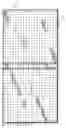
FIG. 1 shows a paper box in an opened configuration according to the present invention;
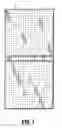
FIG. 2 shows a sideview of the paper box; and
FIG. 3 shows a cross-sectional view of a corrugated medium in a boxboard.
DETAILED DESCRIPTION OF THE PREFERRED EMBODIMENTSThe invention is directed to packaging product for housing goods. The packaging product is preferably made of paperboard, linerboard, or containerboard having charcoal, activated charcoal, or activated carbon as an additive for absorbing moisture, vapor, or condensation (hereinafter referred to as “Coalboard”). Charcoal, activated charcoal, carbon, or substances mostly comprised of carbon are used as additives because of their superior absorbent characteristics, partly due to their extremely vast surface area. The charcoal, activated charcoal, activated carbon, or substances mostly comprised of carbon is mixed with the wood fiber (more commonly known as pulp) in the blend chest. The refined pulp and water with the charcoal, activated charcoal, activated carbon, or substances mostly comprised of carbon added would then be sent on to the papermaking machine. In one embodiment, the linerboard with the embedded charcoal is disposed within a packaging container which is perforated on the interior side to enable steam vapor or humidity to enter into the corrugated medium. In another embodiment, a boxboard is made of containerboard with embedded charcoal, activated charcoal or substances mostly comprised of carbon. With this packaging and method according to the present invention, the contents of the package can be protected against humidity, moisture, and steam.
FIG. 1 shows a pizza box made of Coalboard according to the present invention. The steam vapor that is emitted from the pizza would be drawn through the perforations and be absorbed by the charcoal. It is readily apparent that pizza is only one example of packaged food that would benefit from the vapor absorbing qualities of CoalBoard. Although this is one embodiment of the present invention, it is not the exclusive embodiment.
Referring to FIGS. 1 to 3 and according to a first embodiment of the present invention, all three sheets of the boxboard 1, which comprises exterior linerboard 3, interior linerboard 5, and corrugated medium 4 are embedded with charcoal, activated charcoal, activated carbon, or substances mostly comprised of carbon. The interior linerboard 5 that faces the food product includes perforations 2 to enable the steam vapor generated from the hot food to enter into the corrugated medium 4.
According to a second embodiment of the invention, two sheets of the boxboard 1, preferably interior linerboard 5, and corrugated medium 4 are embedded with charcoal, activated charcoal, activated carbon, or substances mostly comprised of carbon as an additive. The interior linerboard 5 facing the food product is preferably perforated 2 to enable the steam vapor generated from the hot food to enter into the corrugation 4.
According to a third embodiment of the invention, the exterior linerboard 3, and corrugated medium 4 are embedded with charcoal, activated charcoal, activated carbon, or substances mostly comprised of carbon as an embedded additive. The interior linerboard 5 facing the food product would be perforated 2 to enable the steam vapor generated from the hot food to enter into the corrugation 4.
According to a fourth embodiment of the invention, one sheet of the boxboard 1, preferably the interior linerboard 5 is embedded with charcoal, activated charcoal, carbon, or substances mostly comprised of carbon as an embedded additive. The interior linerboard 5 facing the food product would be perforated 2 to enable the steam vapor generated from the hot food to enter into the corrugation 4.
According to a fifth embodiment of the invention, the exterior linerboard 3 is the only sheet having charcoal, activated charcoal, carbon, or substances mostly comprised of carbon as an embedded additive. The interior linerboard 5 facing the food product would be perforated 2 to enable the steam vapor to enter into the corrugation 4.
According to a sixth embodiment of the invention, the corrugated medium 4 is the sheet having charcoal, activated charcoal, carbon, or substances mostly comprised of carbon as an embedded additive. The interior linerboard 5 facing the food product would be perforated 2 to enable the steam vapor generated from the hot food to enter into the corrugation 4.
According to a seventh embodiment of the invention, the boxboard is made from containerboard having charcoal, activated charcoal, carbon, or substances mostly comprised of carbon as an embedded additive. In this embodiment, the boxboard does not include a corrugated medium.
As an alternative to mixing the additive in the pulp formulation process, there are a number of processes that can be used to introduce charcoal, activated charcoal, activated carbon, or substances mostly comprised of carbon into paper. One exemplary process is by blade coating, which is a method of coating paper and paperboard using a flexible blade to control the amount of coating applied to the paper. Blade-coating can take place either on a papermaking machine or on an off-machine coater. The paper may be coated on one side (C1S) or both sides (C2S), or between layers of paper as described in the above embodiments. Off-machine coating refers to coating paper after it comes off the papermaking machine rather than while it is still on the machine. Preferably, an off-machine coater is used to add one or more layer of coating of the carbon material to the paper. Other known processes such as bath coating or surface sizing coating may also be used to mix or coat the carbon material onto the paper.
We did four side-by-side tests with identical pizza pies under the identical conditions. We lined the perimeter of one of the boxes with pulverized charcoal, and left the other box as it would normally be used. After nine minutes cooking at 500 degrees (industry standard), we placed both pies in their respective boxes and let them settle for 5, 7, 10, and 15 minutes. The first three tests were conducted as stated above, the third test we perforated an additional box top and stapled it to the actual top with charcoal sandwiched in between. In each case, the pizza that was in the box with the charcoal was noticeably more crispy. The longer the period of time that we let the pies settle, the more pronounced the effect.
Having thus described the invention with the details and particularity required by the patent laws, it is noted that modifications and variation can be made by persons skilled in the art in light of the above teachings. It is therefore to be understood that changes may be made in the particular embodiments of the invention disclosed which are within the scope and spirit of the invention as defined by the appended claims.
Claims
What is claimed is:1. A boxboard formed by a plurality of sheets of paper, comprising: at least one of the sheets of paper having activated carbon and corrugation, and another sheet of paper having perforations.
2. The boxboard of claim 1, wherein the plurality of sheets of paper includes an inner sheet, an intermediate sheet, and an outer sheet of paper, the outer sheet defining an exterior of the boxboard, wherein the at least one sheet of paper with activated carbon and corrugation is the intermediate sheet, and the sheet with the perforations is the inner sheet.
3. The boxboard of claim 2, wherein the intermediate sheet further includes perforations.
4. The boxboard of claim 1, wherein the plurality of sheets of paper includes an intermediate first and second sheets, an outer sheet defining an exterior of the boxboard, wherein the sheet of paper with activated carbon is the first intermediate sheet and the corrugated sheet of paper is the second intermediate sheet, and the sheet with the perforations is the inner sheet.
5. The boxboard of claim 1, wherein activated carbon is applied to at least one sheet of paper by coating.
6. The boxboard of claim 5, wherein the coating of activated carbon includes use of one of a paper making machine or an off-machine coating.
7. The boxboard of claim 5, wherein the coating of activated carbon includes bath coating.
8. The boxboard of claim 5, wherein the coating of activated carbon includes surface sizing coating.
9. The boxboard of claim 1, wherein the activated carbon is embedded in the at least one sheet of paper by mixing pulp, water and activated carbon.
10. The boxboard of claim 2, wherein the inner and intermediate sheets of paper include the activated carbon.
11. A boxboard formed by a plurality of sheets of paper, comprising: at least one of the sheets of paper having charcoal and corrugation, and another sheet of paper having perforations.
12. The boxboard of claim 11, wherein the plurality of sheets of paper includes an inner sheet, an intermediate sheet, and an outer sheet of paper, the outer sheet defining an exterior of the boxboard, wherein the at least one sheet of paper with charcoal and corrugation is the intermediate sheet, and the sheet with the perforations is the inner sheet.
13. The boxboard of claim 12, wherein the intermediate sheet further includes perforations.
14. The boxboard of claim 11, wherein the plurality of sheets of paper includes an intermediate first and second sheets, an outer sheet defining an exterior of the boxboard, wherein the sheet of paper with charcoal is the first intermediate sheet and the corrugated sheet of paper is the second intermediate sheet, and the sheet with the perforations is the inner sheet.
15. The boxboard of claim 11, wherein charcoal is applied to at least one sheet of paper by coating.
16. The boxboard of claim 15, wherein the coating of charcoal includes use of one of a paper making machine or an off-machine coating.
17. The boxboard of claim 15, wherein the coating of charcoal includes bath coating.
18. The boxboard of claim 15, wherein the coating of charcoal includes surface sizing coating.
19. The boxboard of claim 11, wherein the charcoal is embedded in the at least one sheet of paper by mixing pulp, water and charcoal.
20. The boxboard of claim 12, wherein the inner and intermediate sheets of paper include the charcoal.
Images & Drawings included:

Sources:
- United States Patent and Trademark Office - verify current appl. status at the USPTO↗
Similar patent applications:
- » 10774925
Packaging device and method for absorbing moisture - » 20060029771
Packaging device and method for absorbing moisture - » 20110248081
Packaging Device and Method for Absorbing Moisture
Recent applications in this class:
- » 20250135761 2025-05-01
Folding Structure of Corrugated Board and Production Method Thereof - » 20240116282 2024-04-11
MULTILAYER PRODUCT OF PAPER-LIKE MATERIAL, IN PARTICULAR OF CANNETÉ OR CORRUGATED CARDBOARD TYPE - » 20240066851 2024-02-29
RE-PULPABLE INSULATED PAPER PRODUCTS AND METHODS OF MAKING AND USING THE SAME - » 20230158787 2023-05-25
Plant and method for laminating corrugated cardboard - » 20220161535 2022-05-26
Re-pulp able insulated paper products and methods of making and using the same - » 20210309001 2021-10-07
CORE AND METHOD FOR AUTOMATED HOLLOW DOOR AND PANEL ASSEMBLY - » 20210300008 2021-09-30
Waterproof corrugated paper, manufacturing method thereof, manufacturing apparatus thereof, and usage thereof - » 20210268783 2021-09-02
Light weight linerboard for corrugated board - » 20200189256 2020-06-18
Re-pulpable insulated paper products and methods of making and using the same - » 20190047273 2019-02-14
Board with improved compression strength