Method and device for triggering a reversible occupant protection function in a motor vehicle
US20080114512A1
2008-05-15
11/795,542
2005-12-06
✅ Patent granted
US 7,912,605 B2
2011-03-22
WO; PCT/EP2005/056527; 20051206
WO; WO2006/076986; 20060727
Yonel Beaulieu
2028-06-09
Abstract:
A method for triggering a reversible occupant safety function in a motor vehicle, in which the value of a triggering parameter is determined, the value of the triggering parameter is compared with a predetermined threshold value, and the occupant protection function is triggered when the predetermined threshold value is exceeded by the value of the triggering parameter. An aspect of the method is that the threshold value is influenced by a driving style parameter determined by analysis of the brake and/or gas pedal operating procedures and/or by an operating element operable by the driver.
Assignee:
- Robert Bosch GMBH 19,123 🇩🇪 Stuttgart, Germany
Interested in similar patents?
Get notified when new applications in this technology area are published.
Classification:
B60R21/0132 » CPC main
Arrangements or fittings on vehicles for protecting or preventing injuries to occupants or pedestrians in case of accidents or other traffic risks; Electrical circuits for triggering safety arrangements, in case of vehicle accidents or impending vehicle accidents including means for detecting collisions, impending collisions or roll-over responsive to vehicle motion parameters, e.g. to vehicle longitudinal or transversal deceleration or speed value
B60R2021/01322 » CPC further
Arrangements or fittings on vehicles for protecting or preventing injuries to occupants or pedestrians in case of accidents or other traffic risks; Electrical circuits for triggering safety arrangements, in case of vehicle accidents or impending vehicle accidents including means for detecting collisions, impending collisions or roll-over responsive to vehicle motion parameters, e.g. to vehicle longitudinal or transversal deceleration or speed value comprising variable thresholds, e.g. depending from other collision parameters
B62D6/00 IPC
Arrangements for automatically controlling steering depending on driving conditions sensed and responded to, e.g. control circuits
Description
FIELD OF THE INVENTION
The present invention relates to a method for triggering a reversible occupant protection function in a motor vehicle.
BACKGROUND INFORMATION
German Patent document no. DE 103 03 149 A1 discusses a method for making a deployment decision for a restraint system in which the deployment decision is formed as a function of a linkage of the transverse vehicle acceleration and a yaw rate. The transverse acceleration of the vehicle is additionally subjected to a threshold decision, the respective threshold value being adjusted as a function of at least one component of a center-of-gravity speed of the vehicle.
SUMMARY OF THE INVENTION
The exemplary embodiment and/or exemplary method of the present invention relates to a method for triggering a reversible occupant protection function in a motor vehicle
- in which the value of a triggering parameter is determined,
- the value of the triggering parameter is compared with a predetermined threshold value and
- the occupant protection function is triggered as a function of the comparison, e.g., when the value of the triggering parameter exceeds a predetermined threshold value.
An important aspect of the exemplary embodiment and/or exemplary method of the present invention is that
- the threshold value is influenceable by the driver and/or by his driving performance.
The threshold value is influenced in particular
- by a driving style parameter determined by analysis of the brake and/or gas pedal operating procedures and/or
- by an operating element operable by the driver.
This permits individual adaptation of the threshold values to the driver's comfort range. The driving style parameter represents the driver's driving performance.
In an exemplary embodiment of the present invention, the triggering parameter is the transverse acceleration of the motor vehicle. Since a transverse acceleration sensor is already present in many vehicle dynamics regulating systems, the exemplary embodiment and/or exemplary method of the present invention may be implemented in this way without additional sensors.
In an exemplary embodiment of the present invention,
- the threshold value is predetermined by the driver via an operating element, the driver being able to select, i.e., differentiate, between at least two different finite threshold values or
- the threshold value is predetermined by analysis of the driving style parameter determined based on the brake and/or gas pedal operating procedures, the threshold value being able to assume at least two different finite values.
In this context, the term “finite threshold value” refers to a threshold value that is not infinitely large.
In an exemplary embodiment of the present invention, the reversible occupant protection function is
- an automatic closing of at least one window or
- an automatic closing of the sun roof or
- an adjustment of the head rest position or
- a tightening of reversible seat belt tighteners or
- a raising of the back rests or
- an intervention in the vehicle dynamics, e.g., a brief warning braking.
Due to the reversibility of the triggered occupant protection function, the exemplary embodiment and/or exemplary method of the present invention may at the same time be used for triggering a warning signal to the driver. This warning signal, i.e., automatic closing of the windows or the sun roof, for example, reminds the driver to modify his driving style.
Furthermore, the exemplary embodiment and/or exemplary method of the present invention relates to a device for triggering a reversible occupant protection function in a motor vehicle, including
- a determination arrangement for determining the value of a triggering parameter,
- a comparator arrangement in which the value of the triggering parameter is compared with a predetermined threshold value and
- a triggering arrangement in which the occupant protection function is triggered as a function of the comparison (e.g., when the value of the triggering parameter exceeds the predetermined threshold value).
An important aspect of the device according to the present invention is that the threshold value is influenceable by the driver, i.e., an arrangement, apparatus or structure is provided to allow the driver to influence the threshold value.
In the arrangement for influencing the threshold value in particular, this threshold value is influenced
- by a driving style parameter determined by analysis of the brake and/or gas pedal operating procedures and/or
- by an operating element operable by the driver.
The exemplary methods according to the present invention are also manifested as advantageous embodiments of the device according to the present invention and vice-versa.
BRIEF DESCRIPTION OF THE DRAWINGS
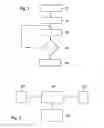
FIG. 1 shows the sequence of the exemplary methods according to the present invention.
FIG. 2 shows the arrangement of the exemplary device according to the present invention.
DETAILED DESCRIPTION
A comfort range may be observed within the driving behavior of most motor vehicle drivers. This comfort range is based on accelerations tolerable for the driver without feeling unsafe or uncomfortable. The particular limiting values for transverse acceleration and longitudinal acceleration are different and also depend on speed. As an example of the dependence of the transverse acceleration comfort limit on speed, it may be pointed out that a driver will safely execute a swerving or turning maneuver involving a transverse acceleration of 0.5 g at low speeds but will not have the confidence to perform such a maneuver at a high speed (e.g., 180 km/h). The same is true for longitudinal acceleration. The typical driver will be comfortable with a longitudinal acceleration much greater than 0.5 g at low speeds, but most drivers experience anxiety with full deceleration at high speeds. In these references, g refers to the acceleration due to gravity, where g≈9.81 m/s2.
The present invention provides a method in which actions that increase driving safety are initiated when the driver is driving above his comfort limits. In this case, an increased risk of an accident is assumed and actions to increase the safety of the occupants of the vehicle are implemented. These actions include, for example
- closing the windows,
- closing the sun roof,
- adjusting the head rest position,
- tightening reversible seat belt tighteners,
- raising the back rests, and
- intervening in the vehicle dynamics.
The goal of these actions is not only to increase the safety of occupants but also to inform the driver of the criticality of the situation. The actions listed above as examples may be activated individually or together. Furthermore, the type and number of actions may be scaled to the extent to which the driver is driving above his comfort limits, i.e., safety limits.
The sequence of the method according to the present invention is depicted in FIG. 1. After the start of the method in block 100, the threshold value for the triggering parameter is set in block 101 by the driver himself or is set automatically on the basis of an analysis of driving performance (e.g., automatic detection and classification of the driver's driving style). In block 102, the value of a triggering parameter is then determined. In block 103 the value of the triggering parameter is compared with a predetermined threshold value. If the predetermined threshold value is exceeded by the value of the triggering parameter, the occupant protection function is triggered in block 104. If the threshold value is not exceeded, the process branches back to block 102.
FIG. 2 shows the design of the device according to the present invention. Block 200 represents the determination arrangement for determining the value of a triggering parameter. This value is sent to comparator arrangement 201, where the value of the triggering parameter is compared with a predetermined threshold value. Depending on the comparison (e.g., if the predetermined threshold value is exceeded by the value of the triggering parameter), occupant protection function 202 is activated in the sense of a deployment. Block 203, for example, characterizes an operating element via which the driver is able to predetermine the threshold value, select it from a predetermined quantity or influence it. However, block 203 may also be designed as a driving style determination arrangement in which the threshold value is automatically determined by analyzing the driver's driving style (e.g., by analyzing the driver's brake or gas pedal operating procedures).
Claims
1-9. (canceled)
10. A method for triggering a reversible occupant protection function in a motor vehicle, the method comprising:
determining a value of a triggering parameter;
comparing the value of the triggering parameter with a predetermined threshold value; and
triggering the occupant protection function as a function of the comparing;
wherein the threshold value is influenced by a driving style parameter determined by analysis of at least one of a brake operating procedure, a gas pedal operating procedure and an operating element operable by the driver.
11. The method of claim 10, wherein the triggering parameter is a transverse acceleration of the motor vehicle.
12. The method of claim 10, wherein the threshold value is predetermined by one of:
the driver via the operating element, at least two different finite threshold values being driver selectable, and
analyzing a driving style parameter as determined based on at least one of the brake operating procedure and the gas pedal operating procedure, the threshold value assuming at least two different finite values.
13. The method of claim 10, wherein the reversible occupant protection function includes one of the following:
an automatic closing of at least one window,
an automatic closing of a sun roof,
an adjustment of a head rest position,
a tightening of a reversible seat belt tightener,
a raising of a back rest, and
an intervention in vehicle dynamics.
14. The method of claim 10, wherein the occupant protection function is triggered when the predetermined threshold value is exceeded by the value of the triggering parameter.
15. A device for triggering a reversible occupant protection function in a motor vehicle, comprising:
a determining arrangement to determine a value of a triggering parameter;
a comparing arrangement to compare the value of the triggering parameter with a predetermined threshold value;
an arrangement to trigger the occupant protection function as a function of the comparing; and
an influencing arrangement to influence the threshold value, in which the threshold value is influenced by a driving style parameter determined by analyzing at least one of a brake operating procedure, a gas pedal operating procedure, and an operating element operable by the driver.
16. The device of claim 15, wherein the triggering parameter is a transverse acceleration of the motor vehicle.
17. The device of claim 15, wherein the threshold value is predetermined by:
the driver via an operating element, at least two different finite threshold values being driver selectable, and
analyzing a driving style parameter as determined based on at least one of the brake operating procedure and the gas pedal operating procedure, the threshold value assuming at least two different finite values.
18. The device of claim 15, wherein the reversible occupant protection function includes one of the following:
an automatic closing of at least one window,
an automatic closing of a sun roof,
an adjustment of a head rest position,
a tightening of a reversible seat belt tightener,
a raising of a back rest, and
an intervention in vehicle dynamics.
Images & Drawings included:

Sources:
- United States Patent and Trademark Office - verify current appl. status at the USPTO↗
Recent applications in this class:
- » 20250222890 2025-07-10
VEHICLE TELEMATICS OF VEHICLE CRASHES - » 20250187557 2025-06-12
EMERGENCY DOOR RELEASE DEVICE - » 20250121789 2025-04-17
COLLISION DETECTION DEVICE AND COLLISION DETECTION METHOD - » 20250065836 2025-02-27
MACHINE LEARNING-BASED CONTINUOUS MONITORING FOR IMPROVING CRASH DETECTION AND RESPONSE SYSTEM ACCURACY - » 20250018892 2025-01-16
MONITORING SYSTEM, MONITORING METHOD, INFORMATION PROCESSING APPARATUS, AND COMPUTER READABLE MEDIUM - » 20240399992 2024-12-05
COLLISION DETECTION DEVICE, COLLISION DETECTION METHOD, AND COLLISION DETECTION PROGRAM - » 20240383429 2024-11-21
IN-SENSOR CRASH DETECTION WITH MOTION SENSORS - » 20240359651 2024-10-31
COLLISION DETERMINATION DEVICE FOR VEHICLE - » 20240294133 2024-09-05
Energy Management System - » 20240294132 2024-09-05
COLLISION DETERMINATION DEVICE AND ACTIVATION CONTROL DEVICE
Recent applications for this Assignee:
- » 20250154889 2025-05-15
PRESSURE CONTROL IN AN EXHAUST AFTERTREATMENT SYSTEM - » 20250154580 2025-05-15
ENZYME TRANSLOCATORS IN NANOGAP WITH 3' -ESTERS - » 20250147582 2025-05-08
METHOD FOR DETERMINING AN EYE DISTANCE IN A PAIR OF DATA GLASSES, AND DATA GLASSES - » 20250146568 2025-05-08
DRIVE ASSEMBLY AND VEHICLE HAVING SUCH A DRIVE ASSEMBLY - » 20250146495 2025-05-08
Flexible Pump Assembly for Use in a Fan Drive - » 20250140882 2025-05-01
FUEL CELL SYSTEM HAVING ENERGY RECUPERATION - » 20250137810 2025-05-01
METHOD FOR MATCHING A DIGITAL ROAD MAP - » 20250137033 2025-05-01
DNA UNFOLDING USING A FREE-END TAG FLOW MODIFIER - » 20250119751 2025-04-10
A BLUETOOTH COMMUNICATION METHOD AND SYSTEM - » 20250118116 2025-04-10
Diagnostic Protocol Search With Improved Efficiency