Method of protecting fuel door
US20080122246A1
2008-05-29
11/796,633
2007-04-27
✅ Patent granted
US 7,525,272 B2
2009-04-28
-
-
Paul Ip
2028-01-01
Abstract:
A control method of a sliding door of a vehicle. A first step engages a clutch of the sliding door if an obstacle is detected during manipulation of the sliding door, and waits for a sliding door manipulation signal to be input. A second step determines whether a fuel door is open. A third step determines whether the signal is input again if the fuel door is open at the second step. A fourth step disengages the clutch if the signal is input again at the third step.
Assignee:
- Kia Motors Corporation 8,327 🇰🇷 Seoul, South Korea
Interested in similar patents?
Get notified when new applications in this technology area are published.
Classification:
B60J5/06 » CPC further
Doors arranged at the vehicle sides slidable; foldable
B60J5/04 » CPC main
Doors arranged at the vehicle sides
E05F15/632 » CPC further
Power-operated mechanisms for wings using electrical actuators using rotary electromotors for horizontally-sliding wings
E05F15/659 » CPC further
Power-operated mechanisms for wings using electrical actuators using rotary electromotors for horizontally-sliding wings specially adapted for vehicle wings Control circuits therefor
E05F15/73 » CPC further
Power-operated mechanisms for wings with automatic actuation responsive to movement or presence of persons or objects
G05B19/0426 » CPC further
Programme-control systems electric; Programme control other than numerical control, i.e. in sequence controllers or logic controllers using digital processors Programming the control sequence
E05Y2400/20 » CPC further
Electronic control; Power supply; Power or signal transmission; User interfaces; Electronic control of brakes, disengaging means, holders or stops
E05Y2900/531 » CPC further
Application of doors, windows, wings or fittings thereof for vehicles characterised by the type of wing Doors
E05Y2900/534 » CPC further
Application of doors, windows, wings or fittings thereof for vehicles characterised by the type of wing Fuel lids
G05B2219/45242 » CPC further
Program-control systems; Nc systems; Nc applications Door, panel, window operation, opening, closing
G05D3/00 IPC
Control of position or direction
Description
CROSS-REFERENCE TO RELATED APPLICATIONS
The present application is based on, and claims priority to, Korean Application Serial Number 10-2006-0117574, filed on Nov. 27, 2006, the disclosure of which is hereby incorporated by reference herein in its entirety.
FIELD OF THE INVENTION
The present invention relates to a method of protecting a fuel door.
BACKGROUND OF THE INVENTION
Typically, a fuel door protection system prevents a fuel door from being damaged if a sliding door is opened toward the fuel door while fuel is being supplied. If a sliding door manipulation signal is input, the system determines whether the fuel door is open. If the fuel door is determined to be open, the fuel door protection system ignores the sliding door manipulation signal. Also, the conventional fuel door protection system determines whether an obstacle, interrupting the manipulation of the sliding door, exists. If an obstacle is determined to exist, the system engages a motor clutch of the sliding door, stopping operation of the sliding door. The sliding door can be operated only after a sliding door manipulation signal is input again, unless the motor clutch is disengaged.
In such a conventional fuel door protection system, the steps that control based on the fuel door have higher priority than the steps that control based on an obstacle. Also, if the fuel door is opened when the motor clutch is engaged, even if the sliding door manipulation signal is input again, it is impossible to manipulate the sliding door.
SUMMARY OF THE INVENTION
Embodiments of the present invention provide a method of protecting a fuel door, which can allow a sliding door to be manipulated even when a fuel door is open while the motor clutch of the sliding door is engaged.
A first step engages a clutch of the sliding door if an obstacle is detected during manipulation of the sliding door, and waits for a sliding door manipulation signal to be input. A second step determines whether a fuel door is open. A third step determines whether the sliding door manipulation signal is input again if the fuel door is determined to be open at the second step. A fourth step disengages the clutch if the sliding door manipulation signal is determined to be input again at the third step.
A fifth step manipulates the sliding door in response to the sliding door manipulation signal if the fuel door is determined not to be open at the second step. A sixth step returns to the first step if the sliding door manipulation signal is determined not to be input again at the third step.
A seventh step determines whether the fuel door is open if the sliding door manipulation signal has been input. An eighth step manipulates the sliding door in response to the sliding door manipulation signal if the fuel door is determined not to be open at the seventh step. A ninth step ignores the sliding door manipulation signal if the fuel door is determined to be open at the seventh step.
A tenth step determines whether the obstacle exists during the eighth step. An eleventh step opens or closes the sliding door in response to the sliding door manipulation signal if the obstacle is not determined to exist at the tenth step. A twelfth step engages the clutch if the obstacle is determined to exist at the tenth step.
The first to sixth steps have higher priority than the seventh to twelfth steps, and the seventh to ninth steps have higher priority than the tenth to twelfth steps.
BRIEF DESCRIPTION OF THE DRAWINGS
For a better understanding of the nature and objects of the present invention, reference should be made to the following detailed description with the accompanying drawings, in which:
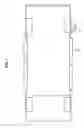
FIG. 1 illustrates a fuel door protection system.
FIG. 2 is a flowchart showing a method of protecting a fuel door according to an exemplary embodiment of the present invention.
DETAILED DESCRIPTION OF THE PREFERRED EMBODIMENTS
In an exemplary embodiment, a sliding door manipulation signal is input at step S12. Whether the fuel door 10 is open is determined at S14. If the fuel door 10 is open, the sliding door manipulation signal is ignored at step S18. The sliding door 20 is not operated, and the method ends. If the fuel door is not open at step S14, the sliding door 20 is manipulated in response to the sliding door manipulation signal, at step S16.
When the sliding door 20 is being manipulated at step S16, whether an obstacle, that could hinder movement of the sliding door 20, exists is determined at step S24. If no obstacle exists, the sliding door 20 is fully opened or closed at step S26, and the method ends.
If an obstacle is determined to exist at step S24, a motor clutch of the sliding door is engaged at step S28, and the method then waits for a sliding door manipulation signal to be input again, at step S30. When the sliding door manipulation signal is input again, at step S30, the method again determines whether the fuel door is open, at step S32. If the fuel door is not open, the method returns to step S16.
If the fuel door is determined to be open at step S32, whether the sliding door manipulation signal is input again is determined, at step S36. If the sliding door manipulation signal is not input again at step S36, the method returns to step S24. If the sliding door manipulation signal is input again at step S35, the motor clutch is disengaged, and the method ends.
As apparent from the foregoing, the fuel door protection method according to an exemplary embodiment of the present invention can allow a sliding door to be manipulated even when a fuel door is open while the motor clutch of the sliding door is engaged.
While this invention has been described in connection with what is presently considered to be practical exemplary embodiments, it is to be understood that the invention is not limited to the disclosed embodiments, but, on the contrary, is intended to cover various modifications and equivalent arrangements included within the spirit and scope of the appended claims.
Claims
What is claimed is:1. A control method of a sliding door of a vehicle, comprising:
a first step of engaging a clutch of the sliding door if an obstacle is detected during manipulation of the sliding door, and of waiting for a sliding door manipulation signal to be input;
a second step of determining whether a fuel door is open;
a third step of determining whether the sliding door manipulation signal is input again if the fuel door is determined to be open at the second step; and
a fourth step of disengaging the clutch if the sliding door manipulation signal is determined to be input again at the third step.
2. The method as defined in claim 1, further comprising:
a fifth step of manipulating the sliding door in response to the sliding door manipulation signal if the fuel door is determined not to be open at the second step; and
a sixth step of returning to the first step if the sliding door manipulation signal is determined not to be input again at the third step.
3. The method as defined in claim 2, further comprising:
a seventh step of determining whether the fuel door is open if the sliding door manipulation signal has been input;
an eighth step of manipulating the sliding door in response to the sliding door manipulation signal if the fuel door is determined not to be open at the seventh step; and
a ninth step of ignoring the sliding door manipulation signal if the fuel door is determined to be open at the seventh step.
4. The method as defined in claim 3, further comprising:
a tenth step of determining whether the obstacle exists during the eighth step;
an eleventh step of opening or closing the sliding door in response to the sliding door manipulation signal if the obstacle is not determined to exist at the tenth step; and
a twelfth step of engaging the clutch if the obstacle is determined to exist at the tenth step.
5. The method as defined in claim 4, wherein the first to sixth steps have higher priority than the seventh to twelfth steps, and the seventh to ninth steps have higher priority than the tenth to twelfth steps.
Images & Drawings included:


Sources:
- United States Patent and Trademark Office - verify current appl. status at the USPTO↗
Recent applications in this class:
- » 20240190222 2024-06-13
VEHICLE DOOR STRUCTURE - » 20220194188 2022-06-23
Handle device for vehicle - » 20220089003 2022-03-24
Automatic door opening and closing system - » 20220009323 2022-01-13
Door assembly for delivery vehicle - » 20200331328 2020-10-22
Door handle - » 20200282813 2020-09-10
Motor vehicle - » 20200207189 2020-07-02
Operation input device and door handle - » 20200009948 2020-01-09
RESIN PANEL COMPONENT OF VEHICLE BODY AND MANUFACTURING METHOD THEREOF - » 20190176583 2019-06-13
DOOR FOR VEHICLE - » 20180029452 2018-02-01
VEHICLE OPENING AND CLOSING BODY OPERATING DEVICE
Recent applications for this Assignee:
- » 20240328042 2024-10-03
PILE KNIT FABRIC FOR INTERIOR MATERIALS OF VEHICLES, METHOD OF MANUFACTURING THE SAME AND MANUFACTURING MACHINE OF PILE KNIT FABRIC - » 20240304039 2024-09-12
SYSTEM FOR ANALYZING OPERATION CAUSE OF CRASH SAFETY CONTROL LOGIC OF VEHICLE AND OPERATING METHOD THEREOF - » 20230224284 2023-07-13
Method of controlling security key of vehicle - » 20230191990 2023-06-22
Lamp control system and method for vehicles - » 20230147161 2023-05-11
Apparatus and method of controlling door for vehicle - » 20230095277 2023-03-30
Fuel cell system without high pressure line of hydrogen supplying system and control method thereof - » 20230093781 2023-03-23
Vehicular thermal management system - » 20230070558 2023-03-09
Apparatus for holding blank for incremental forming - » 20230064036 2023-03-02
Method and apparatus for transmitting and receiving reference signal for sidelink communication - » 20230010359 2023-01-12
Hairpin type stator coil forming method