AUTOMATED AUTOMOBILE GUIDANCE SYSTEM
US20080125938A1
2008-05-29
11/557,138
2006-11-07
Abstract:
An automobile guidance system having an automobile with an exterior, a gas pedal, a brake pedal, and a steering wheel. The system also has a global positioning system and a plurality of ultrasound/radiofrequency detectors/transmitters in communication with a control unit within the automobile. The control unit receives information from the ultrasound/radiofrequency detectors/transmitters and/or the global positioning system. Then, based upon this information the control unit is able to actuate the gas pedal, the brake, and steering wheel to operate the automobile.
Interested in similar patents?
Get notified when new applications in this technology area are published.
Classification:
B62D1/28 » CPC main
Steering controls, i.e. means for initiating a change of direction of the vehicle not vehicle-mounted non-mechanical, e.g. following a line or other known markers
B60K31/0058 » CPC further
Vehicle fittings, acting on a single sub-unit only, for automatically controlling vehicle speed, i.e. preventing speed from exceeding an arbitrarily established velocity or maintaining speed at a particular velocity, as selected by the vehicle operator responsive to externally generated signalling
B60K31/04 » CPC further
Vehicle fittings, acting on a single sub-unit only, for automatically controlling vehicle speed, i.e. preventing speed from exceeding an arbitrarily established velocity or maintaining speed at a particular velocity, as selected by the vehicle operator including electrically actuated servomechanism including an electric control system or a servomechanism in which the vehicle velocity affecting element is actuated electrically and means for comparing one electrical quantity, e.g. voltage, pulse, waveform, flux, or the like, with another quantity of a like kind, which comparison means is involved in the development of an electrical signal which is fed into the controlling means
B62D15/0265 » CPC further
Steering not otherwise provided for; Steering position indicators ; Steering position determination; Steering aids; Active steering aids, e.g. helping the driver by actively influencing the steering system after environment evaluation Automatic obstacle avoidance by steering
G08G1/096725 » CPC further
Traffic control systems for road vehicles; Arrangements for giving variable traffic instructions having an indicator mounted inside the vehicle, e.g. giving voice messages; Systems involving transmission of highway information, e.g. weather, speed limits where the received information might be used to generate an automatic action on the vehicle control where the received information generates an automatic action on the vehicle control
G08G1/096783 » CPC further
Traffic control systems for road vehicles; Arrangements for giving variable traffic instructions having an indicator mounted inside the vehicle, e.g. giving voice messages; Systems involving transmission of highway information, e.g. weather, speed limits where the system is characterised by the origin of the information transmission where the origin of the information is a roadside individual element
B60W2556/50 » CPC further
Input parameters relating to data; External transmission of data to or from the vehicle for navigation systems
G01S15/931 » CPC further
Systems using the reflection or reradiation of acoustic waves, e.g. sonar systems; Sonar systems specially adapted for specific applications for anti-collision purposes of land vehicles
G01S2013/9318 » CPC further
Systems using the reflection or reradiation of radio waves, e.g. radar systems; Analogous systems using reflection or reradiation of waves whose nature or wavelength is irrelevant or unspecified; Radar or analogous systems specially adapted for specific applications for anti-collision purposes of land vehicles Controlling the steering
B62D6/00 IPC
Arrangements for automatically controlling steering depending on driving conditions sensed and responded to, e.g. control circuits
B60K31/00 IPC
Vehicle fittings, acting on a single sub-unit only, for automatically controlling vehicle speed, i.e. preventing speed from exceeding an arbitrarily established velocity or maintaining speed at a particular velocity, as selected by the vehicle operator
G01S5/00 IPC
Position-fixing by co-ordinating two or more direction or position line determinations; Position-fixing by co-ordinating two or more distance determinations
Description
BACKGROUND OF THE INVENTION
This invention relates to an automated automobile guidance system. More specifically, this invention relates to an automobile guidance system that utilizes GPS and/or ultrasound/radiofrequency technology to automatically operate a vehicle.
Driving on today's highways can not only be tiring but additionally dangerous. Many drivers tailgate, fall asleep at the wheel, or experience distractions such as rowdy children or the need to talk on cell phones that tends to cause accidents and dangerous situations. Additionally, individuals on long trips often become tired easily and are forced to spend multiple days traveling and make multiple stops in order to allow them to sleep or rest from the driving.
Therefore, a principal object of the present invention is to provide an automated automobile guidance system that operates an automobile on a highway.
Another object of the present invention is to improve highway safety.
These and other objects, features or advantages of the present invention will become apparent from the specification and claims.
BRIEF SUMMARY OF THE INVENTION
An automobile guidance system for use on a highway. The automobile has an exterior that contains a plurality of ultrasound/radiofrequency detectors/transmitters. These ultrasound/radiofrequency detectors/transmitters communicate with a control unit within the automobile using detectors/transmitters that are associated with the highway. The control unit may also receive information from a Global Positioning System (GPS) and based upon the information from the ultrasound/radiofrequency detectors/transmitters and/or the GPS, the control unit actuates a gas pedal, a brake pedal, and a steering wheel.
BRIEF DESCRIPTION OF THE DRAWINGS
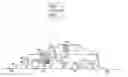
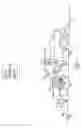
FIG. 1 is a schematic view of an automobile guidance system.
DETAILED DESCRIPTION OF THE PREFERRED EMBODIMENT
The FIGURE shows an automobile guidance system 10 that uses a global positioning system (GPS) 12 that is in communication with an automobile 14. The automobile 14 has a control unit 16 therein that communicates with the GPS 12 and/or communicates with a plurality of ultrasound/radiofrequency detectors/transmitters 18 that are located on the exterior 20 of the automobile 14. The GPS information and/or the ultrasound/radiofrequency detectors/transmitters 18 are used in combination with transmitters/detectors 22 to provide positioning information to the control unit 16.
The automobile 14 has an exterior 20 including at least one bumper 24. Within the automobile 14 is a gas pedal 30, a brake pedal 32 and a steering wheel 34 all of which are mechanically connected to the control unit 16 such that the control unit 16 may actuate them as information is received.
The ultrasound/radiofrequency detectors/transmitters 18 communicate with the transmitters/detectors 22. In this embodiment the transmitters/detectors 22 are shown as detector/transmitter dots on a road or highway 36. Thus, the transmitters/detectors 22 of the automobile guidance system 10 can be adapted for use with detectors already used on highways 36. Though shown as on the highway 36 the transmitters/detectors 22 could be placed on other items associated with the highway 36 without varying from the scope of this invention.
In operation, the automobile guidance system 10 is activated by a user on a highway 36. At this point, the control unit 16 communicates with the GPS 12 and/or the ultrasound detectors/transmitters 18 to determine the position of the automobile 14. Meanwhile the ultrasound/radiofrequency detectors/transmitters 18 are used to send signals to or record signals from transmitters/detectors 22 and to send signals to and record signals from other vehicles to effect the proper positioning of the automobile on the highway 36. Specifically, the ultrasound/radiofrequency detectors/transmitters 18 are positioned around the entire perimeter of the automobile to generate information that is fed back to the control unit 16 and translate the information mechanically to properly steer the vehicle to maintain the vehicle's position on the highway 36.
By having ultrasound/radiofrequency detectors/transmitters 18 on the front bumper 24 the system 10 has the capacity to detect another vehicle to make appropriate adjustments in the acceleration and deceleration of the vehicle thereby maintaining a safe distance from the vehicle which has been detected in front. Specifically when another automobile in front of the vehicle slows, the control unit 16 can make appropriate adjustments in speed by a degree of braking. Also, by having the ultrasound/radiofrequency detectors/transmitters 18 around the perimeter of the vehicle other vehicles and/or other objects may be detected allowing appropriate adjustments to be made in speed and direction to avoid collisions with other vehicles and objects. Similarly upon detection of an obstruction in the highway such as an accident or road construction the control unit 16 can be programmed to slow down, stop, or change position/lanes depending on the obstruction. Positional changes of the vehicle to maintain safe distances and avoid collisions can also be effected by or assisted by the GPS system.
Radiofrequency, ultrasonic transmission, or similar transmissions of the speed limit can also be transmitted to the control unit 16 so that the system 10 can make appropriate velocity adjustments. Specifically adjustments in cruise control can be controlled in response to the speed transmissions.
Once a vehicle operator decides to no longer use the automobile guidance system 10, the system 10 may be deactivated and the operator is then in full control of the vehicle manually. Alternatively, when the automobile exits a freeway and proceeds to an area where manual control of the vehicle is mandatory, while the control unit 16 is still operating the vehicle, the control unit can be programmed to pull the vehicle to the side of the road to a complete stop and initiate the flashers of the vehicle if manual control of the vehicle is not accomplished in a timely fashion. This prevents accidents when an individual is sleeping or is inattentive and their destination has been reached. Before the automated guidance system is deactivated, the control unit 16 has an automated voice countdown to alert the driver of when the system 10 is no longer in operation. The guidance system can be manually activated or deactivated by the driver at any time.
Thus, disclosed is an automobile guidance system 10. The system 10 allows an automobile 14 to be operated by a control unit 16 in combination with ultrasound/radiofrequency detectors/transmitters 18, transmitters/detectors 22 and/or a GPS 12 without the assistance or need of operator input. The system additionally is able to identify other vehicles and obstructions, and the location of the automobile on a highway to safely navigate travel. This travel is done without tailgating and allows for an operator to sleep or partake in other activities while on the highway. Thus, not only is safety improved but an individual can travel longer distances before needing to stop. As such, at the very least, all of the stated objectives have been met.
It will be appreciated by those skilled in the art that other various modifications could be made to the device without the parting from the spirit in scope of this invention. All such modifications and changes fall within the scope of the claims and are intended to be covered thereby.
Claims
What is claimed is:1. An automobile guidance system comprising:
an automobile having an exterior, a gas pedal, a brake pedal and a steering wheel;
a plurality of detectors/transmitters on the exterior of the automobile;
a global positioning system in communication with a control unit within the automobile;
wherein the control unit receives information from the detectors/transmitters and/or the global positioning system;
wherein the control unit actuates at least one of the gas pedal, the brake pedal or the steering wheel in response to the information received.
2. The system of claim 1 wherein the detectors/transmitters are located on a bumper of the automobile.
3. The system of claim 1 further comprising detectors/transmitters detached from the automobile and in communication with the detectors/transmitters.
4. The system of claim 3 wherein the detectors/transmitters are associated with a highway.
5. The system of claim 1 wherein the control unit receives additional information regarding a speed limit and actuates at least one of the gas pedal or brake pedal in response to the additional information.
6. The system of claim 5 wherein the control unit actuates the gas pedal via a cruise control in response to the additional information.
7. The system of claim 1 wherein the control unit is adapted to stop the automobile in response to information received.
Images & Drawings included:
Sources:
- United States Patent and Trademark Office - verify current appl. status at the USPTO↗
Recent applications in this class:
- » 20220219751 2022-07-14
Remote control system for a vehicle and trailer - » 20210206422 2021-07-08
Driving control device, vehicle and driving control method - » 20200156694 2020-05-21
Method and apparatus that direct lateral control during backward motion - » 20190322308 2019-10-24
Control device for vehicle - » 20190100231 2019-04-04
Vehicle component operation - » 20190016367 2019-01-17
Magnetically adhering robot - » 20180362070 2018-12-20
Systems and methods for controlling an input device of an autonomous vehicle - » 20140046547 2014-02-13
System for providing steering assist torque based on a proportional gain value - » 20130138266 2013-05-30
Steering communication device, steered-object communication device and steering communication system - » 20130060424 2013-03-07
STEERING ARRANGEMENT FOR A VEHICLE WHICH IS MOVABLE ALONG A PREDEFINED PATH IN USE, BEING AUTOMATICALLY STEERED VIA AT LEAST ONE FIRST AXLE, AS WELL AS A VEHICLE PROVIDED WITH SUCH A STEERING ARRANGEMENT