Opening and closing apparatus
US20080134734A1
2008-06-12
11/733,000
2007-04-05
Abstract:
An opening and closing apparatus of a luggage compartment door of a vehicle includes: a case mounted to the door; a handle in the case; a rod connected to the handle; a first plate mounted to the case, and rotatable in response to movement of the rod; a first link, movable in response to rotation of the first plate to unlatch the door; and a keyhole in the case. The keyhole is rotatable between a locked state, in which the handle cannot move the rod, and an unlocked state, in which the handle can move the rod.
Interested in similar patents?
Get notified when new applications in this technology area are published.
Classification:
E05B85/13 » CPC main
Details of vehicle locks not provided for in groups -; Handles; Inner door handles with a locking knob forming part of the inside door handle unit
E05B83/16 » CPC further
Vehicle locks specially adapted for particular types of wing or vehicle Locks for luggage compartments, car boot lids or car bonnets
E05B85/12 » CPC further
Details of vehicle locks not provided for in groups -; Handles Inner door handles
Y10T70/5761 » CPC further
Locks; Special application; For control and machine elements; Handle, handwheel or knob Retractable or flush handle
E05B13/10 IPC
Devices preventing the key or the handle or both from being used formed by a lock arranged in the handle
Description
CROSS-REFERENCE TO RELATED APPLICATION
This application claims priority to, and the benefit of, Korean Patent Application No. 10-2006-0123298, filed in the Korean Intellectual Property Office on Dec. 6, 2006, the entire contents of which are incorporated herein by reference.
BACKGROUND OF THE INVENTION
(a) Field of the Invention
The present invention relates to an opening and closing apparatus of a door of a vehicle luggage compartment.
(b) Description of the Related Art
Typically, large vehicles, such as buses, have luggage compartments at lower ends thereof. The door of such a compartment typically includes a handle, which, when pulled, rotates a hook, which turn pulls a rod. The rod rotates a series of plates, with pull secondary rods, releasing them from a latched state to open the door.
A keyhole is provided some distance away from the handle. When a key is rotated within the keyhole, it pulls yet another rod to lock the plates together, locking the door.
Because the keyhole and handle are separate, the door may deform during manufacturing, and water may permeate the handle or keyhole structure. In addition, because of the numerous components, manufacturing cost and time are high.
The above information disclosed in this Background section is only for enhancement of understanding of the background of the invention and therefore it may contain information that does not form the prior art that is already known in this country to a person of ordinary skill in the art.
SUMMARY OF THE INVENTION
Exemplary embodiments of the present invention provide an opening and closing apparatus of a luggage compartment door of a vehicle, including: a case mounted to the door; a handle in the case; a rod connected to the handle; a first plate mounted to the case, and rotatable in response to movement of the rod; a first link, movable in response to rotation of the first plate to unlatch the door; and a keyhole in the case. The keyhole is rotatable between a locked state, in which the handle cannot move the rod, and an unlocked state, in which the handle can move the rod.
The apparatus may further include a second plate engaged to gear teeth on the first plate such that the second plate rotates in response to the rotation of the first plate. A second link is movable by rotation of the second plate to unlatch the door.
The apparatus may further include a slider, slidable in response to rotation of the keyhole, and blocking motion of the handle when the keyhole is in the locked state.
BRIEF DESCRIPTION OF THE DRAWINGS
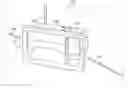
FIG. 1 is a perspective view of an exterior surface of an opening and closing apparatus according to an exemplary embodiment of the present invention.
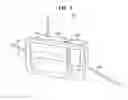
FIG. 2 is a perspective view of an interior surface of the apparatus of FIG. 1.
FIG. 3 is a view similar to FIG. 2, illustrating operation of the apparatus.
FIG. 4 is a view similar to FIGS. 2 and 3, illustrating operation of a keyhole.
DESCRIPTION OF REFERENCE NUMERALS INDICATING PRIMARY ELEMENTS IN THE DRAWINGS
| 200: door | |
| 201: handle | |
| 202: stick | |
| 203: keyhole | |
| 205: case | |
| 207: first link | |
| 209: second link | |
| 301: rod | |
| 303: first plate | |
| 305: slot | |
| 307: slider | |
| 309: second plate | |
DETAILED DESCRIPTION OF THE PREFERRED EMBODIMENTS
An exemplary embodiment of the present invention will hereinafter be described in detail with reference to the accompanying drawings.
According to an exemplary embodiment of the present invention, an opening and closing apparatus of a luggage compartment door 200 of a vehicle includes a case 205 mounted to the door 200, and a handle 201 in the case 205. The handle 201 moves a rod 301. A keyhole 203 is also disposed in the case 205, and rotates to selectively block operation of the handle 201.
A first plate 303 is rotatably secured to the case 205 and selectively rotated by the rod 301. When the first plate 303 rotates, it pulls a first link 207, which opens the door 200.
Since the case 205 houses the handle 201 and the keyhole 203, water permeation to the handle 201 and the keyhole 203 is prevented. In addition, because the case 205 is firstly mounted to the door 200, manufacturing efficiency is improved.
When the handle 201 moves in the direction of the arrow in FIG. 1, and referring also to FIGS. 2 and 3, a stick 202, which is integral to the handle 201, moves downward in the drawings. The rod 301 then moves downward within a slot 305 of the first plate 303, and the first plate 303 rotates clockwise.
As shown in FIG. 2 to FIG. 4, gear teeth are provided on the first plate 303. A second plate 309 is engaged to the gear teeth such that when the first plate 303 rotates clockwise, the second plate 309 rotates counterclockwise. The first link 207 and the second link 209 are pulled by the first plate 303 and the second plate 309, respectively. The motion of the first and second links 207, 209 unlatches a latching mechanism, which may be designed and implemented by a person of ordinary skill in the art based on the teachings herein.
Referring to FIG. 4, if a key (not shown) is rotated in the keyhole 203, a slider 307 moves rightwards in the drawing, blocking movement of the stick 202 such that the opening and closing apparatus cannot open the door 200.
According to an exemplary embodiment of the present invention, because the keyhole and the handle are mounted together in the case, the water permeation and deformation of the door are prevented. In addition, because the number of components is low, manufacturing cost and time are reduced.
While this invention has been described in connection with what is presently considered to be practical exemplary embodiments, it is to be understood that the invention is not limited to the disclosed embodiments, but, on the contrary, is intended to cover various modifications and equivalent arrangements included within the spirit and scope of the appended claims.
Claims
What is claimed is:1. An opening and closing apparatus of a luggage compartment door of a vehicle, comprising:
a case mounted to the door;
a handle disposed in the case;
a rod connected to the handle;
a first plate mounted to the case, and rotatable in response to movement of the rod;
a first link, movable in response to rotation of the first plate to unlatch the door; and
a keyhole disposed in the case and rotatable between a locked state, in which the handle cannot move the rod, and an unlocked state, in which the handle can move the rod.
2. The apparatus of claim 1, further comprising a second plate engaged to gear teeth on the first plate such that the second plate rotates in response to the rotation of the first plate.
3. The apparatus of claim 2, further comprising a second link, movable by rotation of the second plate to unlatch the door.
4. The apparatus of claim 1, further comprising a slider, slidable in response to rotation of the keyhole, and blocking motion of the handle when the keyhole is in the locked state.
Images & Drawings included:


Sources:
- United States Patent and Trademark Office - verify current appl. status at the USPTO↗
Similar patent applications:
- » 20240181281
SHUTTER OPEN-CLOSING APPARATUS, SHUTTER OPEN-CLOSING SYSTEM INCLUDING THE SAME, AND SHUTTER OPEN-CLOSING METHOD - » 20070046065
Opening and closing apparatus for opening and closing body of vehicle - » 20150197974
OPENING AND CLOSING APPARATUS FOR OPENING AND CLOSING MEMBER - » 20070063536
Opening and closing apparatus for opening and closing body of vehicle - » 20140142815
Automatic opening and closing apparatus of opening and closing member for vehicle and structural member included in vehicle - » 20230419490
OPEN OR CLOSED EYE DETERMINATION APPARATUS, OPEN OR CLOSED EYE DETERMINATION METHOD, AND RECORDING MEDIUM FOR OPEN OR CLOSED EYE DETERMINATION - » 20060055196
Lid open-close apparatus - » 20090120001
Vehicle door opening-closing apparatus - » 20080019804
Container Opening-Closing Apparatus and Container-Placement-Position Adjustment Method for the Same - » 20080080893
Open-close apparatus and image forming apparatus
Recent applications in this class:
- » 20240035319 2024-02-01
INSIDE HANDLE - » 20230332445 2023-10-19
INSIDE HANDLE DEVICE - » 20200080352 2020-03-12
Vehicle handle device - » 20130221689 2013-08-29
DEVICE FOR SECURING THE LOCKED POSITION OF A VEHICLE DOOR CATCH - » 20130088022 2013-04-11
Snap set door handle and lock knob assembly - » 20110175377 2011-07-21
Inside door handle device - » 20110101709 2011-05-05
Door handle stroke change structure - » 20110041571 2011-02-24
VEHICLE DOOR LOCKING SYSTEM - » 20100253101 2010-10-07
DAMPER AND DOOR HANDLE WITH THIS DAMPER - » 20100171325 2010-07-08
Vehicle door handle device