Method for producing sucker elements, sucker element produced with the method, and article with sucker
US20080136057A1
2008-06-12
12/007,039
2008-01-04
Abstract:
A method for producing sucker elements consisting in thermoforming a layer of plastic material by means of two mold parts, which form at least one impression that has a frustum-like peripheral shape, the mold parts forming means for blanking the peripheral rim of each thermoformed element with a substantially flat central shape surrounded by a frustum-shaped portion.
Interested in similar patents?
Get notified when new applications in this technology area are published.
Classification:
B29C66/474 » CPC main
General aspects of processes or apparatus for joining preformed parts; General aspects of joining substantially flat articles, e.g. plates, sheets or web-like materials; Making flat seams in tubular or hollow articles; Joining single elements to substantially flat surfaces; Joining single elements to sheets, plates or other substantially flat surfaces said single elements being substantially non-flat
A47K3/002 » CPC further
Baths; Douches; Appurtenances therefor; Accessories for baths, not provided for in other subgroups of group ; Insertions, e.g. for babies; Tubs suspended or inserted in baths; Security or alarm devices; Protecting linings or coverings; Devices for cleaning or disinfecting baths; Bath insulation Non-slip mats for baths
B29C51/082 » CPC further
Shaping by thermoforming, i.e. shaping sheets or sheet like preforms after heating , e.g. shaping sheets in matched moulds or by deep-drawing; Apparatus therefor; Deep drawing or matched-mould forming, i.e. using mechanical means only by shaping between complementary mould parts
B29C65/02 » CPC further
Joining of preformed parts ; Apparatus therefor by heating, with or without pressure
B29C66/1122 » CPC further
General aspects of processes or apparatus for joining preformed parts; General aspects dealing with the joint area or with the area to be joined; Particular design of joint configurations particular design of the joint cross-sections; Joint cross-sections comprising a single joint-segment, i.e. one of the parts to be joined comprising a single joint-segment in the joint cross-section; Single lapped joints Single lap to lap joints, i.e. overlap joints
B29C66/81431 » CPC further
General aspects of processes or apparatus for joining preformed parts; General aspects of machine operations or constructions and parts thereof; General aspects of the pressing elements, i.e. the elements applying pressure on the parts to be joined in the area to be joined, e.g. the welding jaws or clamps characterised by the design of the pressing elements, e.g. of the welding jaws or clamps characterised by the surface geometry of the part of the pressing elements, e.g. welding jaws or clamps, coming into contact with the parts to be joined comprising a single cavity, e.g. a groove
B29C66/8322 » CPC further
General aspects of processes or apparatus for joining preformed parts; General aspects of machine operations or constructions and parts thereof characterised by the movement of the joining or pressing tools; Reciprocating joining or pressing tools Joining or pressing tools reciprocating along one axis
B29C65/04 » CPC further
Joining of preformed parts ; Apparatus therefor by heating, with or without pressure Dielectric heating, e.g. high-frequency welding, i.e. radio frequency welding of plastic materials having dielectric properties, e.g. PVC
B29C2791/001 » CPC further
Shaping characteristics in general Shaping in several steps
B29L2028/00 » CPC further
Nets or the like
B29L2031/727 » CPC further
Other particular articles Fastening elements
B29L2031/7324 » CPC further
Other particular articles; Floor coverings Mats
B29L2031/769 » CPC further
Other particular articles Sanitary equipment
F16B47/00 » CPC further
Suction cups for attaching purposes; Equivalent means using adhesives
Y10T428/13 » CPC further
Stock material or miscellaneous articles Hollow or container type article [e.g., tube, vase, etc.]
Y10T428/24008 » CPC further
Stock material or miscellaneous articles; Structurally defined web or sheet [e.g., overall dimension, etc.] including fastener for attaching to external surface
B29C66/71 » CPC further
General aspects of processes or apparatus for joining preformed parts characterised by the composition, physical properties or the structure of the material of the parts to be joined; Joining with non-plastics material characterised by the composition of the plastics material of the parts to be joined
B29K2027/06 » CPC further
Use of polyvinylhalogenides or derivatives thereof as moulding material PVC, i.e. polyvinylchloride
B28B11/08 IPC
Apparatus or processes for treating or working the shaped or preshaped articles for reshaping the surface, e.g. smoothing, roughening, corrugating, making screw-threads
B29C65/08 » CPC further
Joining of preformed parts ; Apparatus therefor by heating, with or without pressure using ultrasonic vibrations
Description
CROSS-REFERENCE TO RELATED APPLICATIONS
This application is a division of U.S. patent application Ser. No. 10/923,685 filed on Aug. 24, 2004, now pending, which is incorporated herein by reference in its entirety.
The present invention relates to a method for producing sucker elements, to the sucker element produced with the method, and to an article with a sucker.
BACKGROUND OF THE INVENTION
As is known, sucker elements are used in many fields of application and are generally constituted by a substantially bell-shaped body which has, in its axial central portion, a tang for connection to the article to which the suckers are to be applied.
The presence of the protruding element causes considerable problems in many fields of application, and in particular in the case of mats for showers, bathtubs and the like, the thickness of the sucker element produces an unpleasant protrusion that is certainly not appreciated by the user.
Also, the presence of the protruding central part inevitably produces a stiffening of the sucker, which is therefore less effective because, when it is compressed, it is not possible to completely expel the air.
SUMMARY OF THE INVENTION
The aim of the invention is to eliminate the problems noted above, by providing a method for producing sucker elements that can be applied very easily to a wide range of articles, always achieving optimum effects.
Within this aim, an object of the invention is to provide a sucker element that is particularly flat and therefore does not produce an appreciable thickness in an axial direction, making it particularly suitable for use on bath mats and the like.
A further object of the present invention is to provide a method that, thanks to its particular characteristics of execution, is capable of giving the greatest assurances of reliability and safety in use.
A further object of the present invention is to provide a method for producing sucker elements and articles with suckers that can be easily obtained starting from commonly commercially available elements and materials and is also competitive from a merely economical standpoint.
This aim and these and other objects that will become better apparent hereinafter are achieved by a method for producing sucker elements, according to the invention, characterized in that it comprises thermoforming a layer of plastic material by means of two mold parts, which form at least one impression that has a frustum-like peripheral shape and form means for blanking the peripheral rim of each thermoformed element with a substantially flat central shape surrounded by a frustum-shaped portion.
BRIEF DESCRIPTION OF THE DRAWINGS
Further characteristics and advantages of the invention will become better apparent from the description of a preferred but not exclusive embodiment of a method for producing sucker elements, illustrated by way of nonlimiting example in the accompanying drawings, wherein:
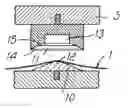
FIG. 1 is a schematic sectional view, in an open position, of the mold parts for thermoforming the sucker element;
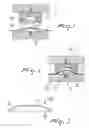
FIG. 2 is a view of the mold parts in the closed position;
FIG. 3 is a schematic view of a sucker element;
FIG. 4 is a sectional view, in the open position, of the mold for connecting the sucker element to an article;
FIG. 5 is a schematic view of the mold in a closed position;
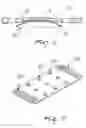
FIG. 6 is an enlarged-scale sectional view of the detail of the sucker element connected to an article constituted by a mat and the like;
FIG. 7 is a schematic view of an article constituted by a bathtub mat.
DESCRIPTION OF THE PREFERRED EMBODIMENTS
With reference to the figures, the method for producing sucker elements, according to the invention, entails preparing a layer of plastic material, preferably soft PVC (Polyvinylchloride), generally designated by the reference numeral 1, which is inserted between two mold parts, specifically a lower mold part 2 and an upper mold part 3, which thermoform the sucker element.
For thermoforming, the mold parts form one or more impressions, which are provided by means of a male element 10, which is connected for example to the lower mold part 2, and a female element 11, which is 5 associated with the other mold part, for example the upper mold part 3.
Preferably, the male element 10 is frustum-shaped, with a narrow central protrusion 12, while the female element 11 has a frustum-shaped recess that blends with a central hollow 13 arranged at the protrusion 12.
Means for blanking the peripheral rim of each thermoformed element are further provided peripherally and are formed by a blade-like lip 14, which is connected to the female element 11 and is adapted to blank the material flush with the protrusion 10.
Preferably, in the female element 11 there is also a recess 15, which allows to provide a protruding ridge 16 on the sucker element, which is generally designated by the reference numeral 20 and, as shown in FIG. 3, has a substantially flat central portion 17 that is surrounded by a frustum-shaped rim 19, on a central portion of which the ridge 16 is provided.
It should be added to the above that it is optionally possible to provide the sucker element by injecting plastic material into molds that have the shape selected for the sucker element.
The sucker element thus produced can be applied very quickly and easily to articles of various kinds.
In the specific case of mats for showers, bathtubs and the like, it is possible to provide a layer 30 made of relatively soft plastic material, which can be inserted between application mold parts, shown in FIGS. 4 and 5, which are formed by a male plug 31 that engages a die 32 provided with a central portion 33 that is substantially cambered and engages a recessed complementary seat 34, which is arranged substantially at the substantially flat central part of the sucker element.
The die 32 also has an annular hollow 35, in which in practice the frustum-shaped portion of the sucker element arranges itself.
The application mold parts are closed so as to produce thermal bonding, which can be performed by means of high frequencies, ultrasound or other methods that allow to stably join the central portion 17 of the sucker element 20 to the layer 30 made of soft material, generally expanded plastic material.
In this manner, mats are obtained, generally designated by the reference numeral 40, in which the suckers do not have a thickness that is unpleasant for the user; moreover, the suckers, thanks to the frustum-shaped configuration of their peripheral rim, are capable of achieving a particularly high and stable adhesion force.
It is thus evident from what has been described above that the invention achieves the proposed aim and objects, and in particular the fact is stressed that a sucker element is provided which has particular characteristics that are particularly suitable for applying it to bathtub mats and the like, always having considerable effectiveness in application.
The sucker element according to the invention is susceptible of numerous modifications and variations, within the scope of the appended claims.
All the details may further be replaced with other technically equivalent elements.
In practice, the materials used, as well as the contingent shapes and dimensions, may be any according to requirements.
The disclosures in Italian Patent Application No. MI2003A001849 from which this application claims priority are incorporated herein by reference.
Claims
What is claimed is:1. A method for producing sucker elements, comprising thermoforming a layer of plastic material by means of two mold parts, which form at least one impression that has a substantially frustum-like peripheral shape and form means for blanking the peripheral rim of each thermoformed element with a substantially flat central portion surrounded by a frustum-shaped portion.
2. The method according to claim 1, wherein said lower mold part and said upper mold part have a male element that is connected to one of said mold parts and a female element that is associated with the other of said mold parts, said male element being substantially frustum-shaped, with a narrow central protrusion, said female element having a frustum-shaped recess that blends with a central hollow arranged substantially at said protrusion.
3. The method according to claim 2, wherein said means for blanking the peripheral rim of each thermoformed element comprise a blade-like lip, which is connected to said female element.
4. The method according to claim 3, comprising, on said female element, a recess for providing a protruding ridge that has a substantially circular shape on the sucker element being provided.
5. The method according to claim 4, wherein said layer of plastic material is constituted by polyvinyl chloride.
6. A method for producing sucker elements, comprising producing, by injection, a layer of plastic material inside a mold that forms an impression that is peripherally frustum-shaped and has a substantially flat portion in its central region.
7. A method for applying a sucker element to articles in general, comprising providing application mold parts, between which it is possible to interpose a layer made of plastic material, said mold parts having a male plug, which can engage a die that forms a substantially cambered central protrusion that can engage a recessed complementary seat arranged substantially at the substantially flat central portion of a sucker element in order to perform thermal bonding.
8. The method for applying a sucker element according to claim 7, comprising an annular hollow for accommodating the frustum-shaped portion of said sucker element.
9. The method according to claim 8, wherein said thermal bonding is performed by means of high frequencies.
10. The method according to claim 8, wherein said thermal bonding is performed by means of ultrasound.
Images & Drawings included:

Sources:
- United States Patent and Trademark Office - verify current appl. status at the USPTO↗
Similar patent applications:
Recent applications in this class:
- » 20240009939 2024-01-11
METHOD AND EQUIPMENT FOR THE INTEGRATION OF CONTINUOUS J SHAPED SPARS IN EXTENDED PANELS OF COMPOSITE MATERIAL - » 20140332139 2014-11-13
Method for producing an air mattress - » 20120225200 2012-09-06
Methods for making fasteners - » 20120155954 2012-06-21
Add-on part for connecting to a component by torsional ultrasonic welding - » 20110235951 2011-09-29
RECLOSABLE BAG WITH TEAR OPEN FEATURE - » 20110031178 2011-02-10
Wireless enabled device - » 20100310827 2010-12-09
Electronic device and hot melt structure thereof - » 20100175811 2010-07-15
INSERT COMPONENT EMBEDDING METHOD - » 20100111450 2010-05-06
Ultrasonic end stops on zipper closure bags and methods for making same - » 20090145949 2009-06-11
Attaching construction and welding method