Filter powder recycling process
US20080141829A1
2008-06-19
11/890,912
2007-08-07
✅ Patent granted
US 7,867,318 B2
2011-01-11
-
-
George Wyszomierski
2028-10-08
Abstract:
The present invention relates to a process of treating filter powders (3) of the type produced in aluminum recycling processes in a recycling system for recycling the metal (1) of saline slag recycling (2), comprising at least a pyrolysis step (31) in which the filter powders (30) enter a rotating auger where they are heated to a temperature of not less than 500° C. and not more than 600° C.; and in which the organic and toxic substances breakdown in this heating and part of the carbon and other combustibles burn in the controlled presence of air, this air being mixed with the powder by the movement of the rotating auger; in which organic materials are oxidized due to the oxygen provided; and in which the solid result of the pyrolysis step (31) is added to the general saline slag recycling process (2).
Inventors:
- Carlos Ruiz De Veye 3 🇪🇸 Erandio, Spain
- Ignacio Alfaro Abreu 2 🇪🇸 Erandio, Spain
- Juan Carlos Mugica Iraola 1 🇪🇸 Erandio, Spain
- Patricio Aguirre Mujica 1 🇪🇸 Erandio, Spain
- Rodolfo Solozabal Echevarria 1 🇪🇸 Erandio, Spain
- Jorge Juan Aragon Puy 1 🇪🇸 Erandio, Spain
- Eduardo Arenales Gomez 1 🇪🇸 Erandio, Spain
Assignee:
- BEFESA ALUMINIO BILBAO, S.L. 1 🇪🇸 Erandio, Spain
- Befesa Aluminio Bilbao S.L. 1 🇪🇸 Erandio, Vizcaya, Spain
Interested in similar patents?
Get notified when new applications in this technology area are published.
Classification:
C22B7/001 » CPC main
Working up raw materials other than ores, e.g. scrap, to produce non-ferrous metals and compounds thereof; Methods of a general interest or applied to the winning of more than two metals Dry processes
C22B7/04 » CPC further
Working up raw materials other than ores, e.g. scrap, to produce non-ferrous metals and compounds thereof; Methods of a general interest or applied to the winning of more than two metals Working-up slag
C22B21/0069 » CPC further
Obtaining aluminium by other processes from scrap, skimmings or any secondary source aluminium, e.g. recovery of alloy constituents
Y02P10/20 » CPC further
Technologies related to metal processing Recycling
Y02P10/20 » CPC further
Technologies related to metal processing Recycling
C22B7/00 IPC
Working up raw materials other than ores, e.g. scrap, to produce non-ferrous metals and compounds thereof; Methods of a general interest or applied to the winning of more than two metals
A62D3/40 IPC
Processes for making harmful chemical substances harmless or less harmful, by effecting a chemical change in the substances by heating to effect chemical change, e.g. pyrolysis
Description
OBJECT OF THE INVENTION
The object of the present invention is to present a process of recycling powders from gas cleaning filters in furnaces used in the melting aluminum or its residues, such as slag and scrap, in aluminum refineries.
The present invention would be integrated in the general aluminum recycling process and in the treatment of its residues, therefore being of interest for the aluminum manufacturing industry.
BACKGROUND OF THE INVENTION
The greatest metallurgical difficulties for aluminum refineries today are in recycling materials with a low metal content, said process being carried out in furnaces using fluxing agents, mixtures of sodium chloride (CINa) and potassium chloride (CIK) in different proportions. The recycling of the metal is thus carried out.
The fluxing agent used, called saline slag, takes the form of large solidified cakes when it is removed from the furnace. This by-product contains the oxide and a certain amount of metal aluminum (5%-8%) occluded therein, the high price of which justifies a recovery treatment. The fluxing agent used is also recycled in the process of recycling the aluminum oxide developed from this saline slag.
The furnace for melting aluminum foam and slag has two main objectives:
-
- 1. Recycling of saline slag, producing a fluxing agent to be reused, aluminum concentrates for re-melting and an oxide for selling.
- 2. A facility for cleaning the gases in which the filter powders are produced.
The treatment of the furnace combustion gases may require the prior addition of powdered salts to neutralize the acid gases (lime or bicarbonate), activated carbon, etc. and is carried out in bag filters.
Currently, the powder is dumped given that its treatment in current saline slag recycling plants greatly alters the production process. The main interest in this case is to obtain zero dumping in this type of residues.
Different studies have been carried out to palliate this problem. The reintroduction in the furnace of the gas filtering powders was studied in the past, but it prolongs the melting and is not cost-effective due to the added powders. A more rational solution would be to mix them with the saline slag to follow the same recycling process, but the tests conducted in this sense do not recommend this with some types of powders. The filter powders are incorporated to the saline slag treatment process continuously from the transport bag (usually of the type known as the Big Bag) to a hopper, and from the latter to a vibrating feeder and a rotating auger. They are mixed on the rotating auger with the ground material coming from the saline slag, subsequently following the same treatment.
The aluminum slag grinding filter powders were also incorporated to the process, although they are reacted differently from the saline slag grinding powder.
This way of operating by incorporating the gas filter powders from the furnaces for a certain time has given rise to a number of problems which delayed production of the facility.
The filter powders of other gas uptake facilities in the furnaces of a refinery also cause many problems for recycling them in the described manner:
-
- They have a lower amount of soluble salts than saline slag, and the proportion of water needed is different.
- They have carbonaceous compounds which hinder contact and dissolution with water.
- They have much less aluminum than saline slag, and their reactivity is much lower, although not the presence of substances which must be made inert.
- They have a fine particle grain size and the decanting and filtering require very special working conditions.
Filter powders have always been difficult to handle and this is the reason they end up being dumped in a duly authorized dump site. On the other hand it has been demonstrated that a successful wet process of treating filter powders is possible. The problem is that the more toxic substances are not destroyed in this process but rather are finally incorporated to the end product, reducing its quality.
The powders resulting from the aluminum refinery gas filtering have the following approximate average characteristics:
| % organic | 5-25 | |
| % ClNa + ClK | 5-65 | |
| % Al2O3 (oxides) | 55-65 | |
| % Al (metal) | 1-8 | |
| % SiO2 | 0-1 | |
| % MgO | 0-1 | |
| % Fe2O3 | 0-1 | |
| % NAl | 0-1 | |
| % S3Al2 + C3Al4 | traces | |
| % heavy metals | Traces | |
The organic matter are oils, fats, free carbon, tar and others.
The inventors, who are persons skilled in the art, are not aware of any system with the features described below.
SUMMARY OF THE INVENTION
To palliate the drawbacks set forth above, the filter powder recycling system, object of the present invention, is provided.
The filter powder recycling system is integrated in the general saline slag treatment process. The raw material which is processed is the saline slag obtained in an aluminum slag treatment salt bath furnace. The production cycle consists of three fundamental phases:
-
- 1. Mechanical grinding of the material (extraction of the metallic aluminum): The saline slag is presented in blocks of 0.2 to 0.5 m3, with an apparent density of 1.5 Tn/m3. This ground material is sent to a separation system. Three aluminum concentrates which are marketed fro aluminum refineries are obtained from this mechanical treatment.
- 2. Causing the dissolution and reaction (obtaining aluminum oxide): The material coming from the grinding step is dissolved in water. The dissolution of the salts is done with part of the condensates produced in the crystallization step and with the alumina concentrate filtration. The slurry produced is pumped to the reactors. The object of this reaction is to eliminate all the gases and odors. These gases are produced by the reaction of some impurities existing in the material with the dissolution water. The reactions taking place when the material becomes wet are:
2Al+3H2O→4Al2O3+3H2
2NAI+3H2O→Al2O3+2NH3
C3Al4+6H2O→2Al2O3+3CH4
S3Al2+3H2O→Al2O3+3SH2
-
- Gases, mainly ammonium and hydrogen gases, are produced during the entire dissolution-reaction process, which gases are led to the purification facility where they are duly treated. The remaining slurry is sent to a filter where the solids will be separated from the brine produced. The solids are washed in the second part of the filter to eliminate the possible residues of the salt in this product.
- 3. Crystallizing the solution (obtaining the CINa and CIK salts): The brine, produced in the dissolution step is fed to the crystallizers. The obtained magma is sent to a centrifuge where the mother liquor is separated from the crystals produced. The mother liquor is recycled and the condensates are sent to the storage tank from where water is supplied to the whole of the facility, resulting in zero water consumption.
The system and process of treating filter powders object of the invention comprises at least:
-
- One pyrolysis step: The filter powders, which are very lightweight and carbonaceous, must enter a rotating auger where they will be heated to a temperature of not less than 500° C. and not more than 600° C. The organic and toxic substances breakdown in this heating and part of the carbon and other combustibles burn in the controlled presence of air.
- One gas treatment step: A series of powder entrainment gases are produced as a result of the operation. This powder must be retained and the gases neutralized and treated to thus be emitted to the atmosphere without creating environmental problems.
The solid result of the pyrolysis step is added to the general saline slag recycling process to thus be incorporated to the process for the result of the saline slag recycling.
The filter powder residues are thus incorporated by means of this system into the saline slag recycling system, destroying the most toxic products and obtaining zero dumping of these products.
BRIEF DESCRIPTION OF THE DRAWINGS
A series of drawings aiding in better understanding the invention and expressly related to an embodiment of said invention as an illustrative but non-limiting example thereof are very briefly described below.
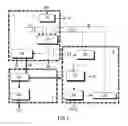
FIG. 1 shows a scheme of the aluminum and saline slag recycling system, together with the system of treating filter powders, object of the invention.
DETAILED DESCRIPTION OF THE PREFERRED EMBODIMENT(s)
As can be seen in FIG. 1, the first system within the general aluminum recycling process is, strictly speaking, the recycling of the metal (1). This in turn comprises:
-
- A sieving step (11) in which ferrous scrap (17) and aluminum slag (10) are produced and which continue to the next step.
- A melting step in the furnace (12), fed by the aluminum slag from the sieving step (11), combustible (13), air (14), concentrates (15) and salts (16). Aluminum (20), saline slag (21) and gases are obtained from this step.
- A gas treatment step (18) in which the gases dumped into the atmosphere (19) are treated and the filter powders (30) are generated.
The saline slag (21) continues to the saline slag recycling system (2) comprising at least the following steps:
-
- A grinding and sieving step (22).
- A dissolution and reaction step (23), in which the product is received from the grinding step (22), generating gases (27) and aluminum oxide, which continues to the filtering and washing step (24).
- A filtering and washing step (24) from which on one hand aluminum oxide (26) is obtained and the rest of the residues continue to the crystallization step (25).
- A crystallization step (25) from which the salts (16) feeding the furnace (12) are obtained.
The filter powders (30) are treated in the process of treating powders (3) comprising at least the following steps:
-
- A pyrolysis step (31) in which the filter powders (30) enter a rotating auger where they are heated to a temperature of not less than 500° C. and not more than 600° C. The organic and toxic substances breakdown in this heating, and part of the carbon and other combustibles burn in the controlled presence of air. The organic matter is further oxidized due to the presence of oxygen. This air is provided by the movement of the rotating auger. The solid result of the pyrolysis step (31) is added to the general saline slag recycling process (2) in any of its steps.
- A gas treatment step (32) in which the gases which are the result of the pyrolysis (31) are filtered, retaining the powders and neutralizing the gases for their dumping (33) into the atmosphere.
Claims
1. A process of treating filter powders of the type produced in aluminum recycling processes in a recycling system for recycling the metal of saline slag recycling, wherein it comprises at least:
a pyrolysis step in which the filter powders enter a rotating auger where they are heated to a temperature of not less than 500° C. and not more than 600° C.; and in which the organic and toxic substances breakdown in this heating and part of the carbon and other combustibles burn in the controlled presence of air, this air being mixed with the powder by the movement of the rotating auger; in which organic materials are oxidized due to the oxygen provided; and in which the solid result of the pyrolysis step is added to the general saline slag recycling process.
Images & Drawings included:
Sources:
- United States Patent and Trademark Office - verify current appl. status at the USPTO↗
Recent applications in this class:
- » 20240344172 2024-10-17
VALUABLE ELEMENT RECOVERY METHOD - » 20240309486 2024-09-19
SYSTEMS AND METHODS OF THERMOCHEMICALLY REDUCING METALLIC ELEMENTS USING THERMAL SHOCK - » 20240084418 2024-03-14
METHOD FOR RECOVERING VALUABLE METAL - » 20230357885 2023-11-09
ULTRAFAST FLASH JOULE HEATING SYNTHESIS METHODS AND SYSTEMS FOR PERFORMING SAME - » 20230332266 2023-10-19
METHOD OF REMOVING VOLATILE CONSTITUENTS FROM AN INDUSTRIAL DUST, AND VALUABLE MATERIAL-CONTAINING PRODUCT - » 20230257851 2023-08-17
Method for recovering valuable metal - » 20230250508 2023-08-10
METHOD FOR RECOVERING VALUABLE METAL - » 20220349022 2022-11-03
FLUIDIZED BED REACTOR AND METHOD FOR RECOVERING ACTIVE METAL FROM LITHIUM SECONDARY BATTERY THEREBY - » 20220177998 2022-06-09
PROCESS OF EXTRACTION OF METALS FROM A WET MASS OF WASTE - » 20200299803 2020-09-24
Method for separating Dy and Tb from alloy containing both