Active EMC filter for machine tools
US20080143432A1
2008-06-19
11/779,507
2007-07-18
✅ Patent granted
US 7,629,836 B2
2009-12-08
-
-
Rajnikant B Patel
2027-07-18
Abstract:
An active EMC filter for machine tools allows reducing the leakage current normally induced by large phase-to-ground capacitances. The filter may comprise an active shunt module or an impedance converter or a correction signal generator and is suitable both for three-phase and single-phase applications.
Assignee:
- Schaffner EMV AG 34 🇨🇭 Luterbach, Switzerland
Interested in similar patents?
Get notified when new applications in this technology area are published.
Classification:
H03K5/00 IPC
Manipulating of pulses not covered by one of the other main groups of this subclass
H02M1/12 » CPC main
Details of apparatus for conversion Arrangements for reducing harmonics from ac input or output
H02J3/01 » CPC further
Circuit arrangements for ac mains or ac distribution networks Arrangements for reducing harmonics or ripples
H02M1/123 » CPC further
Details of apparatus for conversion; Arrangements for reducing harmonics from ac input or output Suppression of common mode voltage or current
Y02E40/40 » CPC further
Technologies for an efficient electrical power generation, transmission or distribution Arrangements for reducing harmonics
Y02E40/40 » CPC further
Technologies for an efficient electrical power generation, transmission or distribution Arrangements for reducing harmonics
H04B1/10 IPC
Details of transmission systems, not covered by a single one of groups - ; Details of transmission systems not characterised by the medium used for transmission; Receivers Means associated with receiver for limiting or suppressing noise or interference
Description
REFERENCE DATA
This application is a continuation of International Patent Application PCT/EP2005/050575 (WO2006/084504) filed on Feb. 9, 2005, the contents whereof are hereby incorporated.
FIELD OF THE INVENTION
The present application relates to active electrical filters for suppressing unwanted noise component in machine tools and industrial power tools equipments. More particularly, but not exclusively, the present application deals with electromagnetic compatibility filters for mains lines or electrical supply lines of electrical machine tools.
DESCRIPTION OF RELATED ART
Electromagnetic compatibility (EMC) is an increasingly critical factor in the electric and electronic industry nowadays. A large number of electric circuits and appliances exist, which are liable to generate unwanted Radio Frequency Electro-Magnetic Interference (RF EMI), or to suffer from interferences generated by other circuits or appliances.
The conducted noises and disturbances in electrical equipment are generally dealt with by inserting a low-pass LC filter on the mains supply line of the noise-generating devices or of the noise-sensitive devices. Such filters attenuate the unwanted frequency components to a harmless level. Many filter topologies, including the classic “L, “T” and “pi” filter topologies, can be employed.
European Patent application EP1069673 shows an example of a three-phase noise suppression filter comprising passive elements.
Passive EMC filters have been proven effective in a number of applications. A shortcoming of this technique, however, is that in order to attain the required attenuation level, high-value capacitors and inductances are needed for this application. The size and cost of the resulting filter are mainly determined by these large components, in particular when high attenuation of common mode noise is needed. Moreover, the leakage current is directly proportional to the capacity of the filter capacitors.
Electrical machine tools represent a special case with regards to the problem of leakage current. In particular when the machine tool is employed in conjunction with a Residual Current Device (RCD), that is a safety device, for example in the electrical power outlet, which automatically breaks the power supply upon detection of leakage current exceeding a defined threshold.
In this case the harmless leakage current induced by the EMC adds to the possible fault current to ground of the machine tool, and effectively lessens the threshold of the RCD. Untimely intervention of the RCD can then follow.
A further concern with machine tools is that often fire protection regulation impose a low level of admissible leakage current.
The leakage current to ground due to the EMC filter can be lessened by reducing the value of the “Y” filtering capacitors. However this affects severely the effectiveness of the filter.
Increasing the inductance value of the filter choke can compensate the lower value of the “Y” capacitor, but only to a certain extent. Larger inductances have larger stray capacitance, which limits the attenuation, and are more costly and voluminous than conventional ones. Furthermore, the combination of a large inductance and a small capacity lessens the stability of the filter and can be the source of unwanted resonant oscillations.
The problem above is particularly sensitive in the case of an asymmetric three-phase system, like for example the system adopted by the Japanese distribution grid, in which one of the three phases is at ground potential. Large leakage current can derive, in this configuration, from leakage in filtering capacitors connected between the star-centre point and ground.
It is an aim of the present invention to provide an EMC filter for machine tools exhibiting a low leakage current.
It is also an aim of the present invention to provide an EMC filter for machine tools with a production cost lower than that of the known devices.
It is another aim of the present invention to provide an EMC filter for machine tools which is more compact than the known devices.
BRIEF SUMMARY OF THE INVENTION
These aims are attained by the device which is the subject of the appended independent claims, optional and additional useful features being introduced in the dependent claims.
BRIEF DESCRIPTION OF THE DRAWINGS
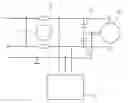
FIG. 1 represents an EMC passive filter of known type.
FIG. 2 represents a EMC filter connected to a machine tool according to one aspect of the present invention.
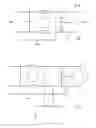
FIG. 3 represents an active part of the filter of FIG. 2.
FIG. 4 shows a simplified diagram of a filter comprising a negative impedance converter according to one aspect of the invention.
FIG. 5 shows a simplified diagram of a filter comprising a current pick-up detector according to one aspect of the invention.
FIG. 6 shows a variant of the filter of FIG. 5.
FIG. 7 shows another variant of shunt module for the filter of FIG. 2.
DETAILED DESCRIPTION OF THE INVENTION
FIG. 1 represents a EMC passive filter of know type, comprising a current-compensated coil 15, an inter-phase capacitor 11 and two “Y” phase-to-ground capacitors 12. The “Y” capacitors 12 are effective in the suppression of common-mode interferences transmitted on the mains line, yet they are an important source of leakage current.
According to one aspect of the invention, the EMC filter includes active elements for suppressing an unwanted RF EMI component conducted by the mains line, without increasing leakage current, like in conventional passive EMC filters. With reference to FIG. 2 an EMC filter according to the invention comprises a current-compensated coil 15 and an active shunt module 32 presenting a low impedance for the RF EMI component which is shunted to ground and prevented from reaching the machine tool 31. The effectiveness of the active shunt module may be limited in the upper part of the frequency spectrum, due to the finite response time of electronics. In this case two small “Y” capacitors, introducing a negligible leakage, may be added for improving high frequency attenuation.
The EMC filter and the machine tool represented on FIGS. 1 and 2 are drawn as single-phase devices. It is to be understood, however, that three-phase or multi-phase devices and filters are also possible, and comprised in the scope of the present invention.
An example of an active shunt module 32 is now discussed with reference to FIG. 3. This example refers to a three-phase circuit. It would be possible, in the scope of the invention, to modify it for a single-phase circuit. The active shunt 32 acts as a capacitive bypass for attenuating high frequency voltage components, notably noise, present on the power lines 33a, 33b and 33c. It comprises two complementary follower transistors 34 for shunting the RF EMI through the impedance 37.
A further example of active shunt module 32 is presented in FIG. 7. The active module 32 is arranged for keeping the input point 72 at a potential close to ground potential, at frequencies where the unwanted noise is expected. The capacitors 76a, 76b 76c and 77a, 77b, 77c, form a voltage divider for the supply rails of the active shunt. In this way the active shunt module is supplied with a voltage which is lower than the mains voltage, for example one half of the mains voltage. This reduces the fault current to harmless levels, even in case of a breakdown of some component, and avoids the use of fuses, which have large stray inductance. Furthermore the device voltages in the active shunt are kept to manageable levels, by the capacitive divider.
The example shown above refers to the case of a three-phase mains supply. The present invention is not limited, however, to this disposition and the presented examples could easily be modified for operation in a single-phase supply line, should the need arise.
FIG. 4 represents schematically another variant of an EMC filter according to the present invention. The filter comprises a Negative Impedance Converter (NIC) 42 thanks to which a winding of transformers 41 and 44 appear as a large series impedance to noise present on power lines 45, 40. The circuit of FIG. 4 allows effective filtering of the EMI to a machine tool device 31, by use of a small “Y” capacitor, which contributes negligibly to the leakage current.
Advantageously, in this case, the “Y” capacitors can be totally dispensed with entirely. The NIC circuit acts as a source of voltage which cancels the noise on lines 40 and 45.
FIG. 5 represent another variant of a filter according to the present invention comprising current sensors 47 and 47′ and an active circuit 48 for injecting a noise correction current in the power lines 45 and 45′, in order to cancel the EMI directed to the machine tool 31. Isolation between the circuit 48 and the supply lines 54, 45′ is provided by isolation capacitors 49 and 49′. The current sensor 47 comprises, for example a pickup coil, for reading the RF EMI circulating along the supply line 45.
Further, even if not represented, it is to be understood that one of the current sensor could be omitted, and, in a variant, only one of the lines could be sensed. In a further variant a magnetic coil could be coupled with both the power lines 45 and 45′ in order to sense, for example, a common-mode noise component.
FIG. 6 represents another variant of the filter of the invention in which the correction signal generated by the active module 49 is injected in the supply line 45, 45′ by means of a transformer 50 magnetically coupling supply lines 45, 45′ to the correction signal. It is to be understood that several forms of magnetic cores and windings bay be used for this purpose. In one advantageous variant the transformer 50 constitutes, with respect to the power lines 45, 45′, a current-compensated impedance.
In not represented variants of the embodiments of FIGS. 5 and 6, the current sensors 47 and 47′ may be replaced by transformers or by pick-up capacitors as voltage sensors. These embodiments of the present invention could also be adapted for a three-phase configuration.
It is an advantage of the above embodiments that the circuit 48 is not directly connected to ground, and could, if necessary be completely floated. In this way the unwanted possibility of stray leakage currents is further reduced.
The EMC filter of the invention is preferably included in a system comprising also a machine tool, connected to a mains supply line, the EMC filter providing attenuation of EMI transmitted along said supply line.
Claims
1. System comprising an electrical machine tool and an EMC electric filter, inserted on a supply line of said electrical device, wherein said EMC filter comprises an active circuit for suppressing unwanted interferences from said supply line.
2. The system of claim 1, wherein said EMC filter includes at least one inductance and an active shunt module for providing a low-impedance path for said interferences.
3. The system of claim 1, wherein said EMC filter is arranged for suppressing a common-mode interference transmitted on said supply line.
4. The system of claim 1, wherein said supply line is a single-phase or a three-phase mains line.
5. The system of claim 1, wherein said EMC filter further comprises phase-to-ground capacitors.
6. The system of claim 1, wherein said EMC filter comprises an impedance converter.
7. The system of claim 6, wherein said EMC filter comprises a transformer, one winding thereof being connected in series on said supply line, and another winding thereof being connected to a negative impedance converter.
8. The system of claim 1, wherein said filter comprises a voltage or current pick-up means, for detecting a disturbance signal on said supply line, an active circuit for generating a correction signal based on said disturbance signal, and a signal injection means for injecting said correction signal in said supply line.
9. The system of claim 1, wherein said filter further comprises a voltage reduction means for supplying said active circuit with a voltage that is lover than the voltage of said supply line.
Images & Drawings included:


Sources:
- United States Patent and Trademark Office - verify current appl. status at the USPTO↗
Recent applications in this class:
- » 20250260305 2025-08-14
MOTOR DRIVING APPARATUS AND AIR CONDITIONER INCLUDING THE SAME - » 20250226739 2025-07-10
CIRCULAR CURRENT SUPPRESSION METHOD, SWITCH CONTROL DEVICE, AND POWER CONVERSION SYSTEM - » 20250226738 2025-07-10
POWER CONVERTER, MOTOR DRIVER, AND REFRIGERATION-CYCLE APPLIED EQUIPMENT - » 20250167665 2025-05-22
DAMPING HIGHER ORDER HARMONICS IN AVERAGE DC LINK VOLTAGES - » 20250141340 2025-05-01
POWER CONVERTING APPARATUS, MOTOR DRIVE UNIT, AND REFRIGERATION CYCLE-INCORPORATING APPARATUS - » 20250070647 2025-02-27
HARMONIC SUPPRESSION METHOD AND APPARATUS FOR THREE-PHASE THREE-WIRE CASCADED POWER CONVERSION APPARATUS - » 20250070646 2025-02-27
POWER SUPPLY DEVICE - » 20250062679 2025-02-20
POWER CONVERSION APPARATUS AND AIR CONDITIONER - » 20240388194 2024-11-21
METHOD FOR PREVENTING FLICKER EMISSIONS OF CONVERTERS - » 20240348151 2024-10-17
Multi-level Hysteresis Voltage Controllers for Voltage Modulators and Methods for Control Thereof
Recent applications for this Assignee:
- » 20250055435 2025-02-13
ELECTROMAGNETIC INTERFERENCE FILTER - » 20240347912 2024-10-17
ANTENNA AND METHOD FOR MANUFACTURING AN ANTENNA - » 20240339755 2024-10-10
WINDING CARRIER, ANTENNA, AND METHOD FOR MANUFACTURING AN ANTENNA - » 20220337226 2022-10-20
High frequency, high output impedance amplifier for EMI active filter applications - » 20220263496 2022-08-18
MULTISTAGE ACTIVE FILTER FOR AUTOMOTIVE APPLICATIONS - » 20220263486 2022-08-18
Electromagnetic interference filter having controlled impedance magnitude - » 20220263407 2022-08-18
High-frequency current source for an active EMI filter, active EMI filter and use of an active EMI filter - » 20220021414 2022-01-20
Electronic decoupling impedance - » 20200328514 2020-10-15
Antenna - » 20200328513 2020-10-15
Antenna