Protection panel for aircrafts
US20080145618A1
2008-06-19
12/001,148
2007-12-10
✅ Patent granted
US 7,736,719 B2
2010-06-15
-
-
David R Sample | Catherine Simone
2027-12-10
Abstract:
Protection panel (3) for an aircraft suitable for being associated with at least a portion of the surface to be protected, consisting of a plurality of layers associated with each other made of aramid fibre in which at least one of said layers consists of an aramid fibre or unidirectional fabric.
Inventors:
- Giuliano Cattaneo 1 🇮🇹 Seveso Milan, Italy
- Luca Bottero 1 🇮🇹 Busto Arsizio, Italy
- Luca Bottero 1 🇮🇹 Varese, Italy
Assignee:
- ALENIA AERMACCHI S.p.A. 20 🇮🇹 Venegono Superiore, Italy
- ALENIA AERMACCHI S.p.A. 9 🇮🇹 Venegono Superiore (Varese), Italy
Interested in similar patents?
Get notified when new applications in this technology area are published.
Classification:
B32B3/00 IPC
Layered products comprising a layer with external or internal discontinuities or unevennesses, or a layer of non-planar form ; Layered products having particular features of form
B64D29/00 » CPC main
Power-plant nacelles, fairings, or cowlings
F01D21/045 » CPC further
Shutting-down of machines or engines, e.g. in emergency; Regulating, controlling, or safety means not otherwise provided for responsive to undesired position of rotor relative to stator or to breaking-off of a part of the rotor , e.g. indicating such position special arrangements in stators or in rotors dealing with breaking-off of part of rotor
F41H5/0485 » CPC further
Armour; Armour plates; Plate construction composed of more than one layer; Layered armour containing fibre- or fabric-reinforced layers all the layers being only fibre- or fabric-reinforced layers
Y02T50/60 » CPC further
Aeronautics or air transport Efficient propulsion technologies, e.g. for aircraft
Y02T50/60 » CPC further
Aeronautics or air transport Efficient propulsion technologies, e.g. for aircraft
Y10T428/195 » CPC further
Stock material or miscellaneous articles; Sheets or webs edge spliced or joined; Sheets or webs coplanar Beveled, stepped, or skived in thickness
Y10T428/24488 » CPC further
Stock material or miscellaneous articles; Structurally defined web or sheet [e.g., overall dimension, etc.] including variation in thickness Differential nonuniformity at margin
Y10T428/24612 » CPC further
Stock material or miscellaneous articles; Structurally defined web or sheet [e.g., overall dimension, etc.] including variation in thickness Composite web or sheet
Y10T428/24777 » CPC further
Stock material or miscellaneous articles; Structurally defined web or sheet [e.g., overall dimension, etc.] Edge feature
Y10T428/249921 » CPC further
Stock material or miscellaneous articles Web or sheet containing structurally defined element or component
Y10T428/2848 » CPC further
Stock material or miscellaneous articles; Web or sheet containing structurally defined element or component and having an adhesive outermost layer Three or more layers
B32B7/12 IPC
Layered products characterised by the relation between layers; Layered products characterised by the relative orientation of features between layers, or by the relative values of a measurable parameter between layers, i.e. products comprising layers having different physical, chemical or physicochemical properties; Layered products characterised by the interconnection of layers; Interconnection of layers using interposed adhesives or interposed materials with bonding properties
B32B3/02 IPC
Layered products comprising a layer with external or internal discontinuities or unevennesses, or a layer of non-planar form ; Layered products having particular features of form characterised by features of form at particular places, e.g. in edge regions
B32B3/14 IPC
Layered products comprising a layer with external or internal discontinuities or unevennesses, or a layer of non-planar form ; Layered products having particular features of form characterised by a discontinuous layer, i.e. formed of separate pieces of material characterised by a face layer formed of separate pieces of material which are juxtaposed side-by-side
B32B3/16 IPC
Layered products comprising a layer with external or internal discontinuities or unevennesses, or a layer of non-planar form ; Layered products having particular features of form characterised by a discontinuous layer, i.e. formed of separate pieces of material characterised by a face layer formed of separate pieces of material which are juxtaposed side-by-side secured to a flexible backing
B32B23/02 IPC
Layered products comprising cellulosic plastic substances in the form of fibres or filaments
B64C1/10 IPC
Fuselages; Constructional features common to fuselages, wings, stabilising surfaces and the like; Frames; Stringers; Longerons ; Fuselage sections Bulkheads
B64D7/00 IPC
Arrangements of military equipment, e.g. armaments, armament accessories, or military shielding, in aircraft; Adaptations of armament mountings for aircraft
Description
The present invention relates to a protection panel for aircrafts.
In particular, the present invention relates to a protection panel for engines or other critical aircraft components suitable for the absorption of impact with fragments for example metallic having a high kinetic energy which could cause a catastrophic breakage of one or more components of another engine of the aircraft.
The ever-increasing use of twin-engine aeroplanes even on long-range lines makes it fundamental to protect engines or other critical components from impact with splinters expelled from the other engine due to the breakage of moving mechanical organs.
Traditional solutions use metallic protections installed directly on the engine for this purpose.
These traditional solutions mainly have the disadvantage of being heavy, costly and obstructing maintenance operations.
The Applicant has faced the problem of simply, effectively and economically protecting engines from damage due to interferences with objects, for example projected towards the fan cowl of the engine itself by the breakage of another engine of the aircraft.
In particular, the solution found envisages that on the fan cowl of the engine or plating adjacent to other critical components, a multilayer panel be installed having at least one layer of fabric or unidirectional made of aramid fibre. The various layers can be bound to each other by means of a resin which should then be polymerized according to a specific treating cycle on a suitable mould, or by sewing the various layers together.
An aspect of the present invention relates to a protection panel for an aircraft suitable for being associated with at least a portion of the surface to be protected, characterized in that it comprises a plurality of layers associated with each other made of aramid fibre in which at least one of said layers consists of an aramid fibre or unidirectional fabric.
Further advantages and objectives of the present invention will appear evident from the following description and enclosed drawings, provided for purely illustrative and non-limiting purposes, wherein:
FIG. 1a represents a schematic view of an aircraft engine;
FIG. 1b schematically represents the fuselage of an aircraft;
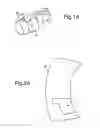
FIG. 2a is a schematic view of a portion of the hood of the engine on which the panel according to the present invention is applied;
FIG. 2b is a schematic view of a portion of fuselage plating on which the panel according to the present invention is applied;
FIG. 3 is a schematic perspective view of a panel according to the present invention;
FIG. 4 is a section of a detail of the edge of the panel according to the present invention.
With reference to the above figures, the engine body 2 of an aircraft is in the form of an oblong casing having inside the turboreactor with all its elements, such as for example, the turbine, the compressor and the combustion chamber. In the aeronautical field the supporting structure of the engine or its casing is conventionally called “nacelle” and has at least one openable portion, through which it is possible to have access to all the internal elements of the engine. FIG. 1A shows a casing 2 having an opposite pair of openable portions 21 and 22 positioned in front of each other with respect to the longitudinal axis of the casing.
FIG. 1B representing an aircraft, illustrates two portions of casing 23 and 24 situated in correspondence with critical components.
These openable portions and other portions of the internal surface of the nacelle of the engine or fuselage can be covered with the panel according to the present invention. FIG. 2A for example illustrates one of the two openable portions 22 partially covered internally by a panel 3 produced according to the present invention; FIG. 2B illustrates one of the two portions 23 or 24 partially covered internally by a panel 3 produced according to the present invention. The panel 3 can cover plating areas, for example of the fuselage in correspondence with critical components or power generation units (APU) for the containment of splinters due to breakage of a moving component.
The panel 3 substantially comprises a plurality of layers associated with each other made of aramid fibre. At least one of these layers consists of an aramid fibre or unidirectional fabric.
The aramid fibre is an aromatic polyamide fibre generally used as reinforcement of plastic materials in the production of high-quality composites (for competition canoes, bulletproof jackets, protective helmets, etc.).
The various layers are bound to each other for example by means of a resin which should then be polymerized according to a specific treatment cycle on a suitable mould, or by sewing the various layers together.
FIGS. 3 and 4 illustrate an embodiment example of said panel positioned on a flat support 4 which simulates the internal surface of the nacelle of the engine, in which the various layers are arranged so that the panel can be stepped 31 in its perimetric area, which is advantageous with respect to the ratio between the performances and weights of the panel 3. On the perimetric area, the panel can also have a strap, for example metallic, which covers the aramid layer. Mechanical connection elements of the panel to the surface to be covered can also be advantageously envisaged on the perimetric layer. The installation of the panel can generally be effected by gluing (as illustrated in FIG. 4 which shows a layer of glue 5), the use of mechanical connection elements, velcro or any other system which, alone or in collaboration with those mentioned, is capable of holding the protection panel in position.
The advantages offered by the solution proposed consist in both an improvement in the weight/efficacy and cost/efficacy ratio with respect to the conventional metal solutions. Further advantages are the increased accessibility to parts of the propeller or other critical components in the maintenance phases, if the panels are installed on the openable portions. Said panel is in fact significantly lighter, economical and versatile than the equivalent traditional solutions used so far.
The total sealing of the edges and exposed surface of the ballistic panel completes the production phase and guarantees insulation of the panel from aggressive and atmospheric agents.
The solution proposed is completely passive and does not at all influence the structural aspects of the component to which it is applied.
Claims
1. A protection panel (3) for an aircraft suitable for being associated with at least a portion of the surface to be protected,
characterized in that it comprises a plurality of layers associated with each other made of aramid fibre in which at least one of said layers consists of an aramid fibre or unidirectional fabric.
2. The protection panel according to claim 1, wherein the layers are bound to each other by means of a resin.
3. The protection panel according to claim 1, wherein the layers are bound to each other by means of sewing.
4. The protection panel according to claim 1, wherein the layers are arranged so that the panel can be stepped (31) in the perimetric area.
5. The protection panel according to claim 4, wherein the panel also has a strap on the perimetric area.
6. The protection panel according to claim 5, wherein mechanical connection elements of the panel to the surface to be covered are envisaged on the perimetric layer.
7. The protection panel according to claim 1, characterized in that it is glued onto the surface to be covered.
8. The protection panel according to claim 1, wherein it is associated with the internal surface of openable portions (21, 22) of said fan cowl (2) of the engine or other critical components (23, 24).
Images & Drawings included:



Sources:
- United States Patent and Trademark Office - verify current appl. status at the USPTO↗
Similar patent applications:
- » 20080170349
Light weight system for lightning protection of nonconductive aircraft panels - » 20120040159
Structural composite panel for an aircraft including a protection against high energy impacts - » 20230084689
Assembly for an aircraft nacelle and comprising a support panel, a thermal protection element and a fastening system
Recent applications in this class:
- » 20250256859 2025-08-14
ACOUSTICALLY TREATED THRUST REVERSER BULLNOSE FAIRING AND TORQUE BOX - » 20250051021 2025-02-13
LOSS OF LOAD PATH DETECTION SYSTEM FOR AIRCRAFT PROPULSION SYSTEM NACELLE AND METHOD FOR USING SAME - » 20230242266 2023-08-03
Electric motor nacelle for a vertical take-off and landing aircraft and aircraft comprising such a nacelle - » 20230145551 2023-05-11
Propulsion system for an aircraft - » 20230132103 2023-04-27
Aircraft nacelle comprising a connection between ducts comprising flanges which are oriented towards the interior, and aircraft comprising at least one nacelle of this type - » 20230114262 2023-04-13
Methods involving and apparatuses for a turbine engine fairing - » 20220097863 2022-03-31
Method for manufacturing an acoustic panel having a capsular skin, and acoustic panel incorporating such a skin - » 20220063823 2022-03-03
Nacelle - » 20210371118 2021-12-02
Method for producing an alveolar soundproofing structure including a diaphragm, and alveolar soundproofing structure obtained - » 20210163143 2021-06-03
AFT ENGINE PYLON FAIRING OF AN AIRCRAFT WITH MULTILAYER HEAT SHIELD
Recent applications for this Assignee:
- » 20160221692 2016-08-04
System for adjusting the profiles of aeronautical structures - » 20160003147 2016-01-07
System for preventing icing on an aircraft surface using a plasma actuator - » 20150326396 2015-11-12
DATA PROTECTION SYSTEM AND METHOD - » 20140351582 2014-11-27
Data protection system and method - » 20140283386 2014-09-25
System for adjusting the profiles of aeronautical structures - » 20140283386 2014-09-25
System for adjusting the profiles of aeronautical structures - » 20140225378 2014-08-14
System for in-flight restarting of a multi-shaft turboprop engine - » 20140151925 2014-06-05
Method for producing a closed-section portion of an aircraft provided with deformation sensors - » 20140012461 2014-01-09
Method for performing diagnostics of a structure subject to loads and system for implementing said method - » 20130299095 2013-11-14
Constraint system of sectors of a device for producing an airplane fuselage