METHOD FOR PREPARATION OF POLYUNSATURATED FATTY ACID-CONTAINING PHOSPHATIDYLSERINE
US20080145902A1
2008-06-19
12/032,164
2008-02-15
Abstract:
A method for the preparation of highly polyunsaturated fatty acid-containing phosphatidylserine and phosphatidic acid by phospholipase D-catalyzed transphosphatidylation of fish liver phosphatidylcholine and L-serine is disclosed.
Inventors:
- Su Chen 2 🇺🇸 Aliso Viejo, CA, United States
- Hung Kwong 2 🇺🇸 Aliso Viejo, CA, United States
Interested in similar patents?
Get notified when new applications in this technology area are published.
Classification:
C12P9/00 » CPC main
Preparation of organic compounds containing a metal or atom other than H, N, C, O, S or halogen
C12P7/6481 » CPC further
Preparation of oxygen-containing organic compounds; Fats; Fatty oils; Ester-type waxes; Higher fatty acids, i.e. having at least seven carbon atoms in an unbroken chain bound to a carboxyl group; Oxidised oils or fats; Fatty acid esters; Glycerides Phosphoglycerides
C12P13/06 » CPC further
Preparation of nitrogen-containing organic compounds; Alpha- or beta- amino acids Alanine; Leucine; Isoleucine; Serine; Homoserine
C07F9/02 IPC
Compounds containing elements of Groups 5 or 15 of the Periodic System Phosphorus compounds
A61K31/685 » CPC further
Medicinal preparations containing organic active ingredients; Phosphorus compounds; Diesters of a phosphorus acid with two hydroxy compounds, e.g. phosphatidylinositols one of the hydroxy compounds having nitrogen atoms, e.g. phosphatidylserine, lecithin
C12P13/00 IPC
Preparation of nitrogen-containing organic compounds
Description
CROSS-REFERENCES
This application is a continuation application of U.S. Ser. No. 10/762,657, filed Jan. 21, 2004, to Su Chen, entitled “Preparation of Highly Polyunsaturated Fatty Acid-Containing Phosphatidylserine and Phosphatic Acid”, the contents of which are incorporated by reference herein in their entirety.
FIELD OF THE INVENTION
The present invention relates to the preparation of highly polyunsaturated fatty acid-containing phosphatidylserine and phosphatidic acid.
BACKGROUND OF THE INVENTION
Phosphatidylserine and phosphatidic acid are two naturally occurring phospholipid classes. Biochemical and biophysical functions of the phospholipids are well documented and appear to be determined by the composition of phospholipid fatty acid chains. Fatty acid chains with more than two double bonds are generally called highly polyunsaturated fatty acids. Laboratory experiments have shown pharmacological effects of highly polyunsaturated fatty acid-containing phosphatidylserine and phosphatidic acid molecules on enhancing cholinergic neurotransmission.
Due to the difficulty of chemically synthesizing highly polyunsaturated fatty acid-containing phosphatidylserine and phosphatidic acid molecules, chemical extraction and purification of such molecules from bovine brain, particularly the highly polyunsaturated fatty acid-containing phosphatidylserine molecules, is generally practical approach to obtain them. Unfortunately, the risk of bovine spongiform encephalopathy made the use of phosphatidylserine molecules extracted from bovine brain potentially dangerous, and the development of an alternative method to prepare highly polyunsaturated fatty acid-containing phosphatidylserine and phosphatidic acid molecules is desired and lacking. In recent years, new features of phosphatidylserine molecules have been made by phospholipase D-catalyzed transphosphatidylation of egg and soybean phosphatidylcholine and have been used as brain cell nutrients as well. But highly polyunsaturated fatty acid-containing phosphatidylserine and phosphatidic acid molecules are generally lacked in final products.
Fish liver phospholipids contain more than 65% of highly unsaturated fatty acid-containing phosphatidylcholine molecules (less than 5% of phosphatidylserine+phosphatidic acid), and this natural material is considered to be safe for the preparation of highly polyunsaturated fatty acid-containing phosphatidylserine and phosphatidic acid molecules by the phospholipase D-catalyzed transphosphatidylation procedure. Natural phosphatidylcholine can also be readily separated and purified from other phospholipids using chromatographic techniques.
SUMMARY OF THE INVENTION
The present invention is the preparation of highly polyunsaturated fatty acid-containing phosphatidylserine and phosphatidic acid by phospholipase D-catalyzed transphosphatidylation of Fish Liver Phosphatidylcholine.
DETAILED DESCRIPTION OF THE INVENTION
The following description and figures are meant to be illustrative only and not limiting. Other embodiments of this invention will be apparent to those of ordinary skill in the art in view of this description.
The following materials are used in the transphosphatidylation procedure:
a: Phospholipase D
Phospholipase D is an enzyme and is commercially available (Sigma Chemical Company; S. Louis, Mo.). Phospholipase D can catalyze the transfer of phosphatidyl group from phosphatylcholine to various primary alcohols.
b: L-Serine
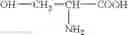
L-Serine is a common amino acid and is commercially available as well (Sigma Chemical Company; S. Louis, Mo.). The chemical structure of L-Serine is:
c: Fish Liver Phosphatidylcholine
Phosphatidylcholine (Lecithin) is a naturally occurring phospholipid class. Fish liver is enriched with highly polyunsaturated fatty acid-containing phosphatidylcholine molecules. The structural characterization of these molecules is mainly due to (i) a phosphocholine moiety linked to the sn-3 position of the glycerol backbone; (ii) a variety of diacyl fatty acid chains esterified to the sn-1 and sn-2 positions of the glycerol backbone, and (iii) location of double bond(s) (between 1-6) within unsaturated fatty acid chains with a number of carbon atoms (between 14-22). Fish liver phosphatidylcholine class consists of more than 10 phosphatidylcholine molecules, and a fish liver phosphatidylcholine molecule contains one of any fatty acid chains, which is esterified at sn-1 position of the glycerol backbone, and another one of any fatty acid which is esterified at sn-2 position of the glycerol backbone. The chemical characterization of fish liver phosphatidylcholine species is:
Reference: Lipid Nomenclature, Lipids, Vol. 12, 455-468 (1977))
Laboratory experiments have shown that these highly polyunsaturated fatty acid chains in phospholipid molecules are usually esterified at sn-2 position of the glycerol backbone. Of the phosphatidylcholine molecules from fish liver, the fatty acid chains esterified at the sn-1 position of the glycerol backbone are different, usually including palmitic acid (C.sub.16H.sub.31O.sub.2; containing none of double bond); stearic acid (Cl.sub.8H.sub.35O.sub.2; containing none of double bond); and oleic acid (Cl.sub.8H.sub.33O.sub.2; containing one double bone). The fatty acid chains esterified at the sn-2 position of the glycerol backbone are different too, usually including linolenic acid (C.sub.18H.sub.31O.sub.2; containing two double bonds); arachidonic acid (C.sub.20H.sub.31O.sub.2; containing four double bonds), eicosapentaenoic acid (C.sub.20H.sub.29O.sub.2; containing five double bonds); and docosahexaenoic acid (C.sub.22H.sub.31O.sub.2; containing six double bonds)(See Reference: Su Chen and M. Claeys, J. Agr. Food Chem. Vol. 44, 2416-2423 (1996)).
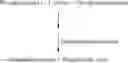
Phospholipase D-Catalyzed Transphosphatidylation of Phosphatidylcholine (P. Comfurius and R. F. A. Zwaal, Biochim. Biophys. Acta, Vol. 488, p 36-42 (1977)).
At the presence of a L-Serine, a choline moiety within phosphatidylcholine can be replaced by a L-Serine, with phospholipase D-catalyzed transphosphatidylation of phosphatidylcholine, to form phosphatidylserine by this one-step procedure, and phosphatidic acid is also produced as a side product in final products. After the transphosphatidylation, the fatty acid chains esterified at sn-1 and sn-2 positions of the glycerol backbone within final products phosphatidylserine and phosphatidic acid molecules are almost identical to those within phosphatidylcholine precursors used.
See Reference: P. Comfurius and R. F. Zwaal, Biochim. Biophys. Acta. Vol. 488, p 36-42 (1977))
Characterization of the phosphatidylserine and phosphatidic acid obtained by phospholipase D-catalyzed transphosphatidylation of fish liver phosphatidylcholine
a: Chemistry
After the replacement of a choline moiety at the sn-3 position of the glycerol backbone with an L-serine by phospholipase D-catalyzed transphosphatidylation of fish liver phosphatidylcholine, final products are phosphatidylserine and phosphatidic acid.
The fatty acid chains esterified at sn-1 and sn-2 positions of final products phosphatidylserine and phosphatidic acid molecules are almost identical to those within fish liver phosphatidylcholine precursors after the transphosphatidylation.
Laboratory experiments have shown that highly polyunsaturated fatty acid-containing phosphatidylserine and phosphatidic acid molecules are more effective as brain cell nutrients on enhancing cholinergic neurotransmission.
The advantages of the present invention are the production of highly polyunsaturated fatty acid-containing phosphatidylserine and phosphatidic acid molecules, which are made by phospholipase D-catalyzed transphosphatidylation of fish live phosphatidylcholine, are much safer when they are used as brain cell nutrients, without the risk of bovine spongiform encephalopathy. Further, choosing fish liver phosphatidylcholine as a precursor to prepare highly polyunsaturated fatty acid-containing phosphatidylserine and phosphatidic acid molecules by the phospholipase D-catalyzed transphosphatidylation procedure is more economic with potentially industrial preparation, compared with small sizes of materials to be used as precursors, such as fish brain and squid skin phosphatidylcholine molecules that also contain highly polyunsaturated fatty acid chains.
Although the invention has been described in terms of particular embodiments and applications, one of ordinary skill in the art, in light of this teaching, can generate additional embodiments and modifications without departing from the spirit of or exceeding the scope of the claimed invention. Accordingly, it is to be understood that the drawings and descriptions herein are proffered by way of example to facilitate comprehension of the invention and should not be construed to limit the scope thereof.
Claims
1. A method for the preparation of polyunsaturated fatty acid-containing phosphatidylserine, the method comprising:
combining an L-Serine with a fish liver phosphatidylcholine;
phospholipase D-catalyzed transphosphatidylating the L-Serine and the fish liver phosphatidylcholine; and
producing a polyunsaturated fatty acid-containing phosphatidylserine from the transphosphatidylating step.
2. A method for the preparation of polyunsaturated fatty acid-containing phosphatidylserine, the method comprising:
combining an L-Serine with purified phosphatidylcholine from fish livers;
phospholipase D-catalyzed transphosphatidylating of the L-Serine and fish liver phosphatidylcholine;
producing polyunsaturated fatty acid-containing phosphatidylserine from the phospholipase D-catalyzed transphosphatidylating step.
3. A method for the preparation of polyunsaturated fatty acid-containing phosphatidylserine, the method comprising:
combining L-Serine with fish liver phosphatidylcholine containing fish liver crude phospholipids;
phospholipase D-catalyzed transphosphatidylating the phosphotidylcholine and L-Serine;
producing a polyunsaturated fatty acid-containing phosphatidylserine from the phospholipase D-catalyzed transphosphatidylating step.
4. A method of preparing phosphatidylserine species, the method comprising:
phospholipase D-catalyzed transphosphatidylating of L-Serine and fish liver phosphatidylcholine to produce a phosphatidylserine species as shown in Formula 1:
wherein R1 is a mixture of acyl fatty chains, linked to the sn-1 position, selected from the group consisting of COOC15H31 (acyl fatty chain; palmitic acid; 16:0), COOC17H35 (acyl fatty chain; stearic acid; 18:0), and COOC17H33 (acyl fatty chain; oleic acid; 18:1); and
wherein R2 is a mixture of acyl fatty chains, linked to the sn-2 position, selected from the group consisting of COOC17H33 (acyl fatty chain; oleic acid; 18:1), COOC17H31 (acyl fatty chain, Linoleic acid; 18:2), COOC19H31 (acyl fatty chain; arachidonic acid; 20:4), COOC19H29 (acyl fatty chain; eicosapentaenoic acid; 20:5 (ω-3)), COOC21H33 (acyl fatty chain; docosapentanoic acid; 22:5), COOC21H31 (acyl fatty chain; docosahexaenoic acid; 22:6 (ω-3)).
Images & Drawings included:




Sources:
- United States Patent and Trademark Office - verify current appl. status at the USPTO↗
Similar patent applications:
Recent applications in this class:
- » 20250034605 2025-01-30
ENZYMATIC DECARBAMOYLATION OF GLUFOSINATE DERIVATIVES - » 20250019732 2025-01-16
METHOD FOR CHEMICAL-BIOLOGICAL CASCADE SYNTHESIS OF L-PHOSPHINOTHRICIN AND MUTANTS THEREFOR - » 20230383321 2023-11-30
IMPROVED METHOD FOR THE PRODUCTION OF ISOPRENOIDS - » 20220195469 2022-06-23
Cell-free production of geranyl pyrophosphate from glycerol in a cell-free manufacturing system - » 20220010342 2022-01-13
D-amino acid oxidative enzyme mutant and application thereof - » 20210363555 2021-11-25
Reducing insoluble deposit formation in ethanol production - » 20200340021 2020-10-29
Cementation methods - » 20200248215 2020-08-06
Enzymatic production of an acyl phosphate from a 2-hydroxyaldehyde - » 20200208181 2020-07-02
Method for preparing phosphorylated keto polyols, derivatives thereof and uses thereof - » 20190352680 2019-11-21
Biological method for preparing heme iron not derived from porcine blood