Crease prevention shoe insert
US20080148607A1
2008-06-26
11/644,718
2006-12-22
Abstract:
The invention consists of a variety of embodiments for a shoe insert that prevents creasing along the top of a shoe. The invention consists of a semi-rigid inner shell, and an outer shell that has a range of rigidity based upon the alternative embodiments design. The inner and outer shells are made of materials comprising wood, metal, ceramic, or plastic.
Inventors:
- Brian Mitchell Spar 1 🇺🇸 New Haven, CT, United States
- Paul William Siragusa 1 🇺🇸 New London, CT, United States
Interested in similar patents?
Get notified when new applications in this technology area are published.
Classification:
A43B23/081 » CPC main
Uppers; Boot legs; Stiffeners; Other single parts of footwear; Heel stiffeners; Toe stiffeners Toe stiffeners
A43B5/06 » CPC further
Footwear for sporting purposes Running shoes; Track shoes
A43B23/08 IPC
Uppers; Boot legs; Stiffeners; Other single parts of footwear Heel stiffeners; Toe stiffeners
Description
CROSS REFERENCES TO RELATED APPLICATIONS
Not Applicable
STATEMENT REGARDING FEDERALLY SPONSORED RESEARCH
Not Applicable
REFERENCE TO APPENDIX
Not Applicable
BACKGROUND OF THE INVENTION
A. Field of the Invention
The present invention relates to a special shoe insert designed to be positioned within the interior of various types of athletic shoes that would prevent the front area or toe section from creasing.
Typically an athletic shoe forms a crease on the front of the show just above where the toes are situated. This crease detracts from the overall appearance and diminishes the useful life of the shoe.
B. Prior Art
The Gray Patent (U.S. Pat. No. 3,950,865) discloses a rigid box toe shoe insert.
The Yang Patent Application Publication (U.S. Pub. No. 2005/0144809) discloses a shoe toe cap having interior and exterior surface with multiple reinforcement layers.
The Gougelet et al. Patent (U.S. Pat. No. 6,598,323) discloses a shoe toe protection device having smoother outer layer and inner layer composed of reinforcing rib members.
The Gesso Patent (U.S. Pat. No. 6,170,174) discloses a shoe liner having shock absorption means.
The Streit et al. Patent (U.S. Pat. No. 3,561,142) discloses a shoe having a toe box protection portion with a force-transmitting spring metal strip.
The Wang Patent (U.S. Pat. No. 5,832,633) discloses a multi-layered toe cap.
The Rose Patent (U.S. Pat. No. Des. 316,772) illustrates a design for a toe cap.
BRIEF SUMMARY OF THE INVENTION
The invention consists of a variety of embodiments for a shoe insert that prevents creasing along the top of a shoe. The invention consists of a semi-rigid inner shell, and an outer shell that has a range of rigidity based upon the alternative embodiments design. The inner and outer shells are made of materials comprising wood, metal, ceramic, or plastic.
BRIEF DESCRIPTION OF THE DRAWINGS
The accompanying drawings, which are included to provide a further understanding of the invention and are incorporated in and constitute a part of this specification, illustrate embodiments of the invention and together with the description serve to explain the principles of the invention:
In the drawings:
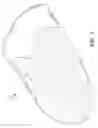
FIG. 1 illustrates an isometric rendering of the most rigid embodiment of the invention;
FIG. 2 illustrates a left and right side view of the most rigid embodiment of the invention;
FIG. 3 illustrates a rear view of the semi-rigid inner shell;
FIG. 4 illustrates a side view of the inner and outer shell of the invention;
FIG. 5 illustrates a top view of the most rigid embodiment;
FIG. 6 illustrates a top view of the spring loaded embodiment;
FIG. 7 illustrates a side view of how the invention fits inside of a shoe; and
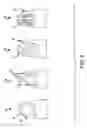
FIG. 8 illustrates a top view of the four embodiments of the invention.
DETAILED DESCRIPTION OF THE EMBODIMENT
Detailed reference will now be made to the preferred embodiments of the present invention, examples of which are illustrated in the accompanying drawings. Referring to FIGS. 1-8, a shoe insert 10 involves an outer shell 15 that is made of a rigid material comprising wood, metal, or a hard plastic. The shoe insert 10 involves a semi-rigid inner shell 16. The shoe insert 10 is used by placing the shoe insert 10 into a shoe 20.
Reference will now be made to the alternative embodiments of the present invention, depicted in FIG. 8. A second embodiment 30 provides a fragmented less-rigid application. The second embodiment 30 involves the semi-rigid inner shell 16 and a fragmented less-rigid outer shell 31. A third embodiment 40 provides a fragmented less-rigid application. The third embodiment 40 involves the semi-rigid inner shell 16 and a second fragmented less-rigid outer shell 41. A fourth embodiment 50 provides a slotted design that is appropriate for a less rigid application. The fourth embodiment 50 involves the semi-rigid inner shell 16 and a slotted outer shell 51.
Reference will now be made to a spring-loaded 60 embodiment depicted in FIG. 6. The spring-loaded embodiment 60 involves the semi-rigid inner shell 16 and a spring-loaded outer shell 61. The spring-loaded outer shell 61 has a plurality of springs 62 located about its middle.
Claims
The inventor claims:1. A shoe insert comprising:
(a) a semi-rigid inner shell; and
(b) an outer shell.
2. The shoe insert as described in claim 1 wherein the outer shell incorporates a plurality of springs aligned to provide flexibility.
3. The shoe insert as described in claim 1 wherein the outer shell has a series of slots to provide a less-rigid application.
4. The shoe insert as described in claim 1 wherein the outer shell is comprised of three separate pieces as depicted as 31 in FIG. 8 to provide a less rigid application.
5. The shoe insert as described in claim 1 wherein the outer shell is comprised of two separate pieces as depicted as 41 in FIG. 8 to provide a less rigid application.
6. The shoe insert as described in claim 1 wherein the outer shell is made of materials comprising wood, metal, ceramic, or plastic.
Images & Drawings included:



Sources:
- United States Patent and Trademark Office - verify current appl. status at the USPTO↗
Recent applications in this class:
- » 20240373986 2024-11-14
PROTECTIVE DEVICE FOR ATTACHING TO A SHOE - » 20230248115 2023-08-10
FOOTWEAR - » 20230232943 2023-07-27
Attachable/detachable toe cap for work shoes - » 20190335858 2019-11-07
SAFETY SHOE TOECAP REINFORCING MATERIAL HAVING PRESSURE DISPERSING STRUCTURE - » 20140223773 2014-08-14
Footwear - » 20130255111 2013-10-03
Toe cap and toe cap embedded shoe - » 20120011742 2012-01-19
Combination structure for shoe shell - » 20100095549 2010-04-22
Safety footwear - » 20090300944 2009-12-10
PROTECTIVE SAFETY SHOE INSERT - » 20090013555 2009-01-15
WATERPROOF SAFETY FOOTWEAR