Simplified method and apparatus for making cored wire and other tubular products
US20080148796A1
2008-06-26
11/613,213
2006-12-20
✅ Patent granted
US 7,950,126 B2
2011-05-31
-
-
Derris H Banks | Azm Parvez
2030-03-02
Abstract:
Improved cored-wire fabrication replaces multiple roller pairs with one or more dies. In the preferred embodiment, flat stock is pulled through a single cylindrical die including an upper tab to ensure and orient the formation of a gap to receive internal powders. Once the powders are introduced, a cylindrical die is used for closure though again, one or more rollers may be used between the powder feed and the die used for closing. In the preferred embodiment, however, a single gap-forming die is used before the powder feed, and a single closing die is used after the powder feed, replacing numerous rollers and other moving parts, thereby dramatically simplifying the apparatus and method of manufacture.
Assignee:
- Weld Mold Company 1 🇺🇸 brighton, MI, United States
Interested in similar patents?
Get notified when new applications in this technology area are published.
Classification:
B21C37/08 » CPC main
Manufacture of metal sheets, bars, wire, tubes or like semi-manufactured products, not otherwise provided for; Manufacture of tubes of special shape of tubes or metal hoses; Combined procedures for making tubes, e.g. for making multi-wall tubes Making tubes with welded or soldered seams
B21C37/045 » CPC further
Manufacture of metal sheets, bars, wire, tubes or like semi-manufactured products, not otherwise provided for; Manufacture of tubes of special shape of bars or wire Manufacture of wire or bars with particular section or properties
B21C37/0818 » CPC further
Manufacture of metal sheets, bars, wire, tubes or like semi-manufactured products, not otherwise provided for; Manufacture of tubes of special shape of tubes or metal hoses; Combined procedures for making tubes, e.g. for making multi-wall tubes; Making tubes with welded or soldered seams Manufacture of tubes by drawing of strip material through dies
Y10T29/49829 » CPC further
Metal working; Method of mechanical manufacture; Assembling or joining; Progressively advancing of work assembly station or assembled portion of work Advancing work to successive stations [i.e., assembly line]
Y10T29/49885 » CPC further
Metal working; Method of mechanical manufacture; Assembling or joining with coating before or during assembling
B21B1/24 IPC
Metal-rolling methods or mills for making semi-finished products of solid or profiled cross-section ; Sequence of operations in milling trains; Layout of rolling-mill plant, e.g. grouping of stands; Succession of passes or of sectional pass alternations for rolling plates, strips, bands or sheets of indefinite length in a continuous process
B23P11/00 IPC
Connecting or disconnecting metal parts or objects by metal-working techniques not otherwise provided for
Description
FIELD OF THE INVENTION
This invention relates generally to the manufacture of tubular structures and, in particular, to methods and apparatus for making cored wire, and the like.
BACKGROUND OF THE INVENTION
Various industrial welding practices utilize cored wire or flux-cored wire as a feedstock. Cored wire typically consists of an outer tubular jacket of mild steel with internal metallic powders suited to the application at hand.
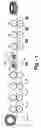
FIG. 1 is a schematic drawing of a machine of the type currently used to produce cored wire. Flat stock 10 is fed into a series of rollers 12, 12′, etc., which progressively shape the flat stock into a tubular structure with a gap 20 into which one or more powders 22 are introduced. The rollers 12, 12′, etc. provide cup-shaping at smaller and smaller radii until the intermediate tubing with a gap is ultimately realized. After the powders are introduced into the gap, another series of rollers 24, 24′, and so forth, are used to compress the powder-containing tube until the gap is fully compressed and sealed within the wire. The wire is then wound onto a spool and typically shipped to a customer in coiled form. Though not shown in the drawing, one or more pulling stages and/or forming dies may be used to reduce the diameter of the wire as desired.
Although machines of the type shown in FIG. 1 are adequate when properly maintained, they require considerable attention due to the thousands of different components and moving parts. As such, not only are machines of this type expensive to build, they are also expensive to operate
SUMMARY OF THE INVENTION
This invention improves upon cored-wire fabrication by replacing the plurality of roller pairs with one or more dies. In the preferred embodiment, flat stock is pulled through a single cylindrical die including an upper tab to ensure and orient the formation of a gap to receive internal powders. One or more sets of rollers and/or the application of heat may optionally be used in advance of this die.
Once the powders are introduced, a cylindrical die is used for closure though again, one or more rollers may be used between the powder feed and the die used for closing. In the preferred embodiment, however, a single gap-forming die is used before the powder feed, and a single closing die is used after the powder feed, replacing numerous rollers and other moving parts, thereby dramatically simplifying the apparatus and method of manufacture.
BRIEF DESCRIPTION OF THE DRAWINGS
FIG. 1 is a drawing of a prior-art cored wire making machine; and
FIG. 2 is a simplified drawing which shows the preferred embodiment of the invention.
DETAILED DESCRIPTION OF THE INVENTION
Having discussed the prior-art apparatus of FIG. 1, the reader's attention is directed to FIG. 2, which shows the preferred embodiment of the present invention. Flat stock 102 is fed through a die 110 having a tab 112. The entrance to the die 110 is funnel shaped, such that as the flat stock is pulled through the die, an intermediate tubular structure is formed with an appropriately dimensioned and oriented cap 114. Optionally, though not necessary to the invention, one or more sets of rollers 104, 106 and/or heat may be applied to the stock 102 to create a partially formed or softened material 108.
The size of the gap may vary, depending upon the feedstock and desired wire diameter. As one example of many, a 0.135 gap may be used in conjunction with 0.525×0.022 feed material to produce wire in the range of 5/32-0.045. Once the gapped wire is formed, powders are introduced by any conventional or yet-to-be-developed method, such as the use of a conveyor 116 fed by a column, as is now typical in the industry. Once the powders are introduced, the single die 124 is used to close the gap and seal the wire prior to formation of coil 126 for shipping. Optionally, one or more sets of rollers 120 may be used to assist in the closure process. Although lap joints are shown, butt joints may also be accommodated.
As can be seen, the apparatus and method of the invention vastly simplifies the process now in use, resulting in dramatic savings both in terms of cost and complexity. The tab 112 and die are 110 is preferably hardened to assist with longevity. Diamond, carborundum, silicon carbide and other such materials may advantageously be used. Although relatively short die are shown in the drawings, the internal channels may vary up to an inch or more to further increase working life.
Although the apparatus has been described in conjunction with the manufacture of cored wire products, it will be appreciated by those of skill that with appropriate modification, the machine and method may be used to make tubing without internal flux or powders, including brake lines, and the like, as well as larger-diameter structures such as exhaust pipes, and so forth. In these cases, the powder feed delivery subsystem would be replaced with an appropriate welding capability.
Claims
I claim:1. Apparatus for fabricating cored wire, comprising:
a first die operative to transform a flat feedstock into a tubular structure with a lengthwise gap;
a powder feed system for introducing one or more powders or other substances into the gap; and
a second die operative to close the gap, resulting in a sealed wire.
2. The apparatus of claim 1, wherein the first die includes tab having a width substantially equal to the gap.
Images & Drawings included:


Sources:
- United States Patent and Trademark Office - verify current appl. status at the USPTO↗
Recent applications in this class:
- » 20240390967 2024-11-28
STEEL PIPE FOR LINE PIPE WITH EXCELLENT LOW TEMPERATURE TOUGHNESS OF WELDED ZONE AND METHOD FOR MANUFACTURING THE SAME - » 20230271240 2023-08-31
METHOD AND APPARATUS FOR MANUFACTURING METAL PIPE - » 20230191466 2023-06-22
STEEL PIPE COLLAPSE STRENGTH PREDICTION MODEL GENERATION METHOD, STEEL PIPE COLLAPSE STRENGTH PREDICTION METHOD, STEEL PIPE MANUFACTURING CHARACTERISTICS DETERMINATION METHOD, AND STEEL PIPE MANUFACTURING METHOD - » 20220040745 2022-02-10
Method for preparing multilayer metal composite pipe - » 20210252576 2021-08-19
Multiple-Winding Pipe Forming Device and Multiple-Winding Pipe Forming Method - » 20200038929 2020-02-06
APPARATUS, METHOD, AND PROGRAM FOR MONITORING OPERATION OF HIGH FREQUENCY RESISTANCE WELDING AND INDUCTION HEATING WELDING OF ELECTRIC RESISTANCE WELDED STEEL PIPE - » 20200009629 2020-01-09
Method of manufacturing a coiled tubing string - » 20200001339 2020-01-02
Method for manufacturing clad steel pipe - » 20200001338 2020-01-02
ASSEMBLY AND WELDING UNIT FOR LONGITUDINALLY WELDED PIPES - » 20190358690 2019-11-28
Welded pipe manufacturing apparatus and welded pipe manufacturing method