Rotary, continuous, combustion turbine
US20080155957A1
2008-07-03
11/648,747
2007-01-03
Abstract:
A three or any number of sided combustion chamber with a central entrance hole through which enters air-fuel which is expoded and is exhausted through periferal exhaust ports. It causes rotation of the combustion chamber between 1,000 and 100,000 rpm. It runs a generator which can run any electrical part. The combustion chamber rotates and therefore it is the important part of the machine.
Interested in similar patents?
Get notified when new applications in this technology area are published.
Classification:
F02C5/04 » CPC main
Gas-turbine plants characterised by the working fluid being generated by intermittent combustion characterised by the arrangement of the combustion chamber in the chamber in the plant the combustion chambers being formed at least partly in the turbine rotor
F02C3/165 » CPC further
Gas-turbine plants characterised by the use of combustion products as the working fluid characterised by the arrangement of the combustion chamber in the plant the combustion chambers being formed at least partly in the turbine rotor or in an other rotating part of the plant the combustion chamber contributes to the driving force by creating reactive thrust
F05D2230/211 » CPC further
Manufacture essentially without removing material by casting by precision casting, e.g. microfusing or investment casting
F05D2230/52 » CPC further
Manufacture; Building or constructing in particular ways using existing or "off the shelf" parts, e.g. using standardized turbocharger elements
F05D2240/35 » CPC further
Components Combustors or associated equipment
F05D2250/15 » CPC further
Geometry; Two-dimensional spiral
F05D2250/82 » CPC further
Geometry; Size or power range of the machines Micromachines
F05D2300/211 » CPC further
Materials; Properties thereof; Oxide or non-oxide ceramics; Oxide ceramics Silica
F02C3/00 IPC
Gas-turbine plants characterised by the use of combustion products as the working fluid
Description
The rotary continuous internal combustion turbinel is made with moulds into which is poured silicone oxide. The silicone oxide is fired until it is hard then it is removed from the moulds.
CROSS REFERENCE TO RELATED APPLICATIONS
None.
The air-foil bearing and generator should be excluded from this patent.
STATEMENT REGARDING FEDERALLY SPONSORED RESERCH
None.
BACKGROUND OF THE INVENTION
I first thought of this invention in 1965 while walking across my stepfathers, Maurice Rosenthal M.D.s barn. I saw a discarded Briggs and Stratton engine and starting ring. I wondered whether the starting ring could be used as an engine. I made some drawings. I told a friend about it and he told his father Charles Hobbs a machinist with Kitt Peak solar observatory. He had experience building things. He made drawings and suggested making the device out of aluminum. I subsequently learned from Popular Science magazine about ceramics, I imagined that they would be better suited to the device. I practiced medicine, subseqently developed multiple sclerosis and subsequently lost the drawings and therefore, I hired Hugh Armstong here in Tucson to remake the drawings.
BRIEF SUMMARY OF THE INVENTION
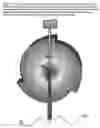
A three or any number of sided combustion chamber with a central entrance hole through which enters airfuel which is expoded and is exhausted through periferal exhaust ports. It causes rotation of the combustion chamber. At hulagal.com a three sided combustion chamber is shown as an example.
DETAILED DESCRIPTION OF THE INVENTION
A three or any number of sided combustion chamber with a central entrance hole through which enters air-fuel which is expoded and is exhausted through periferal exhaust ports. It causes rotation of the combustion chamber between 1,000 and 100,000 rpm. The combustion chamber rotates and therefore it is the important part of the machine.
Claims
1. I claim that the rotary, continuous, internal, combustion turbine will operate with one moving part.
Images & Drawings included:



Sources:
- United States Patent and Trademark Office - verify current appl. status at the USPTO↗
Recent applications in this class:
- » 20150330304 2015-11-19
ENGINE WITH THRUST VECTOR CONTROL - » 20110162618 2011-07-07
Reflective pulse rotary engine - » 20100061838 2010-03-11
Rotating device - » 20090199812 2009-08-13
Structure of the rotary engine - » 20090126681 2009-05-21
Rotary Internal Combustion Engine - » 20080178572 2008-07-31
Reflective pulse rotary engine