Metallic frame and method of making the same
US20080156063A1
2008-07-03
11/983,369
2007-11-07
Abstract:
An exemplary metallic frame (60) is formed by forging and precise machining of a workpiece. The forging process is performed before the precise machining process, a hardness of the frame is larger than that of the workpiece and a surface roughness Ra of the frame reaches about 6.4 microns. The present invention further provides a method of making the frame. The method includes as follows: feeding workpiece process (12) for providing a workpiece (20); forging process (14), the workpiece be forged to form a preform (40); and precise machining process (18), the preform be precisely machined to form a frame.
Inventors:
- Jing Yang 29 🇨🇳 Shenzhen, China
- Ling Hou 2 🇨🇳 Shenzhen, China
- Guang-Hui Xie 1 🇨🇳 Shenzhen, China
- Yong-Guang Wang 1 🇨🇳 Shenzhen, China
- Ling Yi 1 🇨🇳 Shenzhen, China
Interested in similar patents?
Get notified when new applications in this technology area are published.
Classification:
B21K23/00 » CPC main
Making other articles
B21J5/00 IPC
Methods for forging, hammering, or pressing ; Special equipment or accessories therefor
B21D22/00 IPC
Stamping, Spinning, Deep-drawing; Working sheet metal of limited length by stretching; Punching
B21D22/00 IPC
Shaping without cutting, by stamping, spinning, or deep-drawing
Description
BACKGROUND OF THE INVENTION
1. Field of the Invention
The present invention relates to a metallic frame and a method of making the same.
2. Discussion of the Related Art
Nowadays, various electronic devices such as mobile phones, personal digital assistants, and laptop computers are popular and used in a variety of situations. The electronic devices are not only desired with multifunctionality, but also desired being robustness and for aesthetics. Therefore, metal is widely used in frames of the electronic devices.
One typical method of making metallic frame (herein typical frame manufacturing process) includes coarse milling of a workpiece and then precise milling of the workpiece. The frame made from the typical frame manufacturing process has a high precision in size and shape and a low surface roughness. However, a machining period is very long using the typical frame manufacturing process because the milling process is time consuming. As an example, the machining period of the typical frame manufacturing process requires more than ten hours when producing a frame of an ordinary mobile phone. Thus, a production efficiency of the method is low. In addition, a cost of milling is high, adding to a higher production cost of the frame. Furthermore, during coarse milling and precise milling, a significant amount of material is removed from the workpiece and wasted. This also adds to the higher production cost of the frame. Referring to FIGS. 7-9, a frame made of grade SUS304I stainless steel (SUS304I is a Japanese grade of this type of stainless steel, and a corresponding Chinese grade is OCr19Ni11) using the above method shows a metallographic photograph of the frame took under 23±5 degrees Celsius (° C.) and 40-80% relative humidity (RH) conditions. The internal structure of the frame is magnified by 50×, 100×, and 200× in FIGS. 7-9 respectively. The metallographic structure of the frame includes austenite and delta ferrite. A Vickers hardness of the frame under 23±5° C., 40-80% RH and 0.5 kilogram (kg) is 169. Therefore, a hardness of the frame is unduly low.
Therefore, a metallic frame which has high hardness and low production cost and method of making the metallic frame are desired.
SUMMARY
An exemplary metallic frame is formed by forging and precise machining of a workpiece. The forging process is performed before the precise machining process, a hardness of the frame is larger than that of the workpiece and a surface roughness Ra of the frame reaches about 6.4 microns.
An exemplary method of making the frame is provided. The method includes: feeding workpiece process for providing a workpiece; forging process, the workpiece being forged to form a preform; and precise machining process, the preform being precisely machined to form a frame.
Other advantages and novel features will become more apparent from the following detailed description when taken in conjunction with the accompanying drawings.
BRIEF DESCRIPTION OF THE DRAWINGS
The components in the drawings are not necessarily drawn to scale, the emphasis instead being placed upon clearly illustrating the principles of the present metallic frame and method of making the same. Moreover, in the drawings, like reference numerals designate corresponding parts throughout the several views, and all the views are schematic.
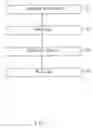
FIG. 1 is a flow chart of a method of making a metallic frame of the present invention.
FIG. 2 is a workpiece formed in a process of the method of FIG. 1.
FIG. 3 is a preform formed after a forging process of the method of FIG. 1.
FIG. 4 is a preform formed after a hole defining process of the method of FIG. 1.
FIG. 5 is a frame formed after a milling process of the method of FIG. 1.
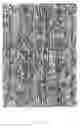
FIG. 6 is a metallographic photograph of the frame of FIG. 5.
FIG. 7 is a metallographic photograph of a traditional frame magnified by in 50×.
FIG. 8 is a metallographic photograph of a traditional frame magnified by 100×.
FIG. 9 is a metallographic photograph of a traditional frame magnified by 200×.
DETAILED DESCRIPTION OF THE EMBODIMENTS
The present invention provides a metallic frame and a method of making the same. The metallic frame usually employed in electronic devices such as mobile phones, personal digital assistants, and laptop computers.
Referring to FIG. 1, the method of making the metallic frame includes the following:
- (1) Feeding workpiece process 12: Referring to FIG. 2, a workpiece 20 is provided by cutting a steel sheet. A size of the workpiece 20 is determined according to a size and a shape of the frame design. In the embodiment, the workpiece 20 is made of SUS304I stainless steel;
- (2) Forging process 14: Referring to FIG. 3, the workpiece 20 is forged several times by a forging equipment (not shown) with a forging mold (not shown), thereby yielding a preform 40. In the forging process 14, the workpiece 20 is managed without being heated by external heat. After the forging process 14, the preform 40 has a size and a shape similar to but a little different from the frame design. For example, the preform 40 is slightly larger and does not have holes compared with the frame design. The preform 40 includes a main portion 402 and a flange 404 extending along an edge of the main portion 402. In the embodiment, the main portion 402 has a shape formed by a rectangle and two semi-circulars with a linear edge adjoining to two opposite edges of the rectangle. Alternatively, the preform 40 may also not include the flange 404, and the main portion 402 may also be of any shapes. The size and the shape of the preform 40 are determined according to a size and a shape of the frame design;
- (3) Hole defining process 16: Referring to FIG. 4, a hole 406 is defined in the preform 40. Also, two or more holes can be defined in the preform 40; and
- (4) Milling process 18: Referring to FIG. 5, the preform 40 undergoes precise milling. A surface of the preform 40 is milled yielding a frame 60 according to the frame design. The precise milling process 18 is shorter than the milling process in the typical metallic frame making method because the size and the shape of preform 40 closely matches the frame design. Furthermore, the frame 60 has a high precision in size, shape, and surface roughness. A surface roughness of the frame 60 is in a range from 2.5 microns (μm) to 0.6 μm after precise milling process 18.
During the forging process 14, the stainless steel material is extruded, squeezed, and forged such that the internal metallographic structure is changed and refined. Thereby, mechanical properties, hardness, and wear resistance of the frame 60 are improved.
Referring to FIG. 6, a metallographic photograph got under 23±5 degrees Celsius (° C.) and 40-80% relative humidity (RH) is shown. In FIG. 6, the metallographic structure is magnified by 200×. The metallographic structure of the frame 60 includes austenite. Comparing FIG. 6 with FIG. 7, it can be seen that a metallographic structure is changed. The change of the metallographic structure results in the improvement of the mechanical properties, the hardness and the wear resistance of the frame 60. Furthermore, in this embodiment, a Vickers hardness of the frame 60 under 23±5° C., 40-80% RH and 0.5 kilogram (kg) is 348 (in the specification, all values of hardness are average values of a plurality of tests) which is much larger than the frame made by milling only. Generally, the Vickers hardness can reach 300.
During the forging process 14, no material is removed from the workpiece 20. During the milling process 18, little material is removed from the workpiece 20 because the size and the shape of the preform 40 are quite close to the frame 60. Therefore, little material is wasted and a production cost of the frame 60 is low. Furthermore, an efficiency of the forging process 14 is much higher than the milling process of the typical frame manufacturing process, and a cost of the forging process 14 is also much lower than milling. Therefore, a production efficiency of the present method for making the frame 60 is high, and a production cost of the frame 60 is low.
Alternatively, other machining processes such as edge-cutting and polishing can be added to make a frame with needed size, shape, and surface properties etc. If a needed frame design does not have a hole, the hole defining process 16 is omitted. The milling process 18 may also be replaced by other precise machining process such as turning process and planing process. After the precise machining process, a surface roughness can reach 6.4 μm. The surface roughness can even reach 3.2 μm.
It is believed that the present embodiments and their advantages will be understood from the foregoing description, and it will be apparent that various changes may be made thereto without departing from the spirit and scope of the invention or sacrificing all of its material advantages, the examples hereinbefore described merely being preferred or exemplary embodiments of the invention.
Claims
What is claimed is:1. A metallic frame is characterized that the frame is formed by forging and precise machining a workpiece, and the forging process is performed before precise machining, a hardness of the frame is larger than that of the workpiece and a surface roughness Ra of the frame reaches about 6.4 microns.
2. The frame as claimed in claim 1, wherein the frame is made of stainless steel.
3. The frame as claimed in claim 2, wherein the frame is made of SUS304I.
4. The frame as claimed in claim 3, wherein an average Vickers hardness of the frame reaches about 300.
5. A method of making a metallic frame, a hardness of the frame is larger than that of the workpiece and a surface roughness Ra of the frame reaches about 6.4 microns, the method comprising:
feeding workpiece process for providing a workpiece;
forging process, the workpiece is forged to form a preform; and
precise machining process, the preform be precisely machined to form a frame.
6. The method as claimed in claim 5, wherein in the precise machining process, the preform is machined by milling process.
7. The method as claimed in claim 5, wherein the workpiece is provided by cutting a steel sheet, and a size of the workpiece is determined according to a size and a shape of a frame design.
8. The method as claimed in claim 5, wherein the preform has a size and a shape according to the frame design.
9. The method as claimed in claim 5, further comprising at least one of processes of edge-cutting, hole defining, and polishing.
10. The method as claimed in claim 5, wherein in the forging process, a metallographic structure is changed, and the change of the metallographic structure results in the improvement of the mechanical properties, the hardness and the wear resistance of the frame.
11. The method as claimed in claim 5, wherein the frame is made of SUS304I.
12. The frame as claimed in claim 11, wherein an average Vickers hardness of the frame reaches about 300.
Images & Drawings included:




Sources:
- United States Patent and Trademark Office - verify current appl. status at the USPTO↗
Similar patent applications:
- » 20100043338
Building metal frame, and method of making, and components therefor including column assemblies and full-length beam assemblies - » 20080295315
Method of making a metal frame - » 20120297720
Building metal frame, and method of making, and components therefor including column assemblies and full-length beam assemblies - » 20100043347
Building metal frame, and method of making, and components therefor including column assemblies and full-length beam assemblies - » 20120199971
Embedded semiconductor die package and method of making the same using metal frame carrier - » 20100006994
Embedded semiconductor die package and method of making the same using metal frame carrier - » 20110037154
Embedded semiconductor die package and method of making the same using metal frame carrier - » 20140127858
Embedded semiconductor die package and method of making the same using metal frame carrier - » 20250163750
METAL PROFILE FOR DOOR/WINDOW FRAME STRUCTURE AND METHOD FOR MAKING SUCH PROFILE - » 20230408221
METHOD FOR MAKING A GUN FRAME BY HIGH ENERGY BEAM WELDING COMPLEMENTARY METAL FRAMES ALONG A COMMON SAGITTAL PLANE
Recent applications in this class:
- » 20240157431 2024-05-16
METHOD FOR MAKING NON-SPHERICAL SOLDER BALL - » 20150143865 2015-05-28
Device and method for construction of baffles from engine block freeze plugs - » 20150118531 2015-04-30
Method for cold-forging thin-walled portion and explosion-proof valve - » 20140020303 2014-01-23
Method for manufacturing light-reflection aluminum door frame molding - » 20140004311 2014-01-02
Cookware Surface and Method for Forming Cookware Surface - » 20130065698 2013-03-14
INSTRUMENT FOR ASSEMBLING A BONE ANCHORING DEVICE - » 20120324976 2012-12-27
METHOD OF FORGING ALUMINUM/ALUMINUM ALLOYS - » 20110242446 2011-10-06
Method of fabricating bottom chassis, bottom chassis fabricated by the method of fabricating the same, method of fabricating liquid crystal display, and liquid crystal display fabricated by the method of fabricating the same - » 20110111869 2011-05-12
Spacer nut manufacturing method - » 20110016944 2011-01-27
METHOD OF PRODUCING METALLIC MEMBER