Organic Compounds
US20080161307A1
2008-07-03
11/815,037
2006-01-27
Abstract:
A method for the treatment of delayed gastric emptying, in a patient in need of such treatment, which comprises administering an effective amount of a 5-HT4 agonist, e.g. tegaserod or salts or hydrates thereof, to the patient.
Inventors:
- David Lewis Earnest 1 🇺🇸 Harding Township, NJ, United States
- Mikhail Rojavin 1 🇺🇸 Southampton, PA, United States
- Gervais Tougas 1 🇨🇭 Basel, Switzerland
Interested in similar patents?
Get notified when new applications in this technology area are published.
Classification:
A61K31/4045 » CPC main
Medicinal preparations containing organic active ingredients; Heterocyclic compounds having nitrogen as a ring hetero atom, e.g. guanethidine or rifamycins having five-membered rings with one nitrogen as the only ring hetero atom, e.g. sulpiride, succinimide, tolmetin, buflomedil condensed with carbocyclic rings, e.g. carbazole; Indoles, e.g. pindolol Indole-alkylamines; Amides thereof, e.g. serotonin, melatonin
A61K31/439 » CPC further
Medicinal preparations containing organic active ingredients; Heterocyclic compounds having nitrogen as a ring hetero atom, e.g. guanethidine or rifamycins having six-membered rings with one nitrogen as the only ring hetero atom the ring forming part of a bridged ring system, e.g. quinuclidine
A61K31/4439 » CPC further
Medicinal preparations containing organic active ingredients; Heterocyclic compounds having nitrogen as a ring hetero atom, e.g. guanethidine or rifamycins having six-membered rings with one nitrogen as the only ring hetero atom; Non condensed pyridines; Hydrogenated derivatives thereof containing further heterocyclic ring systems containing a five-membered ring with nitrogen as a ring hetero atom, e.g. omeprazole
A61P1/00 » CPC further
Drugs for disorders of the alimentary tract or the digestive system
A61P43/00 » CPC further
Drugs for specific purposes, not provided for in groups -
A61K31/5375 » CPC further
Medicinal preparations containing organic active ingredients; Heterocyclic compounds having nitrogen as a ring hetero atom, e.g. guanethidine or rifamycins having six-membered rings with at least one nitrogen and one oxygen as the ring hetero atoms, e.g. 1,2-oxazines 1,4-Oxazines, e.g. morpholine
A61K31/404 IPC
Medicinal preparations containing organic active ingredients; Heterocyclic compounds having nitrogen as a ring hetero atom, e.g. guanethidine or rifamycins having five-membered rings with one nitrogen as the only ring hetero atom, e.g. sulpiride, succinimide, tolmetin, buflomedil condensed with carbocyclic rings, e.g. carbazole Indoles, e.g. pindolol
A61P1/04 » CPC further
Drugs for disorders of the alimentary tract or the digestive system for ulcers, gastritis or reflux esophagitis, e.g. antacids, inhibitors of acid secretion, mucosal protectants
Description
This invention relates to a pharmaceutical composition, use, or method in the treatment of PPI induced delayed gastric emptying with 5-hydroxytryptamine receptor type 4 receptor agonists (5-HT4 agonists).
Proton pump inhibitors (PPIs) are the most effective pharmacological agents used to treat symptoms and complications of acid reflux in patients with gastroesophageal reflux diseases (GERD) (Berardi R. R, 2001, Postgrad.Med., 24-35; Katz P. O., Frissora C., 2002, Curr.Gastroenterol. Rep., 4: 459-462 ). While generally safe, PPIs have been reported to be associated with development of delayed gastric emptying (DeVault, K. R., 1996, Am J Gastroenterol, 91, 1869-1870). For example, rabeprazole has been shown to have a dual effect with overall delay of gastric emptying function (Anjiki H, Sanaka M, Kuyama Y. Dual effects of rabeprazole on solid-phase gastric emptying assessed by the 13C-octanoate breath test. Digestion. 2005; 72(2-3):189-94. Epub Sep. 21, 2005). Omeprazole in daily doses of 20 to 40 mg has been shown to significantly delay the rate of gastric emptying in healthy volunteers (Benini L et al., 1996, Dig Dis Sci, 41, 469-474; Parkman H P et al., 1998, Gastroenterol., 34, 671-675; Rasmussen L et al., 1997, Scand J Gastroenterol., 32, 900-905). The magnitude of this reduction ranges from 15% to as much as 40% of the baseline gastric emptying rate (Benini L et al., 1996, Dig Dis Sci, 41, 469-474; Parkman H P et al., 1998, Gastroenterol., 34, 671-675). While this remains a controversial issue, delayed gastric emptying has been associated with the presence of bacterial overgrowth (Stotzer P. O. et al., 1999, Dig Dis Sci., 44, 729-734) and development of dyspeptic symptoms (Buckles D. C. et al, 2004, Am J Med Sci, 327, 1-4; Haag S. et al., 2004, Gut, 53, 1445-1451). Furthermore, a variable but substantial proportion of patients who are candidates for PPI treatment, such as those with peptic ulcer disease or GERD, have delayed gastric emptying which could be exacerbated by PPI treatment and thus contribute to the frequently observed dyspeptic symptoms seen in these groups of patients (Buckles D. C. et al, 2004, Am J Med Sci, 327, 1-4; Herculano I. R. Jr et al., 2004, Dig Dis Sci, 49, 750-756).
Accordingly, there is a need for agents which modulate and normalize the delay in gastric emptying, particularly the delay in gastric emptying caused by use of PPIs.
It has now been found surprisingly that a HT-4 agonist improves or normalizes delay in gastric emptying, e.g. the delay in gastric emptying caused by the use of PPIs. For example, tegaserod, a well-known HT-4 agonist, has been found to prevent development of delayed gastric emptying caused by omeprazole, a well-known PPI, in healthy male volunteers (see Example).
The terms “5-HT4 agonist” and “PPI” are used herein throughout the patent application as follows:
- A “5-HT4 agonist” is an agent that has an affinity for serotonin receptor type 4 and is able to mimic the effects of serotonin by stimulating the physiologic activity at the cell receptor, as e.g. is useful in the treatment of certain gastrointestinal diseases including IBS-C (irritable bowel syndrome with constipation) e.g. in woman, and chronic constipation. Examples are tegaserod, zacopride, pruclopride, mosapride, and norcisapride.
- A “PPI” (Proton Pump Inhibitor) is an agent that blocks the transport of hydrogen ions into the stomach and hence is useful in the treatment of gastric hyperacidity, as e.g. observed in ulcer disease or GERD. Examples are omeprazole, esomeprazole, tenatoprazole, (R)-tenatoprazole, (S)-tenatoprazole, rabeprazole, lansoprazole, and pantoprazole.
Accordingly the present invention provides a method for the treatment of delayed gastric emptying, for example caused by PPIs, in a patient in need of such treatment, which comprises administering an effective amount of a 5-HT-4 agonist to the patient.
The invention further provides the use of a 5-HT-4 agonist in the preparation of a medicament for the treatment of delayed gastric emptying, for example caused by PPIs.
Furthermore, the invention provides a pharmaceutical composition for use in the treatment of delayed gastric emptying for example caused by PPIs, comprising a 5-HT4 agonist and suitable excipients.
The uses, pharmaceutical compositions and methods of the present invention represent an improvement to existing therapy of delayed gastric emptying caused by PPIs.
Thus in particular embodiments the invention provides:
- a method for the treatment of delayed gastric emptying, for example caused by a PPI, in a patient in need of such treatment which comprises administering an effective amount of a 5-HT4 agonist to the patient;
- use of a 5-HT4 agonist in the preparation of a medicament for the treatment of delayed gastric emptying, for example caused by a PPI; and
- pharmaceutical compositions for use in the treatment of delayed gastric emptying, for example caused by a PPI, comprising a 5-HT-4 agonist and excipients.
The 5-HT4 agonist used in the present invention are typically those which improve delayed gastric emptying, in particular those which improve delayed gastric emptying caused by PPIs.
Thus, for example, suitable 5-HT4 agonist for use in the invention may include (but are not limited to) the following compounds and pharmaceutically acceptable salts thereof, and any hydrate thereof: tegaserod, zacopride, pruclopride, mosapride, and norcisapride. Other useful 5HT4 agonists include E360, ABT224, VIO134, AT17505 and TD2749.
In one embodiment, the 5-HT4 agonist for use in the present invention is selected from a compound of formula I:
wherein
-
- R1 is hydrogen; C1-6alkyl; (C1-6alkyl)carbonyl; benzoyl; or phenylC1-4alkyl-carbonyl;
- R5 is hydrogen; halogen; C1-6alkyl; hydroxy; nitro; amino; C1-6alkylamino; C1-10alkyl-carbonylamino; C2-6alkoxycarbonyl; SO2NRaRb wherein each of Ra and Rb independently is hydrogen or C1-6alkyl; cyano; or trimethylsilyl; C1-6alkyl substituted by —SO2—C1-6alkyl, —SO2NRaRb, —CONRaRb, —NH—SO2—C1-6allcyl, —N(C1-6alkyl)-SO2—(C1-6allcyl), —NRaR′b wherein R′b is hydrogen or C1-6alkyl, C2-6alkoxycarbonyl or —PO(C1-4allcyl)2; carboxy; CONRaRb; —PO(C1-6alkyl)2; OCONRcRd, wherein each of Rc and Rd independently is C1-6alkyl;
- R6 is hydrogen or, when R5 is OH, R6 is hydrogen or halogen,
- Z is —CR4═ wherein R4 is hydrogen, halogen, hydroxy or C1-6alkyl or, when R5 is hydrogen or hydroxy, Z is also —N═,
- R7 is hydrogen, halogen, C1-6alkyl or C1-6alkoxy,
- X—Y is —CR8═N— or —CH(R8)—NH— wherein R8 is hydrogen or C1-6alkyl, and
- B is a radical of formula (a) or (b),
wherein
-
- n is 1 or 2,
- A1 is C═O or CH2,
- X1 is S; NR11 wherein R11 is hydrogen, (C1-6allcyl)carbonyl, benzoyl or phenylC1-4allcyl-carbonyl; or CR12R13 wherein each of R12 and R13 independently is hydrogen or C1-4alkyl,
- R10 is hydrogen; C1-12alkyl; C1-6alkyl substituted by hydroxy, aryl, aryloxy, adamantyl, a heterocyclic radical, —NR15—CO—R16 or —NH—SO2-aryl; C5-7cycloalkyl; adamantyl; (C1-10alkyl)carbonyl; benzoyl; phenyl(C1-4allyl)carbonyl; or —CONHR14, wherein
- R14 is C1-10alkyl or C5-7cycloalkyl,
- R15 is hydrogen or C1-4allcyl, and
- R16 is C1-6alkyl, C57cycloalkyl, C5-7cycloalkyl-C1-4alkyl, aryl or arylC1-4alkyl, wherever “aryl” appears as is or in the significances “aryloxy”, “—NH—SO2-aryl” or “aryl(C1-4alkyl)” in the above definition, it is phenyl or phenyl substituted by halogen, C1-4allcyl or C1-6alkoxy; and
- wherever “heterocyclic radical” appears in the above definition, it is pyridyl, imidazolyl, benzimidazolyl, pyrrolidinyl, pyrrolidonyl, piperidino, pyrazinyl, perhydroindolyl or a radical of formula (c), (d) or (e)
wherein
-
- R22 is hydrogen or C1-4alkyl,
- B1 is —CH2CH2—, —COCH2— or —(CH2)3— in which one or two H thereof can by replaced by C1-4alkyl, or 1,2-phenylene,
- E is —CH2—CH2—, —CH2N(R17)— or —(CH2)3— in which one or two H thereof can be replaced by C1-6alkyl, or 1,2-phenylene,
- E1 is CO or CH2,
- R17 is hydrogen or C1-4alkyl,
- G is CO, —CHCOOR18, —CHCOR19, 5,5-dimethyl-1,3-dioxan-2-ylidene or 1,3-dioxolan-2-ylidene, wherein R18 is hydrogen or C1-6alkyl and R19 is C1-6alkyl, and
- n′ is 0 or 1, and
- X2 is —SR20 or —NR3R′10 wherein R20 is C1-6alkyl, R3 is hydrogen or C1-6alkyl and R′10 has one of the significances given for R10 above, or R3 and R′10 together with the nitrogen atom to which they are attached form a heterocyclic radical as defined above;
- with the proviso that where B is a radical of formula (b), only one of R10 and R′10 can be other than hydrogen and X2 can be —SR20 only when R10 is hydrogen,
and a physiologically-hydrolysable and -acceptable ether or ester thereof when R5 is hydroxy, in free form or in salt form.
Compounds of formula I and their physiologically-hydrolysable and -acceptable ethers or esters are e.g. as disclosed in EP-A1-0 505 322. Suitable pharmaceutically acceptable salts are, e.g., pharmaceutically acceptable acid addition salts, for example such salts as obtained with an inorganic or organic acid, e.g. the hydrochloride, sulfate, acetate, oxalate, maleate and fumarate salts.
By the term “physiologically-hydrolysable and -acceptable ethers or esters” as applied to the compounds of formula I when R5 is hydroxy, is meant ethers in which R5 is etherified (e.g. by optionally substituted C1-6alkyl) and esters in which R5 is esterified and which are hydrolysable under physiological conditions to yield an alcohol or acid which is physiologically acceptable, i.e. which is non-toxic at the desired dosage levels. Specific examples are given in EP-A1-0 505 322.
Preferred compounds of formula I as 5-HT4 receptor partial agonists are e.g. those wherein R1 is H, Z is —CH═ and R5 is OH or C1-6alkoxy.
Further examples of 5-HT4 receptor partial agonists include e.g. RS 67333 (1-(4-amino-5-chloro-2-methoxyphenyl)-3-[1-butyl-4-piperidinyl]-1-propanone), or RS 67506 (1-(4-amino-5-chloro-2-methoxyphenyl)-3-[1-methylsulphonylamino)ethyl-4-piperidinyl]-1-propanone).
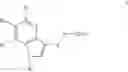
A particularly preferred compound of formula I is the compound of formula
in free form or in pharmaceutically acceptable salt form. This compound has the chemical name of 3-(5-methoxy-1H-indol-3-yl-methylene)-N-pentylcarbazimidamide, and is also known as tegaserod. It is disclosed as being a 5-HT4 receptor partial agonist. It may also exist in form of tautomers
which are included in the present invention. A preferred salt form is the hydrogen maleate. A preferred crystalline form is as described in WO 2005/014544.
All the 5-HT4 agonists mentioned above are well known from the literature. This includes their manufacture. For example, tegaserod is prepared as described e.g. in U.S. Pat. No. 5,510,353.
The 5-HT4 agonists (hereinafter referred to as the Agents of the Invention) may be used in the form of an isomer or of a mixture of isomers where appropriate, typically as optical isomers such as enantiomers or diastereoisomers or geometric isomers, typically cis-trans isomers. The optical isomers are obtained in the form of the pure antipodes and/or as racemates.
The Agents of the Invention can also be used in any salt form or in the form of their hydrates or include other solvents used for their crystallisation.
The Agents of the Invention are preferably used in the form of pharmaceutical compositions that contain a therapeutically effective amount of active ingredient optionally together with or in admixture with inorganic or organic, solid or liquid, pharmaceutically acceptable carriers which are suitable for administration.
The pharmaceutical compositions may be, for example, compositions for enteral, such as oral, rectal, aerosol inhalation or nasal administration, compositions for parenteral, such as intravenous or subcutaneous administration, or compositions for transdermal administration (e.g. passive or iontophoretic).
Preferably, the pharmaceutical compositions are adapted to oral or parenteral (especially intravenous, intra-arterial or transdermal) administration. Intravenous and oral, first and foremost intravenous, administration is considered to be of particular importance.
The particular mode of administration and the dosage may be selected by the attending physician taking into account the particulars of the patient, especially age, weight, life style, activity level. Most preferably, however, the Agents of the Invention is administered orally.
The dosage of the Agents of the Invention may depend on various factors, such as effectiveness and duration of action of the active ingredient, mode of administration, warm-blooded species, and/or sex, age, weight and individual condition of the warm-blooded animal.
The dose mentioned above may be administered as a single dose or in several partial doses—may be repeated, for example once, twice or trice daily. In other words, the pharmaceutical compositions may be administered in regimens ranging from continuous daily therapy to intermittent cyclical therapy.
Preferably, tegaserod hydrogen maleate, one of the Agents of the Invention, is administered in doses which are in the same order of magnitude as those used for the treatment of Irritable Bowel Syndrome diarrhea predominant (IBS-C), e.g. 6 mg trice daily.
The following Example illustrates the invention described hereinbefore.
EXAMPLE
A Randomized, Double-Blind, Placebo-Controlled Study to Evaluate the Effect of Tegaserod on Delayed Gastric Emptying Associated with Omeprazole in Healthy Male Volunteers
Methodology: This is a single center, double-blind, randomized, parallel group trial using a placebo control or tegaserod 6 mg t.i.d. in combination with omeprazole 20 mg b.i.d. Gastric emptying is assessed using a standardized method that has been previously validated and found to be sensitive and specific. After an overnight fast, the subjects are asked to ingest a standardized 99Tc radiolabeled meal (250 ml EggBeater, the equivalent of two eggs, two slices of white bread, 30 cc of strawberry jam and 120 ml of water). The level of radioactivity in gastric contents is measured by external scintigraphy immediately following completion of the meal and then at 60, 120 and 240 minutes after the end of the meal.
Number of subjects: 40 healthy male volunteers (20 per group)
Investigational drug: Tegaserod 6 mg tablets (supplied by Novartis Canada, but are normal 6 mg Zelnorm tablet obtainable as prescription) for oral administration. Each dose consists of a tablet to be taken with a glass of water within 15-30 minutes before mealtime three times daily. Open label component: omeprazole 20 mg tablets (purchased in local pharmacy) to be taken with morning and evening doses of tegaserod or placebo.
Reference therapy: Matching tegaserod 6 mg placebo tablets for oral administration. Each dose consisted of a tablet to be taken with a glass of water within 15-30 minutes before mealtime three times a day. Open label component: omeprazole 20 mg tablets to be taken with morning and evening doses of tegaserod or placebo.
Duration of treatment: Subjects are expected to take their study drugs for 14 consecutive days.
Criteria for Evaluation:
Efficacy: The primary efficacy parameter is time to half emptying (T1/2) of gastric contents. The secondary efficacy endpoints were the calculated lag phase, and percent of gastric contents remaining in the stomach at 60, 120 and 240 minutes after ingestion of a standard meal.
Statistical methods: Paired T-test and Sign Test are used to compare changes in gastric emptying parameters from baseline in two treatment groups.
Results:
Efficacy: Monotherapy with omeprazole 20 mg b.i.d. for 14 days delayed gastric emptying as measured by T1/2 (p<0.003) and by percent of fond remaining in the stomach at 60 minutes (p<0.002) and 120 minutes post-test meal (p<0.04, all by paired T-test). When omeprazole is administered in combination with tegaserod 6 mg t.i.d., gastric emptying at all the studied time points is not statistically different from the respective baseline values.
Conclusions: Addition of tegaserod to omeprazole prevented development of delayed gastric emptying caused by omeprazole monotherapy in healthy male volunteers.
Claims
1-5. (canceled)
6. A method of preventing or treating PPI-induced delayed gastric emptying, comprising administering to a subject in need thereof an effective amount of a 5-HT4 agonist.
7. The method of claim 6, wherein the PPI is selected from omeprazole, esomeprazole, tenatoprazole, (R)-tenatoprazole, (S)-tenatoprazole, rabeprazole, (R)-rabeprazole, (S)-rabeprazole, lanzoprazole, (R)-lanzoprazole, (S)-lanzoprazole, pantoprazole, (R)-pantoprazole and (S)-pantoprazole and pharmaceutically acceptable salts thereof.
8. The method of claim 6, wherein the 5-HT4 agonist is tegaserod, zacopride, pruclopride, mosapride, norcisapride or pharmaceutically acceptable salts thereof.
9. The method of claim 8, wherein the 5-HT4 agonist is tegaserod hydrogen maleate.
Images & Drawings included:


Sources:
- United States Patent and Trademark Office - verify current appl. status at the USPTO↗
Similar patent applications:
- » 20100174095
Organic compound, semiconductor film electrode employing the organic compound, photoelectric conversion element employing the organic compound, and photoelectrochemical solar cell employing the organic compound - » 20190204230
Organic compound analyzer, organic compound analysis method, and program for organic compound analyzer - » 20150025264
Method for producing hydrogen or heavy hydrogens, method for producing hydrogenated (protiated, deuterated or tritiated) organic compound, method for hydrogenating (protiating, deuterating or tritiating) organic compound, method for dehalogenating organic compound having halogen, and ball for use in mechanochemical reaction - » 20220407012
ORGANIC COMPOUND, ORGANIC LIGHT-EMITTING DIODE INCLUDING ORGANIC COMPOUND, AND DISPLAY DEVICE INCLUDING ORGANIC LIGHT-EMITTING DIODE - » 20220407011
ORGANIC COMPOUND, ORGANIC LIGHT-EMITTING DIODE INCLUDING ORGANIC COMPOUND, AND DISPLAY DEVICE INCLUDING ORGANIC LIGHT-EMITTING DIODE - » 20210020847
Organic compound, organic light emitting diode and organic light emitting device including the organic compound - » 20210070740
Organic compound, organic light emitting diode and organic light emitting device including the organic compound - » 20060231832
Liquid crystalline organic compound, organic semiconductor structure, organic semiconductor device, and process for producing liquid crystalline organic compound - » 20210036237
ORGANIC COMPOUND, ORGANIC LIGHT EMITTING DIODE AND ORGANIC LIGHT EMITTING DEVICE HAVING THE ORGANIC COMPOUND - » 20210119147
Organic compound, organic light emitting diode and organic light emitting deice including the organic compound
Recent applications in this class:
- » 20250170099 2025-05-29
TREATMENT OF POSTNATAL DEPRESSION - » 20250170098 2025-05-29
MOLECULAR JACKHAMMER FOR MECHANICAL DESTRUCTION OF CELLULAR STRUCTURE - » 20250161269 2025-05-22
COMPOSITIONS AND METHODS FOR PERIPHERAL TARGETING OF MELATONIN RECEPTOR AGONIST - » 20250161268 2025-05-22
FORMULATIONS OF PSILOCIN THAT HAVE ENHANCED STABILITY - » 20250161267 2025-05-22
FORMULATIONS OF PSILOCIN THAT HAVE ENHANCED STABILITY - » 20250144074 2025-05-08
SUSTAINED RELEASE MELATONIN COMPOSITIONS - » 20250134862 2025-05-01
PROCESS FOR TREATING LIVESTOCK EXPOSED TO TOXIC FORAGE USING MELATONIN COMPOSITIONS - » 20250134861 2025-05-01
COMPOSITIONS COMPRISING 5-METHOXY-N,N-DIMETHYLTRYPTAMINE (5-MEO-DMT) FOR USE IN TREATING MENTAL DISORDERS - » 20250120949 2025-04-17
USE OF SPLA2 INHIBITORS TO TREAT ENVENOMATION BY SNAKES AND WASPS - » 20250114328 2025-04-10
VAPORIZABLE COMPOSITIONS OF 5-MeO-DMT AND THEIR USE