Container decoy
US20080163537A1
2008-07-10
11/651,215
2007-01-10
✅ Patent granted
US 7,441,366 B2
2008-10-28
-
-
Darren W Ark
2027-01-10
Abstract:
A container decoy apparatus (10) for storing items and attracting wild game.
The container decoy apparatus (10) includes at least two portions, when closed form a three-dimensional animal shape.
The portions are combined by a hinge means (14) for opening and closing the container decoy apparatus (10).
The portions are controllably coupled (13), when coupled the container decoy (10) becomes a decoy for attracting wild game and is also used for storing items.
Inventors:
- Richard D. Van Houten 1 🇺🇸 Costa Mesa, CA, United States
- Gary J. Van Houten 1 🇺🇸 Nampa, ID, United States
- Richard D. Van Houten, II 1 🇺🇸 Costa Mesa, CA, United States
Interested in similar patents?
Get notified when new applications in this technology area are published.
Classification:
B65D81/365 » CPC main
Containers, packaging elements, or packages, for contents presenting particular transport or storage problems, or adapted to be used for non-packaging purposes after removal of contents adapted to be used for non-packaging purposes after removal of contents Containers, or parts thereof, simulating or being incorporated into other items, e.g. puppet, animal, vehicle, building, dumb bells
B65D85/00 IPC
Containers, packaging elements or packages, specially adapted for particular articles or materials
A01M31/06 » CPC further
Hunting appliances Decoys
Description
BACKGROUND
1. Field of Invention
This invention relates to storage containers and more particularly to waterfowl storage containers for storing of waterfowl gear.
2. Description of Prior Art
Waterfowl containers have been designed to hold various items that a person would need on a waterfowl hunting trip. Most waterfowl containers are cube or cylinder shaped. Examples of such designs are described in the 2006 Cabela's Waterfowl Catalog page 78 “Camo Marine Dry Boxes”, page 92 and page 93. Respectively, they describe means for storing items. A major drawback for all of the proposed designs is when you have limited space or cover and have to hide the waterfowl container outside your blind. Normally you conceal the waterfowl container with a camouflage material or natural foliage. The reason for the concealment is so the targeted waterfowl does not see the container and is scared away.
OBJECTS AND ADVANTAGES
In general, the object of this invention is to provide a container in the shape of a waterfowl for storing items; and to be used as a decoy for attracting the targeted waterfowl.
DESCRIPTION OF THE DRAWINGS
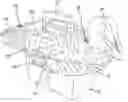
FIG. 1 is an elevated front ¾ view of the container decoy.
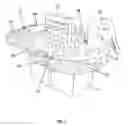
FIG. 2 is an elevated rear ¾ view of the container decoy.
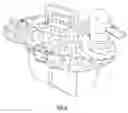
FIG. 3 is an elevated front ¾ view of the open container decoy and interior tray.
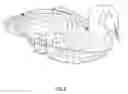
FIG. 4 is an elevated front ¾ view of a modified container decoy.
FIG. 5 is an elevated front ¾ view of another modified container decoy.
FIG. 6 is an elevated front ¾ view of yet another modified container decoy.
REFERENCE NUMERALS IN DRAWINGS
| 10 container decoy apparatus | 11 upper portion | |
| 12 lower portion | 13 coupling device | |
| 14 hinge means | 15 handle | |
| 16 rear eyelet | 17 additional container shape | |
| 18 asymmetrical edge | 19 safety eyelet | |
| 20 rear storage section | 21 center storage section | |
| 22 front storage section | 23 storage tray | |
| 24 contoured side of tray | 25 recess area for handle | |
| 26 extended upper tray ends | 27 head | |
| 28 receiver for moveable head | 29 rear storage divider | |
| 30 front storage divider | 31 storage tray handle | |
| 32 front eyelet | ||
SUMMARY OF THE INVENTION
Among the many objectives of this invention is the provision of a storage container.
A further objective of this invention is the provision of a hunting decoy.
Yet a further objective of this invention is the provision of a container that is used to attract waterfowl.
A still further objective of this invention is the provision of a hunting decoy and its contents is easily transported.
Another objective of this invention is the provision of a hunting decoy that is easily retrieved.
These and other objectives of the invention (which other objectives become clear by consideration of the specifications, claims and drawings as a whole) are met by providing a container, that is a hunting decoy.
DESCRIPTION OF THE PREFERRED EMBODIMENT
With a container decoy of this invention, a three-dimensional animal shape can support a stationary head or moveable head assembly. Within a body portion, a top or an exterior part there of may contain a stationary head or a receiver for a moveable head assembly. More particularly, the container decoy has at least two concave body portions. Thus the interior of the concave body portions is to be used for storing items. The exterior of the body portions contain an appropriate decoration to mimic the targeted animal, such as a duck or goose.
The body portions are adapted to work together by a hinge means, to open and close the container decoy. One preferred form of the hinge means is to have extruding sections on the body portions that interlock to form the hinge.
Another preferred form of the hinge means is to have extruding sections on the body portions that are connected using a rod to form the hinge.
The portions are controllably coupled using a molded coupling device.
Another preferred form of controllably coupling the body portions is to use a molded piece in conjunction with a shaped rod for coupling.
Clearly the head portion and the body portions are colored appropriately to resemble any waterfowl being sought or hunted. Furthermore, the appropriate size and shape of body portions and head can be made to resemble any fowl. It is clear that the concave structure of the body portions and the movability of the head combine to provide great flexibility in the container decoy use or permit a variety of applications.
These container decoys may be formed from any suitable material. The main requirement for material is that it is semi-rigid, receives appropriate decoy colors, and provides an appropriate decoy shape. Thus, the container decoys can be made from wood, synthetic type resins or plastic type materials, or combinations thereof. The resins or plastics may be solid or foamed.
Referring now to FIG. 1, a container decoy 10 may be used alone or in combination with other decoys. The container decoy 10 has at least two portions 11 and 12 to form the three-dimensional animal shape. On the end of one portion 11 can be a stationary or movable head 27. In the center of portion 11 is a handle means 15 for ease of transportation. Adjacent to the handle means 15 are a rear eyelet 16 and a front eyelet 32 for attaching a strap for ease of transportation. In portion 11 there is a recessed area 25 for concealment of the handle means 15 in the down position. The lower circumference of portion 11 has an asymmetrical edge 18 slightly larger than the top circumference of portion 12 so the portions join together to form the three-dimensional animal shape 10. Portion 12 has an additional container shape 17 which is colored to match suited natural foliage.
Portion 12 has a molded and colored coupling mechanism 13 to secure portion 11 to portion 12. Portion 11 and portion 12 have a safety eyelet 19 to be used in conjunction with a locking device to discourage someone from gaining access to the contents of the container decoy 10.
Adding FIG. 2, to the discussion, portion 11 and portion 12 have a hinge means 14 for opening and closing the container decoy 10.
Adding FIG. 3, to the consideration, it becomes clear that the top circumference of portion 12 fits into the bottom asymmetrical circumference 18 of portion 11. Portion 11 shows a receiver 28 for a moveable head 27. Portion 12 shows a rear storage section 20, a center storage section 21 and a front storage section 22. A storage tray 23 fits into the center storage section 21. The storage tray 23 is lifted by using a handle means 31. The storage tray 23 has contoured sides 24 to fit the inner shape of the center storage section 21. The storage tray 23 shows extended upper tray ends 26 that rest on a rear storage divider 29 and front storage divider 30.
Although an exemplary embodiment of the invention has been described in detail above, those skilled in the art will readily appreciate that modifications and variations are possible without materially departing from the novel teachings and advantages of this invention. Accordingly, all such modifications and variations are intended to be included within the scope of this invention as defined in the following claims.
Claims
1. A container decoy, comprising:
a three-dimensional concave bird shape with a head and tail opposed to each other resembling a target bird, in at least two similar size portions, each portion can be used for storing items, and when closed used as a decoy;
a handle means that is positioned on top of the upper portion between the head and tail, to more easily transport and retrieve the container decoy and the items inside:
a front eyelet, positioned on top of the upper portion between the head and the handle means, a rear eyelet, positioned on top of the upper portion between the tail and the handle means, for attaching a strap to more easily transport and retrieve the container decoy and the items inside;
a tray, whose sides conform to the asymetrical inner sides of the upper part of the bottom portion, for an additional storage area;
a hinge means to open and close said portions of said three-dimensional concave bird shape;
a means for controllably coupling said portions of said three-dimensional concave bird shape, whereby said three-dimensional concave bird shape will open and close securely for storing items and attracting wild game.
Images & Drawings included:


Sources:
- United States Patent and Trademark Office - verify current appl. status at the USPTO↗
Similar patent applications:
- » 20060263422
Pharmaceutical composition containing decoy and use of the same - » 20090105183
Pharmaceutical composition containing decoy and method of using the same - » 20070142314
Decoy-containing pharmaceutical compositions and method of using the same - » 20100331395
Decoy-containing pharmaceutical compositions and method of using the same - » 20240347481
INTEGRATED CIRCUIT CONTAINING A DECOY STRUCTURE - » 15415179
Self contained adjustable decoy - » 20060057723
Transgenic plants containing molecular decoys that alter protein content therein - » 20140315825
Anti-cancer compositions containing WNT decoy receptor - » 20170275340
Anti-cancer compositions containing Wnt decoy receptor - » 20190027447
Integrated circuit containing a decoy structure formed by an electrically insulated silicide sector
Recent applications in this class:
- » 20250115408 2025-04-10
PRODUCT FOR HOLDING ITEMS AND METHOD FOR MAKING SAME - » 20240425264 2024-12-26
CONVERTIBLE DECOY BAG AND HUNTING BLIND - » 20230406599 2023-12-21
Gag gift tampon cork applicator - » 20230365318 2023-11-16
TOY CAP - » 20230312218 2023-10-05
PACKAGING BOX - » 20230045068 2023-02-09
Plush toy parcel suitable for shipping - » 20220315313 2022-10-06
PRESENTATION CONTAINER - » 20220073259 2022-03-10
MULTI-PURPOSE CONTAINER - » 20220073258 2022-03-10
PRESENTATION CONTAINER - » 20220033166 2022-02-03
Presentation Trophy Cake Cover and System