Damage tolerant microstructure for lamellar alloys
US20080163958A1
2008-07-10
11/200,397
2005-08-08
✅ Patent granted
US 7,479,194 B2
2009-01-20
-
-
Roy King | Lois L. Zheng
2026-06-10
Abstract:
A damage tolerant microstructure for a lamellar alloy, such as a lamellar γTiAl alloy, is provided in accordance with the present invention. The alloy comprises a matrix and a plurality of grains or lamellar colonies, a portion of which exhibit a nonplanar morphology within said matrix. Each of the lamellar colonies contains a multitude of lamella with irregularly repeating order. The γTiAl platelets have a triangular (octahedral) unit cell and stack with γ twins. The α2Ti3Al platelets are irregularly interspersed. The unit cell for α2Ti3Al is hexagonal. Each of the layers has a curved, nonplanar structure for resisting crack formation and growth.
Assignee:
- UNITED TECHNOLOGIES CORPORATION 4,046 🇺🇸 Hartford, CT, United States
Interested in similar patents?
Get notified when new applications in this technology area are published.
Classification:
C22C30/00 » CPC further
Alloys containing less than 50% by weight of each constituent
C22F1/183 » CPC further
Changing the physical structure of non-ferrous metals or alloys by heat treatment or by hot or cold working of other metals or alloys based thereon; High-melting or refractory metals or alloys based thereon of titanium or alloys based thereon
C22C14/00 » CPC main
Alloys based on titanium
C22F1/18 IPC
Changing the physical structure of non-ferrous metals or alloys by heat treatment or by hot or cold working of other metals or alloys based thereon High-melting or refractory metals or alloys based thereon
Description
CROSS-REFERENCE TO RELATED APPLICATION(S)
This application is a continuation application of U.S. patent application Ser. No. 10/378,171, filed Mar. 3, 2003, entitled DAMAGE TOLERANT MICROSTRUCTURE FOR LAMELLAR ALLOYS, By Daniel P. DeLuca.
STATEMENT OF GOVERNMENT INTEREST
The Government of the United States of America may have rights in the present invention pursuant to Contract No. F33615-94-C-2422 awarded by the Department of the Air Force.
BACKGROUND OF THE INVENTION
The present invention relates to a damage tolerant microstructure for lamellar alloys and to a method of producing same.
The current microstructure of lamellar γTiAl alloys is composed of an equiaxed (prior β) grain structure with planar lamella as shown in FIG. 1. The grains or lamellar colonies themselves exhibit a lamellar stack of TiAl (γ) and Ti3Al (α2) platelets such as that shown schematically in FIG. 2. Interlaminar or intralaminar shear between the layers of the lamellar stack has been identified in fatigue and fracture tests as one of the principal mechanisms leading to monotonic and cyclic crack formation, such as that shown in FIG. 3, in gamma TiAl alloys possessing a lamellar microstructure. High and low cycle fatigue fractures and near threshold small crack growth test fractures show interlaminar shear at their failure origins below 1200 degrees Fahrenheit.
SUMMARY OF THE INVENTION
It is an object of the present invention to provide a damage tolerant microstructure for lamellar alloys such as lamellar TiAl alloys.
It is a further object of the present invention to provide a method for providing a damage tolerant microstructure for lamellar alloys such as lamellar γTiAl alloys.
The foregoing objects are attained by the present invention.
In accordance with the present invention, a damage tolerant microstructure for lamellar γTiAl alloys broadly comprises a matrix and a plurality of lamellar colonies within said microstructure having a nonplanar morphology.
In accordance with the present invention, a method for forming a damage tolerant microstructure for lamellar alloys broadly comprises the steps of casting the alloy and extruding the cast alloy at a temperature in the range of 1290 to 1315 degrees Centigrade at an extrusion ratio in the range of from 90:1 to 100:1.
Other details of the damage tolerant microstructure for lamellar alloys of the present invention, as well as other objects and advantages attendant thereto, are set forth in the following detailed description and the accompanying drawings wherein like reference numerals depict like elements.
BRIEF DESCRIPTION OF THE DRAWINGS
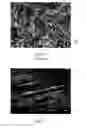
FIG. 1 is a photomicrograph showing the microstructure of a conventional fully lamellar γTiAl alloy having all planar lamella;
FIG. 2 is a schematic representation of a planar lamellar grain structure;
FIG. 3 is a photomicrograph showing monotonic and cyclic crack formation in a γTiAl alloy;
FIGS. 4-6 are photomicrographs of a γTiAl alloy having a microstructure in accordance with the present invention.
DETAILED DESCRIPTION OF THE PREFERRED EMBODIMENT(S)
Lamellar γTiAl alloys in accordance with the present invention have a microstructure exhibiting a plurality of grains referred to as lamellar colonies having a nonplanar morphology within the matrix. The alloys may also have planar grains within the matrix as well as the lamellar colonies having the nonplanar morphology. The lamellar colonies having a nonplanar morphology typically include many stacked layers, each with a curved or non-planar structure. In a γTiAl alloy, some of these layers consist of TiAl (γ) and other layers consist of Ti3Al (α2). Each of the lamellar colonies contains a multitude of lamella with irregularly repeating order. The γTiAl platelets have a triangular (octahedral) unit cell and stack with γ twins. The α2Ti3Al platelets are irregularly interspersed. The unit cell for α2Ti3Al is hexagonal. By forming layers with a curved or non-planar structure, the grains are better able to resist crack formation caused by interlaminar or intralaminar shear.
In a preferred embodiment of the present invention, the lamellar colonies having a nonplanar morphology comprise at least 10% of the lamellar colonies within the matrix and are located along outer edges of the matrix. By having the lamellar colonies with the nonplanar morphology at the outer edges, the alloy becomes more resistant to fatigue damage. Further, in a preferred embodiment of the present invention, the lamellar colonies having the nonplanar morphology have a fine structure with average grain sizes being in the range of 0.8 to 1.09 microns. Fine grain structures are desirable because they are more resistant to the formation of deleterious cracks which lead to failure of the alloy.
Lamellar alloys, such as γ TiAl alloys, having the advantageous nonplanar morphology may be formed by vacuum arc melting the alloy constituents, casting the alloy into a bar or strip stock, and extruding the cast alloy at a temperature in the range of from 1290 degrees Centigrade to 1315 degrees Centigrade and at an extrusion ratio in the range of 90:1 to 100:1. Any suitable extrusion device known in the art may be used to perform the extrusion step.
Referring now to FIGS. 4-6, a damage tolerant microstructure for a lamellar alloy in accordance with the present invention is shown. The alloy is a lamellar γTiAl alloy having a composition consisting of 46 wt % Al, 5-10 wt % Nb, 0.2 wt % boron, 0.2 wt % carbon, and the balance titanium and unavoidable impurities which has been extruded at a temperature of 1310 degrees Centigrade and an extrusion ratio of 100:1. The α transus temperature of this alloy is 1310 degrees Centigrade.
As can be seen from the foregoing discussion, lamellar alloys having a microstructure in accordance with the present invention, particularly γ TiAl alloys, are advantageous in that they will exhibit improved fatigue resistance and a higher threshold for small crack fracture resistance.
It is apparent that there has been provided in accordance with the present invention a damage tolerant microstructure for lamellar alloys which fully satisfies the objects, means and advantages set forth hereinbefore. While the present invention has been described in the context of specific embodiments thereof, other alternatives, modifications, and variations will become apparent to those skilled in the art having read the foregoing description. Accordingly, it is intended to embrace those alternatives, modifications, and variations which fall within the broad scope of the appended claims.
Claims
1. A lamellar γTiAl alloy having a microstructure with a plurality of lamellar colonies having a nonplanar morphology.
2. A lamellar γTiAl alloy according to claim 1, wherein ach of said lamellar colonies exhibit a nonplanar morphology comprised of stacked nonplanar γTiAl and α2Ti3Al lamella.
3. (canceled)
4. A lamellar γTiAl alloy according to claim 1, further comprising a matrix and wherein said plurality of nonplanar lamellar colonies having said nonplanar morphology comprise at least 10% of the grains within said matrix.
5. (canceled)
6. A lamellar γTiAl alloy according to claim 1, wherein each of said plurality of grains having said nonplanar morphology has a size in the range of 0.8 to 1.09 microns.
7-8. (canceled)
9. A lamellar γTiAl alloy according to claim 1, wherein said plurality of nonplanar lamellar colonies include a plurality of stacked layers with each stacked layer having a curved structure.
10. A lamellar γTiAl alloy according to claim 1, wherein each of said lamellar colonies contains a multitude of lamella with irregularly repeating order.
11. A lamellar γTiAl alloy according to claim 1, wherein the γTiAl platelets have a triangular unit cell and stack with γ twins and α2Ti3Al platelets are irregular interspersed and have a hexagonal unit cell.
12. A lamellar γTiAl alloy according to claim 1, further comprising a matrix and said lamellar colonies with said nonplanar morphology being located along outer edges of the matrix.
13. A lamellar γTiAl alloy according to claim 1, wherein said alloy has a composition consisting of 46 wt % Al, 5-10 wt % Nb, 0.2 wt % boron, 0.2 wt % carbon, and the balance titanium and unavoidable impurities.
Images & Drawings included:



Sources:
- United States Patent and Trademark Office - verify current appl. status at the USPTO↗
Similar patent applications:
Recent applications in this class:
- » 20250257426 2025-08-14
TITANIUM ALLOYS FOR ADDITIVE MANUFACTURING - » 20250243563 2025-07-31
WIRES OF NICKEL-TITANIUM ALLOY AND METHODS OF FORMING THE SAME - » 20250243562 2025-07-31
TITANIUM ALLOY SHEET AND METHOD FOR PRODUCING SAME - » 20250223671 2025-07-10
TITANIUM ALLOY - » 20250223670 2025-07-10
ROLLED MATERIAL - » 20250188571 2025-06-12
HYDROGEN STORAGE ALLOYS - » 20250163545 2025-05-22
TITANIUM ALLOY - » 20250129454 2025-04-24
HIGH-STRENGTH, HIGH-FORMABILITY TITANIUM ALLOY USING MOLYBDENUM AND FERROCHROME AND METHOD FOR MANUFACTURING SAME - » 20250129453 2025-04-24
A-TYPE TITANIUM ALLOY AND ITS PREPARATION METHOD - » 20250129452 2025-04-24
TITANIUM-BASED ALLOY COMPOSITIONS, ADDITIVELY MANUFACTURED COMPONENTS THAT INCLUDE THE COMPOSITIONS, ADDITIVE MANUFACTURING SYSTEMS THAT UTILIZE THE COMPOSITIONS, AND METHODS OF ADDITIVELY MANUFACTURING ADDITIVELY MANUFACTURED COMPONENTS
Recent applications for this Assignee:
- » 20210131352 2021-05-06
Methods and systems for a modulated bleed valve - » 20180375008 2018-12-27
Method of forming electrodes on electrocaloric film - » 20180348087 2018-12-06
Parametric trending architecture concept and design - » 20180238268 2018-08-23
Composite wear pad for exhaust nozzle - » 20180159366 2018-06-07
Intra-microgrid communication architecture - » 20180066532 2018-03-08
Flow directing cover for engine component - » 20180038231 2018-02-08
Cooling hole with enhanced flow attachment - » 20180036918 2018-02-08
Media containment for iso-grid structure forming - » 20180003082 2018-01-04
Multiple reservoir lubrication system - » 20170343011 2017-11-30
System for an improved stator assembly