Ceramic material and cutting tools made thereof
US20080167174A1
2008-07-10
12/000,874
2007-12-18
✅ Patent granted
US 7,629,281 B2
2009-12-08
-
-
Karl E Group
2028-07-27
Abstract:
The present invention relates to a ceramic material consisting of β-sialon (Si6-zAlzOzN), polytype 12H, an intergranular amorphous or partly crystalline phase, and containing yttrium with a z-value of from about 0.7 to less than about 1.5. The ceramic material is useful as cutting tool insert for machining of heat resistant super alloys, with good notch wear, acceptable flank wear and sufficient toughness.
Assignee:
- Sandvik Intellectual Property AB 898 🇸🇪 Sandviken, Sweden
Interested in similar patents?
Get notified when new applications in this technology area are published.
Classification:
C04B41/5031 » CPC further
After-treatment of mortars, concrete, artificial stone or ceramics; Treatment of natural stone; Coating or impregnating e.g. injection in masonry, partial coating of green or fired ceramics, organic coating compositions for adhering together two concrete elements, with inorganic materials with ceramic materials Alumina
C04B41/87 » CPC further
After-treatment of mortars, concrete, artificial stone or ceramics; Treatment of natural stone of only ceramics; Coating or impregnation with inorganic materials Ceramics
C04B2235/3217 » CPC further
Aspects relating to ceramic starting mixtures or sintered ceramic products; Composition of constituents of the starting material or of secondary phases of the final product; Constituents and secondary phases not being of a fibrous nature; Metal oxides, mixed metal oxides, or oxide-forming salts thereof, e.g. carbonates, nitrates, (oxy)hydroxides, chlorides Aluminum oxide or oxide forming salts thereof, e.g. bauxite, alpha-alumina
C04B2235/3225 » CPC further
Aspects relating to ceramic starting mixtures or sintered ceramic products; Composition of constituents of the starting material or of secondary phases of the final product; Constituents and secondary phases not being of a fibrous nature; Metal oxides, mixed metal oxides, or oxide-forming salts thereof, e.g. carbonates, nitrates, (oxy)hydroxides, chlorides; Rare earth oxide or oxide forming salts thereof, e.g. scandium oxide Yttrium oxide or oxide-forming salts thereof
C04B2235/3873 » CPC further
Aspects relating to ceramic starting mixtures or sintered ceramic products; Composition of constituents of the starting material or of secondary phases of the final product; Constituents and secondary phases not being of a fibrous nature; Non-oxide ceramic constituents or additives; Nitrides, e.g. oxynitrides, carbonitrides, oxycarbonitrides, lithium nitride, magnesium nitride Silicon nitrides, e.g. silicon carbonitride, silicon oxynitride
C04B2235/3886 » CPC further
Aspects relating to ceramic starting mixtures or sintered ceramic products; Composition of constituents of the starting material or of secondary phases of the final product; Constituents and secondary phases not being of a fibrous nature; Non-oxide ceramic constituents or additives; Nitrides, e.g. oxynitrides, carbonitrides, oxycarbonitrides, lithium nitride, magnesium nitride Refractory metal nitrides, e.g. vanadium nitride, tungsten nitride
C04B2235/766 » CPC further
Aspects relating to ceramic starting mixtures or sintered ceramic products; Aspects relating to sintered or melt-casted ceramic products; Physical characteristics; Crystal structural characteristics, e.g. symmetry Trigonal symmetry, e.g. alpha-SiN or alpha-Sialon
C04B2235/767 » CPC further
Aspects relating to ceramic starting mixtures or sintered ceramic products; Aspects relating to sintered or melt-casted ceramic products; Physical characteristics; Crystal structural characteristics, e.g. symmetry Hexagonal symmetry, e.g. beta-SiN, beta-Sialon, alpha-SiC or hexa-ferrites
C04B2235/79 » CPC further
Aspects relating to ceramic starting mixtures or sintered ceramic products; Aspects relating to sintered or melt-casted ceramic products; Physical characteristics Non-stoichiometric products, e.g. perovskites (ABO) with an A/B-ratio other than 1
C04B2235/80 » CPC further
Aspects relating to ceramic starting mixtures or sintered ceramic products; Aspects relating to sintered or melt-casted ceramic products Phases present in the sintered or melt-cast ceramic products other than the main phase
C04B2235/85 » CPC further
Aspects relating to ceramic starting mixtures or sintered ceramic products; Aspects relating to sintered or melt-casted ceramic products; Phases present in the sintered or melt-cast ceramic products other than the main phase Intergranular or grain boundary phases
C04B41/5061 » CPC further
After-treatment of mortars, concrete, artificial stone or ceramics; Treatment of natural stone; Coating or impregnating e.g. injection in masonry, partial coating of green or fired ceramics, organic coating compositions for adhering together two concrete elements, with inorganic materials non-oxide ceramics; Carbides Titanium carbide
C04B41/5068 » CPC further
After-treatment of mortars, concrete, artificial stone or ceramics; Treatment of natural stone; Coating or impregnating e.g. injection in masonry, partial coating of green or fired ceramics, organic coating compositions for adhering together two concrete elements, with inorganic materials non-oxide ceramics; Borides, Nitrides or Silicides Titanium nitride
C04B41/5063 » CPC further
After-treatment of mortars, concrete, artificial stone or ceramics; Treatment of natural stone; Coating or impregnating e.g. injection in masonry, partial coating of green or fired ceramics, organic coating compositions for adhering together two concrete elements, with inorganic materials non-oxide ceramics; Borides, Nitrides or Silicides Aluminium nitride
C04B41/009 » CPC further
After-treatment of mortars, concrete, artificial stone or ceramics; Treatment of natural stone characterised by the material treated
C04B35/597 » CPC main
Shaped ceramic products characterised by their composition ; Ceramics compositions ; Processing powders of inorganic compounds preparatory to the manufacturing of ceramic products based on non-oxide ceramics based on borides, nitrides, or silicides based on silicon oxynitride, e.g. SIALONS
Description
BACKGROUND OF THE INVENTION
The present invention relates to a ceramic silicon nitride based material suitable for machining of nickel- and cobalt-based materials, sometimes designated as heat resistant super alloys (HRSA) with good notch wear, acceptable flank wear and sufficient toughness.
Ceramic materials for cutting tool applications are, thanks to their high hot hardness, suitable for machining work-piece materials of high hardness, high tensile strength at elevated temperatures and low heat-diffusivity, and particularly so for self-hardening materials such as, e.g., some types of nickel- and cobalt-based materials, sometimes designated as heat resistant super alloys (HRSA).
Many silicon nitride based materials for cutting tools are manufactured using aluminum oxide (Al2O3) as a sintering aid. Aluminum and oxygen have the ability to replace silicon and nitrogen respectively in the crystal structure of silicon nitride, thereby creating a so-called sialon ceramic, Si—Al—O—N, sometimes additionally stabilized by a cation Men+, where Me can be chosen from a large number of (rare-earth) metals and lanthanides of suitable ionic radius (r<1.0 Å), such as Y, Yb, Dy, Lu, Li, Ca, Mg, Sc etc.
Many sialon phases have been detected and characterized, see e.g., Izhevskiy et al., “Progress in SiAlON ceramics”, J. Eur. Ceram. Soc. 20, 2275-2295 (2000), but the predominant phases used in cutting tool materials remain α-sialon phase, RxSi12−(m+n)Al(m+n)OnN(16−n) (1.0 less than about m less than about 2.7; n less than about 1.2), where R is one of the aforementioned metals or lanthanides with ionic radius less than about 1.0 Å, and β-sialon: Si6-zAlzOzN8-z were z is greater than zero and less than about 4.2.
During sintering, the raw materials used, usually a mixture of silicon nitride, alumina and AlN or some sialon “polyphase” (or “polytype”), such as 12H, 21R etc., together with an oxide of the metal or lanthanide, form a transitionary melt from which the α- and β-sialon phases, and possibly other phases such as (if Y is used as the metal ion R mentioned above) YAG, melilite, B-phase, 12H etc. crystallize. After sintering, an intergranular phase between the crystalline grains remains. The amount of intergranular phase produced is influenced by the composition of raw materials used, as well as the sintering conditions.
Besides stabilizing the α-sialon phase, the metal ion also functions as a catalyst for the formation of sialon crystals during sintering, and aids the formation of elongated sialon grains, usually in the beta phase, but elongated grains of α-sialon have also been produced. Fang-Fang et al, “Nucleation and Growth of the Elongated α′-SiAlON”, J. Eur. Ceram. Soc. 17(13) 1631-1638 (1997). It is also clear, that the choice of metal ion used affects the properties of the amorphous phase. Fang-Fang X, Shu-Lin W, Nordberg L-O and Ekström T, “Nucleation and Growth of the Elongated α′-SiAlON”, J. Eur. Ceram. Soc. 17(13) 1631-1638 (1997); Sun et al., “Microstructural Design of Silicon Nitride with Improved Fracture Toughness II: Effects of Yttria and Alumina Additives”, J. Am. Ceram. Soc. 81(11) 2831-2840 (1998); Hong et al., “The effect of additives on sintering behavior and strength retention in silicon nitride with RE-disilicate”, J. Eur. Ceram. Soc. 22, 527-534 (2002); Becher et al., “Compositional Effects on the Properties of Si—Al—RE-Based Oxynitride Glasses (RE=La, Nd, Gd, Y or Lu)”, J. Am. Ceram. Soc. 85(4), 897-902 (2002).
The z-value in the β-sialon phase, Si6-zAlzOzN8-z, affects the hardness, toughness, and grain size distribution in the sintered material. Ekström et al., “SiAlON Ceramics”, J. Am. Ceram. Soc. 75(2), 259-276 (1992). The z-value relates to the amount of Al and O dissolved in the Si3N4-lattice. A theoretical z-value can be calculated from the composition of the starting materials. The actual z-value of the beta sialon phase after sintering can be measured by X-ray diffraction analysis. The measured z-values are always somewhat lower than those calculated since the intergranular phase contains more oxygen and alumina than the beta sialon phase.
GB-A-2157282 discloses a range of sialon materials suitable for use in metal cutting tools, with and without α-sialon, refractory additions such as TiN and SiC, with or without crystalline AlN etc., but always containing a “polytype” sialon phase.
U.S. Pat. No. 5,370,716 discloses a ceramic material for use as a cutting tool in the high speed machining of high temperature alloys and cast irons with a composition of β-sialon (Si6-zAlzOzN8-z where 1<z<3) and intergranular phase.
U.S. Pat. No. 5,965,471 discloses a sintered ceramic material for high speed machining of heat resistant alloys comprising sialon grains and 0.2-20 v/o intergranular phase. At least 80 v/o of said sialon phase is β-sialon having a z-value 1-1.5. The ceramic material has a Vickers Hardness HV1 of more than 1530 and it is produced by gas pressure sintering.
OBJECTS AND SUMMARY OF THE INVENTION
It is an object of the present invention to provide silicon nitride based ceramic materials for metal cutting tool purposes with optimal compositions for machining metals, preferably heat resistant super alloys, with good notch wear, acceptable flank wear and sufficient toughness.
In one embodiment of the invention, there is provided a ceramic material of β-sialon (Si6-zAlzOzN), polytype 12H, an intergranular amorphous or partly crystalline phase, and containing yttrium wherein the amount of intergranular phase, measured as the area attributable to this phase in a SEM picture relative to the total area of the picture, is between about 5 and about 15%, the z-value is from about 0.7 to less than about 1.5; the amount of polytype 12H, measured as the ratio of the height in a Cu—Kα x-ray diffractogram of the 12H peak at a 2Θ value of 34° and the height in the same diffractogram of the β-sialon peak at a 2Θ value of 33° is between about 2 and about 20%, and the yttrium content is from about 3.5 to about 5 wt-%.
In another embodiment of the invention, there is provided a cutting tool for chipforming metal machinery made of the above-identified ceramic material.
BRIEF DESCRIPTION OF THE DRAWINGS
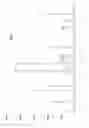
FIG. 1 shows an X-ray diffraction pattern from a sialon material according to the invention in which β refers to β-sialon, 12H to the polytype 12H (6AlN.SiO2), and Si marks peaks from silicon added as an internal standard.
FIG. 2 is a SEM (Scanning Electron Microscope) micrograph in 4000× magnification in backscattered mode of a sialon material according to the present invention in which the grey grains are β-sialon or, in a few cases, 12H polytype, and the lighter areas are intergranular phase.
DETAILED DESCRIPTION OF THE PREFERRED EMBODIMENTS
The present invention provides a ceramic material based on β-sialon (Si6-zAlzOzN), polytype 12H, an intergranular amorphous or partly crystalline phase, and containing from about 3.5 to about 5 wt-%, preferably from about 3.9 to about 4.5 wt-%, yttrium. The β-sialon phase has a z-value of from about 0.7 to less than about 1.5. The amount of intergranular phase is between about 5 and about 15%. The amount of polytype 12H, measured as the ratio of the peak height in an x-ray diffractogram of the CuKα peak at a 2Θ value of 34° (a) and the peak height in the same diffractogram of the peak from β-sialon at a 2Θ value of 33° (b) is between about 2 and about 20%, taking the background into consideration. In addition, the material may contain up to about 3 percent by weight of YAG, B-phase and/or melilite.
The material is particularly useful for cutting tool inserts for machining of heat resistant super alloys (HRSA). Such cutting tool inserts can be provided with coatings of TiN, Ti(C,N), Al2O3 or (Ti,Al)N or any combination thereof.
Sialon material according to the invention is made by powder metallurgical methods such as milling, pressing and sintering. Suitable proportions of powders of silicon nitride, alumina, yttria and aluminum nitride or polyphase 21 R are milled and pressed to insert blanks. The insert blanks are placed on sintering trays without embedding in a powder bed and burnt off separately, and then sintered in a gas pressure sintering furnace. The final part of the sintering shall take place at from about 1700 to about 1900° C. under nitrogen pressure.
After sintering, the blanks are ground to inserts for metal cutting of desired shape and dimension. The inserts are optionally provided with coatings of TiN, Ti(C,N), Al2O3 or (Ti,Al)N or any combination thereof as known in the art.
In one exemplary embodiment of the present invention, the z-value is from about 0.7 to about 1.3, preferably from about 0.7 to less than about 1, and the amount of 12H polytype is between about 5 and about 20%, preferably from about 6 to about 15%.
In another exemplary embodiment of the present invention, the z-value is from about 1.2 to less than about 1.5, preferably from about 1.25 to less than about 1.45, and the amount of 12H polytype is between about 2 and about 15%, preferably from about 2 to about 12%.
The invention is additionally illustrated in connection with the following examples, which are to be considered as illustrative of the present invention. It should be understood, however, that the invention is not limited to the specific details of the examples.
EXAMPLES
Powder raw materials B, C, F and H according to the compositions in Table 1a, except materials E and G, which are commercially available sialon cutting tools, were milled in water, using sialon milling media. Composition C and H have the same raw materials compositions, but differ in the degree of milling. Composition H was subjected to a more intensive milling, which increases the oxygen content of the slurry. Organic binders were mixed into the slurry, which was then granulated through spray drying.
The powders were cold-pressed uniaxially to form green bodies, which were then burnt off separately at 650° C. The burnt off green bodies were then sintered under nitrogen pressure at a maximum sintering temperature of 1810° C. The sintered bodies were ground to inserts of ISO RPGX120700T01020 type.
The materials were analyzed metallographically with regard to porosity. X-ray diffraction was used to determine the z-value and the amount of 12H polytype was determined as the ratio of the height of the 12H CuKa X-ray diffraction peak at a 2Θ angle of 34 degrees to the height of the β-sialon peak at 33 degrees, see FIG. 1.
FIG. 2 is a SEM (Scanning Electron Microscope) micrograph in 4000× magnification in backscattered mode of the sialon material C. The grey areas are β-sialon and 12H polytype and the white areas are intergranular phase. The amount of intergranular phase, measured as the area attributable to this phase, relative to the total area of the picture, is 10%.
| TABLE 1a |
| Composition, wt-% raw material |
| Material | Si3N4 | Al2O3 | 21R-F | Y2O3 | TiN | |
| B | 58.35 | 7.90 | 14.54 | 4.24 | 16.3 | |
| C | 68.62 | 9.28 | 17.11 | 4.99 | 0 | |
| E | N/A | N/A | N/A | (7% Yb) | 0 | |
| F | 68.86 | 15 | 10.69 | 4.99 | 0 | |
| G | N/A | N/A | N/A | N/A | 0 | |
| H | 68.62 | 9.28 | 17.11 | 4.99 | 0 | |
| TABLE 1b |
| Composition and properties, sintered material. |
| wt-% | wt-% | ||||||
| Measured z- | Beta- | % | alpha- | Intergranular phase, | |||
| Material | value | sialon5) | 12H1) | sialon5) | Y wt-% | Porosity2) | %3) |
| B | 0.94 | N/A4) | 20 | — | 3.64 | A02/B00 | 9 |
| C | 0.9 | N/A4) | 15 | — | 3.93 | A02/B00 | 14 |
| E | 0.59 | 70 | 0 | 30 | 7 (Yb) | A00/B00 | 11 |
| F | 1.4 | 100 | 0 | — | 3.93 | A04/B00 | 10 |
| G | 1.7 | 100 | 0 | — | 3.5 | A02/B00 | 13 |
| H | 1.3 | N/A4) | 5 | — | 3.93 | A02/B00 | 14 |
| 1)Measured as the ratio of the height in an x-ray diffractogram of the 12H peak at a 2Θ value of 34° and the height in the same diffractogram of the β-sialon peak at a 2Θ value of 33° | |||||||
| 2)According to ISO 4505 Standard on Metallographic Determination of Porosity | |||||||
| 3)Measured as the area attributable to this phase in a SEM picture relative to the total area of the picture. | |||||||
| 4)Since the percentage of 12H cannot be measured quantitatively, it is not possible to determine the proportion of beta-sialon. | |||||||
| 5)Expressed as the proportion of the crystalline material in the sample, detectable by X-ray diffraction. |
Example 1
Inserts according to compositions B, C and F in Table 1 were tested in a longitudinal turning operation in Inconel 718 using a speed of 225 m/min, feed 0.1 mm/rev and a cutting depth of 2.5 mm. Coolant was used. The inserts were run in test cycles, where one test cycle corresponds to 30 s of machining time. Two test runs, each with a fresh set of inserts, were made, and the number of cycles survived by each insert until a notch wear of 1 mm or flank wear depth (VB) of 0.5 mm were recorded. The resulting life spans, in minutes, as averages over the two test runs, are shown in Table 2. Variant C showed a clear advantage in terms of resistance to flank wear and notch wear. Variant B, essentially the same as variant C in terms of composition, but with TiN added, showed pronounced notch wear which was also the life length limiting factor for variant B.
| TABLE 2 | ||
| Average life length | ||
| Material | (min) | |
| B | 1.5 | |
| C | 3.5 | |
| F | 2.75 | |
Example 2
Inserts according to compositions B, C, F and G in Table 1 were tested in a double facing operation against a shoulder in Inconel 718 using a speed of 280 m/min, feed 0.2 mm/rev and a cutting depth of 2.5+2.5 mm. Coolant was used. The inserts were run in test cycles, where one test cycle corresponds to the described facing operation, in three test runs, each with a fresh set of inserts. The number of cycles survived by each insert until edge breakage or a flank wear depth (VB) of 1.0 mm or more was recorded. The results, as averages over all three test runs, are shown in Table 3. Material C again, and material with composition H, perform best of the tested materials.
| TABLE 3 | ||
| Average life length, | ||
| Material | no. of cycles | |
| B | 6.3 | |
| C | 13.7 | |
| F | 7 | |
| G | 9.7 | |
| H | 15.3 | |
Example 3
Inserts according to compositions C, E, F and G in Table 1 were tested in a double facing operation against a shoulder in Inconel 718 using a speed of 250 m/min, feed 0.2 mm/rev and a cutting depth of 2.5+2.5 mm. Coolant was used. The inserts were run in test cycles, where one test cycle corresponds to the described facing operation, in three test runs, each with a fresh set of inserts. The number of cycles survived by each insert until edge breakage or a flank wear depth (VB) of 1.0 mm or more was recorded. The results, as averages over all three test runs, are shown in Table 4.
Material C, a β-sialon with a z-value of 0.9, has a performance very close to material E, which is a commercially available α/β-sialon with a z-value around 0.6, which would normally be expected to have significantly higher toughness than material C.
| TABLE 4 | ||
| Average life length | ||
| Material | (no. of cycles) | |
| C | 9.7 | |
| E | 10 | |
| F | 6 | |
| G | 8.7 | |
Example 4
Inserts according to compositions C and E in Table 1 were tested in a longitudinal turning operation in Inconel 718 using a speed of 225 m/min, feed 0.124 mm/rev and a cutting depth of 1.5 mm. Coolant was used. The inserts were run in test cycles, where one test cycle corresponds to 30 s of machining time. Three test runs, each with a fresh set of inserts, were made, and the number of cycles survived by each insert until a notch wear length or flank wear depth (VB) of 0.5 mm. The results, as averages over the test runs, are shown in Table 5. Variant C shows longer life length than variant E.
| TABLE 5 | ||
| Average life length | ||
| Material | (min) | |
| C | 3.75 | |
| E | 3.2 | |
Although the present invention has been described in connection with preferred embodiments thereof, it will be appreciated by those skilled in the art that additions, deletions, modifications, and substitutions not specifically described may be made without department from the spirit and scope of the invention as defined in the appended claims.
Claims
1. A ceramic material of β-sialon (Si6-zAlzOzN), polytype 12H, an intergranular amorphous or partly crystalline phase, and containing yttrium wherein:
the amount of intergranular phase, measured as the area attributable to this phase in a SEM picture relative to the total area of the picture, is between about 5 and about 15%,
the z-value is from about 0.7 to less than about 1.5
the amount of polytype 12H, measured as the ratio of the height in a Cu—Kα x-ray diffractogram of the 12H peak at a 2Θ value of 34° and the height in the same diffractogram of the β-sialon peak at a 2Θ value of 33° is between about 2 and about 20%, and,
the yttrium content is from about 3.5 to about 5 wt-%.
2. A ceramic material of claim 1 wherein the z-value is from about 0.7 to about 1.3 and the amount of 12H polytype is between about 5 and about 20%.
3. A ceramic material of claim 1 wherein the z-value is from about 1.2 to less than about 1.5 and the amount of 12H polytype is between about 2 and about 15%.
4. A ceramic material of claim 1 wherein the yttrium content is from about 3.9 to about 4.5 wt-%.
5. A cutting tool insert for chipforming metal machining made of a material of claim 1.
6. Cutting tool insert of claim 5 provided with coatings of TiN, Ti(C,N), Al2O3 or (Ti,Al)N or any combination thereof.
Images & Drawings included:


Sources:
- United States Patent and Trademark Office - verify current appl. status at the USPTO↗
Similar patent applications:
- » 20080188369
Ceramic material and cutting tools made thereof - » 20170334790
Ceramic material and cutting tools made thereof
Recent applications in this class:
- » 20250091960 2025-03-20
FUNCTIONALLY GRADED SiAlON COMPOSITECUTTING TOOL - » 20240199496 2024-06-20
ALPHA-SiAlON POROUS CERAMIC, AND PREPARATION METHOD AND USE THEREOF - » 20230018290 2023-01-19
CUTTING TOOL - » 20210276923 2021-09-09
COMPOSITE CERAMIC BODIES AND APPLICATIONS THEREOF - » 20190031567 2019-01-31
β-SiAlON wavelength converters and methods of making the same - » 20180215669 2018-08-02
Sintered material and cutting tool including same - » 20180194687 2018-07-12
Method for forming sintered ceramic material - » 20180134627 2018-05-17
Sialon composite and cutting tools made thereof - » 20180079690 2018-03-22
Sialon sintered body, method for producing the same, composite substrate, and electronic device - » 20180022652 2018-01-25
Composite ceramics and ceramic particles and method for producing ceramic particles and bulk ceramic particles
Recent applications for this Assignee:
- » 20240141466 2024-05-02
DUPLEX STAINLESS STEEL AND FORMED OBJECT THEREOF - » 20230405601 2023-12-21
MOBILE BULK MATERIAL PROCESSING MACHINE WITH DEMOUNTABLE HANGING ASSEMBLY - » 20230191508 2023-06-22
Milling insert and a side and face milling tool - » 20230182187 2023-06-15
Tube and a method of manufacturing a tube - » 20220339688 2022-10-27
Tube and a method of manufacturing a tube - » 20220288683 2022-09-15
METHOD OF MAKING CERMET OR CEMENTED CARBIDE POWDER - » 20220112585 2022-04-14
DUPLEX STAINLESS STEEL AND FORMED OBJECT THEREOF - » 20220074026 2022-03-10
NEW USE OF A NICKEL-BASED ALLOY - » 20210354205 2021-11-18
Tool body including a damping apparatus and a machining tool having such a tool body - » 20210331179 2021-10-28
Torque reaction pulley for an inertia cone crusher