Math game and method
US20080169608A1
2008-07-17
11/652,700
2007-01-12
✅ Patent granted
US 7,604,237 B2
2009-10-20
-
-
Vishu K. Mendiratta
2027-01-12
Abstract:
A math game is described herein which can effectively improve one's math skills while being simple, entertaining, and eye-pleasing. Players attach randomly selected octagonal tiles that bare digits in the middle and math operation symbols on their sides creating various numbers. Then they join two of his/her numbers to the number from the table creating math equation. The player that exhausts his tiles first is the winner of the game.
Interested in similar patents?
Get notified when new applications in this technology area are published.
Classification:
A63F3/0415 » CPC main
Board games; Raffle games; Geographical or like games ; Educational games Number games
A63F2003/00791 » CPC further
Board games; Raffle games; Playing pieces; Playing pieces with particular shapes; Planimetric shapes, e.g. disks Octagonal
A63F2003/00845 » CPC further
Board games; Raffle games; Playing pieces Additional features of playing pieces; Playing pieces not assigned to one particular player
A63F9/00 IPC
Games not otherwise provided for
A63F3/00 IPC
Board games; Raffle games
Description
CROSS-REFERENCE TO RELATED APPLICATIONS
Not Applicable
STATEMENT REGARDING FEDERALLY SPONSORED RESEARCH OR DEVELOPMENT
Not Applicable
REFERENCE TO SEQUENCE LISTING, A TABLE, OR A COMPUTER PROGRAM LISTING COMPACT DISC APPENDIX
Not Applicable
BACKGROUND OF INVENSIONS
1. Field of the Invention
The present invention relates to a math learning game and more particularly pertains to encouraging practicing of the four basic arithmetic operations on various number types,
2. Description of the Prior Art
The use of educational games is known in the prior art. While these games fulfill their respective, particular objectives and requirements, there still is a need for a game that is both educational, nice looking, exciting for students of different math levels, and can be played by various numbers of players.
SUMMARY OF THE INVENTION
The game presented here prompts the players to perform math operations on randomly given number tiles. While attaching new tiles to the tiles on the table, the players perform numerous math operations and create colorful patterns.
The main object of the present invention is to provide a game that stimulates the players to practice the four arithmetic operations. To attain this, the players are randomly given octagonal tiles with numbers from 0 to 9 that are used to create mathematical operations. The players are prompted to consider numerous arithmetic operations in search for the true one.
Another object of the invention is to provide a game that can be played by players of various math levels. Since the player who exhausts his/her tiles first wins, the players are prompted to consider numerous arithmetic operations on various number types (such as multi-digit numbers or/and fractions) in search for the best math operation that exhausts the biggest number of tiles. The higher is level of math competency of the players, the more fancy moves they can make.
Like in most other games, the object of the present invention is to provide a game that is exciting to the players. This is achieved via following elements of the creative intelligence and luck:
-
- a) Tiles are randomly distributed among the players.
- b) The more fancy is the move, the more tiles the player exhausts.
- c) Tiles with the result of the operation can be placed in the way that is detrimental to opponents.
- d) “Wildcard” tiles can be used instead of any digit.
- e) “Wildcard” tiles can be replaced for the right tile by the next player
Another object of the present invention is to provide a game easy to comprehend. It is achieved by one simple game move that can be learned practically in a few seconds. The same move that is used for all kinds of math operations. To attain this, the octagonal tiles have assigned signs of the four math operations on four of their sides and four “=” symbols on sides between them. Attaching new tiles to tiles from the table by matching sides with the same signs constitutes the move.
Still yet another object of the present invention is to create a game that can be played by different number of players. The standard game set allows 2 to 4 players to play the game together. For higher number of players, additional tiles can be added form another game set.
The final object of the present invention is to create a game that is visually pleasing. As the game progresses the players create on the table randomly generated fractural-like colorful patterns.
DESCRIPTION OF THE DRAWINGS
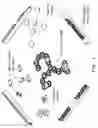
FIG.1 shows a perspective view of simplified game layout as it may look over the course of the game.
FIG. 2A is a perspective view of the main tile with face side up
FIG. 2B is a perspective view of the main tile with face side down
FIG. 3A is a perspective view of the multi-digit joiner with face side up
FIG. 3B is a perspective view of the multi-digit joiner with face side down
FIG. 4A is a perspective view of a sample of the two-digit number with face sides up
FIG. 4B is a perspective view of a two-digit number with face sides down
FIG. 5A is a perspective view of the fraction joiner with face side up
FIG. 5B is a perspective view of the fraction joiner with face side down
FIG. 6A is a perspective view of a sample of the fraction number with face sides up
FIG. 6B is a perspective view of a two-digit number with face sides down
FIG. 7 is perspective drawing of the tile guard
FIG. 8A shows forward move type.
FIG. 8B shows backward move type.
FIG. SC shows split-operation move type.
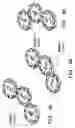
FIG. 9 is a top view of possible tile layout that demonstrates the math game method according to the present invention.
DESCRIPTION OF THE INVENTION
With reference to the drawings, and in particular to FIG. 1 through 9, a new math game embodying the principles and concepts of the present invention will be described.
FIG. 1 shows a simple game layout as it may look over the course of the game. It contains:
-
- a) A pool of tiles
- b) Tiles in game (assembled in math operations)
- c) Tile guards with tiles
- d) Multi-digit joiners
- e) Fraction joiners
FIG. 2A and FIG. 2B show sample of the Main Tile that has octagonal shape.
Standard game set includes five sets with digits from 0 to 9, five sets with negative digits from −1 to −9, and five “wildcard” tiles with the sun pictures instead of numbers on the front tile face. Other game versions may contain different number of tile sets or tiles of one number type only. Tiles for kindergarten version can have dots instead of numbers.
Each side of the octagonal tile bears different math symbol, or preferably half of it. The adding (+) and subtracting (−) symbols are on opposite sides of the tile, as are the multiplying (×) and dividing (÷) symbols. The four sides between them bare equal (=) signs. The sides can be colored with unique color strips for each math operation, yet the same on all tiles. The backside of the tile is flat and has uniform color or pattern.
The tiles are big enough to make the sign easy to see and thick enough to allow tiles to attach firmly to each other without a chance of overlapping.
The single tile constitutes the single digit number, but can also be used as a digit of more complex numbers (multi-digit and fraction numbers).
FIG. 3A and FIG. 3B show Multi-digit Joiner. Standard game set contains 24 such joiners.
The joiner is the rectangular-shape plate with locating ribs allowing quick and precise alignment of the two tiles joined with sides. The short sides of the octagon should have the same color strips as the “=” sign sides. The plate should be thin but firm, while the height of the underneath ribs to be same as main tile thickness.
FIG. 4A and FIG. 4B show how the multi-digit number is formed. Two tiles (number digit) are attached to each other with their sides, while the placed above them multi-digit joiner covers the adjacent tile sides and their math symbols. Formed this way number has eight sides, four of them baring unique math symbols. Three or more digit numbers can be created via joining more tiles together.
FIG. 5A and FIG. 5B show Fraction Joiner. Standard game set contains 12 such joiners.
The joiner is the square-shape plate with locating ribs allowing for precise alignment of two main tiles (numerator and denominator) as well as integer number in front of the fraction. The front face of the joiner has division bar painted in the middle. Sides perpendicular to the division bar should have same color strips as the “=” sign sides. The plate should have same thickness as the plate of the multi-digit joiner, while the height of the underneath ribs to be same as main tile thickness.
FIG. 6A and FIG. 6B show how the fraction number is formed. Two tiles (numerator and denominator) form the fraction as they are attached to fraction joiner that covers their non-active sides. Additional tile (integer number) can be added in front of the fraction by attaching
FIG. 7 shows Tile Guard. Standard game set contains 4 such guards. It allows the players to keep the tiles organized and hidden from other players.
The guard is composed of two non-flat plates: base plate and resting plate. Resting plate is located approximately 80 degrees to the base plate to allow the tiles to lean against. The resting plate height should be approximately 75% of the tile size to allow tiles to rest firmly and allow other players to see number of tiles the player owns (see Guide with Tiles in FIG. 1). Base plate should be wide enough to accommodate 3 tiles stack together and leaning against the resting plate.
FIG. 8A, B, C show different move iteration/math operations
-
- a) FIG. 8A shows the forward move. The player attaches his number (2) to a number from the table (4) matching the same math sign sides (creating math operation). Then he/she attaches to the added number another number (2) that is the result of the created math operation matching “=” sides.
- b) FIG. 8B shows the backward move. The joins two his numbers (7 and 3) with sides of the same math sign (creating math operation). Then he attaches the created assembly to the number from the table (4) that is the result of the math operation matching “=” sides.
- c) FIG. 8C shows the split operation move. The player attaches one his numbers (1) to the number from the table (4) matching the same math signs (creating math operation). Then he/she attaches to the original number from the table (4) another number (5) that is the result of the created math operation matching “=” sides.
FIG. 9 shows top overview of the tile layout as it may look during the course of the game. Together with FIG. 1 it will be used to explain the game method:
-
- a) Each player receives equal number (6-10) of randomly selected tiles that he/she keeps hidden from others behind tile guards. The remaining tiles are kept face side down (in the pool)
- b) One randomly selected tile from the pool is placed on the table face side up.
- c) First (and each subsequent) player attaches his tiles to the tile(s) from the table creating math equations.
- d) The players alternate turns and pick up one tile from the pool after each move.
- e) If the player is not able to make a move he/she looses his/her turn.
- f) Before each turn the player may exchange the wild tile(s) from the table for the tile(s) that bear appropriate number.
- g) The player exhausting his/her tiles first wins
- h) The game continues between the remaining players for the subsequent places.
Claims
1. Game Tile that has octagonal shape, number in the center, four symbols (or half symbols) of the basic math operations located on every second side, and equal signs located on sides between them.
2. Method of forming math equations (the move) by attaching to one of the tiles another tile by matching sides that have the same math symbols, than attaching to it a tile that shows the result of the math operation matching sides with the equal signs.
3. Method of forming double-digit numbers by placing two tiles with the appropriate single digits side by side and covering the redundant equal signs and math operation symbols (in-between them) with flat plate of the multi-digit joiner.
Images & Drawings included:




Sources:
- United States Patent and Trademark Office - verify current appl. status at the USPTO↗
Similar patent applications:
- » 20130069304
Game pieces for math game and method thereof - » 10754328
Math game and method - » 20180342170
Math game and method - » 20170076632
SYSTEM AND GAMING METHOD FOR AIDING IN LEARNING MATH TABLES - » 18666547
Math solving board game apparatus, system, method and/or computer program product - » 20240378947
SYSTEMS AND METHODS FOR SLOT MACHINE GAME DEVELOPMENT UTILIZING ARTIFICIAL INTELLIGENCE GAME MATH DESIGN SYSTEMS - » 20070257433
Apparatus and method for a race game wherein competitors apply defensive strategies and math skills to win
Recent applications in this class:
- » 20250195989 2025-06-19
MATHEMATICAL COLORED-NUMBERED PUZZLE BOARD GAME - » 20250018278 2025-01-16
MATHEMATICAL COLORED-NUMBERED PUZZLE BOARD GAME - » 20230302349 2023-09-28
Strategy Multiplication Game - » 20230158396 2023-05-25
Arithmetic Game - » 20230141684 2023-05-11
Method and system for an interactive player board game - » 20220258037 2022-08-18
Apparatus for a board game - » 20220219071 2022-07-14
PRIME BOARD - » 20220203215 2022-06-30
Educational Math Board Game - » 20220176232 2022-06-09
See It Say It Know It Multiplication Tables - » 20220118350 2022-04-21
BOARD GAME