Cocatalyst for the production of linear alpha-olefins
US20080176738A1
2008-07-24
11/660,557
2005-07-07
✅ Patent granted
US 7,566,679 B2
2009-07-28
WO; PCT/EP2005/007321; 20050707
WO; WO2006/018071; 20060223
Ling-Siu Choi
2025-07-07
Abstract:
The invention relates to a homogeneous catalyst for the production of linear alpha-olefins by oligomerisation of ethylene, consisting of a zirconium salt of organic acids and a cocatalyst which consists of alkylaluminiums and/or aluminium chloride. The activity of the catalyst, system may sometimes be raised substantially by adjusting the molar ratio of chlorine to aluminium in the cocatalyst within the range between 1.0 and 1.5. The economic viability of the production process and product purity are improved.
Inventors:
- Heinz Bölt 32 🇩🇪 Wolfratshausen, Germany
- Fuad Mosa 21 🇸🇦 Riyadh, Saudi Arabia
- Mohammed Zahoor 2 🇸🇦 Riyadh, Saudi Arabia
- Atieh Abu-Raqabah 13 🇸🇦 Riyadh, Saudi Arabia
- Peter Fritz 9 🇩🇪 Unterhaching, Germany
- Holger Hackner 1 🇩🇪 Munchen, Germany
Assignee:
- SAUDI BASIC INDUSTRIES CORPORATION 420 🇸🇦 Riyadh, Saudi Arabia
- Linde AG 17 🇩🇪 Wiesbaden, Germany
Interested in similar patents?
Get notified when new applications in this technology area are published.
Classification:
B01J31/04 » CPC main
Catalysts comprising hydrides, coordination complexes or organic compounds containing organic compounds or metal hydrides containing carboxylic acids or their salts
B01J31/143 » CPC further
Catalysts comprising hydrides, coordination complexes or organic compounds containing organic compounds or metal hydrides containing organo-metallic compounds or metal hydrides of aluminium or boron of aluminium
B01J31/2226 » CPC further
Catalysts comprising hydrides, coordination complexes or organic compounds containing coordination complexes; Organic complexes the ligands containing oxygen or sulfur as complexing atoms; Oxygen, e.g. acetylacetonates Anionic ligands, i.e. the overall ligand carries at least one formal negative charge
B01J31/26 » CPC further
Catalysts comprising hydrides, coordination complexes or organic compounds containing in addition, inorganic metal compounds not provided for in groups -
C07C2/30 » CPC further
Preparation of hydrocarbons from hydrocarbons containing a smaller number of carbon atoms by addition between unsaturated hydrocarbons by oligomerisation of well-defined unsaturated hydrocarbons without ring formation of alkenes, i.e. acyclic hydrocarbons having only one carbon-to-carbon double bond; Catalytic processes with hydrides or organic compounds containing metal-to-carbon bond; Metal hydrides
B01J2231/20 » CPC further
Catalytic reactions performed with catalysts classified in Olefin oligomerisation or telomerisation
B01J2531/48 » CPC further
Additional information regarding catalytic systems classified in; Complexes comprising metals of Group IV (IVA or IVB) as the central metal Zirconium
C08F4/16 » CPC further
Polymerisation catalysts; Metallic compounds other than hydrides and other than metallo-organic compounds; Boron halide or aluminium halide complexes with organic compounds containing oxygen of silicon, germanium, tin, lead, titanium, zirconium or hafnium
C08F10/02 » CPC further
Homopolymers and copolymers of unsaturated aliphatic hydrocarbons having only one carbon-to-carbon double bond Ethene
C08F4/642 » CPC further
Polymerisation catalysts; Metals; Metal hydrides; Metallo-organic compounds; Use thereof as catalyst precursors selected from light metals, zinc, cadmium, mercury, copper, silver, gold, boron, gallium, indium, thallium, rare earths or actinides together with refractory metals, iron group metals, platinum group metals, manganese, rhenium technetium or compounds thereof; Refractory metals or compounds thereof; Titanium, zirconium, hafnium or compounds thereof Component covered by group with an organo-aluminium compound
B01J31/22 IPC
Catalysts comprising hydrides, coordination complexes or organic compounds containing coordination complexes Organic complexes
B01J37/00 IPC
Processes, in general, for preparing catalysts; Processes, in general, for activation of catalysts
Description
The invention relates to a homogeneous catalyst for the production of linear alpha-olefins by oligomerisation of ethylene, consisting of a zirconium salt of organic acids and a cocatalyst.
Linear alpha-olefins (LAO), for example those with four to 30 carbon atoms, are compounds which are, for example, widely used and required in large quantities as comonomers for modifying the properties of polyolefins or as a starting material for the production of plasticisers, household cleansers, flotation agents, emulsifiers, drilling fluids, surface-active substances and synthetic oils, putties, sealants and the like.
According to the inventions described in USSR inventor's certificate 1042701A, the unaccepted Italian patent application ITA24498A/79 and German patents DE4338414 and DE4338416, the oligomerisation of ethylene to C4-C30 LAO is performed in an organic solvent at 60 to 80° C. and pressures of 2.0 to 4.0 MPa. Toluene, benzene or heptane are used as reaction media. All these processes make use of catalysts which consist of a zirconium salt of an organic acid and one of the alkylaluminiums Al(C2H5)3, Al2Cl3(C2H5)3 or AlCl(C2H5)2 as cocatalyst. In order to prevent the occurrence of unwanted secondary reactions, it is necessary to terminate the oligomerisation immediately the reaction mixture leaves the reactor. The catalyst is deactivated by addition of a polar oxygen compound (H2O, methanol, ethanol, carboxylic acids etc.) to the reaction mixture and is then separated from the mixture by adsorption onto a regeneratable aluminium oxide gel. The deactivated catalyst must be replaced by fresh material.
The high price of the zirconium salt means that the catalyst accounts for a considerable proportion of the operating costs of the processes. Higher activity of the catalyst (expressed in kg of LAO product/g of Zr) results in lower consumption and thus in increased economic viability of LAO production because operating costs and, due to the consequently possible reduction in size of the apparatuses for storing, apportioning, deactivating and removing the catalyst, also capital costs are reduced.
It is accordingly an object of the present invention to increase the activity of the catalyst hitherto used for LAO production by modifying the chemical composition thereof in such a manner that lower catalyst consumption is achieved without any drop in product quality.
This object is achieved according to the invention in that the cocatalyst is produced as a mixture of alkylaluminiums and/or aluminium chloride, wherein the molar ratio of chlorine to aluminium in the cocatalyst may be adjusted at will within a certain range by modifying the proportions of the various compounds in the mixture.
DE4338414 describes a catalyst system which is conveniently used in connection with the process explained therein. The zirconium compound has the chemical formula ZrClmXn, wherein m+n=4.0≦m≦2 and X denotes a carboxylate derived from a C4 to C9 fatty acid. The compound Al2Cl3(C2H5)3 has proved to be a particularly advantageous cocatalyst in practice, giving rise to a catalyst activity of 10 kg of (LAO) per 1 g of (Zr).
It has been found that the decisive parameter determining the level of catalyst activity is the molar ratio of chlorine to aluminium in the cocatalyst. Given suitable selection of this ratio, values considerably higher than 10 kg of (LAO)/g of (Zr) may be achieved. Product purity is simultaneously improved.
The cocatalyst is preferably mixed from the substances Al(C2H5)3 and/or AlCl(C2H5)2 and/or Al2Cl3(C2H5)3 and/or AlCl2(C2H5) and/or (AlCl3) such that a Cl:Al ratio with a value of between 1.0 and 1.5 is obtained. The Cl:Al ratio particularly preferably has a value of between 1.0 and 1.3.
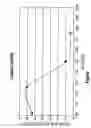
In the Figure, catalyst activity is plotted as a function of the Cl:Al ratio in the cocatalyst. Starting from an activity of 10 kg of (LAO)/g of (Zr) at a Cl:Al ratio of 1.5, corresponding to the prior art (Al2Cl3(C2H5)3), activity rapidly rises as the value of the ratio drops until, at Cl:Al=1.26, it is approx. 500% above the prior art. Activity then slowly drops back down to reach a value of approx. 54 kg of (LAO)/g of (Zr) at Cl:Al=1.02. If Cl:Al ratios of higher than 1.5 are used, activity drops. At Cl:Al=1.77, it is only 3.1 kg of (LAO)/g of (Zr).
Claims
1. A homogeneous catalyst for the production of linear alpha-olefins by oligomerization of ethylene, comprising a zirconium salt of at least one organic acid and a cocatalyst which contains Al and Cl, wherein the cocatalyst consists essentially of one or more compounds selected from the group consisting of alkylaluminium compounds and AlCl3, AlCl(C2H5)2, AlCl2(C2H5) and Al2Cl3(C2H5), wherein the molar ratio of chlorine to aluminum in the cocatalyst is within the range of 1.0 to 1.3.
2. (canceled)
3. (canceled)
4. (canceled)
5. The homogeneous catalyst of claim 1, wherein the alkylaluminium compound comprises Al(C2H5)3.
Images & Drawings included:

Sources:
- United States Patent and Trademark Office - verify current appl. status at the USPTO↗
Recent applications in this class:
- » 20240131499 2024-04-25
BIOMIMETIC CATALYSTS FOR DIVERSE INDUSTRIAL APPLICATIONS IN CHEMICAL REACTIONS - » 20220118431 2022-04-21
BISMUTH-CONTAINING CATALYST COMPRISING AT LEAST ONE AROMATIC SUBSTITUENT - » 20210245143 2021-08-12
LAMINAR ZINC HYDROXIDE ORGANIC-INORGANIC NANOCOMPOSITES FOR USE IN THE REMOVAL AND DEGRADATION OF DYES FROM TEXTILE EFFLUENTS OR ORGANIC SUBSTANCES - » 20210146345 2021-05-20
Catalyst for heavy oil upgradation - » 20200001284 2020-01-02
ACCELERATED METHOD FOR PREPARING HYDROCARBON-SOLUBLE MOLYBDENUM CATALYST PRECURSORS UNDER PRESSURE - » 20190329230 2019-10-31
Method for preparing organic zinc catalyst, organic zinc catalyst prepared by the method and method for preparing polyalkylene carbonate resin using the catalyst - » 20190193061 2019-06-27
Method for preparing laminar zinc hydroxide organic-inorganic nanocomposites for use in the removal and degradation of dyes from textile effluents - » 20180147570 2018-05-31
Catalytically highly effective precious metal-carboxylate compounds of Ir, Ru, Rh, Pd and Au - » 20180133706 2018-05-17
Catalyst based on γ-ketovaleric acid and use thereof in a hydrotreatment and/or hydrocracking process - » 20170001183 2017-01-05
Visible-Light-Activated Multilayered Photocatalyst And The Method Of Its Preparation
Recent applications for this Assignee:
- » 20200207678 2020-07-02
FERTILIZER CAPSULE COMPRISING ONE OR MORE CORES AND METHOD OF MAKING SAME - » 20200017779 2020-01-16
Method for cracking a hydrocarbon feedstock in a steam cracker unit - » 20190351395 2019-11-21
Catalyst with improved activity/selectivity for light naphtha aromatization - » 20190225562 2019-07-25
Process and installation for the conversion of crude oil to petrochemicals having an improved propylene yield - » 20190070594 2019-03-07
Catalyst with improved activity/selectivity for light naphtha aromatization - » 20190062655 2019-02-28
Process for upgrading refinery heavy residues to petrochemicals - » 20190039970 2019-02-07
Process and installation for the conversion of crude oil to petrochemicals having an improved propylene yield - » 20190039969 2019-02-07
Process and installation for the conversion of crude oil to petrochemicals having an improved propylene yield - » 20190023640 2019-01-24
Production of products from natural resources - » 20180371338 2018-12-27
Process for producing BTX from a mixed hydrocarbon source using pyrolysis