Method of enhancing information security in a wireless communications system and related apparatus
US20080178059A1
2008-07-24
12/010,284
2008-01-23
Abstract:
A method for enhancing information security in a wireless communications system comprises receiving a data or control bit sequence and a user identity sequence, performing a CRC operation on the data/control bit sequence to generate a CRC bit sequence, and masking the CRC bit sequence with the user identity sequence to generate a coded bit sequence according to a formula. The formula comprises a first equation and a second equation, and the second equation calculates a plurality of coded bits of the coded bit sequence according to most significant bits or least significant bits of the user identity sequence and the CRC bit sequence.
Interested in similar patents?
Get notified when new applications in this technology area are published.
Classification:
H04L1/0041 » CPC main
Arrangements for detecting or preventing errors in the information received by using forward error control Arrangements at the transmitter end
H04L1/0061 » CPC further
Arrangements for detecting or preventing errors in the information received by using forward error control; Systems characterized by the type of code used Error detection codes
H04L1/0072 » CPC further
Arrangements for detecting or preventing errors in the information received by using forward error control Error control for data other than payload data, e.g. control data
H03M13/15 IPC
Coding, decoding or code conversion, for error detection or error correction; Coding theory basic assumptions; Coding bounds; Error probability evaluation methods; Channel models; Simulation or testing of codes; Error detection or forward error correction by redundancy in data representation, i.e. code words containing more digits than the source words using block codes, i.e. a predetermined number of check bits joined to a predetermined number of information bits; Linear codes Cyclic codes, i.e. cyclic shifts of codewords produce other codewords, e.g. codes defined by a generator polynomial, Bose-Chaudhuri-Hocquenghem [BCH] codes
G06F11/10 IPC
Error detection; Error correction; Monitoring; Responding to the occurrence of a fault, e.g. fault tolerance; Error detection or correction by redundancy in data representation, e.g. by using checking codes Adding special bits or symbols to the coded information, e.g. parity check, casting out 9's or 11's
Description
CROSS REFERENCE TO RELATED APPLICATIONS
This application claims the benefit of U.S. Provisional Application No. 60/886,292, filed on Jan. 23, 2007 and entitled “Method and Apparatus to realize Continuous Packet Connectivity and improve discontinuous transmission and reception”, the contents of which are incorporated herein by reference.
BACKGROUND OF THE INVENTION
1. Field of the Invention
The present invention relates to a method of enhancing information security in a wireless communications system and related apparatus, and more particularly, to a method and related communications apparatus for enhancing information security, and avoiding system malfunction.
2. Description of the Prior Art
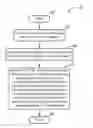
The third generation (3G) mobile telecommunications system has adopted a Wideband Code Division Multiple Access (WCDMA) wireless air interface access method for a cellular network. WCDMA provides high frequency spectrum utilization, universal coverage, and high quality, high-speed multimedia data transmission. The WCDMA method also meets all kinds of QoS requirements simultaneously, providing diverse, flexible, two-way transmission services and better communication quality to reduce transmission interruption rates. Through the 3G mobile telecommunications system, a user can utilize a wireless communications device, such as a mobile phone, to realize real-time video communications, conference calls, real-time games, online music broadcasts, and email sending/receiving. However, these functions rely on fast, instantaneous transmission. Thus, targeting at the third generation mobile telecommunication technology, the prior art provides High Speed Package Access (HSPA) technology, which includes High Speed Downlink Package Access (HSDPA) and High Speed Uplink Package Access (HSUPA), to increase bandwidth utility rate and package data processing efficiency to improve uplink/downlink transmission rate. For HSDPA and HSUPA, the 3rd Generation Partnership Project (3GPP) provides a Continuous Packet Connectivity (CPC) protocol specification, which includes features that, for user equipments (UEs) in CELL_DCH state, aim to significantly increase the number of packet data users for a cell, reduce the uplink noise rise and improve the achievable download capacity for VoIP.
For an HSDPA UE, physical channels include a high speed physical downlink shared channel (HS-PDSCH), for transferring payload data, and a high speed physical control channel (HS-DPCCH) for uploading an acknowledgement/negative acknowledgement (ACK/NACK) and a channel quality identifier (CQI). As for the media access control (MAC) layer of the HSDPA UE, a MAC-hs entity utilizes a transport channel of High Speed Downlink Shared Channel (HS-DSCH) for receiving data from the physical layer. In addition, a shared control channel for HS-DSCH (HS-SCCH) is used as a physical downlink channel, responsible for transmission of control signals corresponding to HS-DSCH, such as demodulation information.
Via HS-SCCH, the MAC-hs entity can transmit control signalings corresponding to HS-DSCH. To support FDD MIMO (Frequency Division Duplexing Multi-input Multi-output) Service, the prior art provides Coding for HS-SCCH type M, which is used when the UE is configured in MIMO mode. In Coding for HS-SCCH type M, CRC (Cyclic Redundancy Check) attachment is performed as follows:
If one transport block is transmitted on the associated HS-PDSCH(s), a 16-bit CRC is calculated to transform a data bit sequence [x1,1, x1,2, . . . , x1,12, x2,1, x2,2, . . . , x2,14] into a CRC bit sequence [c1, c2, . . . , c16]. To enhance information security, the CRC bit sequence [c1, c2, . . . , c16] is then masked with the UE Identity sequence [xue,1, xue,2, . . . , xue,16], and then appended to the data bit sequence [x1,1, x1,2, . . . , x1,12, x2,1, x2,2, . . . , x2,14], to form the coded bit sequence [y1, y2, . . . , y30], where
yi=x2,i, i=1, 2, . . . , 14
yi=(ci-13+xue,i-14)mod 2, i=15, 16, . . . , 30 (Eq. 1)
In Eq. 1, yi=(ci-13+xue,i-14)mod 2 when i i=15˜30. That is, Eq. 1 dose not calculate yi by both least significant bits or most significant bits, which may cause software error, and corresponding UEs will not be able to decode the received data successfully during most of time if the channel quality is good in general.
SUMMARY OF THE INVENTION
According to the present invention, a method for enhancing information security in a wireless communications system comprises receiving a data or control bit sequence and a user identity sequence, performing a CRC operation on the data/control bit sequence to generate a CRC bit sequence, and masking the CRC bit sequence with the user identity sequence to generate a coded bit sequence according to a formula. The formula comprises a first equation and a second equation, and the second equation calculates a plurality of coded bits of the coded bit sequence according to most significant bits or least significant bits of the user identity sequence and the CRC bit sequence.
According to the present invention, a communications device for enhancing information security in a wireless communications system comprises a control circuit for realizing functions of the communications device, a central processing unit installed in the control circuit for executing a program code to operate the control circuit, and a memory coupled to the central processing unit for storing the program code. The program code comprises receiving a data or control bit sequence and a user identity sequence, performing a CRC operation on the data/control bit sequence to generate a CRC bit sequence, and masking the CRC bit sequence with the user identity sequence to generate a coded bit sequence according to a formula. The formula comprises a first equation and a second equation, and the second equation calculates a plurality of coded bits of the coded bit sequence according to most significant bits or least significant bits of the user identity sequence and the CRC bit sequence.
These and other objectives of the present invention will no doubt become obvious to those of ordinary skill in the art after reading the following detailed description of the preferred embodiment that is illustrated in the various figures and drawings.
BRIEF DESCRIPTION OF THE DRAWINGS
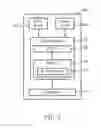
FIG. 1 is a functional block diagram of a communications device.
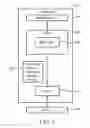
FIG. 2 is a diagram of the program code shown in FIG. 1.
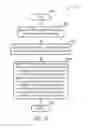
FIG. 3 is a flowchart diagram of a process according to an embodiment of the present invention.
DETAILED DESCRIPTION
Please refer to FIG. 1, which is a functional block diagram of a communications device 100. For the sake of brevity, FIG. 1 only shows an input device 102, an output device 104, a control circuit 106, a central processing unit (CPU) 108, a memory 110, a program code 112, and a transceiver 114 of the communications device 100. In the communications device 100, the control circuit 106 executes the program code 112 in the memory 110 through the CPU 108, thereby controlling an operation of the communications device 100. The communications device 100 can receive signals input by a user through the input device 102, such as a keyboard, and can output images and sounds through the output device 104, such as a monitor or speakers. The transceiver 114 is used to receive and transmit wireless signals, delivering received signals to the control circuit 106, and outputting signals generated by the control circuit 106 wirelessly. From a perspective of a communications protocol framework, the transceiver 114 can be seen as a portion of Layer 1, and the control circuit 106 can be utilized to realize functions of Layer 2 and Layer 3. Preferably, the communications device 100 is utilized in a High Speed Package Access (HSPA) system of the third generation (3G) mobile communications system, supporting Continuous Packet Connectivity (CPC), and can be user or network equipment.
Please continue to refer to FIG. 2. FIG. 2 is a diagram of the program code 112 shown in FIG. 1. The program code 112 includes an application layer 200, a Layer 3 202, and a Layer 2 206, and is coupled to a Layer 1 218. The Layer 3 202 includes a radio resource control (RRC) entity 222, which is used for controlling the Layer 1 218 and the Layer 2 206 and performing peer-to-peer RRC communication with other communications devices, such as a Node-B or a UTRAN. In addition, the RRC entity 222 can change an RRC state of the communications device 100, switching between an Idle mode, CELL_PCH, URA_PCH, CELL_FACH or CELL_DCH state.
As mentioned above, for HSDPA, the MAC layer (or the Layer 2 206) can transmit control signalings corresponding to HS-DSCH via HS-SCCH. To support FDD MIMO services, the program code 112 can perform CRC on HS-DSCH. In such a situation, the embodiment of the present invention provides an information security enhancing program code 220, to enhance information security and avoid system malfunction. Note that, although the information security enhancing program code 220 is implemented in the Layer 2 206 in FIG. 2, it could also be implemented in the Layer 1 218. Whether the information security enhancing program code 220 is implemented in the Layer 2 206 or the Layer 1 218 is not relevant to the present invention. Please refer to FIG. 3, which illustrates a schematic diagram of a process 30. The process 30 is utilized for enhancing information security in a wireless communications system, and can be compiled into the information security enhancing program code 220. The process 30 comprises the following steps:
-
- Step 300: Start.
- Step 302: Receive a data/control bit sequence and a user identity sequence.
- Step 304: Perform a CRC operation on the data/control bit sequence to generate a CRC bit sequence.
- Step 306: Mask the CRC bit sequence with the user identity sequence to generate a coded bit sequence according to a formula, wherein the formula comprises a first equation and a second equation, and the second equation calculates a plurality of coded bits of the coded bit sequence according to most significant bits or least significant bits of the user identity sequence and the CRC bit sequence.
- Step 308: Finish.
According to the process 30, in the second equation, the embodiment of the present invention calculates each coded bits of the coded bit sequence according to the most significant bits or least significant bits of the user identity sequence and the CRC bit sequence. For example, suppose that the data/control bit sequence is [x1,1, x1,2, . . . , x1,12, x2,1, x2,2, . . . , x2,14], the CRC bit sequence is [c1, c2, . . . , c16], and the user identity sequence is [xue,1, xue,2, . . . , xue,16], then according to the embodiment of the present invention, the coded bit sequence [y1, y2, . . . , y30] is:
yi=x2,i, i=1, 2, . . . , 14 (Eq. 2)
yi=(ci-14+xue,i-14)mod 2, i=15, 16, . . . , 30 (Eq. 3)
where Eq. 2 represents the first equation, while Eq. 3 represents the second equation.
Comparing Eq. 1 and Eq. 3, the embodiment of the present invention calculates yi by both least significant bits or most significant bits of ci-14 and xue,i-14 when i=15, 16, . . . , 30, so that corresponding UEs can decode the received data successfully, to prevent system malfunction.
In summary, the embodiment of the present invention can calculate coded bits of the coded bit sequence according to the most significant bits or least significant bits of the user identity sequence and the CRC bit sequence, to enhance information security, and avoid system malfunction.
Those skilled in the art will readily observe that numerous modifications and alterations of the device and method may be made while retaining the teachings of the invention. Accordingly, the above disclosure should be construed as limited only by the metes and bounds of the appended claims.
Claims
What is claimed is:1. A method for enhancing information security in a wireless communications system comprising:
receiving a data or control bit sequence and a user identity sequence;
performing a Cyclic Redundancy Check, called CRC hereinafter, operation on the data or control bit sequence to generate a CRC bit sequence; and
masking the CRC bit sequence with the user identity sequence to generate a coded bit sequence according to a formula;
wherein the formula comprises a first equation and a second equation, and the second equation calculates a plurality of coded bits of the coded bit sequence according to most significant bits or least significant bits of the user identity sequence and the CRC bit sequence.
2. The method of claim 1, wherein the data or control bit sequence is [x1,1, x1,2, . . . , x1,12, x2,1, x2,2, . . . , x2,14], the CRC bit sequence is [c1, c2, . . . , c16], the user identity sequence is [xue,1, xue,2, . . . , xue,16], the first equation is
yi=x2,i, i=1, 2, . . . , 14; and
the second equation is
yi=(ci-14+xue,i-14)mod 2, i=15, 16, . . . , 30,
wherein “yi” is a coded bit of coded bit sequence, and “mod” is modulus operation.
3. A communications device for enhancing information security in a wireless communications system comprising:
a control circuit for realizing functions of the communications device;
a central processing unit installed in the control circuit for executing a program code to operate the control circuit; and
a memory coupled to the central processing unit for storing the program code;
wherein the program code comprises:
receiving a data or control bit sequence and a user identity sequence;
performing a Cyclic Redundancy Check, called CRC hereinafter, operation on the data or control bit sequence to generate a CRC bit sequence; and
masking the CRC bit sequence with the user identity sequence to generate a coded bit sequence according to a formula;
wherein the formula comprises a first equation and a second equation, and the second equation calculates a plurality of coded bits of the coded bit sequence according to most significant bits or least significant bits of the user identity sequence and the CRC bit sequence.
4. The communications device of claim 3, wherein the data or control bit sequence is [x1,1, x1,2, . . . , x1,12, x2,1, x2,2, . . . , x2,14], the CRC bit sequence is [c1, c2, . . . , c16], the user identity sequence is [xue,1, xue,2, . . . , xue,16], the first equation is
yi=x2,i, i=1, 2, . . . , 14; and
the second equation is
yi=(ci-14+xue,i-14)mod 2, i=15, 16, . . . , 30,
wherein “yi” is a coded bit of coded bit sequence, and “mod” is modulus operation.
Images & Drawings included:
Sources:
- United States Patent and Trademark Office - verify current appl. status at the USPTO↗
Recent applications in this class:
- » 20250175280 2025-05-29
METHOD AND APPARATUS FOR DETERMINING TRANSMISSION PARAMETER, NETWORK SIDE DEVICE, AND MEDIUM - » 20250175279 2025-05-29
METHOD FOR IMPROVING POLAR CODE PERFORMANCE USING LOCAL PRE-TRANSFORMATION - » 20250141592 2025-05-01
FORWARD ERROR CORRECTION BYPASS FOR REDUCED POWER - » 20250125906 2025-04-17
DATA PROCESSING METHOD AND DATA PROCESSING APPARATUS - » 20250119237 2025-04-10
DEVICE AND METHOD FOR SUPPORTING HYBRID AUTOMATIC REPEAT REQUEST (HARQ) - » 20250119236 2025-04-10
INTERFACE DEVICE FOR MULTIPLEXING MULTIPLE NETWORK PORTS OVER SINGLE SERDES - » 20250096928 2025-03-20
PHYSICAL CODING SUBLAYER WITH MODIFIED BIT ORDERING TO IMPROVE ERROR BURST RESILIENCY - » 20250096927 2025-03-20
POST-FEC PADDING REDUCTION FOR 802.11BN - » 20250080270 2025-03-06
Application-level forward error correction techniques - » 20250062857 2025-02-20
Fast converging low-density parity-check techniques