Method for making bricks
US20080185759A1
2008-08-07
11/704,392
2007-02-07
Abstract:
A method for making bricks includes a step mixing ceramic earth, quartz sands and Styrofoam as a base and putting the base in a first mold; a step of coating a top layer of ceramic earth on a top of the base; a step of molding surface patterns on the top layer of the base by a second mold, a step of kilning the base in step of making surface patterns for six hours at 1100 degrees Celsius to form a semi-product, a step of coating a layer of glaze on surfaces of the semi-product, and a step of kilning the semi-product for at least one hour at 900 to 1000 degrees Celsius. The base and the top layer are crystallized so as to have desired surface patterns and the Styrofoam is vaporized so as to form holes in the brick.
Interested in similar patents?
Get notified when new applications in this technology area are published.
Classification:
C04B33/04 » CPC main
Clay-wares; Preparing or treating the raw materials individually or as batches Clay; Kaolin
C04B33/32 » CPC further
Clay-wares Burning methods
C04B41/86 » CPC further
After-treatment of mortars, concrete, artificial stone or ceramics; Treatment of natural stone of only ceramics; Coating or impregnation with inorganic materials Glazes; Cold glazes
C04B2235/3418 » CPC further
Aspects relating to ceramic starting mixtures or sintered ceramic products; Composition of constituents of the starting material or of secondary phases of the final product; Constituents and secondary phases not being of a fibrous nature; Non-metal oxides, non-metal mixed oxides, or salts thereof that form the non-metal oxides upon heating, e.g. carbonates, nitrates, (oxy)hydroxides, chlorides Silicon oxide, silicic acids, or oxide forming salts thereof, e.g. silica sol, fused silica, silica fume, cristobalite, quartz or flint
C04B38/061 » CPC further
Porous mortars, concrete, artificial stone or ceramic ware; Preparation thereof by burning-out added substances by burning natural expanding materials or by sublimating or melting out added substances by melting out
C04B33/13 » CPC further
Clay-wares; Preparing or treating the raw materials individually or as batches Compounding ingredients
C04B41/5022 » CPC further
After-treatment of mortars, concrete, artificial stone or ceramics; Treatment of natural stone; Coating or impregnating e.g. injection in masonry, partial coating of green or fired ceramics, organic coating compositions for adhering together two concrete elements, with inorganic materials with vitreous materials
C04B33/00 » CPC further
Ceramics
C04B33/00 » CPC further
Clay-wares
C04B41/009 » CPC further
After-treatment of mortars, concrete, artificial stone or ceramics; Treatment of natural stone characterised by the material treated
C04B38/00 » CPC further
Porous mortars, concrete, artificial stone or ceramic ware; Preparation thereof
C04B35/64 IPC
Shaped ceramic products characterised by their composition ; Ceramics compositions ; Processing powders of inorganic compounds preparatory to the manufacturing of ceramic products; Forming processes; Processing powders of inorganic compounds preparatory to the manufacturing of ceramic products Burning or sintering processes
Description
FIELD OF THE INVENTION
The present invention relates to a method for making bricks with desired exterior patterns and the bricks are light in weight.
BACKGROUND OF THE INVENTION
A conventional bricks for exterior use for buildings generally are rocks such as marbles which has natural colors and fixed density. However, to obtain bricks of natural rocks require high cost and complicated processes. The rocks have to be cut, ground, polished and long distance of transportation. The rocks are cut into proper sizes so as to be used as bricks. The bricks are heavy and some are easily broken. When attaching the bricks to the exterior surface of buildings, cement or adherent are necessary to fix the bricks on the building and metal support members are used to further fix the heavy bricks. In other words, a high cost is involved when using the bricks made by natural rocks.
The present invention intends to provide a method for making bricks which are light in weight and the surface patterns can be easily formed by proper molds.
SUMMARY OF THE INVENTION
The present invention relates to a method for making bricks and the method comprises the following steps:
a step of making base: mixing ceramic earth, quartz sands and Styrofoam as a base and putting the base in a first mold;
a step of making surface layer: coating a top layer of ceramic earth on a top of the base;
a step of making surface patterns: molding surface patterns on the top layer of the base by a second mold;
a step of kilning: kilning the base in step of making surface patterns for six hours at 1100 degrees Celsius to be a semi-product;
a step of coating glaze: coating a layer of glaze on surfaces of the semi-product, and
a step of kilning: kilning the semi-product for at least one hour at 900 to 1000 degrees Celsius.
The primary object of the present invention is to provide a method for making bricks which have desired surface patterns.
Another object of the present invention is to provide a method for making bricks which are formed by kilning at 1100 degrees Celsius and the Styrofoam is vaporized during kilning so as to form holes in the bricks thereby obtaining the bricks light in weight.
The present invention will become more obvious from the following description when taken in connection with the accompanying drawings which show, for purposes of illustration only, a preferred embodiment in accordance with the present invention.
BRIEF DESCRIPTION OF THE DRAWINGS
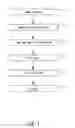
FIG. 1 shows steps of the method for making bricks of the present invention.
DETAILED DESCRIPTION OF THE PREFERRED EMBODIMENT
Referring to FIG. 1, the method for making bricks of the present invention comprises the following steps:
a step of making base 1: mixing ceramic earth, quartz sands and Styrofoam as a base and putting the base in a first mold;
a step of making surface layer 2: coating a top layer of ceramic earth on a top of the base;
a step of making surface patterns 3: molding surface patterns on the top layer of the base by a second mold;
a step of kilning 4: kilning the base in step of making surface patterns for six hours at 1100 degrees Celsius to form a semi-product;
a step of coating glaze: coating a layer of glaze on surfaces of the semi-product, and
a step of kilning: kilning the semi-product for at least one hour at 900 to 1000 degrees Celsius.
The contents in the base are crystallized during the step of kilning so as to form the brick and the surface patterns. The layer of glaze provides the bricks made by the method of the present invention to have an attractive appearance. The Styrofoam is vaporized during kilning and forms a plurality of tiny holes in the bricks. The tiny holes make the bricks made by the method of the present invention to be light in weight so that the bricks can be easily attached to exterior surface of building without need of metal support members.
The method provides an easy way to produce the bricks used on exterior surfaces of buildings and the bricks have desired surface patterns. The bricks made by the method of the present invention are light and easily to be attached on exterior surface of buildings.
While we have shown and described the embodiment in accordance with the present invention, it should be clear to those skilled in the art that further embodiments may be made without departing from the scope of the present invention.
Claims
What is claimed is:1. A method for making bricks comprising:
a step of making base: mixing ceramic earth, quartz sands and Styrofoam as a base and putting the base in a first mold;
a step of making surface layer: coating a top layer of ceramic earth on a top of the base;
a step of making surface patterns: molding surface patterns on the top layer of the base by a second mold;
a step of kilning: kilning the base in step of making surface patterns for six hours at 1100 degrees Celsius to form a semi-product;
a step of coating glaze: coating a layer of glaze on surfaces of the semi-product, and
a step of kilning: kilning the semi-product for at least one hour at 900 to 1000 degrees Celsius.
Images & Drawings included:
Sources:
- United States Patent and Trademark Office - verify current appl. status at the USPTO↗
Similar patent applications:
- » 20180355611
Planter-brick, form for planter-brick, and method of making planter-brick - » 20160039715
CARBONACEOUS BRICKS FOR USE IN CARBON BEDS OF GASIFICATION REACTORS AND METHODS OF MAKING CARBONACEOUS BRICKS - » 20240336525
Catalytic Fuel Bricks and Method of Making Same - » 20100218447
THIN BRICK AND METHOD FOR MAKING - » 20160214905
REFRACTORY BRICKS AND METHODS OF MAKING THE SAME - » 20070098956
Plastic bricks and method for making the same - » 20150003910
ASPHALT BRICK DEVICE AND METHOD OF MAKING SAME - » 20230205186
BRICK MAKING SYSTEM, PRODUCTION CONTROL METHOD, DEVICE, SYSTEM, PRODUCTION EQUIPMENT, AND MEDIUM - » 20120073230
PRE-ENGINEERED BRICK PANEL AND METHODS OF MAKING AND INSTALLING SAME - » 20100090377
Method for making ceramic-coloring clay bricks using waste batteries powder
Recent applications in this class:
- » 20250145531 2025-05-08
METHOD FOR MANUFACTURING TABLETS AND POWDER FOR ECO-FRIENDLY CLAY PREPARATION, TABLETS FOR ECO-FRIENDLY CLAY PREPARATION, AND ECO-FRIENDLY CLAY PREPARED USING SAME - » 20240400458 2024-12-05
Modified calcined kaolin particle with surface amphiphilicity and preparation method thereof - » 20240360038 2024-10-31
CERAMIC COMPOSITIONS - » 20240182365 2024-06-06
COMPOSITION FOR ADDITIVE MANUFACTURING BY BINDER JET PRINTING AND METHOD FOR ADDITIVE MANUFACTURING BY BINDER JET PRINTING - » 20240150246 2024-05-09
BUILDING MATERIALS AND COMPONENTS AND METHODS OF MAKING THE SAME - » 20240150245 2024-05-09
BUILDING MATERIALS AND COMPONENTS AND METHODS OF MAKING THE SAME - » 20240101480 2024-03-28
NANOMATERIAL CERAMIC SPHERES, PREPARATION METHOD, AND APPLICATION THEREOF - » 20240025810 2024-01-25
MANUFACTURING PROCESS OF CALCINED CLAYS IN A ROTARY KILN WITH COLOR CONTROL - » 20230382804 2023-11-30
MATTE CERAMIC TILE AND PREPARATION METHOD THEREOF - » 20230331632 2023-10-19
NANOPOROUS CERAMIC FOR ATOMIZATION CORE AND PREPARATION METHOD THEREOF