Dioxa-tricycloundecane compounds
US20080207482A1
2008-08-28
11/720,661
2005-11-30
✅ Patent granted
US 7,615,525 B2
2009-11-10
WO; PCT/CH2005/000715; 20051130
WO; WO2006/058450; 20060608
Mark Eashoo | Peter F Godenschwager
2026-05-09
Abstract:
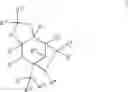
A compound of the formula I
-
- in which the moieties R1—R13 are independently selected from the following moieties:
- R1, R5, R6, R8, R11—H, methyl, ethyl, propyl, isopropyl;
- R3—H, methyl, ethyl, propyl, isopropyl, vinyl;
- R4—H, methyl, ethyl;
- R2, R7, R9—H, methyl, ethyl, propyl, isopropyl, n-butyl, isobutyl, t-butyl;
- R10—H, methyl, ethyl, propyl, isopropyl, t-butyl;
- R12, R13—H, C1-6 linear or branched alkyl;
- or R4 and R11 together with the carbon atoms to which they are attached form a 5- or a 6-membered cycloalkyl ring;
- or R6 and R7 together with the carbon atoms to which they are attached form a cycloalkyl ring having 3, 4, 5 or 6 members.
- The compounds have strong odours and are useful in fragrances and fragrance applications.
Assignee:
- GIVAUDAN SA 476 🇨🇭 Vernier, Switzerland
- Givaudan Schweiz AG 1 🇨🇭 Vernier, Switzerland
Interested in similar patents?
Get notified when new applications in this technology area are published.
Classification:
C07D317/70 » CPC main
Heterocyclic compounds containing five-membered rings having two oxygen atoms as the only ring hetero atoms having the hetero atoms in positions 1 and 3 ortho- or peri-condensed with carbocyclic rings or ring systems condensed with ring systems containing two or more relevant rings
A61K8/49 IPC
Cosmetics or similar toilet preparations characterised by the composition containing organic compounds containing heterocyclic compounds
A61Q13/00 IPC
Formulations or additives for perfume preparations
A61K8/33 IPC
Cosmetics or similar toilet preparations characterised by the composition containing organic compounds containing oxygen
Description
This invention relates to chemical compounds, and more particularly to chemical compounds having novel or enhanced odour properties, and to compositions including such compounds.
It has been found that certain dioxa-tricyclo-undecane compounds have desirable olfactory properties and can therefore be used in applications where such properties are desirable. The invention therefore provides a compound of the formula I
-
- in which the moieties R1—R13 are independently selected from the following moieties:
- R1, R5, R6, R8, R11—H, methyl, ethyl, propyl, isopropyl;
- R3—H, methyl, ethyl, propyl, isopropyl, vinyl;
- R4—H, methyl, ethyl;
- R2, R7, R9—H, methyl, ethyl, propyl, isopropyl, n-butyl, isobutyl, t-butyl;
- R10—H, methyl, ethyl, propyl, isopropyl, t-butyl;
- R12, R13—H, C1-6 linear or branched alkyl;
- or R4 and R11 together with the carbon atoms to which they are attached form a 5- or a 6-membered cycloalkyl ring;
- or R6 and R7 together with the carbon atoms to which they are attached form a cycloalkyl ring having 3, 4, 5 or 6 members.
The definition hereinabove given encompasses all stereochemical forms of the compound. The compound hereinabove described may be a mixture of isomers, or, if desired, it may be resolved by known methods into individual isomers. However, as such resolution inevitably adds to the cost of the process and therefore of the final materials, it is preferred to use the compound as a mixture.
A preferred compound is 8-isopropyl-2,4,4,10,10-pentamethyl-3,5-dioxatricyclo[6.2.1.02,]undecane.
The compounds of the invention may be prepared by known methods, starting from the known compounds II
in which the moieties R1—R11 have the significances hereinabove defined.
The compounds of the invention have strong ambery woody and substantive odours and are useful in the preparation of fragrances and fragrance compositions. The invention therefore provides the use as a fragrance of a compound as hereinabove defined.
The invention further provides the use in a fragrance composition of a compound as hereinabove defined.
The compounds may be used in a broad range of fragrance applications, such as fine and functional fragrances, including perfumes, cosmetics, body care products and household products, for example, laundry, dishwashing and dishwasher products, polishes and cleaners, and so on. The invention therefore also provides a fragrance application comprising at least one compound as hereinabove defined.
The invention is further described with reference to the following non-limiting examples.
EXAMPLE 1
5-Isopropyl-2,7,7-trimethyl-bicyclo[3.2.1]oct-2-ene
A solution of 5-isopropyl-7,7-dimethyl-bicyclo[3.2.1]octan-2-ol (18.5 g, 88 mmol) and KHSO4 (100 mg) in toluene (250 ml) was heated 36 h in a Dean-Starkc apparatus. The solution was cooled and washed once with water and brine, dried (MgSO4) and concentrated in vacuo to yield 5-isopropyl-2,7,7-trimethyl-bicyclo[3.2.1]oct-2-ene (13.77 g, 81%). 13H-NMR (100 MHz, CDCl3): 140.4 (s), 118.7 (d), 52.1 (d), 51.5 (t), 46.1 (s), 46.0 (s), 39.1 (t), 37.6 (d), 37.4 (t), 31.5 (i), 26.9 (q), 24.6 (q), 18.2 (i), 18.0 (q) ppm. GC/MS (EI): 192 (M+, 17), 177 (4), 149 (22), 136 (21), 121 (15), 107 (18), 93 (100), 77 (28), 57 (17), 41 (23). IR (ATR): 2957s, 2933s, 2869m, 1468m, 1452m, 1366m cm−1.
8-Isopropyl-2,4,4,10,10-pentamethyl-3,5-dioxa-tricyclo[6.2.1.02,6]undecane
A solution of 5isopropyl-2,7,7-trimethyl-bicyclo[3.2.1]oct-2-ene (1.00 g, 5.2 mmol), OsO4 (0.052 mmol, 2.5% in t-BuOH) and N-morpholine-N-oxide (913.3 mg, 6.76 mmol) in aqueous acetone (10 ml) was stirred at room temperature for 40 h. The mixture was diluted with MTBE, filtered, concentrated in vacuo and the residue purified by chromatography on silica (hexane:ethyl acetate=7:3). To the resulting diol (0.4 g) was added 2,2-dimethoxy-propane (5 ml) and a catalytic amount of p-TsOH and the solution was stirred for 5 h at room temperature. The mixture was now concentrated and the residue purified by chromatography on silica (hexane:ethyl acetate=95:5) to yield a colorless oil (0.41 g, 30%). 1H-NMR (400 MHz, CDCl3): 4.12 (dd, J=8.9 Hz, 8.5 Hz, 1H, 6-H), 2.09 (dd, J=12.0 Hz, 2.1 Hz, 1H, 11-Ha), 1.84 (d, J=5.1 Hz, 1H, 1-H), 1.80 (ddd, J=14.2 Hz, 8.9 Hz, 2.5 Hz, 1H, 7-Ha), 1.62 (ddd, J=14.2 Hz, 6.1 Hz, 2.1 Hz, 1H, 7-Hb), 1.53-1.48 (m, 1H, 11-Hb), 1.52 (s, 3H), 1.48 (s, 6H), 1.46 (sept., J=6.8 Hz, 1H, 8-CH(CH3)2), 1.38 (dd, J=13.2 Hz, 2.0 Hz, 1H, 9-Ha), 1.26 (dd, J=13.2 Hz, 2.0 Hz, 1H, 9-Hb), 1.16 (s, 3H), 1.10 (s, 3H), 0.86 (d, J=6.8 Hz, 3H, 8-CH(CH3)a), 0.80 (d, J=6.8 Hz, 3H, 8-CH(CH3)b) ppm. 13H-NM (100 MHz, CDCl3): 108.6 (s), 84.6 (s), 78.2 (d), 54.3 (d), 52.4 (t), 45.7 (s), 39.4 (s), 38.1 (t), 37.7 (d), 36.1 (t), 35.1 (q), 30.4 (q), 29.7 (i), 29.4 (q), 27.6 (q), 18.2 (q), 17.9 (q) ppm. GC/MS (EI): 266 (M+, 1), 251 (14), 209 (46), 165 (98), 137 (67), 109 (31), 95 (52), 81 (42), 69 (36), 55 (39), 43 (100), 41 (49). IR (ATR): 2958m, 2873m, 1466m, 1366m, 1229s, 1207m, 1074s, 1049m, 1014m cm−1.
EXAMPLE 2
The following compounds were prepared according to example 1.
5-sec-Butyl-2,7,7-trimethyl-bicyclo[3.2.1]oct-2-ene
Mixture of 2 diastereomers: 13H-NMR (100 MHz, CDCl3): 140.4 (2s), 118.7, 118.6 (d), 52.7, 52.3 (t), 52.0, 51.9 (d), 46.7, 46.6 (s), 45.9, 45.8 (s), 45.8, 45.5 (d), 39.5, 39.3 (t), 37.6, 37.0 (t), 31.6, 31.5 (q), 26.9 (2q), 24.9, 24.8 (t), 24.6 (2q), 14.2, 14.1 (o), 18.0, 12.9 (q) ppm. GC/MS (EI): 206 (M+, 14), 177 (4), 149 (38), 135 (4), 121 (24), 107 (19), 93 (100), 77 (18), 57 (35), 41 (17). IR (ATR): 2959s, 2930s, 2866m, 1451m, 1378m, 884m cm−1.
8-sec-Butyl-2,4,4,10,10-pentamethyl-3,5-dioxa-tricyclo[6.2.1.02,6]undecane
Mixture of 2 diastereomers (in a ratio of 1:1): 1H-NMR (400 MHz, CDCl3): 4.10 (ddd, J=2.5, 6.2, 8.7 Hz, 1H), 2.18-2.11 (m, 1H), 1.85-1.81 (m, 11), 1.79-1.26 (m, 6H), 1.52 (s, 3H), 1.48 (s, 6H), 1.15 (s, 3H), 1.10 (s, 3H), 0.88 (t, J=7.4 Hz, 3H), 0.85, 0.78 (2d, J=6.8 Hz, 3H) ppm. 13H-NMR (100 MHz, CDCl3): 108.6 (2s), 84.6 (2s), 78.2 (2s), 54.2, 54.1 (d), 53.3, 53.1 (t), 46.2 (2s), 45.9 (d), 45.6 (d), 39.4, 39.2 (s), 38.3, 38.1 (t), 36.4, 36.2 (t), 35.1 (2q), 30.4 (2q), 29.7 (2q), 29.4 (2q), 27.6 (2q), 24.9, 24.8 (t), 14.3, 14.0 (q), 13.0, 12.8 (q) ppm. GC/MS (EI): 280 (M+, 2), 265 (35), 223 (96), 165 (31), 151 (100), 109 (24), 95 (33), 81 (18), 57 (33), 43 (35).
Claims
1. A compound of the formula I
in which the moieties R1—R13 are independently selected from the following moieties:
R1, R5, R6, R8, R11—H, methyl, ethyl, propyl, isopropyl;
R3—H, methyl, ethyl, propyl, isopropyl, vinyl;
R4—H, methyl, ethyl;
R2, R7, R9—H, methyl, ethyl, propyl, isopropyl, n-butyl, isobutyl, t-butyl;
R10—H, methyl, ethyl, propyl, isopropyl, t-butyl;
R12, R13—H, C1-6 linear or branched alkyl;
or R4 and R11 together with the carbon atoms to which they are attached form a 5- or a 6-membered cycloalkyl ring;
or R6 and R7 together with the carbon atoms to which they are attached form a cycloalkyl ring having 3, 4, 5 or 6 members.
2. 8-isopropyl-2,4,4,10,10-pentamethyl-3,5-dioxatricyclo[6.2.1.02,6]undecane.
3. A fragrant compound according to claim 1.
4. A fragrance composition comprising compound according to claim 1.
5. A fragrance application comprising at least one compound according to claim 1.
6. A fragrance composition comprising 8-isopropyl-2,4,4,10,10-pentamethyl-3,5-dioxa-tricyclo[6.2.1.02,6]undecane.
7. A fragrance application according to claim 5 wherein the fragrance application is selected from the group consisting of: fine fragrances, functional fragrances, perfumes, cosmetics, body care products, household products, laundry products, dishwashing products, dishwasher products, polishes and cleaners.
8. A fragrance application according to claim 7 wherein the fragrance application is selected from the group consisting of: fine fragrances, perfumes, cosmetics and body care products.
9. A fragrance application according to claim 7 wherein the fragrance application is selected from the group consisting of: household products, laundry products, dishwashing products, dishwasher products, polishes and cleaners.
Images & Drawings included:


Sources:
- United States Patent and Trademark Office - verify current appl. status at the USPTO↗
Recent applications in this class:
- » 20230219918 2023-07-13
(3aS,4aR,5S,7aS,9R,9aR)-2,2,5,8,8,9a-hexamethyloctahydro-4H-4a,9-methanoazuleno[5,6-d][1,3]dioxole - » 20220106285 2022-04-07
Amber odorant - » 20220041569 2022-02-10
(3aS,4aR,5S,7aS,9R,9aR)-2,2,5,8,8,9a-hexamethyloctahydro-4H-4a,9-methanoazuleno[5,6-d][1,3]dioxole - » 20200299254 2020-09-24
Amber odorant - » 20190062298 2019-02-28
Indene derivatives and uses thereof - » 20160168114 2016-06-16
Oxone-aceton mediated metal free preparation of syn-diols - » 20110104098 2011-05-05
Isolongifolanyl-derivatives suitable as odorants - » 20100120737 2010-05-13
Amorphous ciclesonide - » 20100120733 2010-05-13
STEROID MODULATORS OF GLUCOCORTICOID RECEPTOR - » 20100048923 2010-02-25
ATR Inhibitor
Recent applications for this Assignee:
- » 20240312573 2024-09-19
Method Related to Organic Compositions - » 20240296916 2024-09-05
Method Related to Organic Compositions - » 20240141259 2024-05-02
USE OF ENZYMES FOR IMPROVING FRAGRANCE DEPOSITION - » 20240122837 2024-04-18
PROCESS - » 20240099330 2024-03-28
Encapsulation - » 20240018077 2024-01-18
METHOD OF MITIGATING CONVERSION OF VOLATILE TERPENE SPECIES - » 20240016711 2024-01-18
Perfume compositions - » 20230357809 2023-11-09
Solid form of (−)-Ambrox formed by a bioconversion of homofarnesol in the presence of a biocatalyst - » 20230322645 2023-10-12
PROCESS FOR MAKING A CONJUGATED DIENE FROM AN ALLYL ALCOHOL - » 20230286883 2023-09-14
Method of causing conversion of volatile terpene species