Film for Pressure Roller
US20080213569A1
2008-09-04
11/665,336
2005-08-19
Abstract:
The invention aims to provide a film for a pressure roller, without requiring an adhesive layer and capable of maintaining or improving conventionally obtained characteristics such as a tensile strength, a tear strength and an excellent releasing property with a recording material. The invention provides a film for a pressure roller, including a polyimide layer in which fluorinated resin powder is dispersed. The fluorinated resin powder is dispersed in an amount of from 10 to 20 vol % in the polyimide layer, and has an average particle size of from 1 to 20 μm.
Inventors:
- Daisuke SHOJI 3 🇯🇵 Osaka, Japan
- Masahiro Habuka 4 🇯🇵 Osaka, Japan
- Chiaki Kato 1 🇯🇵 Osaka, Japan
Assignee:
- SUMITOMO ELECTRIC FINE POLYMER, INC. 40 🇯🇵 Osaka, Japan
Interested in similar patents?
Get notified when new applications in this technology area are published.
Classification:
F16C13/00 » CPC main
Rolls, drums, discs, or the like ; Bearings or mountings therefor
C08J5/18 » CPC further
Manufacture of articles or shaped materials containing macromolecular substances Manufacture of films or sheets
G03G15/2057 » CPC further
Apparatus for electrographic processes using a charge pattern for fixing, e.g. by using heat using heat using contact heat; Structural details of heat elements, e.g. structure of roller or belt, eddy current, induction heating relating to the chemical composition of the heat element and layers thereof
C08J2379/08 » CPC further
Characterised by the use of macromolecular compounds obtained by reactions forming in the main chain of the macromolecule a linkage containing nitrogen with or without oxygen, or carbon only, not provided for in groups - ; Polycondensates having nitrogen-containing heterocyclic rings in the main chain; Polyhydrazides; Polyamide acids or similar polyimide precursors Polyimides; Polyester-imides; Polyamide-imides; Polyamide acids or similar polyimide precursors
C08L27/12 » CPC further
Compositions of homopolymers or copolymers of compounds having one or more unsaturated aliphatic radicals, each having only one carbon-to-carbon double bond, and at least one being terminated by a halogen; Compositions of derivatives of such polymers not modified by chemical after-treatment containing fluorine atoms
Y10T428/254 » CPC further
Stock material or miscellaneous articles; Web or sheet containing structurally defined element or component and including a second component containing structurally defined particles Polymeric or resinous material
C08L79/08 » CPC further
Compositions of macromolecular compounds obtained by reactions forming in the main chain of the macromolecule a linkage containing nitrogen with or without oxygen or carbon only, not provided for in groups - ; Polycondensates having nitrogen-containing heterocyclic rings in the main chain; Polyhydrazides; Polyamide acids or similar polyimide precursors Polyimides; Polyester-imides; Polyamide-imides; Polyamide acids or similar polyimide precursors
C08L2666/08 » CPC further
Composition of polymers characterized by a further compound in the blend, being organic macromolecular compounds, natural resins, waxes or and bituminous materials, non-macromolecular organic substances, inorganic substances or characterized by their function in the composition; Organic macromolecular compounds, natural resins, waxes or and bituminous materials; Macromolecular compounds according to groups - , or - ; Derivatives thereof Homopolymers or copolymers according to - ; Derivatives thereof
B32B5/16 IPC
Layered products characterised by the non- homogeneity or physical structure, i.e. comprising a fibrous, filamentary, particulate or foam layer; Layered products characterised by having a layer differing constitutionally or physically in different parts characterised by features of a layer formed of particles, e.g. chips, powder or granules
Description
TECHNICAL FIELD
The present invention relates to a film for a pressure roller in a fixing device for fixing a toner transferred onto a recording material, in an image forming apparatus utilizing an electrophotographic process, particularly in an image forming apparatus such as a copy machine or a laser printer.
BACKGROUND TECHNOLOGY
In an image forming apparatus such as a copy machine or a laser printer, a known fixing device for fixing a toner transferred onto a recording material, includes a fixing roller serving as a heating rotary member, and a pressure roller serving as a pressurizing rotary member which is pressurized to the fixing roller.
A recording material (such as a transfer paper, a printing paper or an electrostatic recording paper) bearing an unfixed image (toner image) is introduced into pressurized nips between the rollers by rotation of these rollers. Then, upon passing through the pressurized nip, by a heat from the heating fixing roller and a pressure in the pressurized nip, the toner constituting the unfixed image is hot pressing fixed onto the recording material as a permanent image.
In the fixing device of such image forming apparatus, a film may be employed in the pressure roller.
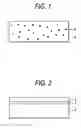
Such film is required to have a releasing property with the toner in addition to characteristics such as a tensile strength and a tear strength, and a film as illustrated in FIG. 2 is utilized.
More specifically, employed is a film prepared by adhering a sheet 1 of a fluorinated resin having an excellent releasing property with the toner and a polyimide sheet 2 by an adhesive material 3 (Patent Reference 1).
However, because of a low adhesive force of the fluorinated resin, the aforementioned film requires the adhesive material 3 for adhering the sheet 1 of fluorinated resin and the polyimide sheet 2, thus involving problems such as a peeling caused due to the adhesive material 3, an increase in the number of production steps, a quality control of plural layers including the adhesive layer, and a high cost.
Patent Reference 1: Japanese Patent Examined Publication JP-B-3032726.
DISCLOSURE OF THE INVENTION
Problems the Invention is to Solve
The object to be accomplished by the present invention is to obtain a film for a pressure roller, not requiring an adhesive layer and capable of maintaining or improving conventionally obtained characteristics such as a tensile strength, a tear strength and an excellent releasing property with a recording material, and to obtain a pressure roller utilizing such film.
Means for Solving the Problems
Through an intensive investigation undertaken by the present inventor, it is found that the aforementioned object can be accomplished by dispersing fluorinated resin powder in polyimide, and the present invention has thus been made.
Thus, the present invention is to provide a film for a pressure roller, characterized in including a polyimide layer in which fluorinated resin powder is dispersed.
Conventionally, a fluorinated resin layer having an excellent releasing property is formed on the film surface in view of releasing property with the toner, however, it is found that the releasing property required in the film for pressure roller can be sufficiently satisfied, even without the layer of fluorinated resin, by dispersing fluorinated resin powder in polyimide.
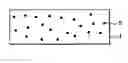
FIG. 1 is a cross-sectional view of a film for pressure roller of the present invention, in which illustrated are a polyimide layer 4 and fluorinated resin powder 5 dispersed in the polyimide layer 4.
The fluorinated resin powder to be dispersed in the polyimide layer is, in consideration of the releasing property and the dispersibility in the polyimide layer, preferably a polymer or a copolymer of a monomer such as vinylidene fluoride, trifluoroethylene, tetrafluoroethylene, tetrafluoropropylene or hexafluoropropylene.
Second aspect of the invention corresponds to such preferred embodiment, and is to provide the film for pressure roller wherein the fluorinated resin powder is at least one of polymers and copolymers of a monomer which is vinylidene fluoride, trifluoroethylene, tetrafluoroethylene, tetrafluoropropylene or hexafluoropropylene.
The fluorinated resin powder is preferably dispersed in an amount of from 10 to 20 vol % in the polyimide layer. An amount of 10 vol % or higher allows to secure a sufficient releasing property with the toner, and an amount of 20 vol % or lower allows to secure an enough tensile strength and an enough tear strength of the film.
Third aspect of the invention corresponds to such preferred embodiment, and provides the film for pressure roller characterized in that the fluorinated resin powder is dispersed in an amount of from 10 to 20 vol % in the polyimide layer.
An average particle size of the fluorinated resin powder influences the surface roughness, thus eventually affecting the strength and the releasing property. Therefore, the average particle size is preferably within a range of from 1 to 20 μm.
Fourth aspect of the invention corresponds to such preferred embodiment, and provides the film for pressure roller characterized in that the fluorinated resin powder has an average particle size of from 1 to 20 μm.
In order to secure the enough tensile strength and the tear strength of the film for pressure roller, the film preferably has a thickness of from 30 to 150 μm. A thickness of 30 μm or larger allows to sufficiently secure the tensile strength and the tear strength, and a thickness of 150 μm or smaller reduces a heat capacity, thereby reducing a heat quantity required for heat fusing of the toner.
Fifth aspect of the invention corresponds to such preferred embodiment, and provides the film for pressure roller, characterized in having a thickness of from 30 to 150 μm.
The film for pressure roller described above has a releasing property required for the pressure roller, and does not cause a problem of peeling of the fluorinated resin layer in the course of use.
ADVANTAGES OF THE INVENTION
The film for pressure roller of the present invention, being characterized in that the fluorinated resin powder is dispersed in polyimide, does not require formation of an adhesive layer, thus being free from the problem of peeling induced by the adhesive material. Furthermore, the number of steps in the production process is limited, also the quality control for the plural layers including the adhesive layer is limited to the quality control of single-layered film, and the cost is made low. Thus obtained is a film for pressure roller of a high and stable quality, having an excellent releasing property with the toner, and an improved inner-surface sliding property (slidability between the inner surface of the pressure roller and another component).
When the fluorinated resin powder is dispersed in the film for the pressure roller in an amount of 10 to 20 vol %, the releasing property with the toner can be satisfied, and the tensile strength and the tear strength of the film can be sufficiently secured.
Also when the film for the pressure roller has the fluorinated resin powder having an average particle size of from 1 to 20 μm, the releasing property with the toner can be satisfied, and the tensile strength and the tear strength of the film can be sufficiently secured.
Furthermore, when a thickness of the film for the pressure roller from 30 to 150 μm, the tensile strength and the tear strength of the film can be sufficiently secured.
BRIEF DESCRIPTION OF THE DRAWINGS
FIG. 1 is a cross-sectional view illustrating an of a film for a pressure roller of the present invention.
FIG. 2 is a cross-sectional view illustrating an example of a prior film for a pressure roller.
DESCRIPTION OF SYMBOLS
- 1 sheet formed by fluorinated resin
- 2 sheet formed by polyimide
- 3 adhesive material
- 4 polyimide layer
- 5 fluorinated resin powder
BEST MODE FOR CARRYING OUT THE INVENTION
Example 1
To a tetrafluoroethylene-perfluoroalkoxyethylene copolymer (PFA, average particle size is about 10 μm) MP-311, manufactured by Mitsui-DuPont Fluorochemical Co., a polyimide varnish of U-varnish S301, manufactured by Ube Industries, Ltd. was added in proportions shown in Table 1, with respect to the total amount of the two.
The obtained mixtures were kneaded, molded into a cylindrical shape and dried.
Then these were sintered in an atmosphere of 400° C. for 2 hours to obtain films for pressure roller.
Then the obtained films for pressure roller were investigated for tensile strengths in the axial direction and the circumferential direction of the pressure roller, by a tensile-compression tester AGS-500D, manufactured by Shimadzu Corp. Results are shown in Table 1.
| TABLE 1 | |||
| sample | |||
| No. | PFA addition amount | axial tensile | circumferential tensile |
| 1 | 0 vol % | 235 MPa | 274 MPa |
| 2 | 10 vol % | 147 MPa | 178 MPa |
| 3 | 20 vol % | 121 MPa | 132 MPa |
| 4 | 30 vol % | 96 MPa | 100 MPa |
Then the obtained films for pressure roller were investigated for elongations in the axial direction and the circumferential direction of the pressure roller, by a tensile-compression tester AGS-500D, manufactured by Shimadzu Corp. Results are shown in Table 2.
| TABLE 2 | |||
| PFA | |||
| sample No. | addition amount | axial tensile | circumferential tensile |
| 1 | 0 vol % | 49% | 55% |
| 2 | 10 vol % | 19% | 30% |
| 3 | 20 vol % | 18% | 15% |
| 4 | 30 vol % | 16% | 15% |
Then the obtained films for pressure roller were investigated for tear strengths in the axial direction and the circumferential direction of the pressure roller, by a tensile-compression tester AGS-500D, manufactured by Shimadzu Corp. Results are shown in Table 3.
| TABLE 3 | |||
| sample | |||
| No. | PFA addition amount | axial tensile | circumferential tensile |
| 1 | 0 vol % | 198 N/mm | 210 N/mm |
| 2 | 10 vol % | 155 N/mm | 136 N/mm |
| 3 | 20 vol % | 61 N/mm | 56 N/mm |
| 4 | 30 vol % | 57 N/mm | 53 N/mm |
Then, films for pressure roller of total lengths of 100 mm and 10 mm were obtained by a process as same as the above described process. Subsequently, the films for pressure roller were investigated for buckling load, by a tensile-compression tester AGS-500D, manufactured by Shimadzu Corp. In the measurement, a belt of φ 32.3 (thickness 90 μm) was compressed in the axial direction, and a maximum load at the buckling was taken as a buckling load. Results are shown in Table 4.
| TABLE 4 | |||
| sample | PFA | ||
| No. | addition amount | total length 100 mm | total length 10 mm |
| 1 | 0 vol % | 80 N | 64 N |
| 2 | 10 vol % | 48 N | 49 N |
| 3 | 20 vol % | 45 N | 42 N |
| 4 | 30 vol % | 39 N | 38 N |
Then the films for pressure roller were investigated for roughness (Rz) on the outer surface in the axial direction and in the circumferential direction, utilizing a surface roughness measuring instrument Surfcom 480A, manufactured by Tokyo Seimitsu Co. Results are shown in Table 5.
| TABLE 5 | |||
| sample | circumferential | ||
| No. | PFA addition amount | axial measurement | measurement |
| 1 | 0 vol % | 0.4 μm | 0.1 μm |
| 2 | 10 vol % | 3.2 μm | 2.9 μm |
| 3 | 20 vol % | 3.6 μm | 3.2 μm |
| 4 | 30 vol % | 3.8 μm | 3.7 μm |
Then the films for pressure roller were investigated for roughness (Rz) on the inner surface in the axial direction and in the circumferential direction, utilizing a surface roughness measuring instrument Surfcom 480A, manufactured by Tokyo Seimitsu Co. Results are shown in Table 6.
| TABLE 6 | |||
| sample | circumferential | ||
| No. | PFA addition amount | axial measurement | measurement |
| 1 | 0 vol % | 0.9 μm | 0.4 μm |
| 2 | 10 vol % | 2.4 μm | 2.3 μm |
| 3 | 20 vol % | 2.8 μm | 2.8 μm |
| 4 | 30 vol % | 3.6 μm | 3.5 μm |
Then the films for pressure roller were investigated for a contact angle (cross-sectional angle of a water drop dropped on a measured surface) at the surface side by a contact angle meter CA-D, manufactured by Kyowa Interface Science Co.
The measurements were executed on a film subjected to surface polishing and a film not subjected to surface polishing. The surface polishing was executed by rotating the film for pressure roller, which is obtained by the above process, at 600 rpm and pressing a polishing film. Results are shown in Table 7.
| TABLE 7 | |||
| PFA | with | without | |
| sample No. | addition amount | surface polishing | surface polishing |
| 1 | 0 vol % | 73° | — |
| 2 | 10 vol % | 86° | 83° |
| 3 | 20 vol % | 88° | 85° |
| 4 | 30 vol % | 90° | 91° |
As will be apparent from the foregoing results, the characteristics required in the film for pressure roller are sufficiently satisfied in the samples of Sample Nos. 2 and 3 which are within the range of the present invention.
Claims
1-5. (canceled)
6. A film for a pressure roller, essentially consisting of a polyimide layer; and
fluorinated resin powder dispersed in the polyimide layer.
7. The film for the pressure roller according to claim 6, wherein the fluorinated resin powder is at least one of polymers and copolymers of a monomer which is vinylidene fluoride, trifluoroethylene, tetrafluoroethylene, tetrafluoropropylene or hexafluoropropylene.
8. The film for the pressure roller according to claim 6, wherein the fluorinated resin powder is dispersed in an amount of from 10 to 20 vol % in the polyimide layer.
9. The film for the pressure roller according to claim 6, wherein the fluorinated resin powder has an average particle size of from 1 to 20 μm.
10. The film for the pressure roller according to claim 6, wherein a thickness of the film for the pressure roller is from 30 to 150 μm.
Images & Drawings included:
Sources:
- United States Patent and Trademark Office - verify current appl. status at the USPTO↗
Recent applications in this class:
- » 20240068509 2024-02-29
COVERED ROLLER, AND COVERED ROLLER LIFESPAN DETECTION METHOD - » 20210180646 2021-06-17
End-fitting for industrial machine rollers - » 20180003218 2018-01-04
LAMINATE AND CONDUCTIVE ROLLER - » 20170314613 2017-11-02
Powder for thermal spray, thermal spray coating film, coating film and roll in molten metal bath - » 20170314612 2017-11-02
Powder for thermal spray, thermal spray coating film, coating film and roll in molten metal bath - » 20170204899 2017-07-20
Assembly structure of roller - » 20150308493 2015-10-29
Driver roller of a winding device of a rolling mill, and method for producing same - » 20150087490 2015-03-26
Soft rubber roll cover with wide grooves - » 20140243177 2014-08-28
Roll with an Elastic Roll Cover in a Paper or Board Machine - » 20140235415 2014-08-21
Transporting member, developing device, and image forming apparatus
Recent applications for this Assignee:
- » 20250087912 2025-03-13
HEAT SHRINKABLE CONNECTING COMPONENT AND METHOD OF MANUFACTURING HEAT SHRINKABLE CONNECTING COMPONENT - » 20250050275 2025-02-13
HOLLOW FIBER MEMBRANE MODULE AND HOLLOW FIBER MEMBRANE FOR MODULE - » 20240246038 2024-07-25
AERATION MODULE - » 20240106221 2024-03-28
HEAT SHRINKABLE TUBE, HEAT SHRINKABLE COUPLING COMPONENT, METHOD OF MANUFACTURING HEAT SHRINKABLE TUBE, AND METHOD OF MANUFACTURING HEAT SHRINKABLE COUPLING COMPONENT - » 20230220922 2023-07-13
Valve member - » 20230025394 2023-01-26
Method for manufacturing hollow fiber membrane module, and hollow fiber membrane module - » 20220388287 2022-12-08
Formed article - » 20210394122 2021-12-23
Hollow-fiber membrane module - » 20210379537 2021-12-09
Hollow-fiber membrane and hollow-fiber membrane module - » 20200309731 2020-10-01
Method of making oil repellent sheet material and gas sensor