System and method for validation of middleware failover behavior
US20080215743A1
2008-09-04
12/072,183
2008-02-25
✅ Patent granted
US 7,890,616 B2
2011-02-15
-
-
Thuong T Nguyen
2029-03-20
Abstract:
An information processing system containing middleware and backend server software components is augmented with the ability to validate the behavior of the middleware system when one or more backend servers are unavailable, based on dynamic reconfiguration of the network layer protocol software component in the operating system underlying the middleware software component.
Assignee:
- Informed Control Inc 6 🇺🇸 Austin, TX, United States
Interested in similar patents?
Get notified when new applications in this technology area are published.
Classification:
H04L41/0803 » CPC main
Arrangements for maintenance, administration or management of data switching networks, e.g. of packet switching networks; Configuration management of networks or network elements Configuration setting
H04L41/046 » CPC further
Arrangements for maintenance, administration or management of data switching networks, e.g. of packet switching networks; Network management architectures or arrangements comprising network management agents or mobile agents therefor
H04L41/0659 » CPC further
Arrangements for maintenance, administration or management of data switching networks, e.g. of packet switching networks; Management of faults, events, alarms or notifications using network fault recovery by isolating or reconfiguring faulty entities
H04L43/0817 » CPC further
Arrangements for monitoring or testing data switching networks; Monitoring or testing based on specific metrics, e.g. QoS, energy consumption or environmental parameters by checking availability by checking functioning
G06F15/16 IPC
Digital computers in general ; Data processing equipment in general Combinations of two or more digital computers each having at least an arithmetic unit, a program unit and a register, e.g. for a simultaneous processing of several programs
G06F15/173 IPC
Digital computers in general ; Data processing equipment in general; Combinations of two or more digital computers each having at least an arithmetic unit, a program unit and a register, e.g. for a simultaneous processing of several programs; Interprocessor communication using an interconnection network, e.g. matrix, shuffle, pyramid, star, snowflake
Description
CROSS-REFERENCE TO RELATED APPLICATIONS
This application claims the benefit of PPA Ser. No. 60/904,528 filed Mar. 2, 2007 by the present inventor, which is incorporated by reference.
FEDERALLY SPONSORED RESEARCH
Not applicable
SEQUENCE LISTING OR PROGRAM
Not applicable
BACKGROUND OF THE INVENTION
1. Field of Invention
This invention relates generally to the management of distributed systems in computer networks.
2. Prior Art
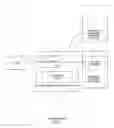
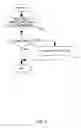
In many enterprise computer networks, a ‘multi-tier’ application deployment model is used. A client application, running on a user's desktop computer system attached to the enterprise network, accesses a network-based service provided by an application server located on a server computer on that network. That application server may in turn act as a middleware client to access other network-based services, provided by backend servers or databases located on other server computer systems on that network. FIG. 2 is a diagram that illustrates the network protocol connections between a client (35) and an application server that integrates a middleware component (34), and between that middleware component and a backend server (37) and optionally an alternate backend computer system (38).
Many servers and databases support high availability for the services they provide, by enabling the service to be implemented by multiple, coordinated servers located on distinct server computer systems. Should one computer system providing the service become unavailable, the other server or servers for that service will continue to provide the service to the middleware clients.
In some cases, the high availability capability provided by a particular vendor's servers is integrated with the network infrastructure, so that a middleware client is not aware when a particular server becomes unavailable. However, it is more common for the server software to be independent of the network infrastructure. Thus, the middleware client for a particular service must be configured with a set of network addresses of the servers that provide that service. If the middleware client detects that a server providing a particular service is unavailable, then the middleware client will retry the operation at another server for that service. This requires that the configuration information of the network addresses of the set of servers providing a particular service be provided to all potential middleware clients of that service. As in many cases this is manually configured by a system administrator when an application server that contains a middleware client is installed, there is a risk that changes to the server or network topology might result in the application server that contains a middleware client no longer holding the correct configuration information. This configuration issue has historically been difficult to detect as the application server might appear to be working properly, and only fail when some of the servers that it has been relying upon become unavailable.
Testing of the failover behavior of a middleware software component under conditions of network or backend server failure is useful to validate the correct operation of that component, and to predict whether the component will function properly should a particular backend server which that component relies upon become unavailable. However, shutting down a backend server in order to test middleware software can be difficult or inappropriate for many enterprises, as:
-
- the backend server might be operated by a different department in the enterprise, or might be operated by another enterprise to which this enterprise has outsourced some network services,
- improperly shutting down a backend server might risk corruption of that server's state,
- shutdown of a backend server might result in alarms being generated, or
- the shutdown and recovery of a backend server might require several hours as the backend server restores its state prior to the failure.
SUMMARY
In order to validate the correct operation of a middleware software component under conditions of network or backend server failure, this invention simulates the failure by reconfiguring the network layer of the computer system on which that middleware software component is installed.
DRAWINGS—FIGURES
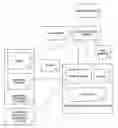
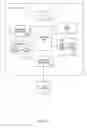
FIG. 1 is a diagram that illustrates the components of the system for middleware failover behavior.
FIG. 2 is a diagram that illustrates prior art components of a computer network.
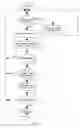
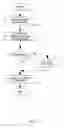
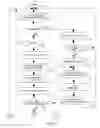
FIG. 3 is a flowchart that illustrates the behavior of an agent protocol thread.
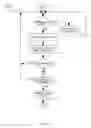
FIG. 4 is a flowchart that illustrates the behavior of an agent scheduling thread.
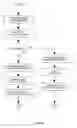
FIG. 5 is a flowchart that illustrates the behavior of a middleware agent monitoring task.
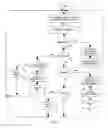
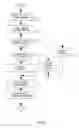
FIG. 6A, FIG. 6B and FIG. 6C are a flowchart that illustrates the behavior of a coordination server scheduling thread.
FIG. 7A and FIG. 7B are a flowchart that illustrates the behavior of a coordination server administrator interaction thread.
FIG. 8 is a flowchart that illustrates the behavior of a backend agent monitoring task.
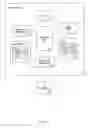
FIG. 9 is a diagram illustrating typical components of an enterprise computer network.
FIG. 10 is a diagram illustrating the typical components of a server computer system that hosts application software and agent software.
FIG. 11 is a diagram illustrating the typical components of a server computer system that hosts application software.
FIG. 12, FIG. 13 and FIG. 14 are diagrams illustrating the structure of tables in a database.
DRAWINGS—REFERENCE NUMERALS
10 Client
12 Middleware computer system
14 Middleware
16 Middleware agent
17 Time server
18 Protocol
20 Coordination server
22 Administrator
24 Backend server
26 Backend system agent
28 Database
30 Backend computer system
31 Alternate backend computer system
32 Middleware computer system
33 Network layer
34 Middleware
35 Client
36 Backend computer system
37 Backend server
38 Alternate backend computer system
260 Intranet switch
262 Middleware computer
263 Time server computer
264 Middleware computer
266 Application server computer
268 Backend computer
270 Backend computer
272 Coordination server computer
274 Administrator workstation
280 Computer system
282 CPU
284 System bus
286 BIOS ROM
288 RAM
290 Hard disk interface
292 Hard disk
294 Network interface
296 LAN switch
298 Operating system software on hard disk
300 Agent software on hard disk
302 Application software on hard disk
304 Operating system in memory
306 Agent in memory
308 Application in memory
320 Computer system
322 CPU
324 System bus
326 BIOS ROM
328 RAM
330 Hard disk interface
332 Hard disk
334 Network interface
336 LAN switch
338 Operating system software on disk
340 Application software on disk
342 Operating system in memory
344 Application in memory
360 Pending list table
362 Agent table
363 Middleware table
364 Failover table
366 Completion table
368 Agent info table
DESCRIPTION
The goal of this invention is to validate that failover capability of a middleware component is working properly. To achieve this goal, an agent installed on the same computer system as the middleware component being tested is instructed to manipulate the network layer of the operating system. In the case of a TCP/IP network layer, the changes are to reconfigure of IP implementation settings to:
-
- block incoming connections to the middleware component except from the coordination server,
- block outgoing connections to a specified backend server, and
- monitor outgoing connections to determine what backend servers are contacted by the middleware component.
This invention consists of the following software components, as illustrated in the diagram of FIG. 1:
-
- a coordination server (20) that manages the tests of middleware behavior,
- a database (28) used by the coordination server to store the configuration parameters and test results,
- a time server (17) that ensures there is time synchronization between the computer systems and servers,
- a middleware agent (16) that interacts with the network layer protocol implementation (18) of the computer system (12) where both it and a middleware component (14) are installed, and
- a backend system agent (26) that monitors the network layer implementation of the computer system (30) where both it and a backend server (24) are installed.
The coordination server (20) can be implemented in software as a web-enabled application running in an application server or web server. The coordination server incorporates two threads of processing: a coordination server scheduling thread, illustrated by the flowchart of FIG. 6A, FIG. 6B and FIG. 6C, and a server administration interaction thread, illustrated by the flowchart of FIG. 7A and FIG. 7B. The coordination server scheduling thread obtains the list of scheduled pending tests from the database, communicates with the middleware components to cause them to attempt interactions with the backend servers, communicates with the agents to cause them to perform the network layer reconfiguration and network statistics gathering to observe the middleware behavior, and sends a report to the administrator. The server administration interaction thread waits for requests from the administrator (22) to create or abandon scheduled pending tests.
The database (28) can be implemented as a relational database. It contains the following tables: a pending list table (360), an agent table (362), a middleware table (363), a failover table (364), a completion table (366) and an agent info table (368).
The pending list table (360) in the database has one row for each pending test that has not yet been completed. The primary key of this table is the TEST ID column. The columns of this table are:
-
- TEST ID: a unique identifier for the test,
- START DATE: the scheduled date and time for the test to begin,
- STATE: whether the test is pending, in progress, or abandoned,
- AGENT LIST: a list of agents participating in the test, and
- END DATE: the date and time for the test to complete.
The agent table (362) in this database has one row for each backend agent and one row for each middleware agent. The primary key for this table is the AGENT ID column. The columns of this table are:
-
- AGENT ID: a unique identifier for the agent,
- SYSTEM: the network address of the computer system on which the agent is installed,
- CREDENTIALS: the credentials to access the agent,
- NETWORK SETTINGS: the changes to the operating system network layer for the agent to make on the computer system, and
- STATE: whether the agent is active, or no longer present.
The middleware table (363) in this database has one row for each middleware agent. The primary key for this table is the AGENT ID column. The columns of this table are:
-
- AGENT ID: the unique identifier for the agent,
- PORT: the TCP port number for connections to be made to the middleware software,
- SOFTWARE: an identifier for the middleware software version and configuration,
- CREDENTIALS: credentials for the coordination server to authenticate to the middleware software, and
- PROTOCOL SETTINGS: settings for the protocol for the coordination server to communicate with the middleware software.
The failover table (364) in this database has one row for each middleware component failover detected by a middleware agent. The columns of this table are:
-
- AGENT ID: the unique identifier of the agent,
- SYSTEM: the network address of the computer system on which the agent is installed,
- DATE: the date and time that the failover was detected,
- ALT SYSTEM: the system to which the failover occurred, and
- STATE: the state of this row.
The completion table (366) in this database has one row for each test that has been completed. The primary key of this table is the TEST ID column. The columns of this table are:
-
- TEST ID: a unique identifier for the test,
- DATE: the date and time the test completed,
- STATE: the result of the test,
- AGENT LIST: a list of the identifiers of the agents that participated in the test, and
- REPORT: a copy of the report provided to the administrator as a result of this test.
The agent info table (368) in this database has one row for each agent that participated in a particular test. The TEST ID and AGENT ID columns together form the primary key of this table. The columns of this table are:
-
- TEST ID: the unique identifier of the test,
- AGENT ID: the unique identifier of the agent,
- STATISTICS: statistics returned by the agent, and
- FAILOVER: failover information returned by the agent.
The middleware agent (16) can be implemented in software running on a computer system that is started automatically when the computer system boots. On Microsoft Windows platforms, the software can be implemented as a Windows service, and on UNIX platforms, the software can be implemented as a daemon process. When the agent starts processing, it creates two threads of execution: an agent protocol thread, illustrated by the flowchart of FIG. 3, and an agent scheduling thread, illustrated by the flowchart of FIG. 4. Additional middleware agent monitoring task threads, as illustrated by the flowchart of FIG. 5, will be created as needed while tests are being performed. The agent has a list of pending tests stored on disk that is read when the agent starts.
The backend system agent (26) can be implemented in software running on a computer system that is started automatically when the computer system boots. On Microsoft Windows platforms, the software can be implemented as a Windows service, and on UNIX platforms, the software can be implemented as a daemon process. When the agent starts processing, it creates two threads of execution: an agent protocol thread, illustrated by the flowchart of FIG. 3, and an agent scheduling thread, illustrated by the flowchart of FIG. 4. Additional backend agent monitoring task threads, illustrated by the flowchart of FIG. 8, will be created as needed while tests are being performed. The agent has a list of pending tests stored on disk that is read when the agent starts.
The processing elements of this invention can be implemented as software running on computer systems attached to a local area network, as illustrated in FIG. 9. The coordination server (20) and database (28) can be realized as software running on a coordination server computer (272). The client (10) can be realized as software running on an application server computer (266). The administrator (22) can access the coordination server using an application, such as a web browser, installed on an administrator workstation computer (274). The middleware (14) and middleware agent (16) can be realized as software running on a middleware computer (262 or 264). The backend server (24) and backend agent (26) can be realized as software running on a backend computer (268). The alternate backend computer system (31) can be realized as software running on another backend computer (270). The time server (17) can be realized as software running on a time server computer (263).
FIG. 10 illustrates the typical components of a server computer system that hosts application software and agent software. Examples of computer systems which host application software and agent software include the middleware computers (262 and 264) and the backend computers (268 and 270). The computer system (280) incorporates a system bus (284), a central processing unit (282), a BIOS ROM (286), a hard disk interface (290) and random access memory (288). A network interface (294) connects the computer system to a local area network switch (296). A hard disk drive (292) attached to the hard disk interface stores the operating system software (298), the agent software (300) and the application software (302). The RAM (288) contains the runtime state of the operating system (304), the agent (306) and application (308).
FIG. 11 illustrates the typical components of a server computer system that hosts application software. Examples of computer systems that host application software include the application server computer (266). The computer system (320) incorporates a system bus (324), a central processing unit (322), a BIOS ROM (326), a hard disk interface (330) and random access memory (328). A network interface (334) connects the computer system to a local area network switch (336). A hard disk drive (332) attached to the hard disk interface stores the software of the operating system (338) and application (340). The RAM (328) contains the state of the operating system (342) and application (344).
Operations
FIG. 3 contains a flowchart that illustrates the behavior of an agent protocol thread. At step 42, the thread will wait for a command from the coordination server. At step 44, the thread will parse the command.
At step 46, the thread will determine if the command is “abandon”. If it is, then at step 48, the thread will determine if the specified test to abandon is in progress. If the test is in progress, the thread will stop the test and reset the network settings (if changed). At step 50, the thread will remove the test from the pending list, if present.
At step 52, the thread will determine if the command is “prepare”. At step 54, the thread will determine if the specified test included with the command is appropriate to this agent. If the test is not appropriate, then at step 56 the thread will reply to the coordination server with a “reject” response. Otherwise, at step 58 the thread will add the test to the on-disk and in-memory pending list, and at step 60 the thread will reply to the coordination server with an “ok” response.
At step 62, the thread will determine if the command is “commit”. At step 64, the thread will mark the specified test as committed on both the on-disk and in-memory pending list, at step 66 will notify the agent scheduler thread, and at step 68 will reply to the coordination server with an “ok” response.
At step 70, the thread will determine if the command is “query”. At step 72, the thread will reply to the coordination server with status of the network statistics from a specified completed test.
FIG. 4 contains a flowchart that illustrates the behavior of an agent scheduling thread. At step 84, the agent scheduling thread will check if the pending list is empty. If the list is empty, then at step 86 the thread will wait for a test to be added. At step 88, the thread will order the pending tests by start time, and at step 90 the thread will wait until the time for the first test to start. If the waiting is interrupted, then at step 92 the thread will re-scan the list, in case an earlier test was added. At step 94, the thread will check if the start time was reached, and if the start time was not reached, then the thread will re-scan the list. Once the task start time is reached, at step 96 the thread will remove the test from the pending test list. At step 98, the thread will check whether the specified test has been committed, and if it has not, the test will be ignored. At step 99, the thread will start a new thread to perform the test. If the agent is a middleware agent, then the newly created thread will be a middleware agent monitoring task thread, as illustrated in FIG. 5. If the agent is a backend agent, then the newly created thread will be a backend agent monitoring task thread, as illustrated in FIG. 8.
FIG. 5 contains a flowchart that illustrates the behavior of a middleware agent monitoring task thread. At step 102, the thread will save the parameters of the network layer of the operating system, and then set the network parameters in the network layer of the operating system, as specified for the test. At step 104, the thread will wait until the test completion time, or until the test is abandoned. At step 106, the thread will test whether the test is abandoned. If the test is not abandoned, then at step 108 the thread will collect statistics from the operating system network layer, and save these in memory for later retrieval by the coordination server using the “query” command. At step 110, the thread will reset the network parameters to their previous value.
FIG. 6A, FIG. 6B and FIG. 6C contain a flowchart that illustrates the behavior of a coordination server scheduling thread. At step 124, the thread will check whether the pending list in the database is empty. If it is, then at step 126 the thread will wait for a test to be added to the database. At step 128, the thread will obtain the list of tests from the pending list table and order them by start time. At step 130, the thread will wait until the time for the first test to start. If the thread wait is interrupted, then at step 132 the thread will repeat the scan, in case the test list has been modified. If the test start time has not yet been reached, then at step 134 the thread will repeat the scan.
At step 136, the coordination server scheduling thread will remove the test from the database by removing the row for it from the pending list table. At step 140, the thread will send requests to the middleware servers, in order to cause them to attempt communication with the backend servers. The formats of the requests are determined from the rows of the middleware table (363) for each agent involved in the test. At step 142, the thread will then wait until the completion time of the test. At step 144, the thread will test whether this test was abandoned. If the test was abandoned, then at step 146, the thread will send an “abandon” command to each participating agent.
If the test was not abandoned, then at step 152, the thread will query each participating agent for the statistics from the network. At step 160, the thread will iterate through each middleware component. At step 162, the thread will parse the network statistics returned by the agent for that middleware. At step 164, the thread will determine from the statistics whether the operation resulting from the request sent from the coordination server to the middleware server was redirected to a known failover server for the backend server omitted from the test. If it was not redirected, then at step 166 the thread will note in the report for the test that the middleware server did not redirect to the failover server. At step 168, the thread will determine whether the operation succeeded. If the operation succeeded, then at step 170 the thread will add the backend server used by the middleware server to the failover table (if it is not already present). If the operation did not succeed, then at step 172 the thread will note in the report to the test that the middleware server test was inconclusive as the backend server was contacted but the operation was unsuccessful, which may indicate another configuration problem with the middleware. At step 176, the thread will add a row to the completion table and send the combined report for the test to the administrator.
FIG. 7A and FIG. 7B contain a flowchart that illustrates the behavior of a coordination server administrator interaction thread. At step 192, the thread will wait for a request to be received from the administrator. At step 194, the thread will check whether the request is to abandon a test. If it is, then at step 196 the thread will notify the coordination server scheduling thread that the test was abandoned. At step 198, the thread will check whether the test is present in the pending list of tests in the pending list table. If the test is present, then at step 200 the thread will remove the test from the pending list table, and at step 202, will notify each participating agent of the test that the test is abandoned.
If the request from the administrator is to create a test, then at step 210 the thread will select appropriate agents for the middleware component being tested. This set will include the agent for that system, and for the backend systems indicated as failover servers required by that middleware component. At step 212, the thread will iterate through the selected agents, and send each a “prepare” command, indicating the test parameters. If an agent responds with a rejection, or an agent is unavailable, then at 202 the thread will notify each agent that the test is abandoned. At step 227, the thread will add a row to the pending list table for the test. At step 228, the thread will iterate through the selected agents, and send each a “commit” command. If an agent responds with a reject, or an agent is unavailable, then at 202 the thread will notify each agent that the test is abandoned.
FIG. 8 contains a flowchart that illustrates the behavior of a backend agent monitoring task thread. At step 242, the thread will wait for the completion time of the test, or until it receives notification that the test is abandoned. At step 244, the thread will check whether the test was abandoned. If the test was not abandoned, then at step 246 the thread will collect statistics from the network.
CONCLUSIONS
Many different embodiments of this invention may be constructed without departing from the scope of this invention. While this invention is described with reference to various implementations and exploitations, and in particular with respect to systems for managing distributed systems, it will be understood that these embodiments are illustrative and that the scope of the invention is not limited to them.
Claims
What is claimed is1. A method for validating the failover behavior of a middleware component, said method comprising:
(a) obtaining a command for configuring a protocol component of a middleware computer system,
(b) configuring said protocol component of said middleware computer system according to said command,
(c) transmitting a request to a middleware server on said middleware computer system,
(d) attempting to send coordinated requests from said middleware server to a backend computer system and to an alternate backend computer system, and
(e) monitoring said protocol component of said middleware computer system, wherein
said command will cause said protocol component to permit said middleware server to have the ability to communicate with said alternate backend computer system, and said command will cause said protocol component to deny said middleware server to have the ability to communicate with said backend computer system.
2. The method of claim 1, wherein said obtaining of said command comprises transferring said command from a coordination server to an agent on said middleware computer system.
3. The method of claim 2, further comprising: transferring from said agent to said coordination server a result of said monitoring.
4. The method of claim 2, wherein said transmitting of said request comprises transferring said request from said coordination server to said middleware server.
5. The method of claim 1, wherein said monitoring comprises determining whether during processing of said request said middleware server attempted to contact said alternate backend computer system and said backend computer system.
6. The method of claim 1, wherein said attempting to send coordinated requests comprises transferring said coordinated requests from said middleware server to said protocol component.
7. A system for validating the failover behavior of a middleware server, said system comprising:
(a) a coordination server,
(b) an agent,
(c) said middleware server,
(d) a protocol component,
(e) a backend computer system, and
(f) an alternate backend computer system, wherein
said middleware server relies upon said protocol component to communicate with said backend computer system and said alternate backend computer system,
said coordination server transmits to said agent a command for configuring said protocol component which will cause said protocol component to permit said middleware server the ability to communicate with an alternate backend computer system and cause said protocol component to deny said middleware server the ability to communicate with a backend computer system,
said agent configures said protocol component according to said command,
said coordination server transmits to said middleware server a request,
said middleware server attempts to send coordinated requests to said backend computer system and to said alternate backend computer system,
said agent monitors said protocol component while said middleware server is processing said request,
said agent transmits a result of said monitoring to said coordination server, and
said coordination server analyzes said result of said monitoring to determine whether during processing of said request said middleware server attempted to contact said alternate backend computer system and said backend computer system.
8. The system of claim 7, wherein said agent, said middleware server and said protocol component are implemented as software on a general-purpose computer system.
9. The system of claim 7, wherein said coordination server is implemented as software on a general-purpose computer system.
10. The system of claim 7, wherein said protocol component is implemented as a network layer module of an operating system.
11. A computer program product within a computer usable medium with software for validating the failover behavior of a middleware component, said computer program product comprising
(a) instructions for obtaining a command for configuring a protocol component of a middleware computer system,
(b) instructions for configuring said protocol component of said middleware computer system according to said command,
(c) instructions for transmitting a request to a middleware server on said middleware computer system,
(d) instructions for monitoring said protocol component of said middleware computer system, wherein
said command will cause said protocol component to permit said middleware server to have the ability to communicate with said alternate backend computer system, and
said command will cause said protocol component to deny said middleware server to have the ability to communicate with said backend computer system.
12. The computer program product of claim 11, wherein said instructions for obtaining said command comprises instructions for transferring said command from a coordination server to an agent on said middleware computer system.
13. The computer program product of claim 12, further comprising: instructions for transferring from said agent to said coordination server a result of said monitoring.
14. The computer program product of claim 12, wherein said instructions for transmitting said request comprise instructions for transferring said request from said coordination server to said middleware server.
15. The computer program product of claim 11, wherein said instructions for monitoring comprises instructions for determining whether during processing of said request said middleware server attempted to contact said alternate backend computer system and said backend computer system.
Images & Drawings included:





Sources:
- United States Patent and Trademark Office - verify current appl. status at the USPTO↗
Recent applications in this class:
- » 20250286776 2025-09-11
DETNET YANG MODEL MAPPING TO 3GPP CONFIGURATION - » 20250286775 2025-09-11
NETWORK CONFIGURATION IDENTIFIER SIGNALLING FOR ENABLING USER EQUIPMENT-BASED BEAM PREDICTIONS - » 20250240204 2025-07-24
SITE MANAGEMENT IN AN ON-DEMAND SYSTEM - » 20250219898 2025-07-03
:USER EQUIPMENT REPORT OF MACHINE LEARNING MODEL PERFORMANCE - » 20250193071 2025-06-12
ENABLING CONFIGURING AN ENDPOINT DEVICE - » 20250184215 2025-06-05
System and Methods for Improving Performance in a Local Area Network Using DHCP Parameters Update Message Network Service - » 20250158879 2025-05-15
CONFIGURATION INPUT APPARATUS, CONFIGURATION INPUT METHOD, AND CONFIGURATION INPUT PROGRAM - » 20250150335 2025-05-08
SETTING CONTENT CHANGING METHOD OF TERMINAL DEVICE, SETTING CONTENT CHANGING SYSTEM, TERMINAL DEVICE, AND INFORMATION PROCESSING DEVICE - » 20250141736 2025-05-01
DYNAMIC DEVICE PERSONA IDENTIFICATION IN A NETWORK - » 20250112820 2025-04-03
MANAGING NETWORK CONNECTED DEVICES
Recent applications for this Assignee:
- » 20100005512 2010-01-07
System and method for validating requests in an identity metasystem - » 20090100130 2009-04-16
System and method for anomalous directory client activity detection - » 20080228721 2008-09-18
System and method for calendar-based anomalous access detection - » 20080046576 2008-02-21
System and method for detecting unused accounts in a distributed directory service - » 20080027981 2008-01-31
System and method for ontology-based translation between directory schemas