Combination of antenna terminal and reception member
US20080224944A1
2008-09-18
11/724,160
2007-03-15
✅ Patent granted
US 7,466,288 B2
2008-12-16
-
-
Hoang V Nguyen
2027-06-28
Abstract:
An antenna assembly includes a reception member and an antenna terminal and the antenna terminal includes a metal core member which is inserted into the reception member. The reception member has an annular flange extending from an inner periphery thereof and a plurality of claws extend from a surface of the annular flange. An annular gap is defined between the claws and the inner periphery of the reception member. A plurality of ribs extend from the inner periphery of the reception member and located in the annular gap. The metal core member has an outer flange extending from an outer periphery thereof and the claws claw the outer periphery of the metal core member. The outer flange is in contact with the ribs.
Inventors:
- Chung-Chuan Huang 2 🇹🇼 Yongkang City, Taiwan
- Chung-Chuan Huang 2 🇹🇼 Yongkang City, Tainan County 710, Taiwan
Interested in similar patents?
Get notified when new applications in this technology area are published.
Classification:
H01Q1/1207 » CPC main
Details of, or arrangements associated with, antennas; Supports; Mounting means for fastening a rigid aerial element
H01Q1/125 » CPC further
Details of, or arrangements associated with, antennas; Supports; Mounting means Means for positioning
H01Q1/12 IPC
Details of, or arrangements associated with, antennas Supports; Mounting means
H01Q1/50 IPC
Details of, or arrangements associated with, antennas Structural association of antennas with earthing switches, lead-in devices or lightning protectors
H01Q1/24 IPC
Details of, or arrangements associated with, antennas; Supports; Mounting means by structural association with other equipment or articles with receiving set
Description
FIELD OF THE INVENTION
The present invention relates to an antenna assembly including a reception member with integral claws for positioning the terminal of the antenna.
BACKGROUND OF THE INVENTION
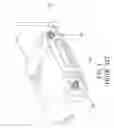
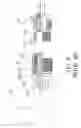
A conventional connection of an antenna terminal and a reception member is shown in FIG. 1 and generally includes a receiving box 10 with two reception members 101 extending from a rear side thereof and each reception member 101 includes outer threads 102. A terminal 30 of an antenna is connected to the reception member 101 by threadedly mounted to the outer threads 102 of the reception member 101. As shown in FIGS. 2 and 3, the terminal 30 includes a metal core member 301 with an insertion end 3011, a plastic washer 302, a spring 303, two conductive rings 304, 305, a locking member 306 and an isolation member 307. The insertion end 3011 extends through the plastic washer 302, the spring 303, the conductive rings 304, 305 and fixedly connected in the locking member 306, The metal core member 301 is in contact with the plastic washer 302. The isolation member 307 is inserted into the insertion end 3011 of the metal core member 301. The locking member 306 is then rolled to form an inward groove to be fixedly connected to the antenna 20. However, the spring 303 is located between the plastic washer 302 and the conductive ring 304 so that when antenna 20 is rotated to be positioned a better orientation to receive stronger signal, the spring 303 is co-rotated and generates noise. Besides, the spring 303 is compressed by the plastic washer 302 and the conductive ring 304 and the torque is applied to the spring 303 during the adjusting of the antenna 20, the spring 303 reaches its limit of fatigue quickly and the antenna 20 cannot be well positioned after being rotated. Furthermore, it requires a process of rolling which increases assembly time and cost.
The present invention intends to provide a combination of an antenna terminal and a reception member wherein the terminal is clawed by claws in the reception member and no spring is used so that the shortcomings of the conventional connection are improved.
SUMMARY OF THE INVENTION
The present invention relates to an antenna assembly that comprises a reception member having an annular flange extending from an inner periphery thereof and a plurality of claws extend from a surface of the annular flange. An annular gap is defined between the claws and the inner periphery of the reception member. A plurality of ribs extend from the inner periphery of the reception member and located in the annular gap. An antenna terminal includes a metal core member that has an insertion end which is inserted into the reception member. An outer flange extends from an outer periphery of the metal core member. The claws claw the outer periphery of the metal core member and the outer flange contacts the ribs.
The primary object of the present invention is to provide an antenna assembly wherein no noise is generated when rotating the antenna.
Another object of the present invention is to provide an antenna assembly wherein no spring and rolling process are needed.
The present invention will become more obvious from the following description when taken in connection with the accompanying drawings which show, for purposes of illustration only, a preferred embodiment in accordance with the present invention.
BRIEF DESCRIPTION OF THE DRAWINGS
FIG. 1 shows a conventional antenna connected with a conventional reception member;
FIG. 2 is an exploded view to show the conventional antenna terminal and the conventional reception member;
FIG. 3 is a cross sectional view to show the conventional antenna terminal and the conventional reception member;
FIG. 4 is an exploded view to show the antenna terminal and the reception member of the present invention;
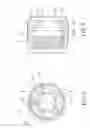
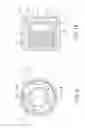
FIG. 5 is an end view of the reception member of the present invention;
FIG. 6 is a cross sectional view along line A-A in FIG. 5;
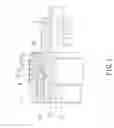
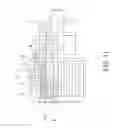
FIG. 7 is a cross sectional view to show that the antenna terminal is connected with the reception member of the present invention;
FIG. 8 is an exploded view to show another embodiment of the antenna terminal and the reception member of the present invention;
FIG. 9 is an end view of the reception member in FIG. 8 of the present invention;
FIG. 10 is a cross sectional view along line B-B in FIG. 9, and
FIG. 11 is a cross sectional view to show that the antenna terminal is connected with the reception member in FIG. 8 of the present invention.
DETAILED DESCRIPTION OF THE PREFERRED EMBODIMENT
Referring to FIGS. 4 to 7, the antenna assembly of the present invention comprises a reception member 1 and an antenna terminal 2, wherein the reception member 1 has an annular flange 11 extending from an inner periphery thereof and a plurality of claws 12 extend from a surface of the annular flange 11. A flat surface 13 is defined in an end of the annular flange 11 and located opposite the claws 12. An annular gap 14 is defined between the claws 12 and the inner periphery of the reception member 1. so that the claws 12 have proper flexibility. A plurality of ribs 15 extend from the inner periphery of the reception member 1 and are located in the annular gap 14.
The antenna terminal includes a metal core member 2 which has an insertion end 21 so as to be inserted into the reception member 1. An outer flange 22 extends from an outer periphery of the metal core member 2 and a stepped surface 23 is defined in the outer periphery of the metal core member 2. The isolation member 3 is inserted into the insertion end 21 of the metal core member 2 and the insertion end 21 is inserted into the reception member 1. The claws 12 claw the outer periphery of the metal core member 2 and the outer flange 22 contact the ribs 15. The metal core member 2 has a groove 24 in which a C-clip 4 is engaged, the C-clip 4 is in contact with the flat surface 13 of the annular flange 11.
FIGS. 8 to 11 show another embodiment of the present invention wherein the reception member 1′ has an annular flange 11′ extending from an inner periphery thereof and a plurality of claws 12′ extend from a surface of the annular flange 11′. A flat surface 13′ is defined in an end of the annular flange 11′ and located opposite the claws 12′. An annular gap 14′ is defined between the claws 12′ and the inner periphery of the reception member 1′. so that the claws 12′ have proper flexibility. A plurality of ribs 15′ extend from the inner periphery of the reception member 1′ and are located in the annular gap 14′.
The antenna terminal includes a metal core member 2′ which has an insertion end 21′ so as to be inserted into the reception member 1′. An outer flange 22′ extends from an outer periphery of the metal core member 2′. The isolation member 3′ is inserted into the insertion end 21′ of the metal core member 2′ and the insertion end 21′ is inserted into the reception member 1′. The claws 12′ claw the outer periphery of the metal core member 2′ and the outer flange 22′ contact the ribs 15′. A conductive ring 4 is located in the reception member 1′ and in contact with the flat surface 13′ of the annular flange 11′. A hooked flange 16′ extends inward from an end of the reception member 1′ and are hooked to the outer flange 22′ of the metal core member 2′.
The claws 12, 12′ are integral with the reception member 1, 1′ so that they are not moved during rotation of the antenna so that no noise is generated. Besides, no spring and rolling process are needed, so that the assembly time and manufacturing cost are reduced.
While we have shown and described the embodiment in accordance with the present invention, it should be clear to those skilled in the art that further embodiments may be made without departing from the scope of the present invention.
Claims
What is claimed is:1. An antenna assembly comprising:
a reception member having an annular flange extending from an inner periphery thereof and a plurality of claws extending from a surface of the annular flange, an annular gap defined between the claws and the inner periphery of the reception member, a plurality of ribs extending from the inner periphery of the reception member and located in the annular gap, and
an antenna terminal including a metal core member having an insertion end which is inserted into the reception member, an outer flange extending from an outer periphery of the metal core member, the claws clawing the outer periphery of the metal core member and the outer flange contacting the ribs.
2. The assembly as claimed in claim 1, wherein a stepped surface is defined in the outer periphery of the metal core member and the claws claw the stepped surface.
3. The assembly as claimed in claim 1, wherein a hooked flange extends inward from an end of the reception member and are hooked to the outer flange of the metal core member.
4. The assembly as claimed in claim 1, wherein a flat surface is defined in an end of the annular flange and located opposite the claws, the metal core member has a groove in which a C-clip is engaged, the C-clip is in contact with the flat surface of the annular flange.
5. The assembly as claimed in claim 1, wherein a flat surface is defined in an end of the annular flange and located opposite the claws, a conductive ring is located in the reception member and in contact with the flat surface of the annular flange.
Images & Drawings included:




Sources:
- United States Patent and Trademark Office - verify current appl. status at the USPTO↗
Recent applications in this class:
- » 20250226565 2025-07-10
ANTENNA AND MOBILE COMMUNICATION CELL SITE - » 20250192414 2025-06-12
BRACKET STRUCTURE AND ANTENNA FIXING DEVICE - » 20250079684 2025-03-06
ANTENNA BRACKET AND RELATED NETWORK COMMUNICATION DEVICE - » 20240380094 2024-11-14
FASTENING ARRANGEMENT FOR FASTENING A DEVICE HOUSING OF A DEVICE TO A VEHICLE PANEL OF A MOTOR VEHICLE, AND MOTOR VEHICLE AND DEVICE - » 20230378631 2023-11-23
Self-aligning magnetic antenna feed connection - » 20230307815 2023-09-28
Apparatus for mounting a transceiver radio unit to a component of a cellular communication system - » 20230098517 2023-03-30
MOUNTING ASSEMBLY AND METHOD OF USE THEREOF - » 20230063342 2023-03-02
Antenna structure and antenna-structure combination method - » 20220311121 2022-09-29
Telecommunications mounting frames and methods of making same - » 20220109223 2022-04-07
Apparatus for mounting a transceiver radio unit to a component of a cellular communication system