METHOD AND APPARATUS FOR SYNCHRONIZATION FOR MIMO TDS-OFDM SYSTEM
US20080225978A1
2008-09-18
12/048,376
2008-03-14
Abstract:
In an orthogonal frequency division multiplexing (OFDM) multiple-input multiple-output (MIMO) wireless communication system where both a transmitter and a receiver include a plurality of antennas, a method comprising the step of: a receiver using at least one pseudo noise (PN) to correlate desired information relating to a received symbol.
Assignee:
- LEGEND SILICON CORP. 61 🇺🇸 FREMONT, CA, United States
Interested in similar patents?
Get notified when new applications in this technology area are published.
Classification:
H04L27/2655 » CPC main
Modulated-carrier systems; Systems using multi-frequency codes; Multicarrier modulation systems; Arrangements specific to the receiver only Synchronisation arrangements
H04B1/7075 » CPC further
Details of transmission systems, not covered by a single one of groups - ; Details of transmission systems not characterised by the medium used for transmission; Spread spectrum techniques using direct sequence modulation; Synchronisation aspects with code phase acquisition
H04L5/0023 » CPC further
Arrangements affording multiple use of the transmission path; Arrangements for dividing the transmission path; Three-dimensional division Time-frequency-space
H04L5/0048 » CPC further
Arrangements affording multiple use of the transmission path; Arrangements for allocating sub-channels of the transmission path Allocation of pilot signals, i.e. of signals known to the receiver
H04J11/00 IPC
Orthogonal multiplex systems, e.g. using WALSH codes
Description
CROSS-REFERENCE TO OTHER APPLICATIONS
The following applications of common assignee and filed on the same day herewith are related to the present application, and are herein incorporated by reference in their entireties:
U.S. patent application Ser. No. ______ with attorney docket number LSFFT-034.
U.S. patent application Ser. No. ______ with attorney docket number LSFFT-035.
U.S. patent application Ser. No. ______ with attorney docket number LSFFT-036.
U.S. patent application Ser. No. ______ with attorney docket number LSFFT-037.
U.S. patent application Ser. No. ______ with attorney docket number LSFFT-038.
U.S. patent application Ser. No. ______ with attorney docket number LSFFT-039.
U.S. patent application Ser. No. ______ with attorney docket number LSFFT-040.
REFERENCE TO RELATED APPLICATIONS
This application claims an invention which was disclosed in Provisional Application No. 60/895,188, filed Mar. 16, 2007 entitled “METHOD AND APPARATUS FOR SYNCHRONIZATION FOR MIMO TDS-OFDM SYSTEM”. The benefit under 35 USC § 119(e) of the United States provisional application is hereby claimed, and the aforementioned application is hereby incorporated herein by reference.
FIELD OF THE INVENTION
The present invention relates generally to a TDS-OFDM system, more specifically the present invention relates to synchronization in the MIMO TDS-OFDM system during information transmission.
BACKGROUND
Method and system for performing synchronization in OFDM systems is known. United States Patent Application No. 20070025236 to Jianglei Ma et al describes a method and apparatus for performing acquisition, synchronization and cell selection within an MIMO-OFDM communication system. A coarse synchronization is performed to determine a searching window. A fine synchronization is then performed by measuring correlations between subsets of signal samples, whose first signal sample lies within the searching window, and known values. The correlations are performed in the frequency domain of the received signal. In a multiple-output OFDM system, each antenna of the OFDM transmitter has a unique known value. The known value is transmitted as pairs of consecutive pilot symbols, each pair of pilot symbols being transmitted at the same subset of sub-carrier frequencies within the OFDM frame.
Synchronization is needed for MIMO TDS-OFDM system transmission, in order to demodulate received TDS-OFDM signals.
SUMMARY OF THE INVENTION
In an orthogonal frequency division multiplexing (OFDM) multiple-input multiple-output (MIMO) wireless communication system where both a transmitter and a receiver include a plurality of antennas, a method comprising the step of: a receiver using at least one pseudo noise (PN) to correlate desired information relating to a received symbol.
BRIEF DESCRIPTION OF THE FIGURES
The accompanying figures, where like reference numerals refer to identical or functionally similar elements throughout the separate views and which together with the detailed description below are incorporated in and form part of the specification, serve to further illustrate various embodiments and to explain various principles and advantages all in accordance with the present invention.
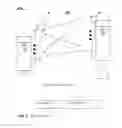
FIG. 1 is an example of a MIMO TDS-OFDM system in accordance with some embodiments of the invention.
FIG. 2 is an example of a symbol composition in accordance with some embodiments of the invention.
FIG. 3 is an example of a part of a receiver in accordance with some embodiments of the invention.
Skilled artisans will appreciate that elements in the figures are illustrated for simplicity and clarity and have not necessarily been drawn to scale. For example, the dimensions of some of the elements in the figures may be exaggerated relative to other elements to help to improve understanding of embodiments of the present invention.
DETAILED DESCRIPTION
Before describing in detail embodiments that are in accordance with the present invention, it should be observed that the embodiments reside primarily in combinations of method steps and apparatus components related to synchronization in the MIMO TDS-OFDM system during information transmission. Accordingly, the apparatus components and method steps have been represented where appropriate by conventional symbols in the drawings, showing only those specific details that are pertinent to understanding the embodiments of the present invention so as not to obscure the disclosure with details that will be readily apparent to those of ordinary skill in the art having the benefit of the description herein.
In this document, relational terms such as first and second, top and bottom, and the like may be used solely to distinguish one entity or action from another entity or action without necessarily requiring or implying any actual such relationship or order between such entities or actions. The terms “comprises,” “comprising,” or any other variation thereof, are intended to cover a non-exclusive inclusion, such that a process, method, article, or apparatus that comprises a list of elements does not include only those elements but may include other elements not expressly listed or inherent to such process, method, article, or apparatus. An element proceeded by “comprises . . . a” does not, without more constraints, preclude the existence of additional identical elements in the process, method, article, or apparatus that comprises the element.
It will be appreciated that embodiments of the invention described herein may be comprised of one or more conventional processors and unique stored program instructions that control the one or more processors to implement, in conjunction with certain non-processor circuits, some, most, or all of the functions of synchronization in the MIMO TDS-OFDM system during information transmission described herein. The non-processor circuits may include, but are not limited to, a radio receiver, a radio transmitter, signal drivers, clock circuits, power source circuits, and user input devices. As such, these functions may be interpreted as steps of a method to perform synchronization in the MIMO TDS-OFDM system during information transmission. Alternatively, some or all functions could be implemented by a state machine that has no stored program instructions, or in one or more application specific integrated circuits (ASICs), in which each function or some combinations of certain of the functions are implemented as custom logic. Of course, a combination of the two approaches could be used. Thus, methods and means for these functions have been described herein. Further, it is expected that one of ordinary skill, notwithstanding possibly significant effort and many design choices motivated by, for example, available time, current technology, and economic considerations, when guided by the concepts and principles disclosed herein will be readily capable of generating such software instructions and programs and ICs with minimal experimentation.
Referring to FIGS. 1-4, a plurality of base stations (BS) 102 (only one shown) each has two or more BS antennas 104. Each one of antennas 104 respectively transmits signals S1, S2, . . . , Sn. At least one of the signals S1 among the transmitted signals S1, S2 . . . , Sn uses the format shown in FIG. 2 employing a pseudo noise (PN) sequence P1. Mobile station (BS) mobile station 106 receives signals using multiple MS antennas 108. Each one of the antennas 108 is adapted to receive from all transmitted signals including the transmitted signals S1, S2, . . . , Sn and other base stations (not shown). Mobile station 106 comprises a receiver 300 for receiving signals from surrounding base stations. The receiver 300 in mobile station 106 is adapted such that all the PN sequences of substantially all the transmitted signals from substantially all the base stations 102 in a predetermined neighborhood or geographic area is known to the base station 106. The receiver is adapted to use the PN codes to perform correlation to find a timing of each path. Both base station 102 and mobile station 106 comprise receivers 300.
Referring specifically to FIG. 2, a packet of transmission or a received packet having PN sequence as guard intervals is shown. The packet is positioned sequentially within a frame among a multiplicity of packets. As can be appreciated, PNs are disposed between the OFDM symbols. It is noted that the present invention contemplates using the PN sequence disclosed in U.S. Pat. No. 7,072,289 to Yang et al which is hereby incorporated herein by reference.
Referring specifically to FIG. 3, a correlator using a corresponding PN sequence such as a PN sequence known to receiver 300 is used to extract the desired information based on the known PN sequence. By way of example, Y1 comprises information received from transmitted signals S1, S2, . . . , Sn associated with base station 102, and other bases stations (not shown) as well. For the sake of simplicity only a single base station is shown. Using an associated PN P1, correlated information X11 is obtained by such devices as a match filter 302. The filtered information X11 is further subjected to a timing estimate 308. Similarly, by using an associated PN Pn, X1n is obtained by such devices as a match filter 304. The filtered information X1n is further subjected a timing estimate 310.
By way of a second example, Ym comprises information received from transmitted signals S1, S2, . . . , Sn associated with base station 102, and other bases stations (not shown) as well. For the sake of simplicity only a single base station is shown. Using an associated PN P1, Xm1 is obtained by such devices as a match filter 314. The filtered information Xm1 is further subjected a timing estimate 320. Similarly, by using an associated PN Pn, Xmn is obtained by such devices as a match filter 316. The filtered information Xmn is further subjected a timing estimate 322.
Methods other than correlation may be used herein as well. The receiver may use other methods such as averaging method or majority vote to find better estimates. Furthermore, the timing estimates can be refined using tracking methods. The receiver may first detect and estimate timing and then use the PN codes from all paths afterwards to perform the combined or joint frequency estimate.
In the foregoing specification, specific embodiments of the present invention have been described. However, one of ordinary skill in the art appreciates that various modifications and changes can be made without departing from the scope of the present invention as set forth in the claims below. Accordingly, the specification and figures are to be regarded in an illustrative rather than a restrictive sense, and all such modifications are intended to be included within the scope of present invention. The benefits, advantages, solutions to problems, and any element(s) that may cause any benefit, advantage, or solution to occur or become more pronounced are not to be construed as a critical, required, or essential features or elements of any or all the claims. The invention is defined solely by the appended claims including any amendments made during the pendency of this application and all equivalents of those claims as issued.
Terms and phrases used in this document, and variations thereof, unless otherwise expressly stated, should be construed as open ended as opposed to limiting. As examples of the foregoing: the term “including” should be read as mean “including, without limitation” or the like; the term “example” is used to provide exemplary instances of the item in discussion, not an exhaustive or limiting list thereof; and adjectives such as “conventional,” “traditional,” “normal,” “standard,” and terms of similar meaning should not be construed as limiting the item described to a given time period or to an item available as of a given time, but instead should be read to encompass conventional, traditional, normal, or standard technologies that may be available now or at any time in the future. Likewise, a group of items linked with the conjunction “and” should not be read as requiring that each and every one of those items be present in the grouping, but rather should be read as “and/or” unless expressly stated otherwise. Similarly, a group of items linked with the conjunction “or” should not be read as requiring mutual exclusivity among that group, but rather should also be read as “and/or” unless expressly stated otherwise.
Claims
What is claimed is:1. In an orthogonal frequency division multiplexing (OFDM) multiple-input multiple-output (MIMO) wireless communication system where both a transmitter and a receiver include a plurality of antennas, a method comprising the step of having a receiver using at least one pseudo noise (PN) to correlate desired information relating to a received symbol.
2. The method of claim 1 further comprising the step of estimating a timing associated with the received symbol.
3. The method of claim 1, wherein the OFDM system is a TDS-OFDM system.
4. The method of claim 1, wherein the PN sequence is used as the guard interval of the transmitted symbols.
5. The method of claim 1, wherein a matched filter is used to correlate the desired information relating to the received symbol.
6. The method of claim 1, wherein the correlated result is used for synchronization.
Images & Drawings included:


Sources:
- United States Patent and Trademark Office - verify current appl. status at the USPTO↗
Similar patent applications:
Recent applications in this class:
- » 20250175375 2025-05-29
NR Broadcast Channel Transmission - » 20250106089 2025-03-27
MULTIPLE-CHANNEL WIRELESS NETWORK SYSTEM - » 20250088402 2025-03-13
SYNCHRONIZED SENSORS AND SYSTEMS - » 20240396784 2024-11-28
ENHANCED UPLINK SYNCHRONIZATION SCHEME - » 20240314014 2024-09-19
WIRED COMMUNICATION SYSTEM FOR REPLACING IN-VEHICLE CAN/LIN BUS - » 20240291704 2024-08-29
METHOD, SYSTEM AND COMPUTER-READABLE STORAGE MEDIUM FOR INTEGER SIGNAL FREQUENCY SPECTRUM SAMPLING AND INTEGER SIGNAL RECOVERY - » 20240048426 2024-02-08
NR Broadcast Channel Transmission - » 20230396480 2023-12-07
Wireless Communication Method and Apparatus - » 20230179464 2023-06-08
Using preamble portion having irregular carrier spacing for frequency synchronization - » 20230096865 2023-03-30
Using preamble portion having irregular carrier spacing for frequency synchronization
Recent applications for this Assignee:
- » 20110080526 2011-04-07
MULTIPLE TUNER TERRESTRIAL DTV RECEIVER FOR INDOOR AND MOBILE USERS - » 20110058600 2011-03-10
MULTIPLE TUNER ATSC TERRESTRIAL DTV RECEIVER FOR INDOOR AND MOBILE USERS - » 20110026579 2011-02-03
NOVEL EQUALIZER FOR SINGLE CARRIER TERRESTRIAL DTV RECEIVER - » 20100082720 2010-04-01
CURVE-FITTING METHOD TO CALCULATE COARSE FREQUENCY OFFSET - » 20100080281 2010-04-01
METHOD TO CALCULATE THE REAL DECISION FEEDBACK EQUALIZER COEFFICIENTS - » 20100080280 2010-04-01
DECISION FEEDBACK EQUALIZER WITH PARTIAL FEEDBACK EQUALIZER IN A VARIABLE SIDEBAND COMMUNICATIONS SYSTEM - » 20100080278 2010-04-01
FILTER STRUCTURE IMPLEMENTATION RELATING TO A LINEAR SYSTEM SOLUTION - » 20100080277 2010-04-01
USING CONJUGATE GRADIENT METHOD TO CALCULATE FILTER COEFFICIENT FOR TIME DOMAIN EQUALIZER - » 20100080276 2010-04-01
METHOD FOR NON-PILOT TONE DATA-AIDED CARRIER FREQUENCY TRACKING - » 20100080275 2010-04-01
TRAINING OF THE NON-UPDATED DECISION FEEDBACK EQUALIZER FOR A 8-VSB RECEIVER