Gambling with loyalty points
US20080242399A1
2008-10-02
11/727,316
2007-03-26
Abstract:
Disclosed in this specification is a strategy for a company offers royalty programs to convert the royalty points into lottery entries. Customers can purchase entries into a lottery, instead of exchange for goods or services, using their royalty points. This strategy may be carried out in partnership with a casino or a gaming establishment.
Interested in similar patents?
Get notified when new applications in this technology area are published.
Classification:
G07F17/3244 » CPC main
Coin-freed apparatus for hiring articles; Coin-freed facilities or services for games, toys, sports, or amusements Payment aspects of a gaming system, e.g. payment schemes, setting payout ratio, bonus or consolation prizes
G07F17/32 » CPC further
Coin-freed apparatus for hiring articles; Coin-freed facilities or services for games, toys, sports, or amusements
G07F17/3255 » CPC further
Coin-freed apparatus for hiring articles; Coin-freed facilities or services for games, toys, sports, or amusements; Payment aspects of a gaming system, e.g. payment schemes, setting payout ratio, bonus or consolation prizes Incentive, loyalty and/or promotion schemes, e.g. comps, gaming associated with a purchase, gaming funded by advertisements
A63F9/24 IPC
Games not otherwise provided for Games using electronic circuits not otherwise provided for
Description
This application is a divisional of the U.S. Utility application Ser. No. 11/630,642.
FIELD OF THE INVENTION
This invention relates to lotteries, more particularly, lotteries into which entries are bought with loyalty points.
BACKGROUND ART
Today, loyalty points are commonly offered in customer rewards programs. These points are usable by customers to exchange for goods or services at any time, and are a liability on the balance sheet of the company offering the rewards programs. It may be desirable for corporations to reduce the liability presented by their loyalty points. One way to do so is to have them used in gambling transactions or converted to a pseudo or new form of currency that enables the free trade between participants.
SUMMARY OF THE INVENTION
A strategy for reducing the loyalty point liability is to offers the points holders opportunity to enter gambling or lottery arrangements, in which the amount of cash or prize paid out is less than the total amount of royalty point involved. The company that offers the rewards program, should it opt to do so, may enter into an agreement with a casino or other gaming operator to execute this strategy.
Accordingly, there is provided a method for a broker to establish a lottery, comprising the steps of: accepting loyalty points from a customer, issuing an entry to the lottery, based on a value ascribed to the loyalty points, conducting the lottery, and paying a prize to a winner of the lottery.
BRIEF DESCRIPTION OF THE DRAWING FIGURES
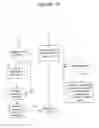
FIG. 1 is a flow chart illustrating a game transaction interface;
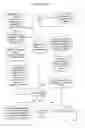
FIG. 2 is a flow chart illustrating a process flow for the remote witnessing of a game;
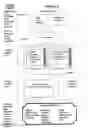
FIG. 3 is a flow chart illustrating methods for auctioning customer expenditures;
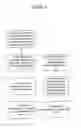
FIG. 4 is a schematic diagram of business architecture;
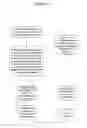
FIG. 5 is a flow chart illustrating the steps associated with a loyalty point exchange for currency; and
FIG. 6 is a flow chart illustrating the steps in a gaming method involving promotional currency.
BEST MODES AND OTHER EMBODIMENTS OF THE INVENTIONS
In one embodiment, a simulated “International Sporting and Athletic Games” could be facilitated using real competitors competing with each other in real-or near real-time events, being watched and wagered on by millions around the world, without anyone needing to leave their hometown.
Monitoring of the event may be done by email, telephone, SMS, kiosk, narrowcast, broadcast etc. Users include performers, wagerers, and spectators. Users of the system may wager on an outcome determined by the performers. In some embodiments only selected users can make bets. Performers may be excluded, as may certain users based on age, location or conflict of interest Performance equipment and other components may be subject to scrutiny and testing to provide for integrity in the game or contest.
Performers, players or spectators (players) may pay a fee to enter such that the sponsor, house (provider of the equipment) or server operator obtains a percentage and the winner of the event obtains a prize pool.
In the alternate, the event may be web-cast or broadcast and a sports-book managed by an entity to enable parties independent of the participants to wager on the outcome.
In one example the player or players uses a game based currency to wager in a virtual casino or sports book associated with the game. The wager may be made directly with a gambling service provided by the game, or with a transfer of funds to a third-party provider associated with the game. A virtual sports book may take bets on actual sub-games (for example, fights or battles, or tournaments or contests) within a game.
A player (or team of players) uses a game based currency to enter a virtual tournament whereby the house, sponsor or server operator takes a percentage of the entry fee and the winner takes the balance (e.g. a virtual jousting or fighting competition). In one embodiment it is envisaged that there would be a virtual colosseum, where gladiators fight against each other (individually or in teams) in cyber-space to be recognized as the best. The game would simulate many or all aspects of the traditional gladiator battles and the associated commerce, or adopt variations or new concepts. The Spectators may bet on the gladiators in the virtual sportsbook and vote for the thumbs up or down.
A player or players use the game based currency to insure themselves through a virtual “broker” against loss in a game (loss of property, virtual life or virtual health etc.).
The Invention also contemplates the provision of insurance within a game.
A player or players use the GBC to enhance their chances of success in the game (extra strength, weapons, engine parts, etc.). A player or players use the game based currency to purchase virtual components that have specific characteristics that when combined result in the creation of a virtual vehicle or combat weapon or other device to be used in the game, a sub-game or tournament. The game based currency is to be used for the payment to assemble the components and the reliability of that assembly may be based on a random outcome or component of skill (e.g. based on the experience of the assembler). That reliability factor can then be a consideration in the determination of a “breakdown” or “malfunction” in a game, sub-game or tournament.
Important components of this invention include:
-
- a) A contest: of chance, skill, stamina or one of more of these attributes.
- b) A game based currency: As used within a game, representations or symbols of real money, simulated money, an invented currency, or loyalty or other points that are ultimately convertible by the player into real money, or an item or thing of value.
- c) Players in the game: Contestants or spectators.
- d) Virtual representations of the participant on a display visible to either participants or spectators.
- e) A simulation device or apparatus: To enable participants to engage in the game or contest.
- f) A networked output device: To enable participants to see, hear, feel, sense, smell or taste the event and the outcome.
- g) A game transaction engine interface: To enable the participants or spectators to insure themselves or others, wager on an outcome involving themselves or others, enhance their chance of success or enter a simulated casino or betting shop—a game within a game.
It is envisaged that (g) may be added to existing simulated sporting games such as golf or multi-user adventure games. It will be understood that the operator of the game may profit either by collecting fees or taking a fee or a percentage of the transactions generated by converting real to GBC, or GBC to real money. Fees may be collected based on player participation or through commissions on the sale of insurance, premium weapons, game tools, virtual services or products.
In the example of simulated golf; extra money could be paid to obtain better clubs (enhancement).
In the example of an adventure game the player could;
-
- (a) Insure themselves against getting “killed” by a monster or other player,
- (b) Place a wager on the outcome of a fight they (or their team) are about to participate in with another player(s).
- (c) Place a wager on a fight about to occur in the game that the player will observe.
- (d) Enter into a tournament whereby an entry fee is paid and the winner (or winners) and the house divide the pool of entry fees.
- (e) Engage in transactions with a virtual gambling house within a game.
The game transaction engine interface, process flow is represented in FIG. 1.
In FIG. 1, a player may be registered on a system, but the interface first establishes if the player is existing in the game (1) and if not, exit (2). Having established that a player is game resident (1), the interface determines if the player has an account (3) and if not, the player is given the choice (4) to either create an account (5) or exit (2). When a player account is created (5) there is an interface with a “financial” institution or other entity where the player holds an account (using actual or pseudo currency, game based currency or loyalty points accumulated with any participating merchant), and the appropriate fees or nominated amount are deducted and the player account credited. During or before the account creation process it is expected the identity of the player rill be verified.
Once an account is established, the system then determines if the player may gamble using their account (6). The general criteria would be: (a) Is the player's account balance positive? (b) Is the person over legal age? (c) Are there any exclusions on the person (e.g. known cheat or self-excluded problem gambler). If the player is unable to participate they return to the game (7), or in the case of a zero balance they player is provided the option to top-up the account.
If the player is able and willing to gamble then, at some time in the game the player will be presented with a choice to decide which sort of game they wish to play (8). In the case of a game of chance (such as a lotto or casino game), the player is presented with the option to play (9). The playing options might be through a virtual gaming house (e.g. Casino) in the game a known brand might have a virtual shop-front in the game, but when the player's avatar walks into that shop, the game transaction engine interface effectively and seamlessly transports the player to a third-party game provider, where the player's balance credentials and other applicable data is transferred and the account is modified accordingly as a result of player activity in the game.
If the player wishes to engage in a sports, tournament, contest or related activity then the player must decide (10) is they are to participate or to observe. If the player is to observe then an entry fee (e.g. to a virtual sport stadium or race-track or arena) may be charged (10) or not and the player is provided the option to wager on the outcome of the event (13). If the player decides to wager, they the player is assessed for eligibility (e.g. one example criteria might be a conflict of interest) (15) and if permitted, may select the event or events and place one of more wagers (15). The player may observe the event or events and outcome or retrieve the outcome at a later time (17), the account is modified and when the player decides, the player returns to the game (20).
If the player decided (10) to participate rather than observe then the player will decide if they wish to insure their avatar against a thing happening (e.g. loss of an arm in the game) or enhance their chance of winning (11) and if not, the player will participate in the event which may or may not involve an participation fee (21). Having decided not to participate before taking precautions or being prepared, the player decides (12) to take out insurance or not. If they do decide to insure against loss or damage to an attribute, entity or item in the game the player will select the option and accept the terms of the policy and have their account deducted accordingly (14). Insurance might be supplied by the game provider or by a third party provider.
The next decision (16) for the player is to enhance or not (participate in the event, 21). The enhancement process (18) may involve purchasing training (e.g. gladiator training), or it may involve purchasing one or more items (e.g. a race car or a sword) or components (e.g. spare tires or bullets) or attributes (e.g. health) that enhance the chances of winning an event. The process may also involve acquiring services, such as the assembly of component parts purchased to construct a racing car.
When the player has completed the insurance and/or enhancement options they may then participate in the event (21).
In a second embodiment, player purchases one or more games at a particular location. The location may be a casino. Where the gambling activity occurs using a PC or wireless communications device, the actual gambling location may be anywhere. These games may be games of chance or skill. The rules for the game may be selected by the player (e.g. the player selects to play a certain type of game and purchases one or more). The result for these games may be determined, e.g. in bulk, at the time of purchase (e.g. slot type game) or may be pre-determined (e.g. scratch type lottery ticket). The game results may or may not be witnessed at the time of purchase. It is important to note that gambling law prescribes a game as placing a bet, the outcome being determined, and a prize of value being determined or awarded. The observance of the game by the player is not a legal requirement of game play. Hence, this embodiment provides for the player purchasing (and playing) many games in an instant, but observing the actual results at a later time. This is a critical variation on prior art where the game is actually observed during play, data stored and may be replayed.
In this embodiment, the game result is stored on a device (other than a printed ticket) and is able to be recovered and displayed either using the storage device or another means to access the storage device.
Using a technological aid, the game play may be witnessed by the player remotely from the exact or actual location of gambling at a different time from where and when it was purchased or first carried out. In this embodiment, the player may witness the replay of multi-state games (where the perception of choice is provided, but the prize outcome is ultimately unaltered from the original game), and the player may choose how they wish for the game to presented to them by selecting different game themes (provided the prize outcome is ultimately unaltered from the original game).
The purpose of the re-play is primarily for the player to witness the gaming outcome for the first time.
By way of example:
-
- a) A player enters a licensed area (e.g. a casino). The player then selects parameters (e.g. 5 reel slot, pay rules, or simply game type) purchases 100 games (e.g. bulk purchase or play) of a favourite game at a terminal and the results of those games are determined (e.g. played) and stored. The player is either provided with a transaction identifier or is identified (e.g. using a player loyalty card) and the game results are linked to either the player ID or the unique transaction ID. The player chooses not to observe the game outcomes or to collect their winnings at that time. The player then goes home, logs onto the venue's web site account using some form of identification and requests to re-play the games played that day over the internet, pay TV, mobile phone or other communication media. The player selects the game theme from a list of options (and may vary the theme from game to game, such as watching the play of $50 of theme #1 and then $50 of theme #2, where the themes adopt the same game engine). The player thus watches the games play (for the first time) from a remote location and at a remote time and observes their winnings and losses at that time. The player then enters a licensed area and provides their transaction ID or player loyalty ID to redeem any winnings that are owed. The player may also choose to redeem the winnings at the time of purchase.
- b) A player may elect to hear the results rather than see them (e.g. a simulated race called over the telephone or internet).
- c) Rather than an electronic identifier (e.g. transaction ID or player ID), the player may elect to have the results loaded on a mobile device (such as a smart card, mobile phone, PDA, or other device.
- d) Rather than an electronic identifier (e.g. transaction ID or player ID), the player may elect to purchase a device with the results pre-loaded. The player may elect to re-use that device time and time again.
- e) The technology involved may be an adaptation of existing Internet gaming systems, systems based gaming, or lottery systems or similar.
- f) Actual currency, a representation of actual currency, points or “promotional play” may be used to place a wager and pay a prize.
- g) It is commonly known to game developers that games are generally comprised of (a) sound, (b) graphics, (c) game engine (i.e. how the game is played), and (d) pay table (i.e. how the game prizes are awarded). Provided (c) and (d) are constant, various graphics and sounds can be substituted to “re-skin” the game. So essentially, a player could be presented with many different graphic or sensory representations of the same game. Hence, this invention provides for the option of a player to select from a variety of game “skins” to remotely witness the outcome of prior game play.
- h) Single-state games (e.g. a spinning reel slot machine simulation), involve no player participation: You either win something or you do not. Multi-state games (e.g. draw poker) generally involve an aspect of player choice. The invention provides for the player to “replay” a multi-state game but be awarded the prize for the best hand they could obtain. This is illustrated by way of the following example:
- a) The player has previously purchased a $1 hand to replay.
- b) The computer selects 10 random numbers and maps them to a deck. Let's say:
- A-C A-H K-C 2-D 5-D 3-S Q-D A-D 4-D 8-H (where C=clubs, D=diamond, H=hearts, S=spades)
- c) The first five cards are dealt: A-C A-H K-C 2-D 5-D
- d) The player discards the last two cards and is provided with replacements: 3-S Q-D
- e) The player now has a final hand of: A-C A-H K-C 3-S Q-D
- f) The player is paid for an inferior hand, being a Pair of Aces: Say $25. The player is also paid a $25 Bonus in some manner because the best the player could have done was to discard the last three cards: K-C 2-D 5-D
- g) Hence a superior hand in this situation would have been: A-C A-H 3-S Q-D A-D, or Three Aces.
- h) Let's say Three Aces pays $50. Hence, the difference is $25. As this is a pre-played game the net return to the player in the replay cannot deviate from the original game play. Hence the optimum outcome must be applied in all cases. Had the player originally discarded the three last cards and realized three aces, no bonus would have been paid.
- i) An alternate to actually playing the hand once, is to keep replaying it until the optimum strategy (e.g. the choices that pay the highest prize) are obtained.
To further illustrate how player choice has no impact on the prize outcome, the following example is provided:
The first hand is A A A A 7, say.
One could make an irrational choice and discard A A A 7, leaving the player with only an A. If it so happens that the next four cards in sequence are K, Q, J, 10 of the same suite as the A, then the player will have obtained a high award from an irrational choice.
However, in “remote witness of game play” because the game is pre-purchased (and top prize pre-determined), the player's choices do little more than provide an interaction, regardless of what they do, they will win the same amount. Hence;
-
- The irrational play would see the player win the prize for a straight flush.
- The rational play would see the player win the prize for four aces+a bonus=the same prize as the straight flush.
The deck is essentially reshuffled at every hand, so one has no way of knowing the state of the deck. At the start of each play there are 10 cards pre-selected, those cards and the sequence of those cards cannot change.
-
- j) An alternate method to provide multi-state games is demonstrated as follows:
A perfectly random 5 cards are dealt. The server will then use “optimum strategy” to determine what cards to hold. Then, the server will deal the requested cards to the “discarded” slots. The resulting hand is analysed, and a payback for that hand is assigned.
Now, when the player goes to make his choice of outcome, the same random cards are analyzed in place of the player's discards. Then the following analysis takes place:
-
- a) If these cards do not yield a result equal to or less than the pre-determined payback, then another set of random cards is drawn. This is continued until the result is equal to or less than the pre-determined payback.
- b) If the cards yield a result equal exactly to the predetermined payback, then the player is shown those cards, and the payback is awarded. The player is given no “bonus money”.
- c) If the cards yield a result less than the predetermined payback, then the cards are shown to the player, and a “win” equivalent to that player's resultant hand is displayed. Further, a “bonus” is awarded in the amount of the pre-determined payback minus the displayed payback.
A multi-state game, in this embodiment includes poker, blackjack, bonus features, second or multiple state games, known or yet to be invented. The implementation would adopt the same basic principles as those described previously, where the ultimate prize remains the same regardless of the path chosen by the player.
Important components of this embodiment are that there must be:
-
- (a) A networked based gaming system complete with game engines, transaction processors and an account keeping capability.
- (b) A remote interface to the gaming system such as a web site, remote or wireless terminals.
- (c) A “remote witness of game play interface” or API.
The process flow for the above embodiment is illustrated in FIG. 2.
In FIG. 2, a player must first of all establish a user account (1) and the interface confirms this (for example when a player swipes their player-card at a kiosk). The player is then given the option of selecting (2) a game type (e.g. 3 reel or 5 reel) and the rules or patterns of play (e.g. pays left to right, scatters pay any, etc.). The rules may be defaulted by the game type the player selected. The player then selects the number of games selected to bulk purchase and payment is made at the cashier station or kiosk or via other means such as using a cell phone (3). Once payment is made, the interface instructs the gaming system to determine the outcomes, store the results, adjust the player's final account based on the outcome of all games selected and link the logged game sessions to player I.D. (6).
So at this point the player has effectively purchased a selected number of games in bulk, which have been determined by the system, but the player has not yet seen the outcome of the games. In a way it is like pressing the button a number of times on a slot machine where you see nothing, but your final account balance and as such 10 games or 1000 can be realized in an instant. Following the transaction, the player is then given the option to display the results of each game or to do so later (10).
If the player decides to display the results now, they player may be instructed to move to another terminal (e.g. the bulk purchase of games may have occurred at a cashier window or the operator supplies play terminals that have no cash transacting capability) where the may witness the graphical and audio representation of the play of each game for the first time (7), in a manner analogous to the player actually playing the game. However, the player is not betting, playing, and potentially winning, the bet and play and win has already been determined, so the player is not gambling, by law. As such the remote witness of the game play could occur on premises that are not licensed for gambling. However, winnings must be collected from licensed premises (5), should the player decide not to play again (4).
If the player decides (10) to display the results later, then at a later time and probably in a different location, the gaming system must be accessed (perhaps via the internet) and the player authenticated (8). The player is then given the option to witness game outcomes (13), and if they decide to, the player is next given the option to witness single or multi-state games (17).
In the event of a single-state game, the player must identify the type (16). It is common practice in the gaming industry for a game manufacturer to develop a common game engine, but to have many different “skins” or “themes” whereby the graphics and sound is different, but the game plays exactly the same (20). Using this technology, the player can then decide which theme or themes (21) to use to observe their prior game purchase. If for example 100 games were pre-purchased, the player may choose 10 different themes to witness the play of 10 games for each theme. Having made the decisions, the player then observes the play (22) at the selection of each “spin” (or similar) button with the credit meter incrementing or decrementing and all other displays operating as they would as if the player were sitting in front of a traditional slot machine. Once complete, the player is given the option (14) to select another game or not. The player may repeat steps (17), (16), (20), (21), (22) one game at a time or in bulk as in the above example.
If at (17) the player elects to play a multi-state game, then the player may still select a game theme and elect to witness one or more games. At (18) the first state is displayed (e.g. In the game of poker that first state would be 5 cards). The player then interacts and selects which cards to keep and which to discard (23). The next state is displayed (24), which in the case of poker would be the replacement cards. If the game is not over (25), then the next state is presented until the game ends at which time the game considers the player's choices and compares the prize result from the player's choice against the prize result from the optimum play (26). If the player's result matched the game result (19) the player is provided the option (14) to play the next game or not. If the player's result does not match the game result, then the prize must be adjusted (15) to compensate because the player is observing a game already determined. The prize adjustment might be through a bonus or the player might be permitted to keep re-playing the game until they realize the optimum strategy or exit, or other means.
Back at (13) or (14) in the event the player decides not to continue, the player may conduct other (perhaps account management or other activity (11) or exit the system. At a later time the player must return to the licensed premises (12) where there is a person or device that will authenticate the player (9) to enable the player to cash out their winnings (5) if they chose not to play again (4).
The need for the player to return to collect winnings is considered to be a useful marketing too.
A third embodiment brings gaming operators and customers together, with each party achieving exactly what they want. The customer wants value for his business—this could be in the form of discounted rooms, free entertainment, complimentary dining or promotional play at the casino, i.e. “comps”. These are standard offerings in Las Vegas. However, sometimes the customer may only realize these benefits after his stay, if at all. There are times when customers have reached a property's comp level, never to receive any complimentary offers prior to the end of their visit.
This embodiment allows customers to receive their comps before they visit and provides the customer with the ability to put their business “out to bid”.
-
- 1. The customer provides the operators with their preferences about a planned visit, for example, planned visitation date, the amount of spending money they are bringing with them, and their favorite activities.
- 2. The information is displayed to the participating operators who will then decide what types of complimentary items or discounts they will make available to that customer for that spending level.
The customer selects the offer that provides him the best value, or suits him the best.
Important components of this invention are:
-
- (a) An existing promotional, loyalty marketing system in place with the Operator,
- (b) An interface with the operator to exchange information and facilitate transactions,
- (c) A computerized system to facilitate; (a) the acquiring of client expenditure limit and requirements, (b) the auctioning of the client's planned expenditure, and the transaction processing, and
- (d) A provider of the cash for promotion exchange service that operates and manages the computerized system.
The process flow for the third embodiment is represented in FIG. 3:
A customer accesses a Web site (1) that provides the service and establishes an account and is authenticated (2) in much the same way any e-commerce site provides for. It is expected that the web site will either be a travel site, or the service will be affiliated with a travel related site. The customer enters their planned travel dates, budget, and preferences into the service database (4). The customer personal details in anonymous to third parties. The service (having previously signed up hotel, resort, casino partners—the bidders), presents the preferences, spend and dates to the bidders or in another embodiment the bidders can access open “auctions” and place a bid (5). The service notifies the customer of the offers (6), and the customer then decides (7) to proceed or abandon the transaction (8). If the customer likes an offer they will transfer funds via any available means (9). The service clears the funds, deducts a commission, and transfers the balance to the resort operator (10). Once the resort operator has the funds they issue coupons or similar or advice to the customer for the services purchased and promotional offers or discounts (11). The customer presents the advice or coupons or similar to the bidder upon arrival for redemption.
EXAMPLE
John Smith logs on to the operator's website (referred to as “Auction House” herein and in the drawings) and enters his information e.g.:
-
- He will be visiting Las Vegas with his wife for three nights June 2 to June 5,
- They will be spending $2,000 in spending money
- They like to play craps, go to shows and eat at fine restaurants
- Auction House charges his account $2,000 (from which it deducts a fee before handing the difference over to the operator).
The Auction House displays this information to the operators, and they bid for John's business:
-
- Green Casino will offer John and his wife 25% off normal room rates, 2 free meals and give him two free tickets to see a show for Saturday June 4th
- Casino Palace offers John and his wife two tickets to see a show Friday June 3rd and gives them $3,000 in promotional casino play.
- Vegas Bay offers John and his wife $2,000 in promotional casino play.
- Game Island is almost sold out that weekend, so they only offer a 10% reduced room rate.
John and his wife choose to stay at Casino Palace and they are directed to bring their confirmation package to the VIP Desk upon arrival.
The Benefits to Each Party are:
John and his wife
-
- Feel special that the properties were vying for their business
- Receive $3,250 in value (their $2,000, $1,000 promotional play, and $250 in value for the tickets)
Casino Palace
-
- Gain The Smith's business (customer acquisition)
- Add them to their database for marketing (loyalty marketing base)
- Fill their casino with loyal customers
- The promotional play is tax exempt (in Nevada), therefore instead of being taxed 6.5% on $2,000, they are taxed nothing on $3,000.
Auction House
-
- Receives a fee (say, 5%) as the broker for the transaction ($100)
It's a “win-win” for everybody. The properties have the ability to offer more discounts and comps at slower times, and continually update offerings based on market demand.
Customers receive complimentary offers up front, creating loyalty and value, and the two may continue a relationship in the future. It's a simple customer acquisition and loyalty marketing tool all in one. Large travel agencies could be used as affiliate marketers/front-end partners to increase the potential market.
A schematic diagram of a business architecture relating to an auction for a customer's business as shown in FIG. 4.
Example: Financial Model
Summary financial model follows:
Auction Housing Estimated Year 1 Revenue
| 2004 Las Vegas Visitor Volume | 37,400,000 | |
| 2004 Online Booking Percentage | 23% | |
| Estimated Visitors Booked Online | 8,533,000 | |
| Clearing House Est. Market Share | 1% | |
| Clearing House Est. Customer Base | 85,330 | |
| 2004 Avg. Expenditure per Las Vegas Visitor | $901.24 | |
| Est. Clearing House Market | $77,570,000 | |
| Clearing House Fee Percentage | 5% | |
| Clearing House Est. Revenue Year 1 | $3,878,000 | |
Gaming Operators Estimated Year 1 Revenue
| Clearing House Customer Base | 85,330 |
| 2004 Avg. Gaming Expenditure per Las Vegas Visitor | $545.00 |
| Incremental Revenue to Operators | $46,500,000 |
| Plus: Tax Saving due to Promotional Play (6.5%) | $3,022,000 |
| Less: Clearing House Fee | $3,878,000 |
| Total Net Incremental Gaming Revenue | $45,644,000 |
Gaming Operators Build Loyalty Marketing Database
| Assume that 50% of patrons are not in the database: | 42,665 |
Loyalty marketing rewards campaigns in every industry—travel, retail, books, banking—give their customers reward points for doing business with companies. However, many times the rewards offered (watches, flights, etc.) are not suitable for the customer or are not considered valued products.
A further embodiment referred to as “Clearing House” (A brokerage or agency to facilitate the transactions disclosed herein) takes on point liabilities from different organizations and converts them to a universal or pseudo “currency” that may be adopted by various organizations to trade in goods and services, or for gaming.
The pseudo or new form of currency may be regional, state or province, country based or even global—such as an existing or to be invented web-based currency.
The pseudo or new form of currency may be used for gambling transactions.
The Benefits to Each Party are:
Customer
-
- Greater flexibility with the use of points.
Company with loyalty point program
-
- Eliminates the point liability from its books
Clearing House
-
- Receive a fee (%) as the broker for the transaction
The major components of this invention are that there must be:
-
- (a) An existing promotional, loyalty marketing system in place with the participating suppliers of goods and services,
- (b) A computerized system to facilitate the transfer and funds management of point equivalent currency, and
- (c) A provider of the point exchange service that operates and manages the computerized system, exchange and banking facility.
- (d) Companies prepared to accept or trade in the form of currency offered by the broker (“Clearing House”).
The process flow for the clearing methods is represented in FIG. 5.
This is not an exchange of goods and service for points between participating companies as that has been done before. This is purely an exchange (or equivalent) to convert points to currency or pseudo currency.
The clearing house “Y”, forms business relationships with suppliers of goods and services with loyalty programs “X” (1) and vendors willing to provide goods and services for pseudo-currency. Y maintains figures on financial equivalent for each X (2), and established one or more pseudo-currencies with associated value “Z” (3). For example, 1000 points may be worth 1c each or $10.00. Y maintains a currency conversion from points to Z's (4) and makes this available to participating customers who hold accounts with Y (5). In our example, X might pay Y $5.00 to wipe the $10.00 off the books. Y will need to make a commission, so Y might deduct a 50% or $2.50 fee, leaving $2.50 available to the customer. So Y might make the 1000 points that the customer held with X, worth 2,500 Zs, where the perception of value is maintained. The customer then transacts with X to instruct in the conversion of points to Zs and Y facilitates the transaction and credits the customer's account with Z's (6). In our example, the customer balance would hold an additional Z2, 500. Z's may then be used by the customer to engage in transactions with participating vendors “E” (7).
Such vendors could be virtual games (where Z's are used as or converted to a game based currency), or E might provide real products and services or E might supply an entry to a gambling game (e.g. lottery) or E might convert the Z's to stock. It is also possible that Y, X, and E or any combination thereof are the same company or entity.
In the event where the Z's are used to purchase lottery or game tickets, the financial model could differ where Z's are converted directly from the cash equivalent of points and the broker makes its money as a commission on the total tickets sold (as opposed to points converted) for operating the game.
This next embodiment pertains to the creation of a lottery using the created promotional currency or by way of contribution of different point programs toward the acquisition of an entry “ticket”. Tickets may be real or virtual, or any representation or promise of entry to a game or event or venue (real or virtual).
Tickets or gaming vouchers may be purchased from pseudo-currency or converted directly from points to tickets or gaming vouchers.
As customers convert their points through “Clearing House”, they can use their points to buy into lottery drawings and sweepstakes or similar or in the alternate, the Clearing House will act as the “broker” of points and operator of the lottery.
With reference to FIG. 6, for example, “X” is a company that provides a product or service and a loyalty point program.
“X” has determined that one loyalty point has a specific liability, “L”.
A customer, “C”, of X has accrued “M” loyalty points with X.
X has an affiliation with a Points Clearing House (or brokerage or auction provider), “Y”.
Y also has relationships with one or more entertainment, retail facilities, or any other merchant or provider of goods or services, “E”, who desire to secure C's points in the form of an actual or invented means of exchange or currency “Z” (possibly referred to promotional credits or “dollars”) and thereby attract C to utilize facilities or services of E.
In the alternate, X may also perform the role of Y or E may perform the role of Y.
In the example of a shop, the offer may be that if C purchases a thing, C can purchase any other thing to the value of the total of accumulated Zs.
In the case of the casino industry, Zs may be “Promotional Dollars” which are a generally accepted term whereby a player must play the promotional dollars, the player cannot cash them, but they are permitted to convert any winnings to cash or kind. Promotional dollars are an attractive way to secure the patronage of C when they visit, often resulting in purchases at other facilities in the casino, accommodation, or additional gaming spend.
In one embodiment C calls an employee of Y to engage in dialogue, or accesses Y's computer servers over the Internet, pay TV, mobile phone or other communication media. C identifies how many Z's Y's E affiliates are offering in exchange for C's points held with X. Or in another embodiment, how many Zs will E allow C to convert their N points held with X to?
C is planning a trip to Las Vegas and notes that E1 casino is offering an attractive deal that, for example, if more than 50,000 Zs are converted, E1 will provide a free room. C likes that deal, and instructs Y how many points they wish to convert to Zs with E1 and proceeds with a transaction.
“Y” negotiates to take a number, “N” (where N<=M>o) of C's points off X at a value “V” per point where V would generally be less than or equal to L.
In one example, X transfers the points to Y at no cost, V=o in order to reduce X's liability.
Or X may pay Y, V/point to take the N point liability. Hence X's liability is reduced by N×(L−V).
Or Y may pay X, V/point to take the N point liability. Hence X's liability is reduced by N×(L+V).
Y now holds N points for, or in trust for C.
In one example, Y sells C's points to the chosen E at a pre-agreed rate.
Or Y advertises C's points for sale to its E affiliates at a given rate, and whoever sees the deal being most attractive buys,
Or Y notifies its E affiliates that C has N Zs and the E affiliates auction or bid for those Zs with X. The result that X sells C's points to the highest bidder.
In any event Y converts points to Z's (which may be points or a currency known or invented), and E purchases Z's off Y to establish a Z banking or trading account for C.
Or in the alternate, Y converts points to Z's (which may be points or a currency known or invented), and Y pays E an amount for E to take over the Z liability.
The method of the invention also provides that C can convert or exchange some or all of their loyalty points with X to a means of exchange. The means of exchange, or medium of exchange, can be common, actual or invented (including web-based currency) currency, or pseudo currency, “Z”. Y converts the customer's points to Z. In preferred embodiments Z is then used with Y, to allow the customer or his agent or assignee or nominee to engage in a transaction.
Y sets the rates of conversion to Z either alone or in affiliation with its partners X and or E. Z may be a known currency (such as US dollars) or a virtual or invented currency.
By way of a simple example:
C holds 100,000 points with X and X has determined that 1 point presents a 1 penny liability (e.g. $1000).
E is offering a 2 penny promotional Z per point at its Las Vegas Casino that can be used for 75% of a room payment or in promotional gaming dollars.
C is visiting Las Vegas and decides to take E's offer and stay with E.
Y offers to take C's points from X at a cost to X of 0.5 penny per point. X buys and hence X has reduced its liability for C's points by 100% in that transaction at a cost of 50% of what it would have cost if C had opted to use the points in a transaction with X.
Y then offers to pay E, 0.2 penny per point and E1 takes the offer.
Y makes 100,000*(0.5-0.2)=$300 on that transaction.
Y then provides C with $2000 in promotional Z's for E1 and C uses those Z's to purchase 75% of five nights of accommodation and balance as promotional gaming dollars.
E has earned $200 from the transaction+25% of five night's accommodation (say $1000) and secured C as a customer on property with $1000 in promotional play to put through the machines.
C also has perceived real money value in excess of the value of C's points equivalent had they used those points With X.
Another embodiment may involve cash or points. In this example, Y acts as a broker for C and negotiates with the various E's to obtain an attractive deal for C. For example, C notifies Y of an intention to visit Las Vegas. C may post a basic profile with Y along with a commitment to spend either points or real money, and Y then gets the various E's to bid for C's points or cash in terms of promotional play or other benefits. In this example C puts up US$1000. Y takes 10% commission and offers US$900 for bids to the E's participating. The highest bid is $1500 in promotional play at Casino E1. C takes the offer and as a result may also decide to stay with that particular casino. Y may well be a travel site or travel broker or agent or Y may have a deal with such an entity or entities.
Y may also offer a lottery in partnership with Es and or Xs or on its own, where C may purchase tickets for Zs. At a determined frequency (e.g. once a week) the total of Z wagered in that period is pooled. A fractional sum (e.g. 50%) goes towards the prize and a second fraction or fee is retained by Y for provision of service (perhaps 20%) goes towards the operator, Y.
Y and the player cash out by either converting Z to actual cash, stock (and then cashing the stock), further entitlements, or merchandise. Hence, in this embodiment, Y may act as a broker for C, converting C's points into stock with the company that C holds points and the C may convert the stock to cash by selling the stock.
FIG. 6 illustrates is a flow chart depicting a lottery involving loyalty points.
A game is offered (1). Customers of the game provider will acquire tickets (e.g. Lottery, Keno or Bingo, roulette), or entry (e.g. some form of contest or raffle), or bet (e.g. a “point-buster” slot machine) using points or pseudo-currency or Z's (2). The participant company or companies wipe their point liability as additional tickets are acquired or fees paid (3). In the case where points are not being used in an instant game such as “slot play”, the funds are pooled until the game is closed (4).
The game is played (5), the winner or winners are paid (6), and the game operator takes the balance of the pool as its commission (7).
In one embodiment a company offers a number of points in exchange for a lottery, keno, bingo or similar ticket or voucher. The game of chance may be operated by the company or a third party. The objective is that the company greatly reduces its liability by having its customers gamble the points.
In another embodiment, the same principle as described above applies, except that more than one company is involved in the game of chance, requiring different rates of point conversion to tickets or vouchers to be applied.
In another embodiment, the company (or a third party) may convert loyalty points to purchase tickets in a state run lottery(s) or licensed game(s) on behalf of the player.
By way of a simple example:
Y presents an offer to all of X's customers to convert their points to Zs where 100 Zs buys a lottery ticket with a prize that increases subject to participation, with a minimum advertised guaranteed amount.
A total number of C's participate representing 100,000,000.00 point liability where one point=1 penny. Total=$1,000,000.00
X pays Y 0.4c per point=$400,000.00
Y then pools the bets and determines to pay a first prize of $200,000.00 and many smaller prizes with a total value of $50,000.00
C wins the prize and so Y pays.
Y has made $150,000.00 in the transaction.
X has effectively saved $600,000.00 in the transaction through a reduction in liability.
By way of another example:
Y offers a global lottery pool with a seed of US$500 million and potential to jackpot to $10 billion at 1000Z's per ticket.
Millions of customers request tickets, representing an ultimate conversion of US$50 billion worth of point liability from 1000s of companies.
The companies ultimately pay Y US$15 billion. Hence the conversion of US$50 billion in points represents a net saving of US$35 billion and a write off of US$15 billion.
Y retains $5 billion for facilitating the exchange and lottery.
One or more customers share in US$10 billion prize pool.
Unclaimed prizes are either added to the next draw or returned to Y.
Having thus described several aspects of at least one embodiment of this invention, it is to be appreciated that various alterations, modifications and improvements will readily occur to those skilled in the art. Such alterations, modifications, and improvements are intended to be part of this disclosure, and are intended to be within the spirit and scope of the invention. Accordingly, the foregoing description is by way of example only.
Claims
What is claimed is:1. A method for a broker to administer entry to a game of chance or skill or both, the game having a prize, the method comprising the steps of:
accepting loyalty points that belong to a customer;
issuing to the customer an entry in the game, based on a value ascribed to the loyalty points.
2. The method of claim 1, wherein:
the broker awards a prize to a winner of the game.
3. The method of claim 1, wherein,
the broker accepts the loyalty points from a third party that pays the points on behalf of the customer.
4. The method of claim 2, wherein,
the third party is a company that issued the loyalty points to the customer.
5. The method of claim 1, wherein,
the broker converts the loyalty points into a medium of exchange.
6. The method of claim 4, wherein,
the broker takes a commission for converting the loyalty points to the medium of exchange.
7. The method of claim 6, wherein:
the broker's commission is based on a total value of a customer's wager.
8. The method of claim 1, wherein:
the customer purchases the entry in the game, from the broker, using the medium of exchange.
9. The method of claim 1, wherein:
the broker conducts the game.
10. The method of claim 1, Wherein:
the broker converts the prize to a medium of exchange for a commission or set fee.
11. The method of claim 1, wherein:
the prize is a service or a product provided by a participating merchant.
12. The method of claim 1, wherein,
the prize is a number of promotional dollars.
13. The method of claim 12, wherein,
the promotional dollars are merchant-specific, and are provided as a way for the customer to acquire goods or services provided by the participating merchant.
14. The method of claim 12, wherein,
the promotional dollars are issued by a licensed gambling venue where the promotional dollars are accepted.
15. The method of claim 14, Wherein,
the broker is an operator of the gambling venue.
16. The method of claim 1, wherein,
the prize is at least a portion of a pool of loyalty points.
17. The method of claim 1, Wherein,
the broker represents or acts for a company that provides a loyalty point program.
18. A method, for a company that provides a loyalty point program, to establish a lottery, comprising the steps of:
converting loyalty points belonging to a customer into an entry into the lottery; and
paying a prize to a winner of the lottery.
19. The method of claim 16, wherein, the prize is at least a portion of a pool of loyalty points from different customers of the company.
20. The method of claim 18, wherein:
a casino converts the prize into promotional dollars, and a winning customer can play in the casino using the promotional dollars.
Images & Drawings included:




Sources:
- United States Patent and Trademark Office - verify current appl. status at the USPTO↗
Recent applications in this class:
- » 20250174081 2025-05-29
CONTROLLING GAMING ESTABLISHMENT CREDIT SYSTEM ISSUED LINE OF CREDIT ACTIVATIONS BASED ON SPEND - » 20250166458 2025-05-22
VIRTUAL TICKET-IN AND TICKET-OUT ON A GAMING MACHINE - » 20250166457 2025-05-22
PRE-AUTHORIZED CASINO CREDIT INSTRUMENT - » 20250157299 2025-05-15
GAMING SYSTEM AND METHOD FOR DETERMINING AWARDS BASED ON PLAYER SELECTED PERSISTENT GAME ELEMENTS - » 20250157298 2025-05-15
SYSTEMS AND METHODS FOR CREDITING WAGERING ACTIVITY - » 20250157297 2025-05-15
SUBMISSION OF PRE-AUTHORIZED TAX-RELATED DOCUMENTS RELATING TO GAME PAYOUTS - » 20250157296 2025-05-15
MOBILE GAMING ALERT - » 20250157295 2025-05-15
WAGER MATRIX WITH MULTIPLE BETTING PARAMETERS - » 20250157294 2025-05-15
LIMITED PAYOUT SYSTEMS AND METHODS - » 20250157293 2025-05-15
AWARD AMOUNT DISPLAY SEQUENCE WITH A LIMITED MULTIPLIER APPLICATION SUB-SEQUENCE