Apple tree named 'RS103-130'
US20080244795P1
2008-10-02
11/728,621
2007-03-26
Abstract:
A new and distinct apple tree variety, Malus domestic cv. “RS103-130” is characterized by a compact medium sized tree with variegated leaf colour yielding red-skinned fruit. The new variety is further characterized as resistant to apple scab (Races l to 5) incited by the fungus Venturia inaequalis.
Assignee:
- State of Queensland through its department of Primary Industries and Fisheries 2 🇦🇺 Brisbane, Australia
Interested in similar patents?
Get notified when new applications in this technology area are published.
Classification:
A01H5/00 IPC
Products
A01H5/00 IPC
Angiosperms, i.e. flowering plants, characterised by their plant parts; Angiosperms characterised otherwise than by their botanic taxonomy
Description
LATIN NAME OF THE GENUS AND SPECIES OF THE PLANT CLAIMEDMalus domestica
VARIETY DENOMINATION“RS103-130”
BACKGROUND AND SUMMARY OF THE INVENTIONThis invention relates to the discovery and asexual propagation of a new and distinct variety of apple tree, Malus domestic cv. “RS103-130”, as herein described and illustrated. The new variety “RS103-130” was first hybridized by controlled pollination. The new variety “RS103-130” is a compact medium sized tree with variegated leaf colour yielding red-skinned fruit. The tree and the fruit of new variety “RS103-130” are resistant to apple scab (Races 1 to 5) incited by the fungus Venturia inaequalis.
The seed parent is “Royal Gala” (the subject of U.S. Pat. No. 4,121) and the pollen parent is “CPR7T90” (unpatented, a scab resistant selection from Purdue Rutgers Illinois Universities (PRI) co-operative breeding program). The new variety “RS103-130” was selected and evaluated at the fruiting stage at Applethorpe Research Station, Queensland, Australia. The new apple tree variety “RS103-130” was first asexually propagated by grafting and budding onto seedling rootstocks.
The new apple tree cultivar, “RS103-130”, is quite distinct from its seed parent, “Royal Gala”, and may be distinguished in the following characteristics: The new apple tree cultivar matures approximately 5 weeks later than the seed parent “Royal Gala”, that is the new apple tree cultivar matures in mid-March while the seed parent “Royal Gala” matures in early February.
The new apple tree cultivar “RS103-130” may be distinguished from presently available cultivars, for example, from “Red Braebum” and “Fuji”, by the following distinguishing characteristics: the tree and fruit of the new apple cultivar is more disease resistant than “Red Braeburn” and “Fuji”. “Red Braeburn” and “Fuji” are blackspot susceptible while the new apple tree cultivar is resistant to black spot (races 1 to 5) incited by the fungus Venturia inaequalis.
The new apple tree variety cv. “RS103-130” has been shown to maintain its distinguishing characteristics through successive asexual propagations by, for example, budding onto seedling rootstocks.
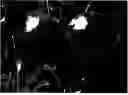
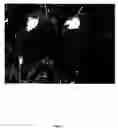
BRIEF DESCRIPTION OF THE DRAWINGSThe accompanying photographic illustrations show typical specimens in full colour of the foliage and fruit of the new apple tree variety cv. “RS103-130”. The colours are as nearly true as is reasonably possible in a colour representation of this type.
FIG. 1 is a photograph of the fruit of the new apple variety cv. “RS103-130”.
FIG. 2 is a photograph of the coloured side of fruit of the new apple variety cv. “RS103-130”.
FIG. 3 is a photograph of the reverse side of the fruit of the new apple variety cv. “RS103-130”.
FIG. 4 is a photograph of fruit of the new apple variety cv. “RS103-130” on the tree (coloured side).
DETAILED DESCRIPTION OF THE PREFERRED EMBODIMENTThroughout this specification, colour names beginning with a small letter signify that the name of that colour, as used in common speech, is aptly descriptive. Colour names beginning with a capital letter designate values based upon the R.H.S. Colour Chart published by The Royal Horticultural Society, London, England.
The descriptive matter which follows pertains to “RS103-130” apple trees as well as to the comparative varieties “Royal Gala” (the subject of U.S. Pat. No. 4,121), “CPR7T90” (unpatented), “Red Braeburn” (unpatented) and “Fuji” (unpatented), grown at the Applethorpe Research Station, Queensland, Australia.
Conventional cross pollination was undertaken in 1993 as per the methods described by Janick & Moore (Eds.) in Methods in Fruit Breeding with controlled pollination between “Royal Gala” (seed parent) and “CPR7T90” (pollen parent). The fruit produced by the procedure were allowed to develop until mature, followed by harvest of the fruit and extraction of the seeds. The seeds were vemalised for a period of up to twelve weeks (moist and at 2° C.) until ready for germination. This produced a family of apple seedlings which were inoculated at the 3 to 5 leaf stage with a fungal suspension of apple black spot eonidia (2.5×10⁵ spores/mL) in order to cull susceptible seedlings. Resistant seedlings were field planted in July 1995 at Applethorpe Research Station, and “RS103-130” selected in 1999 for fruit quality parameters of a striped red to block red colour, sweetness, crispness and low acidity.
In 1996, scion wood was vegetatively propagated by top-working onto mature “Royal Gala” trees on MM106 stock while concurrently bench-grafted to MM106 stock for nursery tree production. In subsequent years scion wood from the trees propagated in 1996 had been used to establish two major trial plantings:
-
- (1) a fruit production block (620 Trees) at Applethorpe Research Station, and
- (2) an organic apple production block on the property of a Stanthorpe apple grower (I & L Rizzato & Sons, Queensland, Australia, 625 trees).
Fruiting at these two trial sites has shown no evidence of off-types after two generations of vegetative propagation. Further to this, a budwood multiplication block (12 trees) on seedling and MM106 rootstocks had also been established at Applethorpe Research Station with no evidence of off-types.
Asexual reproduction of this new variety by grafting and budding onto rootstock shows that the foregoing and all other characteristics and distinctions come true to form and are established and transmitted through succeeding propagations. The fruit of the subject were grown on M.26 rootstocks in a 10 by 6 m complete randomized block design orchard planting, at Applethorpe Research Station, Queensland, Australia. This block has been planted for the purposes of obtaining data for Plant Breeders' Rights under Australian legislation.
Redness of skin colour was determined using a Minolta Chroma Meter CR-200 to measure the hue angle (H). Mean values were taken from measurements at three points from the shoulder to the basal end of the sun-exposed side of each fruit. The lower the hue angle, the greater the red coloration.
Pest and disease treatments were applied as required. Irrigation and fertilizer application followed commercial practice. 10 to 20 random measurements of each characteristic were obtained from each replicate.
Certain characteristics of this variety, such as growth and colour, may change with changing environmental conditions (e.g., light, temperature, moisture), nutrient availability, rootstocks, or other factors. Colour descriptions and other terminology are used in accordance with their ordinary dictionary descriptions, unless the context clearly indicates otherwise. Colour names beginning with a capital letter designate values based upon the R.H.S. Colour Chart published by The Royal Horticultural Society, London, England.
The following information has been determined from the averages of data measured from a sampling of the trees of “RS103-130” grown in the Plant Breeder's Right block, at Applethorpe Research Station, Queensland, Australia. The observations described herein are believed to apply to plants of the variety “RS103-130” grown under similar conditions of soil and climate elsewhere.
- Tree:
- General: Measurements were taken on trees that were 3 years of age growing on M.26 rootstock in Queensland, Australia. Numbers provided are averages of data measured from the sampling of trees.
-
- Vigor.—Low to moderate.
- Overall shape.—Spreading to slight drooping.
- Height.—Approximately 2.02 m.
- Width.—Approximately 1.38 m.
- Caliper.—Approximately 32 mm at 100 mm above the graft union, and ranging from approximately 100 mm to approximately 300 mm above the ground.
- Trunk.—Medium Stocky.
- Trunk bark texture.—Smooth with raised, prominent lenticels.
- Trunk bark colour.—About Greyed-Green colour RHS 197D.
- Patches or other markings.—No prominent spots or scales evident.
- Primary Branches.—Stout; Branches emerge at an angle of approximately 60 to approximately 90 degrees with branches higher in the tree emerging at approximately 60 degrees. Exemplary 2-year-old primary branches have been observed to have a caliper of approximately 12.2 mm measured at the base.
- Branch colour.—One-year old branches are about Brown RHS 200D in colour, while older branches are about Grey-Brown RHS 199C in colour.
- Branch pubescence.—Absent.
- Branch lenticels.—Low to medium density, approximately 5 per square centimetre; Shape: Oval Colour. About Greyed-White RHS 156D Size. Approximately 1.2 mm long by approximately 0.9 mm wide.
- Internodes.—Average internode length is approximately 2.0 cm for a 1-year old shoot.
- Bearing.—Annual.
- Hardiness.—Australian Zone hardy, comparable to “Cripps Pink”.
- Drought and insect resistance.—Comparable to “Cripps Pink”.
- Disease resistance.—Bred using parent with Vf gene complex conferring resistance to apple scab incited by the fungus Venturia inaequalis.
-
- Leaves:
-
- Texture.—Leathery.
- Sheen.—Medium Glossy to slightly dull.
- Length.—Approximately 4.9 cm to approximately 11.0 cm; average approximately 8.4 cm (average measurement from 50 typical leaves).
- Width.—Approximately 3.7 cm to approximately 7.1 cm, average approximately 4.9 cm (average measurement from 50 typical leaves).
- Petiole.—Length: Approximately 35.0 mm Diameter: Approximately 1.4 mm Colour: About Green RHS 138B, tinged with about Greyed-Purple RHS 185B at point of attachment.
- Margin.—Finely serrated.
- Tip shape.—Acute.
- Stipules.—Either 1 or 2 present on only 25% of leaves. Where present, opposite, slender (approximately 0.14 mm to approximately 0.95 mm), colour about Yellow-Green RHS 147C, length approximately 3.3 mm to approximately 15.9 mm.
- Leaf colour.—Upper leaf surface: About Yellow-Green RHS 147 A. Lower leaf surface: About Yellow-Green RHS 147C.
- Leaf vein colour: From about Greyed-Purple RHS 185B at the base of the leaf (point of attachment to petiole) to about Green-White RHS 157B at the apex.
- Pubescence.—Absent to very fine on upper surface, to fine (light) on lower surface.
-
- Flowers:
- General:
-
- Size.—Medium. Approximately 37.7 mm in diameter — fully flattened.
- Shape.—Ovoid to round.
- Colour.—Unopened bud. King Bloom Length: Approximately 12.5 mm to approximately 16.2 mm (average approximately 14.46 mm); Diameter: Approximately 9.7 mm to approximately 11.9 mm (average approximately 10.74 mm) Color: About Red-Purple RHS 63C. Opened bud: Color. About White RHS 155D with streaks to about Red-Purple RHS 62D. Flower: Upper petal surface. About White RHS 155D to about Red-Purple RHS 62D. Lower petal surface: About White RHS 155D to about Red-Purple RHS 62B.
-
- Petals:
-
- Numbers of petals per flower.—5.
- Petal size.—Length. Approximately 17.72 mm. Width. Approximately 12.05 mm.
- Petal shape.—Ovate in shape. Base. Slightly acuminate. Apex: Rounded.
- Arrangement.—Their arrangement is separated but over-lapping.
-
- Sepals:
-
- Number.—About 5 per flower.
- Length.—Approximately 6.34 mm.
- Width.—Approximately 4.30 mm wide.
- Color.—About Green RHS 143D, tinged at the tip with about Red-Purple RHS 59A.
- Arrangement.—Arranged separately.
-
- Pedice/peduncle: Apples do not have branched inflorescences hence no pedicels. The flower stalk of an apple is the peduncle.
-
- Length.—Approximately 10.44 mm (measured to where receptacle is swelling).
- Diameter.—Approximately 1.06 mm.
- Colour.—About Yellow-Green RHS 145C.
-
- Stamen:
-
- Number.—Approximately 20 per flower, arranged in a row around the circumference of the receptacle.
- Length.—Approximately 3.65 to approximately 11.67 mm.
- Filament color.—About White RHS 155C.
- Anthers.—About 20 per flower. Anther Color: About Yellow RHS 5D Unopened Anther Color: About Yellow RHS 5D.
- Pollen color.—About Yellow RHS 4B.
-
- Pistil:
-
- General.—The stigma is about approximately 1 mm long; styles are 5 in number, separated at base but held tightly and entangled by fine hairs, and about Yellow-Green RHS 144B in colour.
-
- Pollination requirements: An early flowering variety e.g. Braeburn is preferred. Later flowering varieties e.g. Granny Smith or Cripp's Pink will overlap sufficiently in flowering to enable pollination.
- Fragrance: Slight.
- Bloom season: In 2006 at Applethorpe in Queensland, Australia, blooming began on the 18th of September with full bloom on the 28th of September finishing on the 3rd of October.
- Fruit:
- General: Measurements are the average of 10 typical “RS103-130” apples.
- Size: Medium to large.
-
- Length.—Approximately 71.3 mm.
- Width.—Approximately 81.4 mm.
-
- Shape: Asymmetrical, conic; slight ribbing is present; very slight lobes observed at calyx end.
-
- Cavity.—Approximately 38.6 mm wide with a depth of approximately 20.6 mm.
- Basin.—Approximately 28.4 mm wide with a depth of approximately 8.0 mm.
-
- Fruit stem:
-
- Length.—Approximately 10.5 mm.
- Diameter.—Approximately 2.8 mm.
- Color.—About Yellow-Green RHS 144B.
-
- Locules: 5 slightly open locules with seeds free of the carpel wall at maturity.
- Fruit skin:
-
- Thickness.—Medium.
- Surface texture.—Glossy with a tendency to become greasy at maturity.
- Lenticels.—Are present, approximately 0.5 to approximately 1.0 mm in diameter, generally cream in colour.
- Colour.—General colour effect: About Red RHS 53A. Ground colour: At maturity, about Yellow-Green RHS 154C. Overcolour: About Red RHS 53A with paler sections about Red RHS 53B. Russetting: Slight amount inside stem cavity.
-
- Flesh:
-
- Flavor.—Mild, sweet, low-acid flavour.
- Brix.—Approximately 14.1 to approximately 18.1 Brix (Average approximately 15.7 Brix).
- Juiciness.—Moderately juicy.
- Colour.—About Yellow RHS 8C.
- Aroma.—Slight.
-
- Core: While the calyx can be open in about 70 percent of fruit, the calyx tube is closed and the core lines are defined.
-
- Shape.—Round to slightly elongate.
- Diameter.—Approximately 32.1 mm.
-
- Seed:
-
- Number.—About 1 to 2 seeds per cell.
- Shape.—Acute in shape.
- Length.—Approximately 8.7 mm.
- Width.—Approximately 5.6 mm wide.
- Color.—About Greyed-Orange RHS 165A.
-
- Fruit production: First picking date in the 2006 season at Applethorpe, Australia, was about the 20th of March, and last picking date was about 29th of March.
- Storage: Fruit remains fresh at room temperature (approximately 20° C.) for approximately 7 days, and can be stored up to approximately 4 months in cold storage (about 1° C., or about 34° F.).
- Usage: Fresh eating.
Ten typical apples of “RS103-130” and of the cultivar “Braeburn” from trees growing near to one another, were obtained on the 5th of April 2006 and tested for certain properties. The approximate averages of these properties were as follows:
| TABLE 1 |
| COMPARISON OF “RS103-130” WITH OTHER APPLE VARIETIES |
| “RS103-130” | “Braeburn” | |
| Firmness | 9.2 | 7.2 |
| (pressure kg/cm2) | ||
| Starch Index | 5.5 | 5.5 |
| On Scale of 1 (high starch) to 6 | ||
| (low starch) | ||
| Soluble Solids | 15.7 | 12.7 |
| (in percent) | ||
| Apple scab resistance | Scab Resistant | Scab susceptible |
| (Scab resistant/scab susceptible) | ||
Claims
What is claimed is:1. A new and distinct apple tree as herein described and illustrated.
Images & Drawings included:
Sources:
- United States Patent and Trademark Office - verify current appl. status at the USPTO↗
Recent applications in this class:
- » 20240292771 2024-08-29
Campanula plant named 'Twilight' - » 20240251691 2024-07-25
HYDRANGEA PLANT NAMED 'HYLV17520' - » 20240251690 2024-07-25
Vaccinium Plant Named 'BWPBLUE02' - » 20240251689 2024-07-25
BLUEBERRY PLANT NAMED 'FC13-113' - » 20240251688 2024-07-25
BLUEBERRY PLANT NAMED 'FCM14-057' - » 20240237567 2024-07-11
PONGAMIA VARIETIES - » 20240224827 2024-07-04
PELARGONIUM PLANT NAMED 'PEQZ0103' - » 20240215470 2024-06-27
Agapanthus plant named 'Monsapho' - » 20240215469 2024-06-27
plant named ‘LOCORA3519’ - » 20240206359 2024-06-20
CORYLUS PLANT NAMED 'BWM01'
Recent applications for this Assignee:
- » 20080289071 2008-11-20
PLUM TREE NAMED 'QUEEN GARNET'