Method of making cushion material
US20080245469A1
2008-10-09
11/743,810
2007-05-03
✅ Patent granted
US 7,625,458 B2
2009-12-01
-
-
Richard Crispino | Barbara J. Musser
2028-07-21
Abstract:
A method of making a cushion material includes the steps of pressing a pad onto a die with a plurality of protrusions to form a plurality of protrusion portions on the pad, and then attaching an upper layer on transversely cutting the protrusion portions of the pad to separate the upper layer and the die and form the pad with a plurality of pad members thereon, and then attaching a lower layer on the other side of the pad members to form a three-layer cushion material.
Assignee:
- Tiong Chih Enterprise Co, Ltd. 1 🇹🇼 Taichung Hsien, Taiwan
Interested in similar patents?
Get notified when new applications in this technology area are published.
Classification:
B29C43/146 » CPC main
Compression moulding, i.e. applying external pressure to flow the moulding material; Apparatus therefor of articles of definite length, i.e. discrete articles in several steps for making multilayered articles
B29C43/021 » CPC further
Compression moulding, i.e. applying external pressure to flow the moulding material; Apparatus therefor of articles of definite length, i.e. discrete articles characterised by the shape of the surface
B29C65/028 » CPC further
Joining of preformed parts ; Apparatus therefor by heating, with or without pressure; Particular heating or welding methods not otherwise provided for making use of inherent heat, i.e. the heat for the joining comes from the moulding process of one of the parts to be joined
B29C66/1122 » CPC further
General aspects of processes or apparatus for joining preformed parts; General aspects dealing with the joint area or with the area to be joined; Particular design of joint configurations particular design of the joint cross-sections; Joint cross-sections comprising a single joint-segment, i.e. one of the parts to be joined comprising a single joint-segment in the joint cross-section; Single lapped joints Single lap to lap joints, i.e. overlap joints
B29C66/438 » CPC further
General aspects of processes or apparatus for joining preformed parts; General aspects of joining substantially flat articles, e.g. plates, sheets or web-like materials; Making flat seams in tubular or hollow articles; Joining single elements to substantially flat surfaces; Joining substantially flat articles ; Making flat seams in tubular or hollow articles; Joining a relatively small portion of the surface of said articles Joining sheets for making hollow-walled, channelled structures or multi-tubular articles
B29C69/001 » CPC further
Combinations of shaping techniques not provided for in a single one of main groups - , e.g. associations of moulding and joining techniques; Apparatus therefore a shaping technique combined with cutting, e.g. in parts or slices combined with rearranging and joining the cut parts
B29C48/0011 » CPC further
Extrusion moulding, i.e. expressing the moulding material through a die or nozzle which imparts the desired form; Apparatus therefor; Combinations of extrusion moulding with other shaping operations combined with compression moulding
B29C48/07 » CPC further
Extrusion moulding, i.e. expressing the moulding material through a die or nozzle which imparts the desired form; Apparatus therefor characterised by the shape of the extruded material at extrusion Flat, e.g. panels
B29C48/13 » CPC further
Extrusion moulding, i.e. expressing the moulding material through a die or nozzle which imparts the desired form; Apparatus therefor characterised by the shape of the extruded material at extrusion Articles with a cross-section varying in the longitudinal direction, e.g. corrugated pipes
B29C48/21 » CPC further
Extrusion moulding, i.e. expressing the moulding material through a die or nozzle which imparts the desired form; Apparatus therefor; Articles comprising two or more components, e.g. co-extruded layers the components being layers the layers being joined at their surfaces
B29C66/472 » CPC further
General aspects of processes or apparatus for joining preformed parts; General aspects of joining substantially flat articles, e.g. plates, sheets or web-like materials; Making flat seams in tubular or hollow articles; Joining single elements to substantially flat surfaces; Joining single elements to sheets, plates or other substantially flat surfaces said single elements being substantially flat
B29C66/712 » CPC further
General aspects of processes or apparatus for joining preformed parts characterised by the composition, physical properties or the structure of the material of the parts to be joined; Joining with non-plastics material characterised by the composition of the plastics material of the parts to be joined the composition of one of the parts to be joined being different from the composition of the other part
B29C66/727 » CPC further
General aspects of processes or apparatus for joining preformed parts characterised by the composition, physical properties or the structure of the material of the parts to be joined; Joining with non-plastics material characterised by the structure of the material of the parts to be joined being porous, e.g. foam
B29C66/8322 » CPC further
General aspects of processes or apparatus for joining preformed parts; General aspects of machine operations or constructions and parts thereof characterised by the movement of the joining or pressing tools; Reciprocating joining or pressing tools Joining or pressing tools reciprocating along one axis
B29C2793/00 » CPC further
Particular articles
B29C2793/00 » CPC further
Shaping techniques involving a cutting or machining operation
B29K2105/04 » CPC further
Condition, form or state of moulded material or of the material to be shaped cellular or porous
B29L2024/00 » CPC further
Articles with hollow walls
B29L2031/751 » CPC further
Other particular articles Mattresses, cushions
Y10T156/1039 » CPC further
Adhesive bonding and miscellaneous chemical manufacture; Methods of surface bonding and/or assembly therefor with permanent bending or reshaping or surface deformation of self sustaining lamina Surface deformation only of sandwich or lamina [e.g., embossed panels]
Y10T156/1057 » CPC further
Adhesive bonding and miscellaneous chemical manufacture; Methods of surface bonding and/or assembly therefor with cutting, punching, tearing or severing; Perforating lamina Subsequent to assembly of laminae
Y10T156/108 » CPC further
Adhesive bonding and miscellaneous chemical manufacture; Methods of surface bonding and/or assembly therefor with cutting, punching, tearing or severing Flash, trim or excess removal
B29K2023/083 » CPC further
Use of polyalkenes or derivatives thereof as moulding material; Polymers of ethylene; Copolymers of ethylene EVA, i.e. ethylene vinyl acetate copolymer
B29C66/71 » CPC further
General aspects of processes or apparatus for joining preformed parts characterised by the composition, physical properties or the structure of the material of the parts to be joined; Joining with non-plastics material characterised by the composition of the plastics material of the parts to be joined
B29K2021/00 » CPC further
Use of unspecified rubbers as moulding material
B32B38/04 IPC
Ancillary operations in connection with laminating processes Punching, slitting or perforating
Description
BACKGROUND OF THE INVENTION
1. Field of the Invention
The present invention relates generally to a cushion or shock-absorbency material, and more particularly to a method of making a cushion material.
2. Description of the Related Art
Typically, a conventional method of making a cushion material, which has a sandwich structure of a fabric, a cushion member and a fabric with a greater gap therebetween, is injection molding. The injection molding process is expensive and needs longer time that doesn't meet the requirement of mass production. To increase the competition in the market, it should be improved
SUMMARY OF THE INVENTION
The primary objective of the present invention is to provide a faster and cheaper method of making a cushion material.
According to the objective of the present invention, a method of making a cushion material includes the steps of pressing a pad onto a die with a plurality of protrusions to form a plurality of protrusion portions on the pad, and then attaching an upper layer on transversely cutting the protrusion portions of the pad to separate the upper layer and the die and form the pad with a plurality of pad members thereon.
BRIEF DESCRIPTION OF THE DRAWINGS
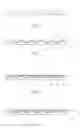
FIG. 1 to FIG. 5 are sectional views of a preferred embodiment of the present invention, showing the procedures to make the cushion material;
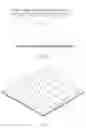
FIG. 6 is a sectional view of the cushion material of the preferred embodiment of the present invention; and
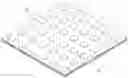
FIG. 7 is a perspective view of the cushion material of the preferred embodiment of the present invention.
DETAILED DESCRIPTION OF THE INVENTION
As shown in FIG. 1 to FIG. 5, a method of making a cushion material includes the steps of:
a. Preparing a die 10: The die 10 has a plurality of protrusions 11, which shapes and layout are designed by the manufacture. The shapes of the protrusions 11 may be circle, rectangle, triangle or hexagon, and the layout may be matrix or random. In the present embodiment, the protrusions 11 are hexagonal columns and arranged in matrix, as shown in FIG. 1.
b. Providing a pad 20 on the die 10: The pad 10 may be a foamed plastic, EVA or rubber.
c. Pressing the pad 20 to form a plurality of protrusion portions 21 thereon, as shown in FIG. 2. The protrusion portions 21 are formed by the protrusions 11 of the die 10.
d. Attaching an upper layer 30 on the pad 20. The upper layer 30 is attached on distal ends of the protrusion portions 21 of the pad 20, as shown in FIG. 3.
e. Providing a blade mold 40 transversely cutting the protrusion portions 21 of the pad 20 to separate the pad 40 and the die 10. A path of the blade mold 40 crosses between the distal ends of the protrusion portions 21 and the protrusions 11 of the die 10 to form the upper layer 30 with a plurality of the pad members 20 thereon, as shown in FIG. 4 and FIG. 5.
f. Attaching a lower layer 50 on the pad members 20 on the upper layer 30 to form a three-layer cushion material, as shown in FIG. 6 and FIG. 7. The cushion material has the upper layer 30 and the lower layer 50 at a top side and a bottom side thereof and the pad members 20 between upper layer 30 and the lower layer 50.
With the procedures above, it will get the three-layer cushion material. The pad members, which serve cushion function, between the up and lower layers may change their shapes, pitches and pattern by utilizing different die.
The up and lower layers may be made of any suitable materials, such as cotton, linen, nylon, polymer or other materials. The method of pressing the pad onto the die may be cold pressing to form the protrusion portions. The adhesive for attachment the present invention may be ventilation glue or non-ventilation glue or other suitable adhesives.
The present invention provides a faster and cheaper method of making the cushion material for mass production.
The description above is a few preferred embodiments of the present invention and the equivalence of the present invention is still in the scope of the claims of the present invention.
Claims
What is claimed is:1. A method of making a cushion material, comprising the steps of:
a. providing a die with a plurality of protrusions on a side thereof;
b. resting a pad on the die on the side with the protrusions;
c. pressing the pad to form a plurality of protrusions by the protrusions of the die;
d. attaching an upper layer on distal ends of protrusion portions of the pad; and
e. providing a blade mold crossing between the protrusions of the die and the protrusion portions of the pad to separate the upper layer and the die and form the pad with a plurality of pad members thereon.
2. The method of making a cushion material as defined in claim 1, further comprising the step of attaching a lower layer on the pad members after the step e to form a sandwich structures of a upper layer, a pad and a lower layer.
3. The method of making a cushion material as defined in claim 2, wherein the upper layer and the lower layer may be made of cotton, linen, nylon, or polymer.
4. The method of making a cushion material as defined in claim 2, wherein the pad may be made of foamed plastic, ethylene vinyl acetate (EVA), or rubber.
Images & Drawings included:
Sources:
- United States Patent and Trademark Office - verify current appl. status at the USPTO↗
Similar patent applications:
- » 20170313485
THERMALLY ACTIVATED CUSHIONING MATERIAL AND METHOD OF MAKING THE SAME - » 20080166524
Thermoformed cushioning material and method of making - » 20140150170
VARIABLY-TENSED COMPOSITE CUSHIONING MATERIAL AND METHOD FOR MAKING THE SAME - » 20120115379
MULTI-LAYERED COMPOSITE CUSHIONING MATERIAL AND METHOD FOR MAKING THE SAME - » 20140154452
Composite cushioning material and jigless method for making the same - » 20240270471
SHREDDED RECYCLED CARDBOARD FILLED PACKAGING CUSHION AND METHOD OF MAKING PACKAGING CUSHION USING RECYCLED CARDBOARD MATERIAL - » 20150140265
Cushioning wrap material and apparatus and methods of making same - » 20220145064
A GEL AND CUSHIONING MATERIAL BASED ON THERMOPLASTIC ELASTOMERS AND METHOD OF MAKING THEREOF
Recent applications in this class:
- » 20240286322 2024-08-29
PRESSURE MOULDING PROCESS AND RELATED PRESSURE MOULDING DEVICE - » 20230364833 2023-11-16
METHOD FOR MANUFACTURING RESIN MOLDED ARTICLE - » 20220410443 2022-12-29
Method for producing molded body by compression-molding - » 20220161464 2022-05-26
System and method for multi-material molding - » 20220048226 2022-02-17
A GLOSSY FINISH SANDWICH COMPOSITE AND PROCESS FOR PREPARING THE SAME - » 20210053258 2021-02-25
Method for producing sealed structure - » 20210023745 2021-01-28
Compression molded cascades with two piece mold - » 20190275712 2019-09-12
Golf ball incorporating compression molded layer and methods and tooling for making - » 20170259470 2017-09-14
METHOD OF PRODUCING A DECORATIVE STRUCTURAL PLASTIC PART - » 20160031129 2016-02-04
Method to produce a make-up cosmetic product