Grinding balls and their manufacturing method
US20080245912A1
2008-10-09
10/587,125
2005-02-07
✅ Patent granted
US 7,487,928 B2
2009-02-10
WO; PCT/BE2005/000016; 20050207
WO; WO2005/075375; 20050818
Faye Francis
2026-03-08
Abstract:
The present invention relates to grinding balls made of fritted ceramic comprising a compound of alumina silicate (αAl2O3.βSiO2) and in particular mullite (3Al2O3.2SiO2), zirconia (ZrO2) and alumina (Al2O3).
Assignee:
- Magotteaux International S.A. 21 🇧🇪 Vaux-Sous-Chevremont, Belgium
- Magotteaux International SA 5 🇧🇪 , Belgium
Interested in similar patents?
Get notified when new applications in this technology area are published.
Classification:
B02C17/20 » CPC main
Disintegrating by tumbling mills, i.e. mills having a container charged with the material to be disintegrated with or without special disintegrating members such as pebbles or balls; Details Disintegrating members
C04B35/119 » CPC further
Shaped ceramic products characterised by their composition ; Ceramics compositions ; Processing powders of inorganic compounds preparatory to the manufacturing of ceramic products based on oxide ceramics based on aluminium oxide; Fine ceramics; Composites with zirconium oxide
C04B35/185 » CPC further
Shaped ceramic products characterised by their composition ; Ceramics compositions ; Processing powders of inorganic compounds preparatory to the manufacturing of ceramic products based on oxide ceramics based on silicates other than clay rich in aluminium oxide Mullite 3Al2O3-2SiO2
C04B35/6261 » CPC further
Shaped ceramic products characterised by their composition ; Ceramics compositions ; Processing powders of inorganic compounds preparatory to the manufacturing of ceramic products; Forming processes; Processing powders of inorganic compounds preparatory to the manufacturing of ceramic products; Preparing or treating the powders individually or as batches ; preparing or treating macroscopic reinforcing agents for ceramic products, e.g. fibres; mechanical aspects section; Treating the starting powders individually or as mixtures Milling
C04B35/6303 » CPC further
Shaped ceramic products characterised by their composition ; Ceramics compositions ; Processing powders of inorganic compounds preparatory to the manufacturing of ceramic products; Forming processes; Processing powders of inorganic compounds preparatory to the manufacturing of ceramic products; Preparing or treating the powders individually or as batches ; preparing or treating macroscopic reinforcing agents for ceramic products, e.g. fibres; mechanical aspects section using additives specially adapted for forming the products, e.g.. binder binders Inorganic additives
C04B2235/3201 » CPC further
Aspects relating to ceramic starting mixtures or sintered ceramic products; Composition of constituents of the starting material or of secondary phases of the final product; Constituents and secondary phases not being of a fibrous nature; Metal oxides, mixed metal oxides, or oxide-forming salts thereof, e.g. carbonates, nitrates, (oxy)hydroxides, chlorides Alkali metal oxides or oxide-forming salts thereof
C04B2235/3206 » CPC further
Aspects relating to ceramic starting mixtures or sintered ceramic products; Composition of constituents of the starting material or of secondary phases of the final product; Constituents and secondary phases not being of a fibrous nature; Metal oxides, mixed metal oxides, or oxide-forming salts thereof, e.g. carbonates, nitrates, (oxy)hydroxides, chlorides; Alkaline earth oxides or oxide forming salts thereof, e.g. beryllium oxide Magnesium oxides or oxide-forming salts thereof
C04B2235/3208 » CPC further
Aspects relating to ceramic starting mixtures or sintered ceramic products; Composition of constituents of the starting material or of secondary phases of the final product; Constituents and secondary phases not being of a fibrous nature; Metal oxides, mixed metal oxides, or oxide-forming salts thereof, e.g. carbonates, nitrates, (oxy)hydroxides, chlorides; Alkaline earth oxides or oxide forming salts thereof, e.g. beryllium oxide Calcium oxide or oxide-forming salts thereof, e.g. lime
C04B2235/3215 » CPC further
Aspects relating to ceramic starting mixtures or sintered ceramic products; Composition of constituents of the starting material or of secondary phases of the final product; Constituents and secondary phases not being of a fibrous nature; Metal oxides, mixed metal oxides, or oxide-forming salts thereof, e.g. carbonates, nitrates, (oxy)hydroxides, chlorides; Alkaline earth oxides or oxide forming salts thereof, e.g. beryllium oxide Barium oxides or oxide-forming salts thereof
C04B2235/3225 » CPC further
Aspects relating to ceramic starting mixtures or sintered ceramic products; Composition of constituents of the starting material or of secondary phases of the final product; Constituents and secondary phases not being of a fibrous nature; Metal oxides, mixed metal oxides, or oxide-forming salts thereof, e.g. carbonates, nitrates, (oxy)hydroxides, chlorides; Rare earth oxide or oxide forming salts thereof, e.g. scandium oxide Yttrium oxide or oxide-forming salts thereof
C04B2235/3246 » CPC further
Aspects relating to ceramic starting mixtures or sintered ceramic products; Composition of constituents of the starting material or of secondary phases of the final product; Constituents and secondary phases not being of a fibrous nature; Metal oxides, mixed metal oxides, or oxide-forming salts thereof, e.g. carbonates, nitrates, (oxy)hydroxides, chlorides; Refractory metal oxides, their mixed metal oxides, or oxide-forming salts thereof; Zirconium oxides, zirconates, hafnium oxides, hafnates, or oxide-forming salts thereof Stabilised zirconias, e.g. YSZ or cerium stabilised zirconia
C04B2235/3418 » CPC further
Aspects relating to ceramic starting mixtures or sintered ceramic products; Composition of constituents of the starting material or of secondary phases of the final product; Constituents and secondary phases not being of a fibrous nature; Non-metal oxides, non-metal mixed oxides, or salts thereof that form the non-metal oxides upon heating, e.g. carbonates, nitrates, (oxy)hydroxides, chlorides Silicon oxide, silicic acids, or oxide forming salts thereof, e.g. silica sol, fused silica, silica fume, cristobalite, quartz or flint
C04B2235/3463 » CPC further
Aspects relating to ceramic starting mixtures or sintered ceramic products; Composition of constituents of the starting material or of secondary phases of the final product; Constituents and secondary phases not being of a fibrous nature; Non-metal oxides, non-metal mixed oxides, or salts thereof that form the non-metal oxides upon heating, e.g. carbonates, nitrates, (oxy)hydroxides, chlorides; Silicates other than clay, e.g. water glass Alumino-silicates other than clay, e.g. mullite
C04B2235/80 » CPC further
Aspects relating to ceramic starting mixtures or sintered ceramic products; Aspects relating to sintered or melt-casted ceramic products Phases present in the sintered or melt-cast ceramic products other than the main phase
C04B2235/94 » CPC further
Aspects relating to ceramic starting mixtures or sintered ceramic products; Aspects relating to sintered or melt-casted ceramic products Products characterised by their shape
Y02P40/60 » CPC further
Technologies relating to the processing of minerals Production of ceramic materials or ceramic elements, e.g. substitution of clay or shale by alternative raw materials, e.g. ashes
Y02P40/60 » CPC further
Technologies relating to the processing of minerals Production of ceramic materials or ceramic elements, e.g. substitution of clay or shale by alternative raw materials, e.g. ashes
Y10T29/49712 » CPC further
Metal working; Method of mechanical manufacture Ball making
B02C17/18 IPC
Disintegrating by tumbling mills, i.e. mills having a container charged with the material to be disintegrated with or without special disintegrating members such as pebbles or balls Details
B21D53/00 IPC
Making other particular articles
B02C25/00 IPC
Control arrangements specially adapted for crushing or disintegrating
B02C17/14 IPC
Disintegrating by tumbling mills, i.e. mills having a container charged with the material to be disintegrated with or without special disintegrating members such as pebbles or balls Mills in which the charge to be ground is turned over by movements of the container other than by rotating, e.g. by swinging, vibrating, tilting
Description
FIELD OF THE INVENTION
The present invention relates to the grinding of mineral or organic substances, and in particular to spheroid fritted-ceramic balls used in agitator mills, of the attrition type or others, for the reduction, dispersion and regeneration of particles in a dry and/or wet process.
STATE OF THE ART AND INTRODUCTION
The equipment and methods of fine grinding and the dispersion with dry and wet processes are well known to those skilled in the art and developed in industries such as:
- the mineral industry with the fine grinding of pre-ground particles by means of traditional methods,
- the industries of paint, ink, lacquer and agrochemical compounds as well as for the dispersion and homogenisation of liquids and of varied solid constituents.
In most cases, these equipment and methods use dispersion or grinding materials of an essentially spherical shape and of reduced diameters (generally less than 10 mm).
Fine and ultra-fine grinding has recently become an essential development path in the mining industries, with the need to supply economical grinding materials.
The agitator mill can be described as follows: it comprises a cylindrical chamber positioned horizontally or vertically and containing small balls with a diameter of 0.5 mm to 12 mm depending on the desired fineness for the finished product. An axis with discs rotates in this chamber. These discs transmit the motion to the grinding medium and to the material to be ground. The motion of the whole assembly allows the dispersion of the material to be ground between the grinding balls that have the function of reducing said material to a predetermined fineness. The particle size obtained is thus a function of the energy put into the machine.
This grinding method can be achieved continuously in wet and dry processes, with the supply and discharge of the material to be ground, or in batches, i.e. in an entirely closed cylindrical chamber.
The grinding media themselves are clearly subjected to wear and their selection will depend on the following criteria:
- chemical inertness relative to the ground or dispersed products,
- resistance to mechanical impacts,
- resistance to wear,
- wear caused on the internal equipment of the mill or of the disperser,
- its density, a higher density giving good grinding performance,
- the absence of open porosity, leading to rapid wear of the grinding balls,
- an acceptable spherical shape.
A limited number of media used in agitator mills or in dispersers can be found on the market:
- sand with rounded grains (quartz, zircon),
- glass balls,
- metal balls,
- fused-ceramic balls,
- fritted-ceramic balls.
Sand with rounded grains is a natural and cheap product. Its poor resistance to mechanical impacts, its low density, its variations in quality (inconsistency of deposits), its abrasiveness towards the internal equipment of agitation mills and dispersers constitute its limitations in application.
Glass balls that are widely used to overcome the drawbacks of sand with rounded grains turn out to be less effective in grinding or dispersion applications that require balls with high mechanical resistance and high wear resistance. Their low density of 2.5 is also a feature that limits their use when grinding efficiency is an important element of the process.
Metal balls turn out less effective for the following reasons:
- they are insufficiently chemically inert relative to the ground or dispersed products,
- their excessively high density entails high energy consumption and high heating level of the internal equipment of the mills/agitators.
Ceramic balls on the other hand have better mechanical resistance than glass balls, a density that is intermediate between that of glass balls and that of metal balls as well as good chemical inertness relative to the ground or dispersed products.
Depending on the manufacturing methods, ceramic balls are classified into two groups:
- fused-ceramic balls, obtained by the fusion of ceramic compounds at very high temperature (±2000° C.) and solidified in the form of droplets,
- fritted-ceramic balls, obtained by cold shaping of the ceramic compounds and consolidation of the latter by fritting at high temperature (±1500° C.).
Depending on the ceramic compounds shaped, the fritted-ceramic balls are classified into four groups:
- balls made of alumina (Al2O3 content ≧90%),
- balls made of alumina silicate (mullite or others),
- balls made of alumina-zirconia (85 to 95% Al2O3—15 to 5% ZrO2),
- balls made of zirconia, stabilised or partially stabilised by means of yttrium, cerium or magnesium oxide, among others.
The compositions of mullite/zirconia as well as those of mullite/alumina/zirconia have generally been studied in the context of fireproof bricks to be used in glass furnaces.
In their publication “High temperature mechanical properties of reaction-sintered mullite/zirconia and mullite/alumina/zirconia composites” (Journal of Materials Science 20 (1985), pp. 2533-2540), G. Orange and F. Cambier studied the break resistance of such compounds as well as their impact resistance at high temperature (1000° C.) for using these compounds in structural applications such as glass furnaces.
The problem with grinding balls is however very different. These balls must be much smoother than fireproof bricks in as much as the mere presence of angles on the grinding media may reduce by 50% the useful life of the internal equipment of attrition mills, leading to maintenance costs that make the use of very rough grinding media impossible.
The surface finish of grinding balls is thus very important since it directly affects the internal wear of the equipment and the grinding quality. Said surface finish is also directly affected by the chemical composition and the manufacturing method of said balls.
Grinding balls in electrically fused alumina and zirconia are disclosed in the American patents U.S. Pat. No. 3,486,706 and U.S. Pat. No. 5,502,012, respectively. These documents claim specific vitreous phases.
Patent application EP-0 662 461 A1 discloses balls of ceramic material formed by the fusion of a mixture of zirconia and silica and studies the effect of the presence of yttrium and cerium oxides.
Document EP 1 167 320 A1 describes low-cost products made of alumina-zirconia-silica, melted and cast into blocks, to be used in glass furnace regenerators or in superstructures.
All grinding balls comprising silica, alumina or zirconia have the common feature that they have been produced by fusion, which requires access to temperatures above 2000° C., which is technically difficult and hence expensive. By contrast, none of these documents discloses grinding balls made of fritted ceramic, comprising at the same time silica, alumina and zirconia. This process can be achieved at about 1500° C., which is much easier in terms of technology and hence less expensive.
Aims of the Invention
The present invention aims to provide grinding balls made of fritted ceramic with a particular composition having high durability and good resistance to cold wear, to be used in grinding mills for mineral or organic substances. In addition, it aims to provide a method for manufacturing such balls.
SUMMARY AND CHARACTERISTIC ELEMENTS OF THE INVENTION
The present invention discloses grinding balls made of fritted ceramic comprising a compound of alumina silicate (αAl2O3.βSiO2), zirconia (ZrO2+HfO2) and alumina (Al2O3).
Preferably, the ceramic moreover comprises 1 to 5% by weight of oxides selected from the group of Na2O, MgO, CaO and BaO.
In addition, said alumina silicate compound preferably comprises mullite (3Al2O3.2SiO2).
In a particularly advantageous way, said ceramic moreover comprises a stabilizing agent selected from the rare earth oxides.
The invention also presents grinding balls made of fritted ceramic and produced from a mixture comprising the following ingredients (in weight %):
- 5 to 40% ZrO2+HfO2,
- 0.1 to 10% Y2O3,
- 0.5 to 20% SiO2,
- 40 to 90% Al2O3 with a ZrO2/SiO2 ratio greater than or equal to 2.
Preferably, the grinding balls made of fritted ceramic are produced from a mixture comprising the following ingredients (in weight %):
- 10 to 24% ZrO2+HfO2,
- 0.5 to 3% Y2O3,
- 5 to 12% SiO2,
- 60 to 85% Al2O3
with a ZrO2/SiO2 ratio greater than or equal to 2;
Still according to the invention, the grinding balls made of fritted ceramic are obtained by a method for fritting a mixture comprising the following ingredients (in weight %):
- 10 to 24% ZrO2+HfO2,
- 0.5 to 3% Y2O3,
- 5 to 12% SiO2,
- 60 to 85% Al2O3
with a ZrO2/SiO2 ratio equal to 2.
According to the invention, the grinding balls have a diameter between 0.1 mm and 100 mm, preferably between 0.5 mm and 50 mm, and in particular preferably between 0.5 mm and 10 mm.
The present invention further discloses a method for manufacturing grinding balls made of fritted ceramic, comprising the following steps:
- mixing and/or grinding raw materials by dry and/or wet process so as to form a slurry with possible addition of binding agents and/or organic surfactants;
- passing said slurry through a granulation means or process;
- selecting by sieving the balls obtained with the return to the mixer of the balls having unsatisfactory grain size via a possible drying and/or grinding step;
- drying the balls of satisfactory grain size;
- fritting the balls of satisfactory grain size between 1400° C. and 1600° C. followed by a packaging step.
Moreover, the invention specifies that the granulation means comprise fluidised-bed granulators and granulation discs.
Moreover, the granules may also be obtained by gelation methods or by injection moulding methods.
The invention also specifies that said organic binding agents are chosen from the group of polysaccharides, thermoplastic polymers, thermosetting polymers or polymers based on aqueous or organic solvents.
As an advantage, said surfactants are chosen from the group of carboxylic acids such as stearic acid or oleic acid and/or polyelectrolytes such as ammonium polymethylacrylate.
Moreover, the invention discloses the use of the grinding balls made of fritted ceramic for grinding mineral or organic materials.
SHORT DESCRIPTION OF THE FIGURES
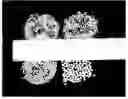
FIG. 1 shows an illustration of the balls according to the present invention with different grain sizes.
DETAILED DESCRIPTION OF THE INVENTION
The invention relates to balls made of fritted ceramic comprising alumina-zirconia-alumina silicate, and in particular alumina-zirconia-mullite. The quality of these balls is higher than that of balls made of alumina, of alumina silicate or of alumina-zirconia, and their cost is significantly lower than that of zirconia balls, which are very expensive and used in particular as grinding and/or dispersion medium.
More precisely, the invention relates to balls made of fritted ceramic with the following chemical composition, by weight %:
- 5 to 40% ZrO2+HfO2, preferably between 10 and 24%,
- 0.1 to 10% Y2O3, preferably between 0.5 and 3%,
- 0.5 to 20% SiO2, preferably between 5 and 12%,
- 40 to 90% Al2O3 preferably between 60 and 85%,
with a ZrO2/SiO2 ratio greater than or equal to 2, preferably equal to 2. - 0 to 5% of optional oxides (Na2O, CaO, MgO, Bao, . . . ).
These balls may be formed by shaping from a slurry and/or a paste of ceramic oxides, dried and fritted at temperatures between 1400° C. and 1700° C., preferably between 1500° C. and 1600° C.
In the following description, where ZrO2 (zirconia) is mentioned, the total of (ZrO2+HfO2) is to be taken into account. Indeed, some HfO2, that is chemically inseparable from ZrO2 and has similar properties, is always present in addition to ZrO2, which is well known to those skilled in the art.
The invention is based on the dissociation reaction of zircon at high temperature in the presence of alumina. This reaction is also well known to those skilled in the art:
Varying x allows to adjust the relative volume proportions of alumina (Al2O3) (if x≠0), of alumina silicate in general and of mullite (3Al2O3.2SiO2) and in particular, of zirconia (ZrO2), and thus to modify the properties of the final fritted ceramic composite such as hardness, durability and wear resistance.
The reaction at high temperature between zircon and alumina allows to obtain, by fritting pulverulent powders, very homogeneous composites, the synthesised phases of which are finely dispersed.
In a preferred embodiment of the invention, yttrium oxide (Y2O3) is added to the basic reagent of the preceding reaction, which allows to stabilise the crystallographic forms (cubic or tetragonal) of zirconia obtained at high temperature.
Zirconia remains mainly in tetragonal and sometimes in cubic shape in low proportions. These states depend on the amount of Y2O3 introduced. The tetragonal form is the densest of the three allotropic variants of zirconia: density of 6.1 g/cc versus 5.9 g/cc for zirconia in the cubic shape and 5.8 g/cc for zirconia in the monoclinic shape.
The tetragonal shape also gives a mechanical reinforcement effect to the matrix in which it is located. The total quantity of Y2O3, i.e. the portion entering the zirconia in order to stabilise it and the excess portion entering the composition of the silicate phase (mullite), leads to the production of denser balls with greater resistance to high impact forces and to wear.
Stabilisation of the zirconia also allows to improve the durability of the composite and to increase the dissociation speed of zircon, hence to reduce the temperature or the duration of fritting. This reduction in the temperature or duration of fritting allows to obtain a finer microstructure which is a major advantage in terms of wear resistance.
Description of the method of the invention
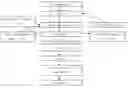
The pelletisation method for obtaining balls can be diagrammatically represented as follows:
The dry ceramic ingredients of the balls of this invention are intimately mixed in a mixer, some water may possibly be added to the mixture, for example in order to obtain a pasty consistency or in order to form a slurry.
The mixed constituents, particularly in a dry process, may be transformed in spheres by means of a rotating pelletising disk or of a granulation disc. The powder of the ceramic ingredients turns into spheres by fogging of water with one or several organic binding agents added, on the rotary bed of the solid components. Fogging is adjusted so that the balls coming out of the pelletising disc comprise a humidity between 18 and 22% by weight of water.
After the spheres are formed, they undergo a sieving process according to three grain size fractions:
- a) the fraction with the desired grain size where the balls formed follow the manufacturing method through to the end;
- b) the fraction with a grain size lower than that desired where the balls formed are returned to the pelletising disc in order to continue growing;
- c) the fraction with a grain size greater than that desired where the balls formed are dried, pulverised and sent back to the mixer.
The fraction with the desired grain size (a) is dried in a conventional drying oven at a temperature of about 110° C. until the balls have a humidity level lower than 1% by weight.
The dried balls are then loaded into a fritting oven. The balls are fritted at a temperature between 1400° C. and 1600° C. according to a well-defined heating speed programme.
After fritting and cooling of the oven, the balls are conditioned in their packaging and are ready for dispatch.
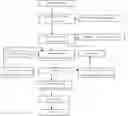
Granulation by a fluidised bed dryer is shown in the following diagram:
The ceramic ingredients that make up the balls of this invention with water and a dispersant added, are finely ground in a proportion of dry material within the range of 50 to 75%. After grinding, the extracted slurry receives organic binding agents (5 to 7%) and is finely mixed.
The slurry is injected at room temperature through injectors into a granulation fluidised-bed dryer where it comes into contact with the fluidised solid particles (seeds) having the same composition as that of the invention.
The hot air (140° C. max.) entering the dryer evaporates the water contained in the slurry, thus causing the deposition of the dry materials on the seeds. The successive depositions of dry material make the granules grow in layers and transform them into balls. Once the balls reach the desired size, they are removed from the dryer.
After extraction from the dryer, the balls undergo a sieving operation:
- a) the balls with a smaller particle size than that desired go back into the dryer in order to continue their growth in it;
- b) the balls with a larger particle size than that desired undergo a grinding operation and then go back into the dryer in order to serve as seeds for future balls;
- c) the balls with the desired particle size follow the process (fritting at high temperature, packaging) to its end as in the process at Point A.
Other Manufacturing Methods
Shaping of the balls by gelation reaction:
- production of a slurry comprising between 50 and 75% dry materials, from the ceramic ingredients making up the balls of this invention with water and a dispersant added.
- addition to the slurry of a natural polysaccharide: 0.5 to 3% relative to the concentration of dry materials.
- gelation by flow, drop by drop, of the slurry through capillaries of different diameters in an aqueous solution comprising polyvalent cations.
- separation of the balls formed from the aqueous solution, washing of the balls in water, drying and fritting at high temperature.
Shaping of the balls by the injection moulding process:
- production of a suspension from the ceramic ingredients making up the balls of this invention with binding agents (waxes, polymers) and surfactants (carboxylic acid, for example stearic acid, oleic acid, . . . ) added.
- heating of this suspension to ±160° C. and injection of same into the impressions of the balls made in a metal mould, previously heated between 40 and 60° C.
- after solidification of the balls formed, extraction of these from the mould, unbinding of the binding agents according to a well-defined thermal treatment and fritting of the balls at high temperature.
Performance Tests in Laboratory and Industrial Attrition Mills
The performance of the balls of the invention (alumina-zirconia-mullite) by comparison with zirconia balls stabilised or partially stabilised with yttrium oxide.
a) Test Conditions
- grinding of a slurry with 60% by weight of dry material
- composition of the slurry: 30% in volume of alumina and 70% by volume of zirconia
- equipment: Netzsch-LMK4 attrition mill
- attrition mill speed: 2000 rpm
- dimension of the balls: 2 mm diameter
- filling with balls: 82% of the useful volume
b) Results
| Balls of the | Zirconia balls of the | ||
| Measured parameters | invention | prior art | |
| Grinding time | 3 h | 3 h | |
| Total raw energy | 13.9 kWh | 14 kWh | |
| Final product | |||
| D90 | 2.75μ | 2.80μ | |
| D50 | 0.80μ | 0.84μ | |
| D10 | 0.24μ | 0.24μ | |
| Wear | 19.6 g/kWh | 5.9 g/kWh | |
c) Comments
All conditions being identical, the grinding performance of the two kinds of balls are equivalent. If the wear performance are in favour of the zirconia balls, 3.32 times better, the cost of those balls is ±10 time higher than that of the balls of the invention. This makes the alumina-zirconia-mullite balls thus very attractive on the economical side.
Gains in wear and in grinding efficiency of the balls of the invention relative to the commercially available alumina balls.
- 1) Packaging phase: comparison in wear of the balls without introducing abrasive material in the grinding mill
a) Test Conditions
- supply of water only
- equipment: Netzch-LMK4 attrition mill
- attrition mill speed: 2000 rpm
- dimension of the balls: 2 mm diameter
- filling in balls: 75% of the useful volume
- test duration: 12 h
b) Results
| Type | Wear (g/kWh) | X more wear | |
| Reference 1 | 40.79 | 2.06 | |
| Reference 2 | 44.09 | 2.22 | |
| Reference 3 | 57.25 | 2.89 | |
| Balls of the invention AMZ | 19.82 | 1 | |
| Note: | |||
| reference 1, reference 2 and reference 3 are commercially available alumina balls from different sources. |
c) Comments
The balls of the invention in the packaging phase are more wear efficient (2 to 2.89 times) than the alumina balls. This test shows the very good durability of the balls of the invention.
- 2) Test phase in the presence of material to be ground
a) Test Conditions
- grinding of an alumina slurry with 65% by weight of dry material
- equipment: Netzch-LM100 attrition mill
- attrition mill speed: 400 rpm
- dimension of the balls: 2 mm diameter
- filling with balls: ±85% of the useful volume
b) Results
| Balls of | ||
| the | Alumina | |
| Measured parameters | invention | balls |
| Grinding time | 28 h | 36 h |
| Particle size of the final product: d50 | 1.3μ | 1.3μ |
| Wear | 25.8 g/kWh | 35.9 g/kWh |
C) comments
The balls of the invention are 1.3 times more efficient in terms of grinding time. This performance is partly due to the higher density of those balls. The wear performance is of the order of 1.4 times better than the alumina balls. This confirms the inner feature of those balls in terms of durability.
Claims
1. Grinding balls made of fritted ceramic comprising a compound of alumina silicate (αAl2O3.βSiO2) zirconia (ZrO2+HfO2) and alumina (Al2O3).
2. Grinding balls made of fritted ceramic as in claim 1, wherein said ceramic moreover comprises 1 to 5% by weight of oxides selected from the group of Na2O, MgO, CaO and BaO.
3. Grinding balls made of fritted ceramic as in claim 1, wherein said compound of alumina silicate comprises mulitte (3Al2O3.2SiO2).
4. Grinding balls made of fritted ceramic as in claim 1, wherein said ceramic moreover comprises a stabilizing agent selected from the rare earth oxides.
5. Grinding balls made of fritted ceramic, produced from a mixture comprising the following ingredients (in % by weight):
5 to 40% ZrO2+HfO2,
0.1 to 10% Y2O3,
0.5 to 20% SiO2,
40 to 90% Al2O3, with a ZrO2/SiO2 ratio greater than or equal to 2.
6. Grinding balls made of fritted ceramic, produced from a mixture comprising the following ingredients (in % by weight):
10 to 24% ZrO2+HfO2,
0.5 to 3% Y2O3,
5 to 12% SiO2,
60 to 85% Al2O3
with a ZrO2/SiO2 ratio greater than or equal to 2.
7. Grinding balls made of fritted ceramic, obtained by a method for fritting a mixture comprising the following ingredients (in % by weight):
10 to 24% ZrO2+HfO2,
0.5 to 3% Y2O3,
5 to 12% SiO2,
60 to 85% Al2O3
with a ZrO2/SiO2 ratio equal to 2.
8. Grinding balls made of fritted ceramic, wherein said balls have a diameter between 0.1 and 100 mm.
9. Grinding balls made of fritted ceramic, wherein said balls have a diameter between 0.5 and 50 mm.
10. Grinding balls made of fritted ceramic, wherein said balls have a diameter between 0.5 and 10 mm.
11. Method for manufacturing grinding balls made of fritted ceramic, comprising the following steps:
mixing and/or grinding raw materials by dry and/or wet processes so as to form a slurry with the possible addition of binding agents and/or organic surfactants;
passing said slurry through a granulation means or process;
selecting by sieving the balls obtained with the return back to the mixer of the balls having unsatisfactory grain size via a possible drying and/or grinding step;
drying the balls of satisfactory grain size;
fritting the balls of statisfactory grain size between 1400° C. and 1600° C. followed by a packaging step.
12. Method for manufacturing grinding balls made of fritted ceramic as in claim 11, wherein the granulation means comprise fluidised-bed granulators and granulation discs.
13. Method for manufacturing grinding balls made of fritted ceramic as in claim 11, wherein the granulation methods comprise gelation methods or injection moulding methods.
14. Method for manufacturing grinding balls made of fritted ceramic as in claim 11, wherein said organic binding agents are chosen from the group of polysaccharides, thermoplastic polymers, thermosetting polymers or polymers based on aqueous or organic solvents.
15. Method for manufacturing grinding balls made of fritted ceramics as in claim 11, wherein said surfactants are chosen from the group of carboxylic acids such as stearic acid or oleic acid and/or polyelectrolytes such as ammonium polymethylacrylate.
16. Use of the grinding balls made of fritted ceramic as in claim 1 for grinding mineral or organic materials.
Images & Drawings included:
Sources:
- United States Patent and Trademark Office - verify current appl. status at the USPTO↗
Recent applications in this class:
- » 20250289001 2025-09-18
METAL MATRIX COMPOSITE GRINDING BALL - » 20250135462 2025-05-01
MODULAR SHREDDER RING FOR IMPLEMENTATION IN WASTE DISPOSER AND RELATED METHOD - » 20250058328 2025-02-20
METHOD OF PRODUCING INORGANIC MATERIAL AND APPARATUS OF PRODUCING INORGANIC MATERIAL - » 20240009676 2024-01-11
HORIZONTAL GRINDER ROTOR, GRINDING BEAD DRIVING DEVICE AND HORIZONTAL GRINDER - » 20220331813 2022-10-20
Method of producing inorganic material and apparatus of producing inorganic material - » 20200001303 2020-01-02
SMALL PARTICLE COMPOSITIONS AND ASSOCIATED METHODS - » 20180297036 2018-10-18
BEAD MADE OF A FUSED PRODUCT - » 20170008004 2017-01-12
GRINDING MEDIA FABRICATION - » 20160296939 2016-10-13
Continuous Grinding Device for Divided Solid Materials - » 20160256873 2016-09-08
Process of dry milling particulate materials
Recent applications for this Assignee:
- » 20240035124 2024-02-01
HIERARCHICAL COMPOSITE WEAR PART WITH STRUCTURAL REINFORCEMENT - » 20220097128 2022-03-31
Composite wear part - » 20210131076 2021-05-06
Composite tooth with frustoconical insert - » 20200055055 2020-02-20
Grinding roller - » 20180321213 2018-11-08
METHOD FOR MONITORING CHEMICAL PARAMETERS FROM AN OPERATING MINERAL OR WATER PROCESSING PLANT; SYSTEM THEREFOR; PROCESSING PLANT COMPRISING SUCH SYSTEM - » 20170152193 2017-06-01
Ceramic grains and method for their production - » 20160144381 2016-05-26
Method for recovering a copper sulfide concentrate from an ore containing an iron sulfide - » 20140251878 2014-09-11
Separator for granular materials - » 20130130188 2013-05-23
Grid plate - » 20130126649 2013-05-23
Ring for grinding mill