Method of controlling at least one terminal from a base station
US20080248760A1
2008-10-09
11/667,454
2005-10-19
✅ Patent granted
US 8,238,892 B2
2012-08-07
WO; PCT/GB2005/004018; 20051019
WO; WO2006/051256; 20060518
Yuwen Pan
2028-02-18
Abstract:
One or more identifiers are set for each terminal and a priority ranking is allocated to each identifier to determine priority of one scheduling command relative to any other scheduling command. A data block is transmitted from the base station to the, or each, terminal, including the scheduling command and at least one identifier. Each terminal indicated by the identifier adapts its power level or data rate in accordance with the scheduling command.
Inventors:
- Jorn Krause 7 🇩🇪 Berlin, Germany
- Philip Booker 1 🇬🇧 Southhampton Hampshire, United Kingdom
- Thomas M. Chapman 1 🇬🇧 Southampton Hampshire, United Kingdom
- Toby Kier Proctor 1 🇬🇧 Salisbury Wilshire, United Kingdom
- Philip Booker 1 🇬🇧 Southampton Hampshire, United Kingdom
Assignee:
- SIEMENS AKTIENGESELLSCHAFT 12,417 🇩🇪 Munich, Germany
Interested in similar patents?
Get notified when new applications in this technology area are published.
Classification:
H04M3/00 IPC
Automatic or semi-automatic exchanges
H04W52/54 » CPC main
Power management, e.g. TPC [Transmission Power Control], power saving or power classes; TPC Signalisation aspects of the TPC commands, e.g. frame structure
H04W72/14 » CPC further
Local resource management, e.g. wireless traffic scheduling or selection or allocation of wireless resources; Wireless traffic scheduling using a grant or specific channel
H04W8/26 » CPC further
Network data management Network addressing or numbering for mobility support
H04W28/22 » CPC further
Network traffic or resource management; Central resource management; Negotiation of resources or communication parameters, e.g. negotiating bandwidth or QoS [Quality of Service]; Negotiating wireless communication parameters Negotiating communication rate
H04W36/18 » CPC further
Hand-off or reselection arrangements; Performing reselection for specific purposes for allowing seamless reselection, e.g. soft reselection
H04W52/146 » CPC further
Power management, e.g. TPC [Transmission Power Control], power saving or power classes; TPC; TPC algorithms; Separate analysis of uplink or downlink Uplink power control
H04W72/0473 » CPC further
Local resource management, e.g. wireless traffic scheduling or selection or allocation of wireless resources; Wireless resource allocation where an allocation plan is defined based on the type of the allocated resource the resource being transmission power
H04W72/1247 » CPC further
Local resource management, e.g. wireless traffic scheduling or selection or allocation of wireless resources; Wireless traffic scheduling; Schedule definition, set-up or creation based on priority of the information source or recipient
H04B1/40 IPC
Details of transmission systems, not covered by a single one of groups - ; Details of transmission systems not characterised by the medium used for transmission; Transceivers, i.e. devices in which transmitter and receiver form a structural unit and in which at least one part is used for functions of transmitting and receiving Circuits
Description
This invention relates to a method of controlling one or more terminals from a base station.
In the third generation partnership project (3GPP) work is ongoing relating to enhanced uplink (or enhanced dedicated channel (E-DCH)) for frequency division duplex (FDD). Improvements provide a feature for universal mobile telecommunication system (UMTS) that enhances uplink (UL) transmissions from the mobile station or user equipment (UE) to the base station, or Node B by the Node B scheduling the interference, transmit power received at the Node B and transport formats used. These three parameters are coupled. Furthermore, a hybrid automatic repeat request (HARQ) mechanism sends acknowledgements (ACK) or non-acknowledgements (NACK) from a Node B, or in case of soft handover, more than one Node B, to the UE to trigger retransmissions. There is also some consideration of implementing a shorter transmission time interval (TTI) of 2 ms, rather than a 10 ms TTI which is more usually considered to be standard. The effect of all these changes is to improve coverage and throughput, as well as to reduce delay in the UL.
However, it is necessary to provide a way of scheduling commands from the base station to the terminal.
In accordance with a first aspect of the present invention, a method of controlling one or more terminals from a base station comprises setting one or more identifiers for each terminal; allocating a priority ranking to each identifier to determine priority of one scheduling command relative to any other scheduling command; and transmitting a data block from the base station to the, or each, terminal, including the scheduling command and at least one identifier; wherein each terminal indicated by the identifier adapts its power level or data rate in accordance with the scheduling command.
This ensures that changes in power level or data rate of a terminal can be controlled without having to apply the same changes to all terminals.
Preferably, each scheduling command includes a validity period.
This reduces the need for the base station to send commands, because the terminal will automatically revert to a default value on expiry of the validity period.
The default value could be one which is preset for all terminals, but preferably, each terminal indicated by an identifier in a scheduling command reverts to the power level and data rate of its lowest priority identifier, on expiry of the validity period of that scheduling command.
Certain terminals may have a need for a higher basic power level and data rate, so this can be set individually, as the lowest priority identifier.
The terminal could respond substantially instantaneously to a change indicated by a scheduling command, but preferably, each terminal indicated by an identifier in a new scheduling command changes its power level or data rate in accordance with the new scheduling command, only when a validity period for a previous scheduling command for that terminal expires.
This allows the base station to plan ahead in terms of resources.
Although the scheduling command could set a relative change, such as increase or decrease power by a fixed amount, preferably, the scheduling command sets an absolute power level or data rate.
The terminal could be a static terminal, but preferably, the terminal comprises a mobile terminal.
Preferably, the identifiers for a terminal in soft handover are identifiers from different base stations and their relative priorities.
When in soft handover, the terminal may receive scheduling information from more than one base station, so it needs to know which takes precedence.
A method of scheduling one or more terminals from a base station will now be described, with reference to the accompanying drawings in which:
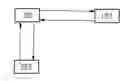
FIG. 1 is a block diagram of a first example of the present invention;
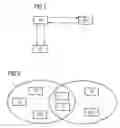
FIG. 2 shows the invention applied during soft handover; and
FIG. 3 illustrates how priorities are allocated and used according to the present invention.
In FIG. 1, a node B NB schedules a pair of terminals UE1 and UE2, typically mobile terminals within a cell. If UE1 is causing interference, the node B can send a scheduling command to UE1 which reduces its data rate and power level to the specified lower ones, without affecting UE2. Alternatively, if NB has spare resources it can send a command, indicating to both UE1 and UE2 that they can increase their power levels and data rate to the same, higher, value.
FIG. 2 illustrates the problem of soft handover, where terminals T1 and T3 might receive scheduling commands from both NB1 and NB2. Using the method of the present invention, the terminals will be given an identifier and priority ranking, so that they know which node B to follow.
Different ways of scheduling commands, or grants, sent from the Node B to the UE are possible. An absolute scheduling grant indicates an absolute setting of UL transmit power limit or UL transport format limit, whereas a relative scheduling grant gives an up or hold or down command for setting UL transmit power limit or UL transport format limit.
For the absolute scheduling grant, a corresponding scheduling identification, currently called UE Id, is sent together with the command to indicate the UE to which the scheduling grant applies. The scheduling grants can affect an individual UE (individual scheduling identification), a configured group of UEs (‘group scheduling identification’), or all UEs which are under control of the scheduling Node B (‘common scheduling identification’). Thus, there is a hierarchical scheduling identification giving different levels of grants. The UE receives configuration information (e.g. when the E-DCH channel is set up or reconfigured) in which a prioritized list of scheduling identifications is provided to indicate which scheduling identification has a higher priority, if the UE has or receives different grants with overlapping validity periods. Alternatively, the absolute grants may remain valid until the next absolute grant occurs, rather than being given a specific validity period.
One example of using a list of prioritised UE IDs is one in which one of the IDs is used for scheduling a group of UEs. All of the UEs in the group are given a common ID as one of their UE IDs and individual Ids as another of their UE IDs. Their behaviour on receiving an absolute grant containing a UE ID will differ depending on whether the grant contains the common ID or an individual ID and the priority of the common/individual IDs.
In FIG. 3, a UE, e.g. UE1 is allocated 2 IDs with different priorities. The higher priority is UEID1 and the lower priority is UEID2, i.e. ID1 has a higher priority than ID2. The UE receives an absolute grant for UEID1, which has priority 1, so the UE responds. It also receives an absolute grant for UEID2, with priority 2, but the UE does not respond to this because it already has a valid grant with a higher priority number.
The present discussion assumes that absolute scheduling grants are received only from the serving Node B and relative grants from all cells/Node Bs. Hence non-serving Node Bs could stop interference increasing absolute grants from serving cell/Node B e.g. by an overload indication provided via their relative grants.
Advantages of the proposed invention include a reduction and simplification of scheduling grants. A group or all UEs can be addressed by one grant only which is quicker in overload situations and saves downlink power and radio resources in general. Although the scheduler in the Node B is implementation specific, corresponding signalling for the configuration is needed in the standard and cost savings in the sense of radio resources can be achieved.
Claims
1-7. (canceled)
8. A method of controlling at least one terminal from a base station, comprising:
setting at least one identifier for each terminal;
allocating a priority ranking to each identifier to determine priority of one scheduling command relative to any other scheduling command;
transmitting a data block from the base station to each terminal, including the scheduling command and at least one identifier; and
each terminal indicated by the identifier adapting a power level or data rate in accordance with the scheduling command.
9. A method according to claim 8, wherein each scheduling command includes a validity period.
10. A method according to claim 9, wherein each terminal indicated by an identifier in a scheduling command reverts to the power level and data rate of a lowest priority identifier thereof, on expiry of the validity period of the scheduling command.
11. A method according to claim 9, wherein each terminal indicated by an identifier in a new scheduling command changes at least one of power level and data rate in accordance with the new scheduling command, only when a validity period for a previous scheduling command for the terminal expires.
12. A method according to claim 11, wherein the scheduling command sets at least one of an absolute power level and data rate.
13. A method according to claim 12, wherein the terminal is a mobile terminal.
14. A method according to claim 13, wherein the identifiers for a terminal in soft handover are identifiers from different base stations and their relative priorities.
Images & Drawings included:

Sources:
- United States Patent and Trademark Office - verify current appl. status at the USPTO↗
Recent applications in this class:
- » 20250175911 2025-05-29
WIRELESS COMMUNICATION SYSTEM - » 20240389035 2024-11-21
WIRELSS SIGNALING METHODS AND DEVICES FOR NOTIFYING DUTY CYCLE TRANSMISSION EXHAUSTION - » 20240357520 2024-10-24
COMMUNICATION METHOD AND COMMUNICATION APPARATUS - » 20240259963 2024-08-01
ENABLING AND DISABLING OF AUTOMATIC GAIN CONTROL (AGC) SYMBOLS IN SIDELINK - » 20230354222 2023-11-02
TRANSMIT POWER CONTROL ACCUMULATION CORRECTION - » 20230039103 2023-02-09
TRANSMIT POWER CONTROL CONFIGURATION FOR PHYSICAL UPLINK CONTROL CHANNEL REPETITION ACROSS MULTIPLE COMPONENT CARRIERS - » 20220369247 2022-11-17
MULTI-BEAM TRANSMISSION SIGNALING FOR UPLINK COMMUNICATION CHANNELS - » 20220286981 2022-09-08
Cell-group transmission power control commands - » 20220174617 2022-06-02
System, apparatus and method for dynamic transmit power determination - » 20220095248 2022-03-24
Data transmission method, apparatus, and system
Recent applications for this Assignee:
- » 20250262772 2025-08-21
PLACE CONDITIONED PICK FOR ROBOTIC PICK AND PLACE OPERATIONS - » 20250242498 2025-07-31
SYSTEM AND METHOD FOR PICK POSE ESTIMATION FOR ROBOTIC PICKING WITH ARBITRARILY SIZED END EFFECTORS - » 20250216836 2025-07-03
PRIORITIZATION BETWEEN AGENTS IN AGENT-BASED PROCESS AUTOMATION - » 20250168873 2025-05-22
WLAN Communication Method and Devices - » 20250168152 2025-05-22
Communication System, Adapter for a Terminal and Method for Securely Transmitting Time-Critical Data within the Communication System - » 20250166165 2025-05-22
TRAINING SYSTEMS FOR SURFACE ANOMALY DETECTION - » 20250162095 2025-05-22
Method for Operating a Machine Tool, Computer Program Product, Control Unit, Machine Tool, Simulation Program Product and Use of the Control Unit - » 20250147755 2025-05-08
INDUSTRIAL APPLICATION PACKAGE MANAGEMENT - » 20250126041 2025-04-17
METHOD OF CAPTURING PACKETS FROM APPLICATIONS HOSTED ON CONTAINERS - » 20250117920 2025-04-10
SELF-SUPERVISED ANOMALY DETECTION FRAMEWORK FOR VISUAL QUALITY INSPECTION IN MANUFACTRUING