Driving method
US20080252587A1
2008-10-16
11/775,239
2007-07-10
✅ Patent granted
US 8,164,561 B2
2012-04-24
-
-
Richard Hjerpe | Jeffrey A Parker
2030-09-06
Abstract:
A driving method for driving a display panel is provided. The display panel includes a plurality of scan lines, a plurality of data lines, and a plurality of pixel units electrically connected to the scan lines and the data lines. The driving method comprises enabling the pixel units controlled by the scan lines through different scanning sequences and inputs image data to the pixel units via the data lines in several consecutive frame times, wherein capacitance coupling effects between the pixel units are varied depending on the scanning sequences. Accordingly, the line mura caused by the capacitance coupling effect is restrained.
Inventors:
- Tsang-Hong Wang 4 🇹🇼 Hsinchu, Taiwan
- Fang-Lin Chang 2 🇹🇼 Hsinchu, Taiwan
- Yun-Chung Lin 3 🇹🇼 Hsinchu, Taiwan
Assignee:
- AU OPTRONICS CORPORATION 1,889 🇹🇼 Hsinchu, Taiwan
Interested in similar patents?
Get notified when new applications in this technology area are published.
Classification:
G09G3/34 IPC
Control arrangements or circuits, of interest only in connection with visual indicators other than cathode-ray tubes for presentation of an assembly of a number of characters, e.g. a page, by composing the assembly by combination of individual elements arranged in a matrix no fixed position being assigned to or needed to be assigned to the individual characters or partial characters by control of light from an independent source
G09G3/20 » CPC main
Control arrangements or circuits, of interest only in connection with visual indicators other than cathode-ray tubes for presentation of an assembly of a number of characters, e.g. a page, by composing the assembly by combination of individual elements arranged in a matrix no fixed position being assigned to or needed to be assigned to the individual characters or partial characters
G09G2300/08 » CPC further
Aspects of the constitution of display devices Active matrix structure, i.e. with use of active elements, inclusive of non-linear two terminal elements, in the pixels together with light emitting or modulating elements
G09G2310/02 » CPC further
Command of the display device Addressing, scanning or driving the display screen or processing steps related thereto
G09G2320/0209 » CPC further
Control of display operating conditions; Improving the quality of display appearance Crosstalk reduction, i.e. to reduce direct or indirect influences of signals directed to a certain pixel of the displayed image on other pixels of said image, inclusive of influences affecting pixels in different frames or fields or sub-images which constitute a same image, e.g. left and right images of a stereoscopic display
G09G3/36 IPC
Control arrangements or circuits, of interest only in connection with visual indicators other than cathode-ray tubes for presentation of an assembly of a number of characters, e.g. a page, by composing the assembly by combination of individual elements arranged in a matrix no fixed position being assigned to or needed to be assigned to the individual characters or partial characters by control of light from an independent source using liquid crystals
Description
CROSS-REFERENCE TO RELATED APPLICATION
This application claims the priority benefit of Taiwan application serial no. 96112825, filed Apr. 12, 2007. All disclosure of the Taiwan application is incorporated herein by reference.
BACKGROUND OF THE INVENTION
1. Field of the Invention
The present invention relates to a driving method. More particularly, the present invention relates to a driving method for a liquid crystal display (LCD).
2. Description of Related Art
The proliferation of multi-media systems in our society depends to a large extent on the progressive development of semiconductor devices and display devices. Display devices such as the cathode ray tube (CRT) have been used for quite some time due to its remarkable display quality, reliability and low cost. Although the conventional CRT has many advantages, the design of the electron gun renders it heavy, bulky and energy wasting. Moreover, there is always some potential risk of hurting viewer's eyes due to its emission of some radiation. With big leaps in the techniques of manufacturing semiconductor devices and optoelectronic devices, high picture quality, slim, low power consumption and radiation-free displays such as the thin film transistor liquid crystal displays (TFT LCD) have gradually become mainstream display products.
FIG. 1 is a schematic view of a conventional active device array. Referring to FIG. 1, a display panel 10 includes a plurality of scan lines G1-Gn, a plurality of data lines S1-Sm, and a plurality of pixel units 2 having active devices 2a. The scan lines G1-Gn and the data lines S1-Sm are electrically connected to the active devices 2a of the pixel units 2 correspondingly and the pixel units 2 are driven by the scan lines G1-Gn and the data lines S1-Sm. In particular, the display panel 10 further includes a plurality of shift registers (not shown), and the shift registers generate scanning control signals which cooperate with the data signals to enable the pixel units 2 at a proper time, so as to input-image data to the pixel units 2.
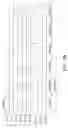
FIG. 2 is a timing diagram of a driving method of the active device array in FIG. 1. Referring to FIG. 2, in each frame time, the scanning control signals SR(G1)-SR(Gn) input to the scan lines G1-Gn sequentially enable the pixel units 2 through the same scanning sequence, for example, the sequence of SR(G1), SR(G2), SR(G3) . . . SR(Gn−1), SR(Gn). When the driving method of FIG. 2 is employed to drive the active device array 10, and the pixel units 2 controlled by the odd scan lines SR(G1), SR(G3) . . . and the pixel units 2 controlled by the even scan lines SR(G2), SR(G4) . . . are under non-uniform charging conditions, and line mura may occur in a direction parallel to the data lines S1-Sm. For example, when the scanning control signal SR(G1) is input to the scan line GI, an image data is input to the pixel unit 2 connected to the scan line G1 and the data line S1. When the scanning control signal SR(G2) is input to the scan line G2, another image data is input to the pixel unit 2 connected to the scan line G2 and data line S1. At this time, the image data recorded in the pixel unit 2 on the left of the data line S1 may be affected or coupled by the image data recorded in the pixel unit 2 on the right of the data line S1 (i.e., the capacitance coupling effect), thus causing non-uniform brightness. As a result, the capacitance coupling effect should be reduced.
SUMMARY OF THE INVENTION
The present invention is directed to providing a driving method to restrain the line mura of the display panel.
As embodied and broadly described herein, the present invention provides a driving method for driving a display panel including a plurality of scan lines, a plurality of data lines, and a plurality of pixel units electrically connected to the scan lines and the data lines. The driving method comprises enabling the pixel units controlled by the scan lines through different scanning sequences and inputting image data to the pixel units via the data lines in several consecutive frame times, wherein capacitance coupling effects between the pixel units are varied depending on the scanning sequences.
In the present invention, the pixel units are enabled through different sequences in several consecutive frame times, so as to improve the non-uniform brightness due to capacitance coupling effects between the pixel units, thereby restraining the line mura caused by the non-uniform brightness.
In order to make the aforementioned features and advantages of the present invention comprehensible, preferred embodiments accompanied with figures are described in detail below.
It is to be understood that both the foregoing general description and the following detailed description are exemplary, and are intended to provide further explanation of the invention as claimed.
BRIEF DESCRIPTION OF THE DRAWINGS
The accompanying drawings are included to provide a further understanding of the invention, and are incorporated in and constitute a part of this specification. The drawings illustrate embodiments of the invention and, together with the description, serve to explain the principles of the invention.
FIG. 1 is a schematic view of a conventional active device array.
FIG. 2 is a timing diagram of a driving method of the active device array in FIG. 1.
FIG. 3A is a display panel according to a first embodiment of the present invention.
FIG. 3B is a timing diagram of a driving method of the display panel in FIG. 3A.
FIG. 3C is a display panel according to another embodiment of the present invention.
FIG. 4 is a timing diagram of a driving method according to a second embodiment of the present invention.
FIG. 5A is a display panel according to a third embodiment of the present invention.
FIG. 5B is a timing diagram of a driving method of the display panel in FIG. 5A.
DESCRIPTION OF EMBODIMENTS
The First Embodiment
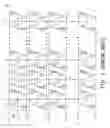
FIG. 3A is a display panel according to a first embodiment of the present invention, and FIG. 3B is a timing diagram of scanning control signals SR1(G1)-SR1(G2n) according to the first embodiment of the present invention.. Referring to FIGS. 3A and 3B, a display panel 10′ includes a plurality of scan lines G1-G2n, a plurality of data lines S1-Sm, and a plurality of pixel units 2 having active devices 2a, wherein n, m are positive integers. The scan lines G1-G2n and the data lines S1-Sm are electrically connected to the active devices 2a of the pixel units 2 correspondingly. In this embodiment, all the pixel units 2 are divided into a plurality of display bands 4, and each of the display bands 4 is constituted by pixel units 2 controlled by two adjacent scan lines. The pixel units 2 in each of the display bands 4 are driven by the corresponding scan lines G1-G2n and corresponding data lines S1-Sm. The scanning control signals SR1(G1)-SR1(G2n) are respectively input to the scan lines G1-G2n to enable the pixel units 2 controlled by the scan lines G1-G2n.
In this embodiment, a rising edge of the scanning control signals SR1(G1)-SR1(G2n) enables the pixel units 2 controlled by the scan lines G1-G2n, and a falling edge of the scanning control signals SR1(G1)-SR1(G2n) disables the pixel units 2 controlled by the scan lines G1-G2n. However, in other embodiments of the present invention, the falling edge of the scanning control signals SR1(G1)-SR1(G2n) enables the pixel units 2, and the rising edge of the scanning control signals SR1(G1)-SR1(G2n) disables the pixel units 2. More particularly, in an embodiment of the present invention, the enable signal (the rising edge or the falling edge) of the scanning control signals SR1(G1)-SR1(G2n) cooperates with the data signals (not shown) transmitted by the data lines S1-Sm to input an image data to the pixel units 2. In an embodiment of the present invention, the method of inputting the image data to the pixel units 2 via the data lines S1-Sm includes dot inversion driving, line inversion driving, or frame inversion driving.
Referring to FIG. 3B, in the first frame time, the enable signal of the scanning control signals SR1(G1)-SR1(G2n) sequentially enables the pixel units 2 controlled by the scan lines G1, G2, G3, G4, . . . , G2n−1, G2n in each row. In the second frame time, the enable signal of the scanning control signals SR1(G1)-SR1(G2n) sequentially enables the pixel units 2 controlled by the scan lines G2, G1, G4, G3, . . . G2n, G2n−1 in each row. In other words, in the first frame time, the pixel units 2 controlled by the odd scan lines in the same display band 4 are enabled first, and then the pixel units 2 controlled by the even scan lines are enabled; while in the second frame time, the pixel units 2 controlled by the even scan lines in the same display band 4 are enabled first, and then the pixel units 2 controlled by the odd scan lines are enabled.
Further, the enable sequence of the pixel units 2 in a third frame time is identical to the enable sequence in the first frame time, and the enable sequence of the pixel units 2 in a fourth frame time is identical to the enable sequence in the second frame time. According to an embodiment of the present invention, when the scanning sequences include m scanning sequences, the consecutive frame times (i.e., a scanning period) can be set as (m*k) frame times, and m, k are positive integers.
In this embodiment, the aforementioned driving method is not limited to be used for driving the display panel shown in FIG. 3A, but can be employed for driving display panels of other configurations, for example, a display panel 10″ shown in FIG. 3C.
According to an embodiment of the present invention, the enable signal of the scanning control signals SR1(G1)-SR1(G2n) enables the pixel units respectively controlled by each scan line through different scanning sequences in several consecutive frame times. Thus, capacitance coupling effects between the pixel units are varied depending on the scanning sequences, such that the line mura may not easily occur to the display panel.
The Second Embodiment
FIG. 4 is a timing diagram of a driving method according to a second embodiment of the present invention. Referring to FIG. 4, in this embodiment, the scanning period is set to be four frame times. In the first and second frame times, the enable signal of the scanning control signals SR1′(G1)-SR1′(G2n) sequentially enables the pixel units 2 controlled by the scan lines G1, G2, G3, G4, . . . , G2n−1, G2n in each row. In the third and fourth frame times, the enable signal of the scanning control signals SR1′(G1)-SR1′(G2n) sequentially enables the pixel units 2 controlled by the scan lines G2, G1, G4, G3, . . . G2n, G2n−1 in each row.
In this embodiment, each of the display bands 4 is also constituted by pixel units 2 controlled by two adjacent scan lines. In the first and second frame times, the pixel units 2 controlled by the odd scan lines in the same display band 4 are enabled first, and then the pixel units 2 controlled by the even scan lines are enabled. In the third and fourth frame times, the pixel units 2 controlled by the even scan lines in the same display band 4 are enabled first, and then the pixel units 2 controlled by the odd scan lines are enabled.
It should be noted that, though the first and second embodiments respectively adopt two and four frame times as a scanning period to enable the pixel units 2, the scanning period can be set as frame times of a multiple of 2, such as 2, 4, 6 . . . frame times. Similarly, the driving method of this embodiment can be used to drive the display panels 10′ or 10″ shown in FIG. 3A or FIG. 3D.
The Third Embodiment
FIG. 5A is a display panel according to a third embodiment of the present invention, and FIG. 5B is a timing diagram of a driving method of the display panel in FIG. 5A. In the first and second embodiments, each of the display bands 4 is constituted by pixel units 2 controlled by two adjacent scan lines. However, in the present embodiment, each of the display bands 4 is constituted by pixel units 2 controlled by three adjacent scan lines, as shown in FIG. 5A. A detailed description is illustrated below with reference to FIGS. 5A and 5B.
Referring to FIG. 5B, in the first frame time, the enable signal of the scanning control signals SR2(G1)-SR2(G3n) sequentially enables the pixel units 2 controlled by the scan lines G1, G2, G3, G4, G5, G6, . . . , G3n−2, G3n−1, G3n in each row. In the second frame time, the enable signal of the scanning control signals SR2(G1)-SR2(G3n) sequentially enables the pixel units 2 controlled by the scan lines G3, G1, G2, G6, G4, G5, . . . , G3n, G3n−2, G3n−1 in each row. In the third frame time, the enable signal of the scanning control signals SR2(G1)-SR2(G3n) sequentially enables the pixel units 2 controlled by the scan lines G2, G3, G1, G5, G6, G4, . . . , G3n−1, G3n, G3n−2 in each row. That is, in the first frame time, the second frame time, and the third frame time, the enable sequences of pixel units in each row are different.
In addition, the enable sequence of the pixel units 2 in a fourth frame time is identical to the enable sequence in the first frame time, the enable sequence of the pixel units 2 in a fifth frame time is identical to the enable sequence in the second frame time, and the enable sequence of the pixel units 2 in a sixth frame time is identical to the enable sequence in the third frame time. However, in each scanning period, the enable sequences of the pixel units in each row are not limited by this embodiment, and other permutations and combinations of the enable sequences also fall in the scope of the present invention.
It should be noted that, though this embodiment only adopts three frame times as a scanning period to enable the pixel units 2, the scanning period can be set as frame times of a multiple of 3, such as 3, 6, 9 . . . frame times.
Though in the first, second, and third embodiments, each of the display bands is constituted by pixel units controlled by two or three scan lines, it should be understood that the present invention is not limited herein. Moreover, when each of the display bands is constituted by pixel units controlled by x scan lines, the scanning period can be set as x*y frame times, wherein x, y are positive integer, and x>1.
In view of the above, in the present invention, the pixel units are enabled through different sequences in several consecutive frame times, so as to improve the non-uniform brightness due to capacitance coupling effects between the pixel units, thereby restraining the line mura caused by the non-uniform brightness.
It will be apparent to those skilled in the art that various modifications and variations can be made to the structure of the present invention without departing from the scope or spirit of the invention. In view of the foregoing, it is intended that the present invention cover modifications and variations of this invention provided they fall within the scope of the following claims and their equivalents.
Claims
What is claimed is:1. A driving method for driving a display panel comprising a plurality of scan lines, a plurality of data lines, and a plurality of pixel units electrically connected to the scan lines and the data lines, the driving method comprising:
enabling the pixel units controlled by the scan lines through different scanning sequences and inputting an image data to the pixel units via the data lines in several consecutive frame times, wherein capacitance coupling effects between the pixel units are varied depending on the scanning sequences.
2. The driving method as claimed in claim 1, wherein the scanning sequences comprise m scanning sequences, the consecutive frame times comprise (m*k) frame times, and m, k are positive integers.
3. The driving method as claimed in claim 2, wherein m=2.
4. The driving method as claimed in claim 3, wherein the pixel units are divided into a plurality of display bands, and each of the display bands is constituted by pixel units controlled by a part of the adjacent scan lines.
5. The driving method as claimed in claim 4, wherein the scanning sequences comprise:
enabling the pixel units in each of the display bands through a first scanning sequence in at least one frame time of 2k frame times; and
enabling the pixel units in each of the display bands through a second scanning sequence in the rest frame times of 2k frame times, wherein the second scanning sequence is contrary to the first scanning sequence.
6. The driving method as claimed in claim 2, wherein m=3.
7. The driving method as claimed in claim 6, wherein the pixel units are divided into a plurality of display bands, and each of the display bands is constituted by pixel units controlled by a part of the adjacent scan lines.
8. The driving method as claimed in claim 7, wherein the scanning sequences comprise:
enabling the pixel units in each of the display bands through a first scanning sequence in a part of the frame times in 3k frame times;
enabling the pixel units in each of the display bands through a second scanning sequence in another part of the frame times in 3k frame times; and
enabling the pixel units in each of the display bands through a third scanning sequence in the rest frame times in 3k frame times, wherein the first, second, and third scanning sequences are different from each other.
9. The driving method as claimed in claim 1, wherein the method of inputting the image data to the pixel units via the data lines comprises dot inversion driving, line inversion driving, or frame inversion driving.
Images & Drawings included:



Sources:
- United States Patent and Trademark Office - verify current appl. status at the USPTO↗
Similar patent applications:
- » 20210407441
Backlight driving method, display driving method, drive device and display device - » 9878358
LIQUID CRYSTAL DISPLAY DEVICE, IMAGE DISPLAY DEVICE, ILLUMINATION DEVICE AND EMITTER USED THEREFORE, DRIVING METHOD OF LIQUID CRYSTAL DISPLAY DEVICE, DRIVING METHOD OF ILLUMINATION DEVICE, AND DRIVING METHOD OF EMITTER - » 20110134154
Liquid crystal display device, image display device, illumination device and emitter used therefor, driving method of liquid crystal display device, driving method of illumination device, and driving method of emitter - » 20050206589
Liquid crystal display device, image display device, illumination device and emitter used therefor, driving method of liquid crystal display device, driving method of illumination device, and driving method of emitter - » 20180131385
Digital analog conversion circuit, data driver, display device, electronic apparatus and driving method of digital analog conversion circuit, driving method of data driver, and driving method of display device - » 20090201286
Light emitting period setting method, driving method for display panel, driving method for backlight, light emitting period setting apparatus, semiconductor device, display panel and electronic apparatus - » 20140307009
Light emitting period setting method, driving method for display panel, driving method for backlight, light emitting period setting apparatus, semiconductor device, display panel and electronic apparatus - » 20160321998
Light emitting period setting method, driving method for display panel, driving method for backlight, light emitting period setting apparatus, semiconductor device, display panel and electronic apparatus - » 20120169802
Light emitting period setting method, driving method for display panel, driving method for backlight, light emitting period setting apparatus, semiconductor device, display panel and electronic apparatus - » 20160189637
Light emitting period setting method, driving method for display panel, driving method for backlight, light emitting period setting apparatus, semiconductor device, display panel and electronic apparatus
Recent applications in this class:
- » 20250279022 2025-09-04
ELECTRONIC DEVICE AND IMAGE PROCESSING METHOD THEREOF - » 20250279021 2025-09-04
ELECTRONIC DEVICE - » 20250273110 2025-08-28
Predictive Gamma Algorithm for Multiple Display Refresh Rates - » 20250265957 2025-08-21
ARRAY SUBSTRATE AND DISPLAY PANEL COMPRISING THE SAME - » 20250259580 2025-08-14
DISPLAY PANEL, REPAIRING METHOD AND DISPLAY DEVICE - » 20250252883 2025-08-07
DATA PROCESSING DEVICE, DATA DRIVING DEVICE, AND SYSTEM FOR DRIVING DISPLAY DEVICE - » 20250252882 2025-08-07
DISPLAY PANEL AND DISPLAY DEVICE - » 20250252881 2025-08-07
DISPLAY DEVICE AND ELECTRONIC DEVICE HAVING THE SAME - » 20250246110 2025-07-31
DYNAMIC REFRESH RATE SWITCHING SYSTEM AND METHOD THEREOF - » 20250246109 2025-07-31
DISPLAY-BASED USER ILLUMINATION SYSTEM
Recent applications for this Assignee:
- » 20230262206 2023-08-17
Naked-eye stereoscopic display system and display method thereof - » 20230253379 2023-08-10
Display apparatus - » 20230234055 2023-07-27
OPTOELECTRONIC TWEEZER DEVICE AND FABRICATION METHOD THEREOF - » 20230223674 2023-07-13
Antenna module and display apparatus - » 20230197917 2023-06-22
DISPLAY APPARATUS - » 20230187457 2023-06-15
Display panel - » 20230187417 2023-06-15
Display panel including opaque encapsulation and doped planarization layers and manufacturing method thereof - » 20230143881 2023-05-11
Display panel - » 20230140381 2023-05-04
Stretchable display panel - » 20230137029 2023-05-04
PHOTOSENSITIVE DEVICE