Process for producing a bio-pesticide composition containing and
US20080286853A1
2008-11-20
12/088,039
2007-02-15
✅ Patent granted
US 7,923,005 B2
2011-04-12
WO; PCT/IN2007/000064; 20070215
WO; WO2007/094014; 20070823
Vera Afremova
2027-09-20
Abstract:
A process for the production of organic and combination formulation of bio-pesticide containing Trichoderma harzianum and Pseudomonas fluorescens comprising preparation of mother culture, liquid fermentation as well as solid fermentation of T. harzianum, preparation of mother culture, liquid fermentation as well as solid fermentation of P. fluorescens separately, followed by mixing both the bio-pesticides in the proportion of 1-2:1-2: preferably 1:1 to get the final combination, formulation.
Inventors:
- Mahendrakar Sreenivasa Rao 2 🇮🇳 Bangalore, India
- N. Ramachandran 1 🇮🇳 Bangalore, India
- Mahendrakar Sreenivasa Rao 1 🇮🇳 Hessargatta Lake, India
- Nanjundagowda Ramachandran 1 🇮🇳 Hessarghatta Lake, India
Assignee:
- DEPARTMENT OF BIOTECHNOLOGY (DBT) 3 🇮🇳 New Delhi, India
- Department of Biotechnology 2 🇮🇳 , India
- Indian Institute of Horticultural Research 1 🇮🇳 , India
Interested in similar patents?
Get notified when new applications in this technology area are published.
Classification:
Y10S435/876 » CPC further
Chemistry: molecular biology and microbiology; Microorganisms using bacteria or actinomycetales; Pseudomonas Pseudomonas fluorescens
Y10S435/945 » CPC further
Chemistry: molecular biology and microbiology; Microorganisms using fungi Trichoderma
A01N63/27 » CPC further
Biocides, pest repellants or attractants, or plant growth regulators containing microorganisms, viruses, microbial fungi, animals or substances produced by, or obtained from, microorganisms, viruses, microbial fungi or animals, e.g. enzymes or fermentates; Bacteria; Substances produced thereby or obtained therefrom Pseudomonas
A01N63/38 » CPC further
Biocides, pest repellants or attractants, or plant growth regulators containing microorganisms, viruses, microbial fungi, animals or substances produced by, or obtained from, microorganisms, viruses, microbial fungi or animals, e.g. enzymes or fermentates; Microbial fungi; Substances produced thereby or obtained therefrom Trichoderma
A01N65/00 » CPC main
Biocides, pest repellants or attractants, or plant growth regulators containing material from algae, lichens, bryophyta, multi-cellular fungi or plants, or extracts thereof
A01N65/20 » CPC further
Biocides, pest repellants or attractants, or plant growth regulators containing material from algae, lichens, bryophyta, multi-cellular fungi or plants, or extracts thereof; Magnoliopsida [dicotyledons] Fabaceae or Leguminosae [Pea or Legume family], e.g. pea, lentil, soybean, clover, acacia, honey locust, derris or millettia
A01N65/26 » CPC further
Biocides, pest repellants or attractants, or plant growth regulators containing material from algae, lichens, bryophyta, multi-cellular fungi or plants, or extracts thereof; Magnoliopsida [dicotyledons] Meliaceae [Chinaberry or Mahogany family], e.g. mahogany, langsat or neem
A01N65/44 » CPC further
Biocides, pest repellants or attractants, or plant growth regulators containing material from algae, lichens, bryophyta, multi-cellular fungi or plants, or extracts thereof; Liliopsida [monocotyledons] Poaceae or Gramineae [Grass family], e.g. bamboo, lemon grass or citronella grass
C12N1/14 IPC
Microorganisms, e.g. protozoa; Compositions thereof ; Processes of propagating, maintaining or preserving microorganisms or compositions thereof; Processes of preparing or isolating a composition containing a microorganism; Culture media therefor Fungi ; Culture media therefor
A01N63/00 IPC
Biocides, pest repellants or attractants, or plant growth regulators containing microorganisms, viruses, microbial fungi, animals or substances produced by, or obtained from, microorganisms, viruses, microbial fungi or animals, e.g. enzymes or fermentates
Description
FIELD OF INVENTION
This invention relates to a process for producing a bio-pesticide composition containing Trichoderma harzianum and Pseudomonas fluorescens.
BACKGROUND OF INVENTION
A standardized process for mass production of Trichoderma harzianum Rifai and Pseudomonas fluorescens (Migula) separately is known in the art. Such a process included liquid fermentation step and not solid fermentation. As it is, liquid fermentation process alone would result in the end product of bio-control agent formulation of inferior quality. Hence, by this process it is not economical to produce a bio-pesticide of T. harzianum or P. fluorescens.
For the management of various soil borne pathogens, formulation of T. harzianum is being used widely on the various agricultural crops. Similarly formulation of P. fluorescens is also widely used for the management of various soil borne pathogens infecting various agricultural crops. There are also several reports on the efficacy of these two potential bio-agents against various soil borne pathogens infecting various agricultural crops. However, there is no organic product of combination formulation of these two bio-agents.
OBJECTS OF THE INVENTION
An object of this invention is to propose a process for liquid and solid fermentation of Trichoderma harzianum using organic materials.
Another object of the present invention is to propose a process for liquid solid fermentation of Pseudomonas fluorescens using organic material.
Still another object of the present invention is to propose a preparation containing T. harzianum and P. fluorescens with an organic carrier.
Yet another object of this invention is to propose a preparation containing T. harzianum and P. fluorescens which is highly effective for the management of various soil borne pathogens on agricultural crops.
At the outset of the description that follows, it is to be understood that the ensuing description only illustrates a particular form of this invention. However, such a particular form is only an exemplary embodiment and is not intended to be taken restrictively to imply any limitation on the scope of the present invention.
DETAILED DESCRIPTION OF THE INVENTION
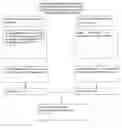
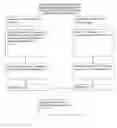
The process of mass production of combination formulation of T. harzianum and P. fluorescens include (a) liquid as well as solid fermentation of T. harzianum (b) liquid as well as solid fermentation of P. fluorescens separately.
1. Fermentation of Trichoderma harzianum:
Preparation of Mother Culture:
-
- The isolate is sub cultured on potato dextrose agar medium, which is incubated under dark condition. The discs are cut and inoculate into a conical flask containing Potato Dextrose Broth (PDB) (Hi-medical), and incubated, which can be used for the liquid fermentation.
Liquid Fermentation for the Production of Trichoderma harzianum
- The isolate is sub cultured on potato dextrose agar medium, which is incubated under dark condition. The discs are cut and inoculate into a conical flask containing Potato Dextrose Broth (PDB) (Hi-medical), and incubated, which can be used for the liquid fermentation.
In the liquid fermentation process, organic materials (4-8%, preferably 5% neem (Azadirachta indica) cake suspension+4-8%, preferably 5% pongamia cake extract (Pongamia pinnata)+0.02-0.05%, preferably 0.03% sugar cane molasses in the ratio of 1:1:1) are used as substrate. The substrate is autoclaved at 121° C. (15 PSI) for 20 min. for its use in the liquid fermentation process. This is unique feature in this process.
The liquid concentration of neem and pongamia aqueous extracts are prepared by pre-soaking the oil cakes and later decanted and filtered using muslin cloth.
The required concentration of sugar cane molasses (organic material) is prepared by dissolving the molasses (v/v) in a known amount of tap water. All the ingredients are mixed and used as the substrate in the liquid fermentation process. Such as substrate is sterilized in the fermenter. After it is cooled, it is added with the mother culture of the bio-agent prepared using Potato Dextrose Broth (PDB) (Hi-media) (the preparation of the mother culture is mentioned above). The fungal mat is harvested in the aseptic conditions and it is used for the solid fermentation.
Solid Fermentation for the Production of Trichoderma harzianum
Solid fermentation is an important step and contributes tremendously for the mass production process making it more efficient and economical. In this stage, organic materials [(neem cake (de oiled cake)+pongamia cake (de oiled cake)+wheat bran in the ratio of 1-3:1-3:1-2, preferably 1:1:2] are used as substrate in the solid fermentation of Trichoderma harzianum. The substrate is autoclaved at 121° C. (15 PSI) for 20 min. for use in the solid fermentation process.
The fungal mat obtained through the liquid fermentation is mixed and filled in a tray with the lid and should be left for 7 days for the solid fermentation.
The solid substrate enables the bio-control fungus to produce the maximum number of spores per gram of substrate.
Liquid Fermentation Pseudomonas fluorescens:
Preparation of Mother Culture of P. fluorescens
The isolate has to be sub cultured on King's B—medium. It should be incubated for 24-36 hours 30±1° C. Later with the help of cork borer (7 mm) the discs should be cut and inoculate into the 500 ml conical flask containing 250 ml of King's B broth. The has to be incubated at 30±1° C. for 24-36 hours and this can be used in the liquid fermentation process.
Liquid Fermentation of Pseudomonas fluorescens:
Liquid fermentation of P. fluorescens is carried out using a fermenter. Initially, the medium be used will be required quantity of King's B broth. The medium is sterilized and culture of P. fluorescens is inoculated to the sterilized broth. Afterwards the liquid fermentation is allowed. Later on this harvested under aseptic conditions and used for solid fermentation.
| Composition of King's B medium |
| SI. NO. | CHEMICALS | FOR 1000 ML |
| 1. | K2HPO4 | 0.15 g |
| 2. | MgSO47H2O | 0.15 g |
| 3. | Peptone | 20.00 g |
| 4. | Glycerol | 10.00 ml |
| 5. | Agar | 18.00 g |
| 6. | Distilled water | 1000 ml |
| Add after autoclaving | ||
| 7. | Ampicillin | 50.00 ppm |
| 8. | Chloramphenicol | 12.50 ppm |
Solid Fermentation of P. fluorescens:
Pseudomonas fluorescens obtained through the liquid fermentation has to be used for the solid fermentation using organic materials.
The composition of the substrate (organic materials) to be used in the solid fermentation Pongamia (de oiled) cake: Neem (de oiled) cake: Wheat Bran (1:1:2).
These materials have to be auto claved at 121° C. (15 PSI) for 20 min.
Inoculation of P. fluorescens on to Organic Materials in the Solid Fermentation:
Pseudomonas fluorescens obtained through the liquid fermentation has to be mixed at rate of 25 ml per kg of the above substrate filled in a tray with the lid and should be left for 10 days for the solid fermentation.
Production of the Organic Combination Formulation (Final Product) of the Bio-Agents T. harzianum and P. fluorescens:
The material obtained through the solid fermentation of P. fluorescens can be packed in one or five or ten kg pockets in aseptic conditions. Hence the organic materials (Neem (de oiled) make+Pongamia (de oiled) cake Wheat Bran) will become carrier material of the formulation or product of this bio-agent.
Characteristics of Formulation:
-
- Neem and pongamia cakes were used as the carrier of the formulation of the product. This is also unique since this improve the establishment of the bio-control agent in the soil, it will be economical, eco-friendly and fits in the organic farming practices.
- The final product will have Colony Forming Units (CFU) of T. harzianum to a level of 2.5×10⁹/g and Colony Forming Units (CFU) of P. fluorescens to a level of 2.7×10⁹/g. Pathogenic contaminants—Salmonella-not present
- Shigella_not present
- Vibrio_not present.
- Other microbial contaminants are 1.6×10² count/gm
- pH is 7.2
- Moisture content is 7.5%
- Shelf life of the product—12 months.
-
- The final product will have Colony Forming Units (CFU) of T. harzianum to a level of 2.5×10⁹/g and Colony Forming Units (CFU) of P. fluorescens to a level of 2.7×10⁹/g.
- Moisture percentage—7.5%
- Shelf life of the product—12 months
- In the process, organic materials [neem cake (de oiled cake): pongamia cake (de oiled cake): Wheat Bran in the ratio of 1:1:2] are used as substrate in the solid fermentation of Pseudomonas fluorescens. This is a unique feature in this process.
- After the solid fermentation of T. harzianum and P. fluorescens separately, both the bio-pesticides are mixed at in the proportion of 1-2:1-2, preferably 1:1 to get the final combination formulation of these two bio-agents. These two bio-agents are compatible and will have a shelf life of 12 months.
- Organic materials [neem cake (de oiled cake)+pongamia cake (de oiled cake)+wheat Bran in the ratio of 1:1:2] act as the carrier of the formulation of final product. This is also an unique feature in this process.
It is to be noted that the formulation of the present invention is susceptible to modifications, adaptations and changes by those skilled in the art. Such variant formulations are intended to be within the scope of the present invention which is further set forth under the following claims:—
Claims
1-8. (canceled)
9: A process for the production of organic and combination formulation of bio-pesticide containing Trichoderma harzianum and Pseudomonas fluorescens comprising:
preparing a first mother culture, comprising liquid fermentation and solid fermentation of T. harziarum;
preparing a second mother culture comprising liquid fermentation and solid fermentation of P. fluorescens separately; and
mixing said first mother culture and said second mother culture in the proportion of 1-2:1-2 to produce a final combination formulation.
10: The process of claim 9, wherein said liquid fermentation of T. harzianum comprises mixing 4-8% neem cake suspension, 4-8% pongamia cake suspension, and 0.02-0.05% sugarcane molasses in the ratio of 1:1:1.
11: The process of claim 9, wherein the solid fermentation of T. harzianum comprises using neem cake, pongamia cake and wheat bran in 1:1:2 ratio as a substrate.
12: The process of claim 9, wherein said liquid fermentation of P. fluorescens is performed in kings' B broth.
13. The process of claim 9, wherein the solid fermentation of P. fluorescens comprises using neem cake, pongamia cake and wheat bran in 1:1:2 ratio as a substrate.
14: The process of claim 9, wherein after solid fermentation T. harzianum and P. fluorescens are mixed in a proportion of 1-2:1-2 to produce the combination formulation.
15: The process of claim 11, wherein said solid fermentation contributes to a mass production process.
16: The process of claim 9, wherein an organic material selected from the group consisting of de-oiled neem cake, de-oiled pongamia cake, wheat bran, and combinations thereof serves as a carrier of the combination formulation.
17: The process of claim 9, wherein said first mother culture and said second mother culture are mixed in the proportion of 1:1 to produce the final combination.
18: The process of claim 9, wherein said liquid fermentation of T. harzianum comprises mixing 5% neem cake suspension, 5% pongamia cake suspension, and 0.03% sugarcane molasses in the ratio of 1:1:1.
19: The process of claim 14, wherein T. harzianum and P. fluorescens are mixed in the proportion of 1:1.
20: The process of claim 13, wherein said solid fermentation contributes to a mass production process.
21: The process of claim 16, wherein the organic material is de-oiled neem cake, de-oiled pongamia cake, and wheat bran in the ratio of 1:1:2.
Images & Drawings included:
Sources:
- United States Patent and Trademark Office - verify current appl. status at the USPTO↗
Recent applications in this class:
- » 20250169509 2025-05-29
ENDOPHYTE COMPOSITIONS AND METHODS FOR IMPROVED PLANT HEALTH - » 20240334939 2024-10-10
Weed Seed Germination Inhibitor - » 20240268397 2024-08-15
ENHANCED FORMULATIONS, COMPOSITIONS AND METHODS FOR PEST CONTROL - » 20240245060 2024-07-25
ENHANCED FORMULATIONS, COMPOSITIONS AND METHODS FOR PEST CONTROL - » 20240156104 2024-05-16
FUNGI-DERIVED COMPOSITION, ITS PRODUCTION PROCESS AND USES - » 20240049726 2024-02-15
FERMENTED COMPOSITION FOR PLANT GROWTH - » 20240041051 2024-02-08
Solvent Compositions Promoting Plant Growth - » 20230083613 2023-03-16
METHOD FOR PREPARING MUSHROOM ANTIBACTERIAL AGENT AND ANTIBACTERIAL AGENT MADE THEREFROM - » 20220354125 2022-11-10
METHOD FOR USING MUSTARD MEAL OR AN EXTRACT THEREOF - » 20220338482 2022-10-27
Enhanced formulations, compositions and methods for pest control
Recent applications for this Assignee:
- » 20170226536 2017-08-10
Formulation and process for biohydrogen production - » 20140323547 2014-10-30
gene in cancer and inflammation - » 20100145025 2010-06-10
Recombinant Mouse-Human Chimeric Fab Against Hepatitis B Surface Antigen